Early Life & Artistic Foundations: The Venetian Roots of Eugen von Blaas
Eugen von Blaas, a name synonymous with the gentle grace and idyllic scenes of 19th-century Italy, wasn’t born into a world solely defined by the shimmering canals and palazzi of Venice. His origins lay in Albano, near Rome, a landscape that initially shaped his artistic sensibilities before destiny led him to the heart of the Venetian Republic. Born in 1843 to Karl von Blaas, himself a painter of considerable skill, Eugen’s artistic journey began not as a deliberate pursuit but as an almost inevitable inheritance. His father served as his first and most influential teacher, instilling within him a foundational understanding of technique and composition. However, it was the family's relocation to Venice when Karl accepted a professorship at the Academy that truly ignited the spark of inspiration in young Eugen. The city, with its unique light, vibrant culture, and captivating atmosphere, became both his muse and his classroom.
The early influence of his Tyrolean father blended seamlessly with the distinctly Italian aesthetic surrounding him. While Karl provided a rigorous academic grounding, Agnesina Auda, Eugen’s mother—a woman from a well-to-do Roman family—brought an appreciation for elegance and refinement that would later become hallmarks of her son's work. This confluence of influences – the structured discipline of his father and the inherent beauty perceived by his mother – laid the groundwork for Von Blaas’s distinctive style, one that balanced technical mastery with a romantic sensibility.
Academic Classicism & Von Blaas’s Distinct Style: A Blend of Tradition and Romanticism
 Wikipedia: Eugene de Blaas
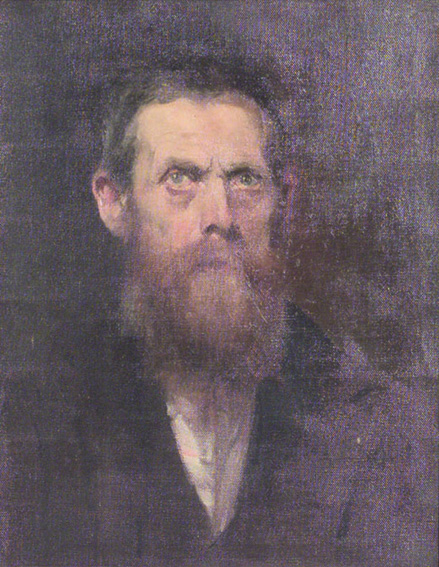
Eugene de Blaas, also known as Eugene von Blaas or Eugenio Blaas (24 July 1843 – 10 February 1931), was an Italian painter in the school known as Academic Classicism. == Life and career == He was born at Albano, near Rome, to a Tyrolean father and...
Eugen von Blaas firmly established himself within the school of Academic Classicism, an artistic movement characterized by its adherence to traditional techniques, idealized forms, and narrative clarity. However, to categorize him solely as a classicist would be a disservice to the nuanced beauty that permeates his oeuvre. While he undoubtedly possessed the technical prowess expected of artists trained in this tradition – precise draftsmanship, meticulous attention to detail, and a mastery of light and shadow – Von Blaas infused his work with a distinctly Romantic spirit.
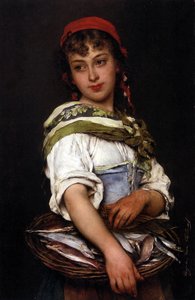
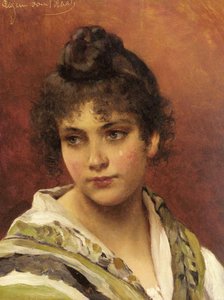
His paintings weren’t simply recreations of reality; they were interpretations, imbued with a sense of nostalgia, sentimentality, and an almost palpable warmth. He excelled at capturing fleeting moments—a shared glance, a quiet laugh, the gentle play of sunlight on water—elevating everyday scenes to something truly special. This ability to imbue ordinary life with extraordinary beauty set him apart from his contemporaries and cemented his reputation as a favorite portraitist among Venice’s aristocratic circles.
Venetian Society on Canvas: Recurring Themes in Von Blaas's Oeuvre
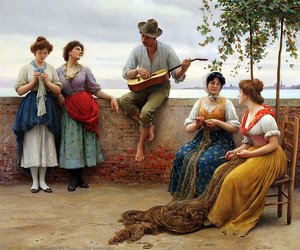
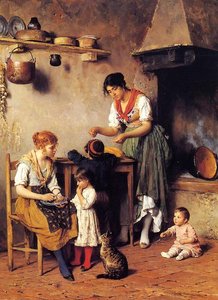
A defining characteristic of Eugen von Blaas’s work is its consistent focus on Venetian society. He didn’t depict grand historical events or mythological narratives; instead, he turned his attention to the lives of ordinary people—the laundresses gossiping by the canals, children playing in sun-drenched courtyards, families enjoying a quiet moment together. These weren't merely portraits; they were windows into a specific time and place, offering glimpses of Venetian life as it was lived.
Recurring themes emerge throughout his body of work: courtship rituals, domestic tranquility, and the simple pleasures of rural existence. Paintings like “The Milkmaid” exemplify this focus, showcasing not just a scene of daily labor but also a sense of dignity and grace in the subject’s posture and expression. Similarly, works depicting families gathering shells or engaging in other leisurely activities highlight his fascination with human connection and the beauty found in everyday moments. He often portrayed scenes within sacristies or campillos, intimate spaces that allowed him to explore themes of faith, community, and social interaction.
Technique and Materials: Bringing 19th-Century Life to Vivid Detail
Von Blaas’s mastery wasn't solely rooted in his subject matter; it was equally dependent on his exceptional technical skill. He worked primarily with oil paints on canvas, employing a layering technique that allowed him to create depth, texture, and luminosity. His brushstrokes, while visible upon close inspection, were often blended seamlessly to achieve a smooth, polished finish. This meticulous approach contributed to the overall sense of realism in his paintings.
He possessed an exceptional eye for color, utilizing a muted palette that evoked a sense of warmth and nostalgia. He wasn’t interested in bold, dramatic contrasts; instead, he favored subtle gradations and harmonious blends that created a soft, inviting atmosphere. His ability to capture the play of light on water, fabric, and skin was particularly noteworthy, lending his paintings an almost ethereal quality. The use of impasto—the thick application of paint—added texture and dimension, further enhancing the sense of realism.
Von Blaas’s Legacy & Influence: From Venice to International Recognition
Throughout his career, Eugen von Blaas enjoyed considerable success, exhibiting his work at prestigious venues such as the Royal Academy in London and the Walker Art Gallery in Liverpool. His paintings were highly sought after by collectors across Europe, particularly among those who appreciated his romantic sensibility and meticulous technique. While he remained deeply rooted in Venetian culture, his influence extended far beyond the confines of Italy.
His work resonated with a growing audience eager for depictions of beauty, tranquility, and human connection—themes that continue to captivate viewers today. Though not as widely celebrated as some of his contemporaries, Von Blaas’s legacy endures through the enduring appeal of his paintings, which offer a poignant glimpse into a bygone era. His student, Marie Wunsch, continued his tradition, further solidifying his impact on the artistic landscape.
Exploring Key Works: A Closer Look at Masterpieces by Eugen von Blaas
Eugene de Blaas lived in the XIX – XX cent., a remarkable figure of Italian-Austrian Academic Art. Find more works of this artist at Wikiart.org – best ...
To truly appreciate Von Blaas’s artistry, one must delve into specific examples of his work. “Portrait of a Boy,” for instance, showcases his ability to capture youthful innocence and quiet dignity. The warm tones and meticulous detail create a sense of intimacy, drawing the viewer into the subject's world. Similarly, “Gathering Shells” exemplifies his fascination with rural life and human connection, depicting a scene of simple pleasure and familial warmth.
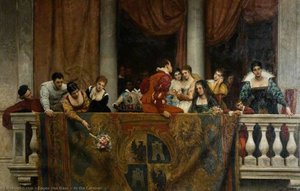
“The Milkmaid,” perhaps one of his most iconic works, transcends mere representation; it’s a celebration of labor, dignity, and the beauty found in everyday existence. These paintings, along with others like “On the Balcony” and “Venetian Masquerade”, demonstrate Von Blaas's versatility and mastery of technique. They are not simply historical artifacts but enduring testaments to his artistic vision—a vision that continues to inspire and captivate audiences worldwide.
At ArtsDot, we offer meticulously crafted reproductions of Eugen von Blaas’s masterpieces, allowing you to bring the beauty and sentiment of 19th-century Venice into your own home. Explore our collection today and discover the timeless appeal of this remarkable artist.