

The Silent Language: An Introduction to Visual Storytelling
--- title: Symbolism - The Metropolitan Museum of Art author: Nicole Myers url: https://www.metmuseum.org/essays/symbolism hostname: metmuseum.org description: Symbolist painters believed that art should reflect an emotion or idea rather than represe...
To gaze upon a masterpiece is to enter into a silent dialogue with the artist, a conversation structured not by words, but by the deliberate arrangement of form, light, and space. For many of us, encountering a great work of art feels like stumbling upon a beautiful secret; there is an undeniable emotional resonance, yet the true depth of the message often remains just out of reach. This feeling of wonder is the beginning of a journey into visual storytelling. Art has always been about more than simply what is depicted; it is profoundly concerned with how it is depicted. Whether we are looking at a serene Renaissance landscape or a dramatic Baroque portrait, the artist is using a specialized vocabulary to communicate ideas that transcend time and language.
This visual language relies on the concept of suggestion rather than explicit narration. As the great Symbolist poets once believed, to name an object is to suppress much of the enjoyment found in its presence; it is the suggestion of meaning that captures the heart. When we learn to read these subtle cues, a painting transforms from a mere decorative object into a living narrative. We begin to see that every brushstroke and every placement of a figure serves a larger purpose, guiding our eyes through a carefully choreographed journey of discovery that speaks directly to our emotions and intellect.
Geometry of the Soul: Decoding Compositional Structures and Balance
 Mastering Composition: A Guide to the Rule of Thirds, Golden Ratio, and Diagonal Secrets in Art History
The Architecture of Vision: Understanding Compositional Foundations To gaze upon a masterpiece is to enter into a silent dialogue with the artist, a conversation structured not by words, but by the deliberate arrangement of form, light, and space. Fo...
Beneath the surface beauty of a classical painting lies an invisible scaffolding known as composition. This is the architecture of vision, providing the structural intent that supports the emotional weight of a canvas. In the Renaissance era, this was achieved through a pursuit of mathematical proportion and harmony. Artists sought to emulate the ordered rationality of the classical world, employing geometric structures like the Golden Ratio to achieve a sense of divine equilibrium. When you observe a work from this period, you might notice a profound sense of stability; this is often due to figures being placed within balanced, triangular groupings that mirror classical architectural principles.
Consider, for instance, the masterful arrangement in Anthony van Dyck’s portrait of Lord Strange and his family. The composition utilizes a classical triangle, with the patriarch at the apex, creating a sense of hierarchical order and familial strength. This structural choice is not merely aesthetic; it directs the viewer's gaze in a rhythmic pulse, moving from the commanding presence of the father to the grace of the mother, and finally to the innocence of the child. Even more modern techniques, such as the Rule of Thirds, serve to avoid static symmetry, creating an organic sense of movement that invites the viewer to contemplate the subject's psychological depth. By understanding these compositional foundations, we can begin to feel the tension between presence and absence, learning how artists use space to create balance or drama.
Hidden Emblems: A Guide to Identifying Iconography and Symbolic Objects
 James Stanley, Lord Strange, Later Seventh Earl of Derby, with His Wife, Charlotte, and Their Daughter
James Stanley, Lord Strange, Later Seventh Earl of Derby, with His Wife, Charlotte, and Their Daughter – A Portrait Steeped in Symbolism This magnificent portrait by Anthony van Dyck, completed around 1636, transcends mere representation; it’s a mast...
Once we understand the structure, we can begin to investigate the characters and objects within the frame. This is where we enter the realm of iconography—the study of subject matter and its deeper meanings. In many historical periods, particularly in Northern Renaissance works like Albrecht Dürer’s The Austrian Saints, every element carries a symbolic resonance. A single flower, a specific garment, or even a particular tool is rarely accidental; they are emblems of piety, authority, or mortality. To decode these symbols is to unlock the true intent of the creator.
In portraiture, objects often serve as extensions of the sitter's identity and status. A sword might represent martial prowess and nobility, while a bouquet of flowers held by a lady can act as an emblem of purity, femininity, or even the fleeting nature of life. In religious iconography, the language becomes even more profound. The works of masters like Andrei Rublev or Theophanes the Greek utilize specific colors and liturgical symbols to transform icons into portals to the divine. By learning to identify these recurring motifs—the way a certain shade of blue might signify heaven, or how a skull serves as a memento mori—we gain the tools to interpret the complex social and religious narratives woven into the fabric of the artwork.
Light, Shadow, and Emotion: How Chiaroscuro Shapes Narrative Depth
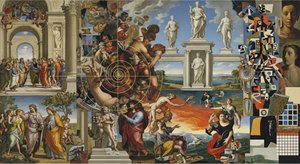 The Eloquence of Arrangement: Compositional Strategies in Western Art from the Renaissance to Modernism
Introduction: The Foundations of Visual Harmony Wikipedia: Renaissance art Renaissance art (1350 – 1620) is the painting, sculpture, and decorative arts of the period of European history known as the Renaissance, which emerged as a distinct style in ...
If composition is the skeleton of a painting, then light and shadow are its breath and soul. One of the most powerful tools in an artist's repertoire is chiaroscuro—the dramatic interplay between light and dark. This technique does far more than create the illusion of three-dimensional volume; it sculpts emotion. By casting certain areas into deep shadow while illuminating others with a piercing glow, artists can direct our attention to the most critical narrative elements, creating a sense of theatricality and intense psychological depth.
<In the Baroque era, this use of light became increasingly dramatic, used to evoke awe, fear, or spiritual ecstasy. The shadows do not merely represent darkness; they represent the unknown, the mystery, and the weight of human experience. When we see a face emerging from a dark background, illuminated by a single, soft light source, we are drawn into an intimate encounter with the subject's inner world. This manipulation of light allows the artist to create texture and luminosity, making fabrics appear velvety and skin appear radiant, ultimately guiding our emotional response through the sheer power of visual contrast.
Beyond the Surface: Connecting Historical Symbolism to Modern Interior Design
Understanding the secrets of the Old Masters does not relegate us to the past; rather, it enriches our present. In the modern home, art serves as a cornerstone of personal identity and atmosphere. When we choose a piece for our walls, we are not just selecting a color or a size; we are choosing a mood and a story. The principles of classical composition—balance, focal points, and rhythm—are just as vital when arranging a gallery wall in a contemporary living room as they were in a Renaissance chapel.
Integrating fine art into your interior design allows you to create a space that is both aesthetically pleasing and deeply meaningful. Whether it is a large-scale multi-panel set that adds architectural drama to a wide hallway, or a custom-commissioned portrait that celebrates a family milestone, the goal is to foster a connection between the inhabitant and the artwork. By appreciating the hidden layers of symbolism and the brilliance of historical techniques, we can curate our homes with confidence, surrounding ourselves with pieces that do more than decorate—they inspire, they provoke thought, and they transform a house into a sanctuary of culture and beauty.
At ArtsDot.com, we believe that fine art should be accessible to everyone. From breathtaking handmade oil reproductions that capture the tactile texture of the masters to custom services that turn your personal photos into timeless masterpieces, our mission is to help you discover and cherish the profound beauty of art history in your own home.