The Aesthetic Catalyst: Transforming Dining Interiors into Immersive Brand Experiences
 Instagrammable Interiors: Using Strategic Art to Drive Organic Social Media Marketing
The Aesthetic Catalyst: Transforming Hotel Interiors into Immersive Brand Experiences Experiential travel Experiential travel, also known as immersion travel, is a form of tourism in which people focus on experiencing a country, city or particular pl...
In the contemporary landscape of hospitality, the traditional definition of a dining space has undergone a profound metamorphosis. The modern diner is no longer a passive recipient of standardized comfort; they are active curators of their own lives, seeking environments that resonate with personal narratives and aesthetic values. When a guest enters a restaurant, they are searching for more than just culinary excellence; they are looking for an atmosphere that feels significant, a sense of place that transcends the generic. This shift toward experiential dining demands that designers move beyond functional elegance to create spaces that act as emotional catalysts. The integration of art serves as the primary engine for this transformation, turning a temporary meal into a lasting memory. By moving away from mere decoration and toward intentional curation, a restaurant can synthesize its architecture, service standards, and culinary offerings into a singular, cohesive identity.
The power of this transformation lies in the ability to bridge the gap between physical surroundings and emotional resonance. Whether through the textured depth of an impasto oil reproduction or the sweeping grandeur of a ceiling fresco, art provides the soul of the space. When design successfully achieves this, the restaurant ceases to be a mere building and becomes a destination in its own right. This is particularly vital in an age where diners seek immersion—a form of engagement that connects them meaningfully with the history, culture, and environment of the establishment.
Strategic Curation: Leveraging High-Impact Art for Organic Social Media Visibility
 Social media marketing
Social media marketing is the use of social media platforms and websites to promote a product or service. Although the terms e-marketing and digital marketing are still dominant in academia, social media marketing is becoming more popular for practit...
In the digital era, the visual appeal of a restaurant serves as its most potent marketing tool. We have entered an age where dining is a performance, and the interior serves as the stage. The rise of "Instagrammable" interiors is not merely a fleeting trend but a strategic opportunity to drive organic social media marketing. When a space features striking, high-impact art, it encourages guests to become brand ambassadors. Every photograph shared on Instagram or TikTok acts as earned media, providing authentic, user-generated content that reaches far beyond the immediate physical location.
Strategic curation involves selecting pieces that act as visual anchors—elements so captivating that they demand to be captured and shared. This is not simply about filling a void on a wall with a pleasant image; it is about utilizing visual media to establish a dialogue with the visitor. By investing in art that offers high visual interest, such as the rich textures of hand-painted oils or large-scale, eye-catching murals, restaurant owners can trigger a cycle of organic visibility. This visibility, in turn, feeds into broader digital marketing efforts, creating a buzz that attracts new patrons and enhances the brand's digital footprint through the sheer power of aesthetic impact.
From Canvas to Cuisine: Using Visual Storytelling to Define Your Restaurant's Identity
A restaurant’s interior is a narrative framework that shapes how guests perceive every bite of food. For the ambitious owner, the establishment serves as a stage upon which culinary stories are told. A well-curated environment does more than please the eye; it fosters connection and builds a lasting memory that lingers long after the final course has been cleared. This is where the concept of "tasting the visuals" becomes essential. The visual intensity of the art should align perfectly with the culinary flavor profile of the menu. A bold, vibrant collection of modern abstracts might complement a contemporary fusion kitchen, while more classical, light-drenched landscapes could elevate a traditional fine-dining experience.
This alignment creates a sense of authenticity that is difficult to achieve through food alone. When the textures of the walls, the weight of the furniture, and the energy of the art all harmonize with the culinary offerings, it creates a holistic sensory journey. This approach ensures that the restaurant is not just a place to eat, but a destination that resonates on an emotional level. By using art as a tool for visual storytelling, owners can communicate their values, cuisine, and overall ethos instantly, often communicating what words alone cannot.
The Psychology of Space: How Texture and Color Influence Guest Perception and Value
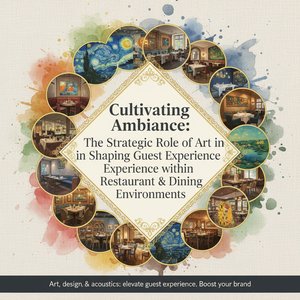 Cultivating Ambiance: The Strategic Role of Art in Shaping Guest Experience within Restaurant & Dining Environments
The Psychology of Restaurant Design: Beyond Aesthetics Wikipedia: Environmental psychology Environmental psychology is a branch of psychology that explores the relationship between humans and the external world. It examines the way in which the natur...
The psychology of restaurant design extends far beyond aesthetics into the realm of environmental psychology. The orchestration of light, color, texture, and spatial arrangement profoundly influences our perception of taste, mood, and overall experience. We do not simply eat in a space; we respond to it on a visceral level, shaped by evolved instincts and learned associations. For instance, the use of
impasto techniques—where paint is applied thickly enough that brushstrokes are visible—adds a tactile dimension to a room. This physical texture can influence the perceived "weight" and richness of an atmosphere, much like how a heavy sauce influences the perception of a dish.
Color palettes also play a critical role in shaping guest behavior and perceived value. The strategic use of color can stimulate appetite, create intimacy, or evoke feelings of luxury and prestige. When these visual elements are executed with precision, they dictate the success of the environment by influencing how guests perceive the quality of the service and the food. A cohesive aesthetic that considers the interplay of light and texture ensures that the space feels thoughtfully curated, which in turn elevates the perceived value of the entire dining experience.
Scaling the Vision: Large-Format Murals, Multi-Panel Sets, and Architectural Integration
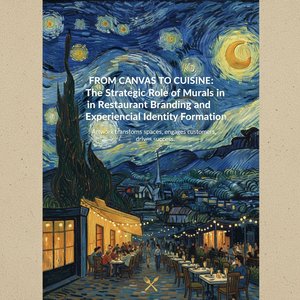 From Canvas to Cuisine: The Strategic Role of Murals in Restaurant Branding and Experiential Identity Formation
The Mural Renaissance: Why Restaurants Are Investing in Experiential Art Beyond Aesthetic Appeal: Strategic Art Collections for Modern Hospitality Brand Narratives Discover how strategic art curation elevates hospitality brands & enhances guest exper...
For large-scale hospitality projects, such as hotels or expansive restaurant halls, the challenge lies in filling significant architectural voids without losing the intimacy of the space. This is where architectural art becomes a vital tool for designers and procurement managers. Large-format murals and ceiling frescoes can transform entire rooms, recreating historical grandeur like the Sistine Chapel on a modern scale. These works, painted on massive canvas rolls, allow professionals to integrate art directly into the architecture, much like high-end wallpaper, creating an immersive environment that feels permanent and integrated.
Furthermore, the "multi-panel" trend offers a sophisticated way to address wide walls or long staircases. By splitting a single masterpiece across three, four, or five panels, designers can create a contemporary, modular look that maintains visual flow while breaking up the scale of a large room. This technique ensures that even in massive, high-volume spaces, the art remains a cohesive part of the design narrative rather than an overwhelming presence. Whether through custom-engineered canvas wraps or meticulously planned group sets, scaling art allows for a seamless transition between the physical structure and the artistic vision.
Operational Excellence: Efficient Art Procurement and Logistics for Hospitality Professionals
 A Procurator of Saint Mark.s d -
Witness Tintoretto's masterful ‘A Procurator of Saint Mark’s’! This Venetian portrait captures civic power & wealth with dramatic chiaroscuro, showcasing the artist's dynamic style and a key figure in Venice's Republic.
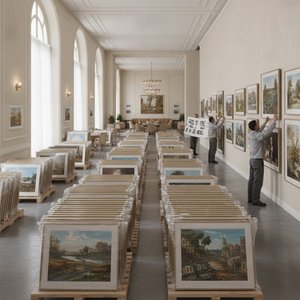
For the hospitality professional, the acquisition of art must be as efficient as it is impactful. Managing large-scale decor projects requires a reliable supply chain that understands the pressures of time, budget, and volume. Successful procurement involves more than just selecting beautiful pieces; it requires a partner who can handle the complexities of international logistics, customs, and large-order management. In an industry where consistency is key, having access to a deep catalog of repeatable, standard-sized classics—alongside the ability to commission bespoke reproductions—is essential for maintaining brand standards across multiple locations.
True operational excellence in art procurement means navigating the challenges of global shipping, VAT documentation, and custom sizing with ease. For procurement managers overseeing hotel chains or restaurant groups, the ability to receive tax-compliant documentation, handle bulk orders, and rely on fast, tracked delivery via partners like DHL or FedEx is non-negotiable. When art procurement is treated as a streamlined, professional process—complete with digital mockups for approval and clear timelines—it ceases to be a logistical burden and becomes a strategic advantage, allowing owners to focus on their core mission: delivering exceptional culinary experiences.