

The Radiant Dusk: Redefining the Medieval Aesthetic
 The Magic of International Gothic: Elegance, Gold, and Courtly Splendor in Medieval Art
The Radiant Dusk: Defining the International Gothic Aesthetic The Radiant Dusk of Medieval Vision: Exploring Late Gothic Art's Synthesis of Faith, Form & Emotionality (c. 1300-1500) Introduction: The Twilight of Gothic – A New Aesthetic Sensibility T...
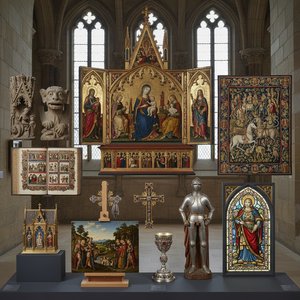
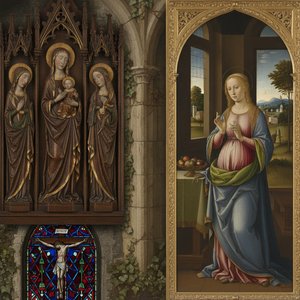
To gaze upon the works of the Late Gothic period is to witness the radiant dusk of a medieval vision, a profound moment in time where the heavy, monumental shadows of the Romanesque era began to yield to a newfound sense of fluidity and light. Spanning roughly from 1300 to 1500, this era represents a delicate equilibrium—a transition in the European consciousness that was far more than a mere change in technique. It was a period where the soaring spiritual ambitions of earlier centuries began to subtly embrace a more humanistic and emotionally nuanced aesthetic. As the sun began to set on the Middle Ages, the rigid, often intimidating iconography that once dominated the medieval mind gave way to an art that embraced elegance, intricate detail, and a soft, lyrical beauty.
This shift reflected a fundamental change in how humanity perceived both the divine and the earthly. The heavens were no longer depicted merely as a distant, terrifying realm of judgment, but as a space capable of being rendered with breathtaking luminosity and tactile tenderness. This was not a sudden rupture with the past, but rather a refined evolution where the heavy structures of previous generations were replaced by a fascination with surface ornamentation and flowing drapery. It was an era where the spiritual could be expressed through the exquisite, setting a stage for the monumental shifts in perspective and naturalism that would soon define the Renaissance.
Gold, Grace, and Glamour: The Visual Language of Courtly Splendor
 International Gothic Style: The Elegant Dawn of European Art History and the Transition to Renaissance Naturalism
The Radiant Dusk: Defining the International Gothic Aesthetic The Magic of International Gothic: Elegance, Gold, and Courtly Splendor in Medieval Art The Radiant Dusk: Defining the International Gothic Aesthetic The Radiant Dusk of Medieval Vision: E...
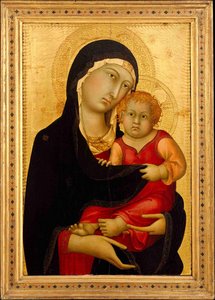
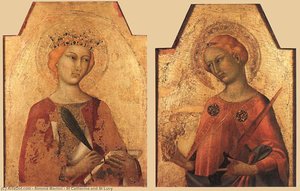
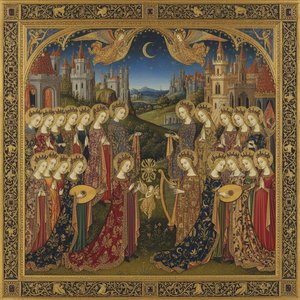
The International Gothic aesthetic is defined by its unapologetic embrace of luxury—a visual language of gold, grace, and courtly splendor. This was an art form designed to dazzle the eyes of emperors, cardinals, and the emerging mercantile classes alike. The use of luminous coloration and precious materials served a dual purpose: to honor the divine through material wealth and to assert the prestige of the patron. In works like Simone Martini’s St. Martin is Knighted, we see a masterful use of deep reds and golds that convey both solemnity and grandeur, utilizing glazing techniques to create an ethereal glow that seems to emanate from within the panel itself.
This period mastered the art of the "soft style," where figures were characterized by graceful contours rather than harsh, dramatic lines. The meticulous attention to detail—the way light catches a fold of silk or the intricate pattern on a liturgical garment—created a sense of courtly refinement. This was an era of high-impact visual identity, where the sheer decorative power of the artwork was as important as its religious narrative. By blending Byzantine grandeur with Northern European realism, artists created a tapestry of texture and light that felt both otherworldly and intensely present.
A Borderless Vision: How Trade and Travel Created a Global Style
 International Gothic
International Gothic is a period of Gothic art that began in Burgundy, France, and northern Italy in the late 14th and early 15th century. It then spread very widely across Western Europe, hence the name for the period, which was introduced by the Fr...
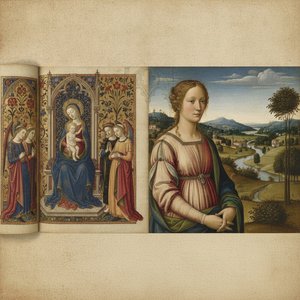
Despite the political fragmentation of Europe, the International Gothic period was remarkably unified, functioning much like a modern global movement. The name itself, introduced by art historian Louis Courajod, speaks to this widespread consensus among artists and patrons across borders. This stylistic cohesion was driven by the spread of ideas and portable works, such as illuminated manuscripts, which traveled along major trade routes and pilgrimage paths like the Via Francigena. Royal marriages, such as that between Richard II of England and Anne of a Bohemia, acted as cultural conduits, blending the artistic currents of France, Burgundy, Flanders, and Italy.
This era saw a convergence of cultures where the refined elegance of French manuscript illumination met the vibrant traditions of Sienese painting. The movement was fueled by a network of patronage that stretched from the Imperial court in Prague to the Duchy of Burgundy. Because ideas were no longer confined to local workshops, we see a reduction in national variation and the emergence of a shared European visual vocabulary. This interconnectedness allowed for a sophisticated exchange of techniques, such as the use of tempera glazes and the development of intricate, decorative patterns that could be recognized from the Rhineland to the Mediterranean.
Masters of the Line: Simone Martini and the Architecture of Elegance
 Simone Martini
A Sienese Master of Elegance and Grace Simone Martini, born around 1284 in the heart of Siena, Italy, stands as a pivotal figure in the transition from medieval to Renaissance art. He wasn’t merely a painter; he was an architect of elegance, a master...
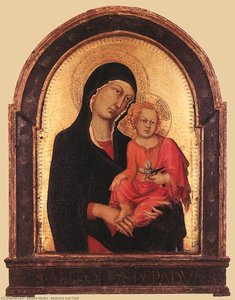
At the heart of this movement stood the Sienese masters, most notably Simone Martini, an architect of elegance who redefined the boundaries of medieval painting. Unlike his contemporary Giotto, who leaned toward more monumental and heavy forms in Florence, Martini prioritized graceful lines and a delicate sensibility. His work is a masterclass in the synthesis of influences; he took the flattened perspective and luminous color of Byzantine tradition and infused it with the meticulous detail and expressive drapery characteristic of Northern Gothic art. His brushwork achieved a remarkable textural subtlety, capturing the nuances of fabric and skin with an astonishing, almost modern, realism.
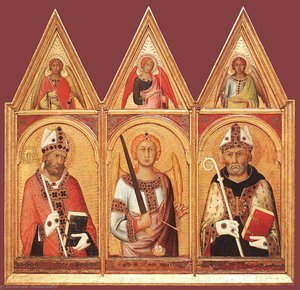
Martini’s influence extended far beyond Siena, as his workshop collaborated on ambitious projects that showcased Sienese prowess throughout Europe. Whether through the profound meditation on faith found in the Orsini Polyptych or the dynastic ambition displayed in his altarpieces, Martini used line and color to create an atmosphere of serene contemplation. His ability to balance the spiritual weight of his subjects with a courtly refinement made him a pivotal figure in the transition from the medieval to the Renaissance spirit, proving that true impact lies in the precision of the stroke and the grace of the contour.
From Devotion to Drama: The Emotional Evolution of Late Gothic Art
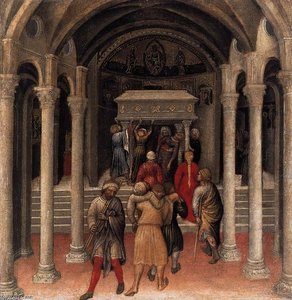 Quaratesi Polyptych: Pilgrims at the Tomb of St Nicholas of Bari
Gentile da Fabriano's 'Pilgrims at the Tomb of St Nicholas of Bari': A Window into Medieval Devotion This exquisite polyptych, measuring 36 x 35 cm and dating from 1425, offers a poignant glimpse into the religious fervor of the early 15th century. E...
As the period progressed toward the 15th century, the International Gothic style began to weave deeper threads of emotionality into its decorative fabric. While the earlier parts of the movement focused on courtly beauty, the later works embraced a more palpable sense of human drama and psychological complexity. We see this in the way artists depicted the suffering of saints or the sorrow of the Virgin; the figures were no longer merely static icons but participants in a narrative that demanded empathy from the viewer. The Quaratesi Polyptych by Gentile da Fabriance, for instance, offers a poignant glimpse into religious fervor through its meticulous detail and sense of reverence.
This evolution was a precursor to the intense naturalism of the Renaissance. The movement began to explore the tension between the divine and the human, using subtle gestures and facial expressions to convey profound grief, compassion, or awe. Even in the more static, hieratic approach seen in the Bohemian Gothic works of Master Theodoric, there is an underlying spiritual depth that moves beyond mere decoration. This era taught us that art could be both a beautiful object of prestige and a powerful vessel for human emotion, bridging the gap between the celestial and the terrestrial.
Modern Remix: Bringing International Gothic Energy into Contemporary Spaces
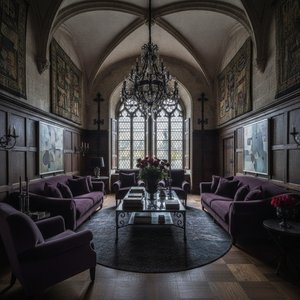 Gothic Glamour Reimagined: How Late Medieval Aesthetics are Driving the Next Big Interior Design Trend
The New Gothic: Why Medieval Drama is the Ultimate Mood for Modern Interiors Late Gothic - Smarthistory Late Gothic Period that saw the impact of the Black Death but also continued development of Humanism, the growth of cities, education, and economi...
While centuries separate us from the courts of Charles IV or the workshops of Siena, the visual energy of the International Gothic period remains strikingly relevant to the modern aesthetic. Today, we see a resurgence of interest in the "drama and depth" of this era—a move away from sterile minimalism toward something much more visceral and textured. The bold use of gold, the intricate patterns, and the high-contrast lighting of the Late Gothic are perfectly suited for contemporary interiors that crave a sense of presence and history.
At ArtsDot.com, we celebrate this intersection of historical depth and modern impact. Just as the International Gothic masters "remixed" Byzantine and Northern styles, we empower our clients to reimagine art history through custom commissions and digital transformations. Whether it is a hand-painted oil reproduction that captures the luminous glazes of Martini or an AI-driven transformation of a personal photo into a period-shifted masterpiece, the goal remains the same: to create art that commands attention. We invite you to explore our collections and bring the breathtaking splendor of the past into your modern world.