




The Silent Partner: Understanding the Frame's Role in Visual Narrative
 The Frame as Argument: An Expert Guide to Selecting the Perfect Frame for Your Masterpiece
The Silent Partner: Understanding the Frame's Role in Visual Narrative The Frame as Argument: An Expert Guide to Selecting the Perfect Frame to Elevate Your Art The Silent Partner: Understanding the Frame's Role in Visual Narrative The Frame as Argum...
To the casual observer, a frame may appear as nothing more than a functional boundary, a wooden perimeter designed to separate the vibrant world of the canvas from the static reality of the wall. Yet, for those who truly inhabit the space of visual culture, we understand that the frame is far more than a mere border; it is a silent partner in the profound dialogue between the artwork and the observer. It acts as a curated gateway, a threshold that prepares the mind for the emotional journey ahead. When contemplating a masterpiece, our perception is immediately shaped by this structural introduction. The frame establishes the initial context, setting the stage upon which the artist’s vision performs.
Without it, an image might remain a mere depiction; with it, the work becomes a curated object of contemplation. This relationship is deeply psychological, acting as an act of intentionality that elevates a piece of imagery from a simple arrangement of pigment and oil into a window through which we glimpse another era, another light, and another soul. It defines the limit where the painted world ends and our own reality begins, focusing our attention and directing the gaze inward. At ArtsDot.com, we view the frame as the final brushstroke, an essential element that completes or, if poorly chosen, ruins a painting.
Historical Grandeur: From Renaissance Gilding to Baroque Theatricality
 Beyond the Canvas: Framing as a Catalyst for Value & Aesthetic Impact in Luxury Art Reproduction
The Historical Significance of Framing: Beyond Protection For centuries, the frame has been far more than a mere boundary for a work of art; it’s an integral component of its narrative, a silent partner in the dialogue between artist and viewer. Whil...
The history of framing is a chronicle of power, prestige, and the evolution of taste. For centuries, the frame has been far more than a mere boundary; it has been an integral component of a work's narrative. During the Renaissance, frames were often commissioned alongside portraits by wealthy patrons as explicit statements of affluence. These elaborate gilded carvings, featuring intricate gold leaf and precious stones, were meticulously crafted to mirror the opulence depicted within the canvas and reinforce the sitter's social standing. The very materials used—gold, fine wood, and ornate ornament—spoke volumes about the value placed upon both the subject and the art that immortalized them.
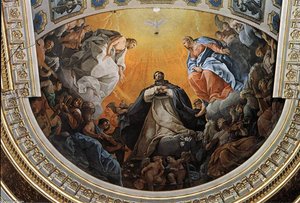
As we transitioned into the Baroque era, the frame’s role evolved toward the theatrical. This period embraced contrast, movement, and exuberant drama. Frames became increasingly ornate, designed to amplify the emotional impact of works like those by Luca Giordano or the sweeping compositions of the late Baroque. The interplay between light and shadow within a heavily carved, gilded frame mirrors the chiaroscuro technique found on the canvas itself. We see this legacy in the way historical masters used architecture and ornament to extend the artwork’s presence beyond its physical dimensions, creating a sense of monumental scale that commands the room with regal authority.
Architectural Harmony: Selecting Frames for Modern and Traditional Interiors
 Framing Perception: A Comprehensive Guide to Selecting Frames that Enhance Interior Styles and Artwork Value
The Art of Framing: Beyond Protection – Elevating Interiors & Artwork Value Wikipedia: Interior design Interior design is the art and science of enhancing the interior of a building to achieve a healthier and more aesthetically pleasing environment f...
Selecting the perfect frame requires a keen eye for how art interacts with its environment. The spectrum of frame styles is as diverse as the art it encompasses, and the choice should be a deliberate act of interior curation. Traditional frames, often crafted from richly stained woods like oak or mahogany, evoke a sense of timeless elegance. These are the ideal companions for oil paintings with classical themes, portraits steeped in history, and landscapes imbued with romanticism. Their ornate detailing—acanthus leaves, egg-and-dart molding, and gilded accents—speaks to a bygone era, adding gravitas and sophistication to any stately room.
Conversely, modern interiors often demand a more minimalist approach. Inspired by visionaries like Robert Kulicke, who revolutionized the industry with his elegant bands of polished aluminum, modern frames prioritize clean lines and understated elegance. This style provides a sanctuary for contemporary works or even allows a classical reproduction to breathe within a sleek, mid-century setting. For those seeking a more avant-garde look, we offer the ability to "remix" history through multi-panel layouts, splitting a single image across three, four, or five panels to create a cohesive, modern architectural statement that flows seamlessly across wide walls or staircases.
The Science of Preservation: Protecting Your Investment through Material Excellence
Beyond aesthetics, the primary duty of a frame is the stewardship of the artwork. For any serious collector, framing is an act of preservation. The earliest frames were born of necessity, protecting fragile surfaces from handling and environmental damage. Today, this responsibility remains vital. To protect your investment, one must consider the chemistry of art. At ArtsDot.com, our hand-painted reproductions are crafted using flexible gesso to prevent cracking and specific oils, such as saffoar for whites, to prevent yellowing over time. Every painting is finished with a coat of Damar varnish, protecting the surface from dust, moisture, and atmospheric pollutants.
A professional frame provides a structural shield. Our full-service framing shop utilizes solid wood frames—in gold leaf, espresso, or natural finishes—with stretcher bars specifically braced to prevent warping over time. For those displaying prints, we recommend using acid-free matting to create an essential air gap between the print and the glass, preventing moisture buildup that can degrade pigments. Whether it is a bespoke oil painting or a museum-quality Giclée, the integrity of the materials determines whether the artwork will remain vibrant for decades or succumb to the elements.
Customizing the Canvas: Bespoke Framing Solutions for Hand-Painted Masterpieces
The true magic of art lies in the boundary between the artwork and its environment. This is where bespoke customization allows a collector to transcend the original. When commissioning a hand-painted oil reproduction, the framing process becomes part of a larger creative journey. We offer unique services such as MirrorWrap or ExtendedWrap, where the artist continues the painting around the edges of the canvas for a seamless, frameless look that emphasizes texture and depth. This is particularly effective for our "Impasto" style commissions, where the physical thickness of the paint demands a frame that does not overshadow the tactile beauty of the brushstrokes.
For those looking to transform personal memories into historical treasures, our customization extends to the very soul of the piece. You may request a "Period Shift," transforming a modern photograph into a 17th-century masterpiece in the style of Rembrandt, complete with a period-appropriate frame. Our Project Coordinators manage every detail, from digital mockups that allow you to see the composition before painting begins, to the final selection of a gold-leafed frame that complements your specific color palette. At ArtsDot.com, we do not just provide reproductions; we provide the tools to curate your own personal museum, ensuring every piece is a testament to unparalleled craftsmanship and historical reverence.