



The Gastronomic Gallery: Setting the Stage for Sensory Excellence
 Indonesia Gastronomy Network
A Sensory Odyssey: The Living Canvas of Indonesian Gastronomy In the pulsating heart of Jakarta, where the echoes of ancient Sunda Kelapa meet the frenetic energy of a modern metropolis, lies an institution that redefines the boundaries of the museum...
To dine is to engage in a ritual that transcends mere sustenance; it is an act of communion, a sensory voyage where taste, aroma, and atmosphere converge. For the discerning restaurateur, the dining room serves as more than a functional space—it is a curated stage where every element, from the weight of the silver to the texture of the walls, contributes to a cohesive narrative of luxury. When we introduce fine art into this intimate setting, we are not merely decorating; we are composing a symphony of experiences. A well-chosen masterpiece acts as a silent conductor, guiding the mood of the room and inviting guests to linger within a world of profound beauty. The presence of historical canvas transforms a meal into an event, elevating the culinary journey by surrounding the palate with the luminous spirit of history and the evocative textures of light and shadow.
The true magic of a gastronomic gallery lies in its ability to stimulate the appetite through visual splendor. Just as a chef meticulously balances acidity, fat, and salt, an art curator must balance color, scale, and historical resonance. By integrating museum-quality works, a restaurant owner provides guests with a sanctuary of connection where time seems to slow down, allowing the conversation to flow as freely as the vintage wine. This intentional curation creates a sense of prestige and timelessness, ensuring that the memory of the meal is anchored by the enduring presence of the Old Masters.
Impressionism and the Appetite: Capturing Light and Movement at the Table
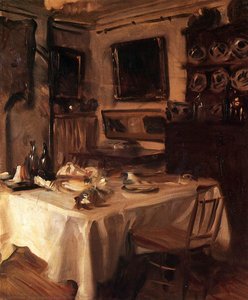 My Dining Room
A Window Into Parisian Elegance: Exploring Sargent’s “My Dining Room” John Singer Sargent's "My Dining Room," completed in 1885, isn’t merely a depiction of an interior; it’s a masterful distillation of Impressionistic ideals and a poignant reflectio...
There is a profound psychological link between the ephemeral beauty of Impressionism and the fleeting joys of a fine meal. The works of masters such as Claude Monet, Pierre-Auguste Renoir, and Camille Pissarro are defined by their desire to capture the sensory essence of life—the way sunlight dances across a garden or how a summer afternoon feels against the skin. In a dining environment, these paintings offer a visual language of vitality. Their broken brushstrokes and prismatic palettes celebrate the beauty of the everyday, mirroring the vibrant energy of a bustling, high-end bistro or the tranquil elegance of a fine-dining salon.
Consider the works of John Singer Sargent, particularly his 1885 masterpiece, My Dining Room. In this canvas, Sargent captures more than an interior; he distills the very essence of refined taste and the anticipation of an evening meal. Through his masterful use of light, one can almost feel the warmth of the diffused sunlight spilling across a polished table, illuminating the surfaces with a soft, inviting glow. Such paintings do not merely depict a scene; they convey how a space feels. For a restaurant, adopting this Impressionistic approach means providing a soulful backdrop that stimulates the senses and nurtional the appetite for beauty, reminding every guest to find wonder in the ephemeral moments shared around the table.
Architectural Grandeur: From Georgian Elegance to Modernist Geometry
 Dining room
 The Geometry of Modern Living: A Glimpse into Italian Design History To gaze upon this depiction of a dining room is not merely to observe furniture; it is to step directly into the optimistic, forward-thinking spirit of early 20th-century Italian de...
The architectural bones of a dining space dictate its social rhythm, and art serves as the essential ornamentation that completes this structural dialogue. In the grand tradition of 18th-century Britain, spaces like the Bath Assembly Rooms or the Pump Room exemplify an obsession with social refinement and classical proportion. Built from warm, honey-hued stone and adorned with Corinthian columns, these environments reflect Enlightenment ideals of symmetry and grace. To decorate such a space requires art that respects this architectural gravity—works that echo the grandeur of the Georgian era through meticulous detail and historical weight.
Conversely, the dawn of the 20th century introduced a new philosophy of design, where functionality met refined aesthetics. We see this in the optimistic spirit of Italian design history, such as the 1927 depictions of dining rooms by masters like Gio Ponti. Here, the focus shifts to the geometry of modern living, utilizing rich walnut woods and gleaming brass to create a sense of rational elegance. Whether one is leaning into the opulent, heavy textures of a 19th-century hall or the clean, geometric lines of modernism, the art must act as an extension of the architecture. It should anchor the room, providing a focal point that respects the structural integrity of the space while adding layers of historical depth.
Curating Atmosphere: Selecting Masterpieces for Social Connection and Intimacy
 henry room
The Quiet Observer of Victorian Faith In the heart of a rapidly industrializing Birmingham, where the soot of progress began to settle upon the cobblestones of England, Henry Room (1802–1850) emerged as a painter of profound spiritual and psychologic...
The dining room is the social heartbeat of any establishment, a stage for conversation and shared stories. When selecting art for this intimate environment, the objective is to find that perfect tension between visual impact and atmospheric comfort. For more private, intimate settings, one might look toward the quiet, psychological depth found in the works of Henry Room. His meticulous documentation of the Victorian soul offers a sense of permanence and moral character, providing a dignified countenance to a room designed for deep, meaningful connection.
For larger, more social spaces, the energy must be higher. One might imagine dinner parties framed by the electric vitality of 20th-century movements or anchored by the deep, soulful textures of a work that demands a second look between bites. The goal is to create a curated sanctuary where guests feel invited to slow down and linger over dessert. By choosing works that possess an enduring ability to stir the heart—be it through the rhythmic energy of Seurat’s pointillism or the emotional intensity of a large-scale abstract work—the restaurateur ensures that the atmosphere remains as memorable as the menu itself.
Beyond Decoration: Integrating Fine Art into Professional Restaurant Design
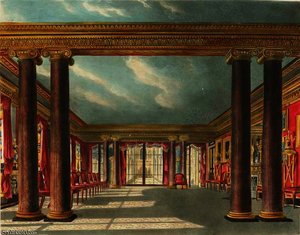 Carlton house, dining room
Admire Charles Wild’s opulent ‘Carlton House, Dining Room.’ A lavish 19th-century painting of a grand dining hall. Hand-painted reproduction available.
For the professional restaurateur, integrating fine art is a strategic design choice that requires an eye for both aesthetics and logistics. It is not enough to simply hang a print; true luxury is achieved through the integration of texture and materiality. This might involve utilizing large-format murals or even ceiling frescoes to recreate the breathtaking heights of historical chapels or palaces, transforming a standard dining room into a monumental experience. The use of multi-panel, or "multi-panel" layouts can also serve to break up wide walls or staircases, creating a cohesive, modern architectural look that flows seamlessly across the room.
Furthermore, the integration of art should consider the interplay of light and surface. Just as a chef considers the sheen of a reduction, a designer must consider how light hits a canvas. Hand-painted oil reproductions offer a depth of tonal range and visible brushstrokes that no digital print can replicate. The physical presence of impasto—the raised texture of paint—adds a tactile dimension to the room, catching the candlelight and adding a sense of lived-in reality. When art is treated as an architectural element rather than an afterthought, it becomes an inseparable part of the restaurant's identity.
The Legacy of the Canvas: Preserving History through Hand-Painted Reproductions
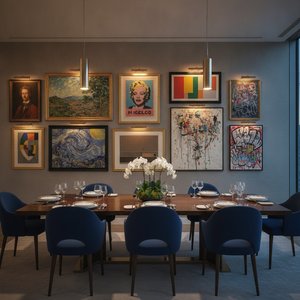 10 Iconic Masterpieces to Elevate Your Dining Room Decor
Introduction The dining room is more than a mere space for sustenance; it is the heart of the home, a sanctuary for conversation, and a stage for the most intimate of human connections. To adorn this setting with fine art is to elevate a simple meal ...
In an era dominated by the ephemeral and the digital, there is a profound value in the tangible. At ArtsDot.com, we believe that the legacy of the Old Masters should be accessible to those who wish to surround themselves with greatness. We specialize in high-quality, hand-painted oil reproductions that capture the soul of the world's most iconic masterpieces. Our process is one of academic excellence; our artists, holders of degrees from prestigious Fine Arts academies, work on 100% cotton canvas to ensure every brushstroke reflects the original's intent. We do not merely copy; we recreate the texture, the light, and the very emotion of the masters.
For the restaurant owner or the private collector, our service offers a way to "remix" history. Whether it is a custom commission that transforms a personal milestone into a Renaissance-style portrait, or a large-scale reproduction designed to anchor a grand dining hall, we provide a bridge between the past and the present. From our professional digital mockup service to our global logistics via DHL and FedEx, we ensure that bringing a piece of history into your space is as seamless as it is transformative. We invite you to explore our collection of canonical masterpieces and discover how the enduring beauty of the canvas can forever elevate your culinary experience.