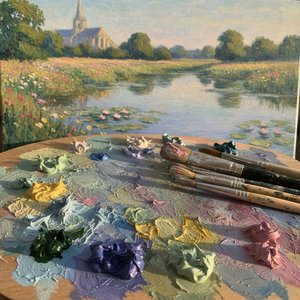


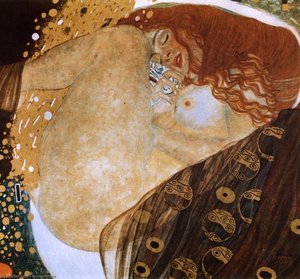
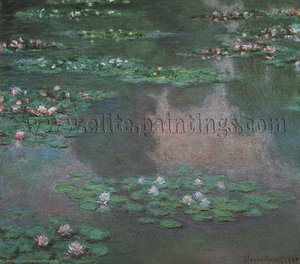

The Death of Disposable Decor: Escaping the Cycle of Fast Interiors
 Sustainable Luxury: Why Hand-Painted Art Beats Mass Decor for the Eco-Conscious Collector
The Death of Disposable Decor: Rejecting the Era of Fast Interiors Sustainable Soul: Why Hand-Painted Custom Art is the Ultimate Zero-Waste Decor Choice The Death of Disposable Decor: Moving Beyond Mass-Produced Prints Sustainable design Environmenta...
In our modern era, we find ourselves adrift in a sea of transient aesthetics, caught within the relentless tide of what many have termed "fast decor." It is a landscape defined by a rapid cycle of consumption, where mass-produced canvas prints and digital reproductions are discarded as quickly as seasonal trends fade from our social media feeds. This culture of disposability does more than merely clutter our physical environments; it strips our living spaces of their very soul, leaving behind interiors that feel sterile, ephemeral, and profoundly disconnected from the concept of a true home. We have become victims of a hollow convenience, inhabiting rooms filled with objects that possess no narrative, no weight, and no intention.
To inhabit such a space is to live within a state of constant replacement. When we settle for low-quality prints that fade under the gentle touch of sunlight or warp under the subtle shifts of humidity, we are participating in a linear model of consumption—a cradle-to-grave trajectory that inevitably ends in landfills and oceans. This cycle of waste is the antithesis of the refined, thoughtful life. True prestige no longer resides in the sheer volume of what one can acquire, but in the enduring quality of what one chooses to keep. By rejecting the temporary, we begin to move toward a more intentional way of living, where every object is selected not for its immediate trendiness, but for its ability to anchor us in beauty.
Tactile Permanence: The Soulful Depth of Impasto vs. Digital Prints
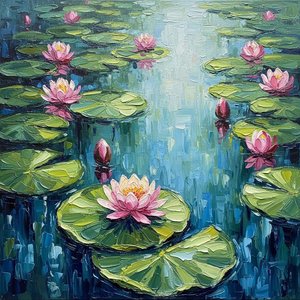 Serene Azure Depths: A Singular Impasto Study of Floating Petals and Verdant Ripples
Experience the immersive tranquility of Christian Noiret's Serene Azure Depths, a one-of-one contemporary impasto masterpiece featuring vibrant lily pads and textured cerulean ripples, available for your private collection.
There is a profound difference between seeing an image and experiencing a painting. In the digital age, we are often fatigued by the flat, unyielding perfection of screens and computer-printed posters. These reproductions, while visually accurate, lack the tactile permanence that defines true fine art. They offer only a surface, a thin layer of ink that lacks the breath of life. In contrast, a hand-painted oil reproduction offers an antidote to this digital fatigue through the magic of texture. Consider the technique of impasto, where paint is laid thickly upon the canvas, allowing the energetic strokes of the brush or knife to remain visible and sculptural.
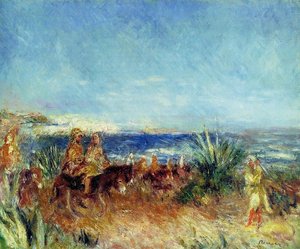
When you stand before a masterfully executed Impressionist piece, such as a landscape inspired by Monet or Renoir, you are not merely looking at colors; you are witnessing the physical movement of the artist. The raised ridges of oil paint catch the light, creating subtle shadows that shift as you move through the room. This depth provides a sensory experience that a flat Giclée print simply cannot replicate. There is a rhythmic, heartbeat-like quality to the visible brushwork—a luminous palette that vibrates with life. This physical texture creates a connection between the viewer and the canvas, transforming a wall into a window of light and atmosphere, where the very substance of the paint mirrors the ephemeral beauty of the natural world.
A Legacy of Intentionality: Why Hand-Painted Oils are the Ultimate Zero-Waste Choice
 Zero waste
Zero waste, or waste minimization, is a set of principles focused on waste prevention that encourages redesigning resource life cycles so that all products are repurposed (i.e. "up-cycled") and/or reused. The goal of the movement is to avoid sending ...
As we become more conscious of our environmental footprint, the concept of sustainable luxury takes on a new, profound meaning. The movement toward zero-waste is not merely about recycling; it is about redesigning our resource life cycles to favor reuse and permanence over waste. Hand-painted art stands as the ultimate expression of this philosophy. Unlike mass-produced decor that is destined for the incinerator, a bespoke oil painting is an investment in longevity. It is a piece created with academic excellence, using materials like flexible grotto, specific oils to prevent yellowing, and protective Damar varnish to ensure the work survives for generations.
Choosing a hand-painted reproduction is an act of stewardship. It represents a shift from being a mere consumer of trends to becoming a curator of beauty. By selecting works that possess inherent structural integrity—painted on 100% cotton canvas with meticulous layering—we embrace a cradle-to-cradle approach to our interiors. We are choosing objects that do not require replacement, but rather, objects that grow more cherished with time. This is the essence of a sustainable soul: finding profound value in the enduring, and recognizing that true luxury lies in the rejection of the disposable in favor of the everlasting.
Curating for Generations: The Enduring Value of Masterpiece Reproductions
The true measure of an heirloom is its ability to tell a story long after the original owner has passed. When we curate our homes with high-quality reproductions of Impressionist and Post-Impressionist masters—names like Degas, Cézanne, and Van Gogh—we are participating in a lineage of cultural preservation. These works are not mere decorations; they are vessels of history. A well-maintained oil painting, protected from direct sunlight and housed in a solid wood frame, becomes a permanent fixture of a family's legacy, bridging the gap between the past and the future.
This level of curation allows for a personalized approach to art collecting that transcends simple ownership. Through services like custom commissions, one can even "remix" history, requesting a modern memory be transformed into the light-drenched style of an Impressionist master. This ability to infuse personal milestones with historical grandeur ensures that the art remains deeply personal and eternally relevant. We are not just decorating walls; we are building a gallery of memories, ensuring that the aesthetic values we hold dear are passed down as part of our very identity.
The Art of Slow Living: Reclaiming Authenticity through Impressionist Mastery
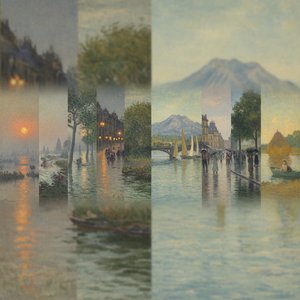 10 Iconic Impressionist Landscapes That Changed Art Forever
Introduction Close your eyes for a moment and imagine the world not as a collection of fixed lines and rigid shapes, but as a shimmering dance of light and atmosphere. Imagine the way a morning mist clings to the reeds of a pond, or how the setting s...
In an age that often feels hurried and disconnected, there is a quiet, soulful solace in returning to the masters. The Impressionist movement itself was a revolution of perception—a desire to capture the fleeting, the ephemeral, and the deeply felt. To look upon an Impressionist landscape is to rediscover the poetry of the present moment. It invites us to slow down, to notice the way a morning mist clings to a pond or how the setting sun dissolves the horizon into a violet haze. This practice of "slow looking" is the ultimate luxury in a fast-paced world.
By surrounding ourselves with the works of visionaries who stepped out of the studio and into the open air, we reclaim a sense of wonder. We learn to appreciate the beauty found in imperfection and the subtle nuances of light and shadow. This intentional way of living—surrounding oneself with art that demands attention and rewards patience—is the pinnacle of a refined life. It is an invitation to find peace within the textures of the canvas and the eternal dance of color, reminding us that even in a world of rapid change, true beauty remains constant.
For those seeking to begin their own journey into the world of fine art reproductions and bespoke commissions, visit ArtsDot.com—the premier destination for the Impressionist soul.