
The Sacred Sanctuary: Defining the Atelier as a Laboratory of Light and Discipline
 The Art of the Studio: Capturing Creative Mastery and the Soul of the Atelier on Canvas
The Sacred Sanctuary: Defining the Atelier as a Laboratory of Light Beyond the Brushstroke: Unveiling the Intimate Charm of Impressionist Studio Scenes The Threshold of Creation: An Introduction to the Impressionist Atelier To step into the world of ...
To step across the threshold of a true atelier is to leave the clamor of the external world behind and enter a realm where time is measured not by the ticking of a clock, but by the slow, deliberate movement of shadows across a floor. Historically, the studio has never been merely a room filled with supplies; it is a sanctuary, a private laboratory where the artist’s internal vision meets the tangible elements of the physical world. In the grand tradition of European academies, this space—the atelier—served as a structured environment of intense discipline and devotion. It was here that the scent of damp clay, the sharp tang of turpentine, and the heavy presence of linseed oil created an atmosphere of profound focus.
For the discerning historian or collector, understanding this sanctity is essential, for it is within these walls that the very soul of a masterpiece is forged. The studio serves as the vital bridge between thought and form, acting as a crucible of innovation where the boundaries between the creator’s mind and their medium begin to dissolve. Whether it be the light-drenched workshops designed to capture the subtle nuances of musculature or the dim, controlled environments used to master the chiaroscuro of the Old Masters, the atelier is a place of profound meditation and intense physical labor. It is a space where the chemistry of pigments is mastered and the very architecture of visual reality is constructed through rigorous application of classical technique.
The Master and the Apprentice: The Guild Tradition and the Evolution of Art Education
 Atelier
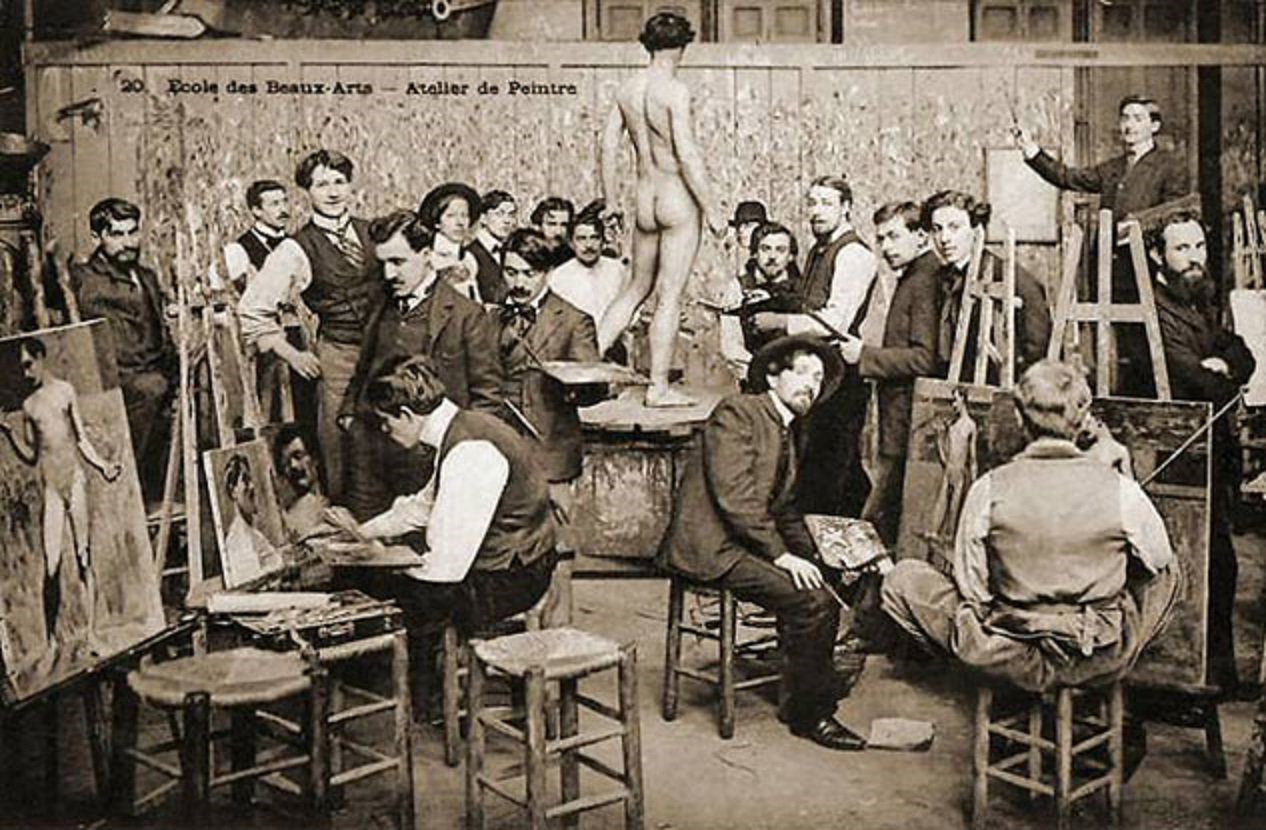
An atelier (French: [atəlje]) is the private workshop or studio of a professional artist in the fine or decorative arts or an architect, where a principal master and a number of assistants, students, and apprentices can work together producing fine a...
For centuries, the atelier functioned as both a classroom and a factory of culture. From the medieval guilds to the height of the Renaissance, the studio was a structured ecosystem where a principal master and a number of assistants, students, and apprentices worked in unison. In medieval Europe, this way of working was often enforced by local guild regulations, such as those of the painters' Guild of Saint Luke. This master-apprentice system was a rigorous vocational practice; young apprentices began with simple tasks, gradually gaining expertise to become journeymen before eventually ascending to the rank of master themselves. It was a lineage of knowledge, passed down through generations via the shared dust of pigments and the watchful eye of the mentor.
As the power of these guilds declined, the academy became the favored method of training, yet the fundamental spirit of the atelier remained. The studio provided the foundation for European artistic tradition, a place where the rigorous discipline of anatomy, perspective, and color theory was instilled. While the modern era has seen a shift toward more individualistic expressions, the essence of this structured learning remains visible in the works that define our history. At ArtsDot.com, we honor this academic excellence by employing artists who hold degrees from prestigious Fine Arts academies, ensuring that every hand-painted reproduction carries the weight of this venerable tradition.
Beyond the Walls: Impressionist Revolutions and the Mobile Studio of Claude Monet
 The Boat Studio (Le bateau-atelier)
A Moment Frozen in Light: Claude Monet’s *The Boat Studio* Claude Monet's *The Boat Studio*, painted in 1876, isn’t merely a depiction of a scene; it’s a profound meditation on the artist’s process, his relationship with nature, and the very essence ...
In the mid-19th century, a group of courageous rebels in France sought to dismantle the rigid constraints of the official Paris Salon, turning their gaze away from historical grandeur toward the ephemeral beauty of the present moment. To step into the world of the Impressionists is to leave behind the heavy, somber shadows of academic tradition and enter a realm bathed in dappled sunlight. These artists did not merely seek to paint landscapes; they sought to capture the very heartbeat of existence. At the center of this revolution was a radical expansion of the studio concept—the movement of the workshop into the wild, unmediated world.
Nowhere is this intimacy of process more profoundly felt than in Claude Monet’s 1876 masterpiece, The Boat Studio (Le bateau-atelier). This painting is far more than a depiction of a scene; it is a profound meditation on the artist’s relationship with nature. Here, we find Monet at work within his floating studio—a small, meticulously outfitted boat anchored along the Seine in Argenteuil. This mobile workshop allowed him to pursue his vision wherever light and inspiration led him, embodying a deliberate rejection of the static, indoor environment. By painting en plein air, directly from nature, Monet sought to capture the impression of light and atmosphere—the way colors shift and blend as they interact with each other. His decision to move the atelier onto the water represents a pivotal moment in art history, where the laboratory of light became as fluid as the river itself.
A Symphony of Color: Matisse and the Transformation of the Studio into Symbolic Space
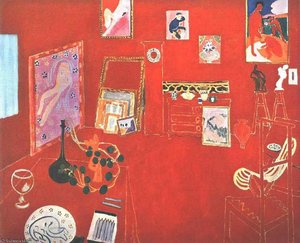 Red Studio (L'Atelier Rouge), Moma NY
The Genesis of a Masterpiece Henri Matisse's "Red Studio (L'Atelier Rouge)," painted in 1911, isn’t merely a depiction of a studio; it’s an immersive experience, a carefully constructed stage for the artist’s own creative process. Born in Le Cateau-C...
As we moved into the 20th century, the studio underwent another profound metamorphosis. The focus shifted from the optical perception of light to the expression of subjective emotion and symbolic meaning. Henri Matisse, a pioneer of this movement, transformed the atelier from a place of observation into a carefully constructed stage for his own creative process. In his 1911 work, Red Studio (L'Atelier Rouge), the studio is no longer just a room; it is an immersive experience, a saturated world that exists entirely within the artist's psychological landscape.
The choice of red in this iconic painting is far from arbitrary; it is a deliberate assertion of control and emotional resonance. Matisse utilized flattened planes and simplified shapes to move away from the photographic precision of the past, instead using color as a vehicle for feeling. In The Pink Studio, we see a similar exploration, where a vibrant shade of pink commands attention, establishing an atmosphere of warmth and intensity. These works represent a rejection of Impressionism’s focus on fleeting moments in favor of a more permanent, symbolic reality. The objects within these studios—paintings, vases, chairs—are rendered as stylized elements that contribute to a larger, harmonious composition, proving that the atelier can be a space where reality is not just captured, but entirely reimagined.
The Alchemy of Creation: Materials, Pigments, and the Physicality of the Workshop
 Inside the Artist's Studio: The Secret World Behind Masterpiece Creation
The Sacred Space: Understanding the Role of the Atelier in Art History Atelier An atelier (French: [atəlje]) is the private workshop or studio of a professional artist in the fine or decorative arts or an architect, where a principal master and a num...
To truly understand the genesis of a masterpiece, one must appreciate the physical alchemy that occurs within the workshop. The atelier is a place of intense material science, where the chemistry of pigments is mastered to ensure longevity and brilliance. Every great work is born from the careful preparation of the medium—the application of flexible gesso to prevent cracking and the use of specific oils, such as safflower, for whites to prevent the dreaded yellowing of time. The very architecture of visual reality is constructed through the layering of these elements upon a canvas.
This physical dedication is what distinguishes a true hand-painted oil reproduction from a mere print. When you hold a work created by our artists, you are witnessing the visible brushstrokes and the deeper tonal range that only real paint on 100% cotton canvas can provide. Our process involves meticulous layering, allowing for the creation of texture and impasto that captures the energy of the original master. Each painting is finished with a protective coat of Damar varnish, shielding the surface from dust, moisture, and atmospheric pollutants, ensuring that the brilliance of the workshop survives for generations.
Preserving the Legacy: Bringing the Spirit of the Atelier into the Modern Home
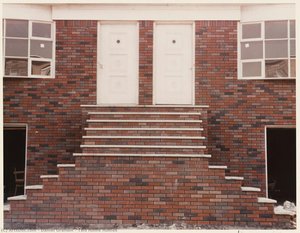 Two Home Homes
Dan Graham's "Two Home Homes" (1966) is a captivating photographic exploration of space and perception, challenging our understanding of domesticity and urban environments. A seminal work of conceptual art.
While the era of the great guild-regulated ateliers has passed, their legacy remains a vital part of our cultural fabric. The studio continues to be a place where the boundaries between the creator’s mind and the medium dissolve, and we invite you to bring that sense of sacred creativity into your own living space. Whether through a large-format mural that recreates a historical ceiling or a custom portrait that transforms a personal memory into a 17th-century masterpiece in the style of Rembrandt, the spirit of the atelier is still very much alive.
At ArtsDot.com, we specialize in bridging the gap between art history and modern interiors. We offer the ability to "remix" history, allowing you to request a photo to be painted in the light-drenched style of Monet or the bold textures of Van Gogh. Our mission is to provide collectors with museum-quality pieces that serve as lasting memories. From our professional digital mockup service to our global logistics ensuring safe delivery via DHL and FedEx, we treat every commission with the same reverence that a Renaissance master would have shown his most prized pupil. We invite you to explore our collection of canonical masterpieces and find the piece that will turn your home into your own personal sanctuary of art.