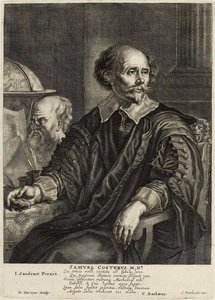
Joachim von Sandrart: A Bridge Between Baroque Vision and Artistic History
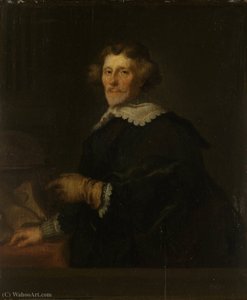
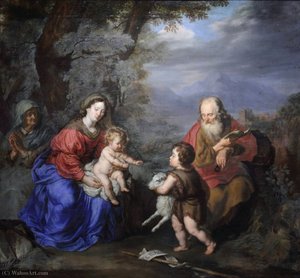
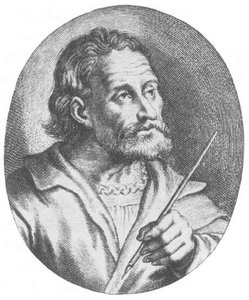
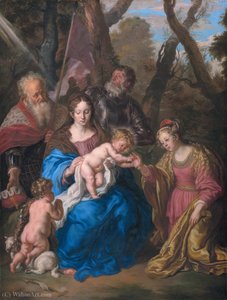
Joachim von Sandrart, a figure often overshadowed by the titans of the Baroque era, nevertheless stands as a pivotal artist and intellectual whose legacy extends far beyond his captivating paintings. Born in Frankfurt am Main in 1606 to a family with deep roots in Mons, Belgium, he wasn’t merely a painter; he was a conduit between artistic creation and meticulous historical documentation – a rare convergence of talent that shaped the course of 17th-century art history.
Sandrart's early life laid the groundwork for his future pursuits. He received initial instruction in drawing, nurtured by familial connections to artists and scholars. However, it was a youthful ambition to master engraving that propelled him towards Prague at the tender age of fifteen. There, under the tutelage of Aegidius Sadeler, a prominent member of a renowned family of engravers, Sandrart honed his technical skills and began to understand the power of visual representation. Sadeler recognized Sandrart’s potential, encouraging him to explore painting – a decision that would irrevocably alter the trajectory of his career.
The Caravaggisti Influence and Italian Awakening
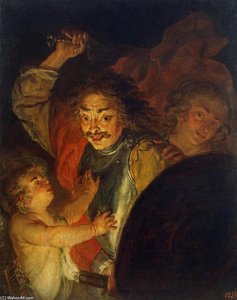
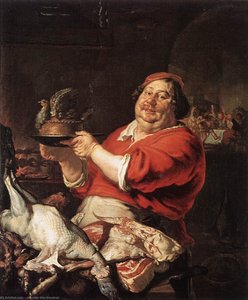
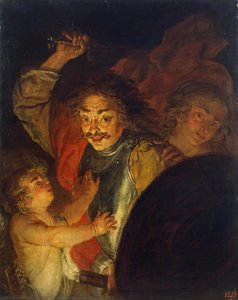
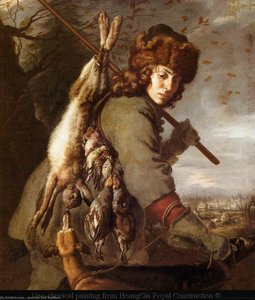
Utrecht in 1625 marked a transformative period for Sandrart. He became a pupil of Gerrit van Honthorst, a leading figure within the Utrecht *Caravaggisti* movement – a group known for their dramatic use of light and shadow, echoing the style pioneered by Caravaggio. This immersion in the *tenebrismo*, the stark contrast between light and dark, profoundly influenced Sandrart’s artistic sensibilities. A particularly significant event occurred in 1627 when Peter Paul Rubens himself sought out Honthorst for collaboration on his monumental *Marie de' Medici* cycle in London. Sandrart accompanied Honthorst on this venture, gaining invaluable experience working alongside one of the Baroque period’s most celebrated masters – a direct exposure to the dynamism and expressive power of Rubens’ style.
Driven by an insatiable curiosity, Sandrart embarked on a grand tour of Italy in 1627. He immersed himself in the artistic heartland of Europe, exploring Venice, Bologna, Florence, and Rome. He joined the *Bentvueghels* brotherhood – a vibrant society of predominantly Dutch and Flemish artists who embraced a spirit of artistic freedom and often adopted satirical nicknames – providing him with access to a network of fellow artists and a unique perspective on the art world. During this period, he developed his skills as a portrait painter, capturing the likenesses of prominent figures while simultaneously refining his technique and absorbing the diverse influences of Italian art.
Amsterdam’s Recognition and the *Teutsche Academie*
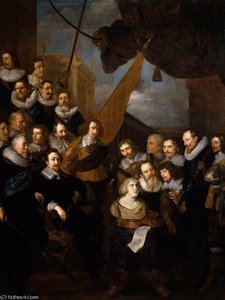
By 1637, political instability and the threat of plague prompted Sandrart and his wife to seek refuge in Amsterdam. This relocation proved to be a turning point in his career. He flourished as both a painter of genre scenes and portraits, quickly gaining recognition within the city’s thriving artistic community. The culmination of this success arrived with a prestigious commission from the Bicker Company of the Amsterdam *Schutterij* (militia). He was tasked with creating a monumental commemorative piece celebrating the state visit of Maria de' Medici in 1638 – a painting now housed within the Rijksmuseum that stands as a testament to his artistic prowess and the city’s growing prominence on the European stage. The commission not only showcased Sandrart’s skill but also symbolized Amsterdam’s formal recognition through its connection with France.
However, after the death of his wife in 1672, Sandrart shifted his focus to a monumental undertaking: the writing of art history. This endeavor culminated in the publication of the *Teutsche Academie der edlen Bau-, Bild- und Mahlerey-Künste* (The German Academy of Noble Arts of Architecture, Sculpture and Painting) between 1675 and 1680. Inspired by Karel van Mander’s *Schilder-boeck* and Giorgio Vasari's biographies, Sandrart compiled a comprehensive collection of biographical sketches of Dutch and German artists – a groundbreaking work that became an invaluable resource for understanding the artistic landscape of the time. The *Teutsche Academie* is not without its imperfections—notably his misattribution regarding Hendrick ter Brugghen—but it remains a vital primary source for scholars studying 17th-century art, offering insights into the lives, techniques, and influences of numerous painters, sculptors, and architects.
A Lasting Legacy
Sandrart’s dedication to documenting the contributions of his contemporaries ensured that their achievements would not be forgotten. He died in Nuremberg in 1688, leaving behind a legacy that extends far beyond his paintings – a legacy rooted in his commitment to preserving and celebrating the artistic heritage of his time. His *Teutsche Academie* stands as a testament to his intellectual curiosity and his profound understanding of art history, solidifying his place as one of the earliest systematic art historians of the German-speaking world.