

 Pregledaj u prostoru
 Pošalji
 Podeli
 Detalji o delu

 Преузми
 Slični predmeti
 Rendgenski snimak
 Slajdovi
 Statistika
Deutsch Porträt der Frau des Künstlers
 Oil
Oil- WallArt
- Munich Secession
 1887
1887- 19th Century
 202.0 x 98.0 cm
 Neue Pinakothek
 Pročitaj više
Kupite digitalnu sliku visoke rezolucije i poboljšanog kvaliteta, koja je znatno superiornija od onoga što vidite u online prikazu.
Svaka datoteka je pedantno pripremljena od strane naših stručnjaka koristeći napredne alate i profesionalnu ručnu retušu. Osiguravamo da svaka slika ima izuzetnu oštrinu, preciznu reprodukciju boja i fine detalje.
Konačna datoteka se dostavlja putem e-pošte u roku od 72 sata, optimizovana za neposrednu upotrebu u profesionalnim, izdavačkim i štamparskim okruženjima. To je isti kvalitet kojem veruju vrhunski studiji dizajna, izdavači i galerije.
Digitalna slika
Preuzmite datoteku visoke rezolucije za ličnu upotrebu, štampanje i kreativne projekte. ( Pređi na štampu Kupi ručno naslikanu sliku)
Uključeno uz svaku porudžbinu digitalne slike
Profesionalna digitalna isporuka, zagarantovana
Kada odaberete ArtsDot.com, ne dobijate samo sliku – vi primate profesionalno unapređeno digitalno umetničko delo, izrađeno sa najvećom preciznošću i uz garanciju zadovoljstva. Evo svega što automatski dolazi uz vašu porudžbinu:

Brza dostava putem e-pošte
Vaša digitalna slika visoke rezolucije biće vam poslata putem e-pošte u roku od 72 sata od poručivanja – spremna za trenutnu upotrebu.

Digitalna datoteka unapređena veštačkom inteligencijom
Vaše umetničko delo je profesionalno optimizovano korišćenjem naprednih AI alata i ručne obrade, čime se osiguravaju maksimalni detalji, oštrina i preciznost boja.

Besplatna ponovna isporuka doživotno
Slučajno ste obrisali ili izgubili svoju datoteku? Ne brinite – poslaćemo vam je ponovo u bilo kom trenutku, potpuno besplatno.

Bez troškova uvoza – zauvek
Uživajte u svojim umetničkim delima trenutno, bez carine, dažbina ili troškova dostave – digitalni download je uvek bez poreza.

Garancija vernosti boja
Uz pomoć profesionalnih alata i upravljanja bojama, osiguravamo da vaša digitalna slika što vernije odražava originalne boje.

Garancija zadovoljstva od 100 dana
Ako niste zadovoljni svojom digitalnom slikom, izvršićemo reviziju ili ćemo vam vratiti 100% novca u roku od 100 dana – bez ikakvih pitanja.

100% garancija povrata novca
Niste zadovoljni? Dobijte puni povraćaj novca u roku od 100 dana od prijema digitalne datoteke – bez suvišnih pitanja.

Popusti na velike porudžbine
Kupite 3 slike, uštedite 10% - Kupite 5 slika, uštedite 15% - Kupite 10+ slika, uštedite 20%. Odlično za kreativne projekte, galerije i agencije.
An Encounter with Elegance: The Soul Behind the Canvas
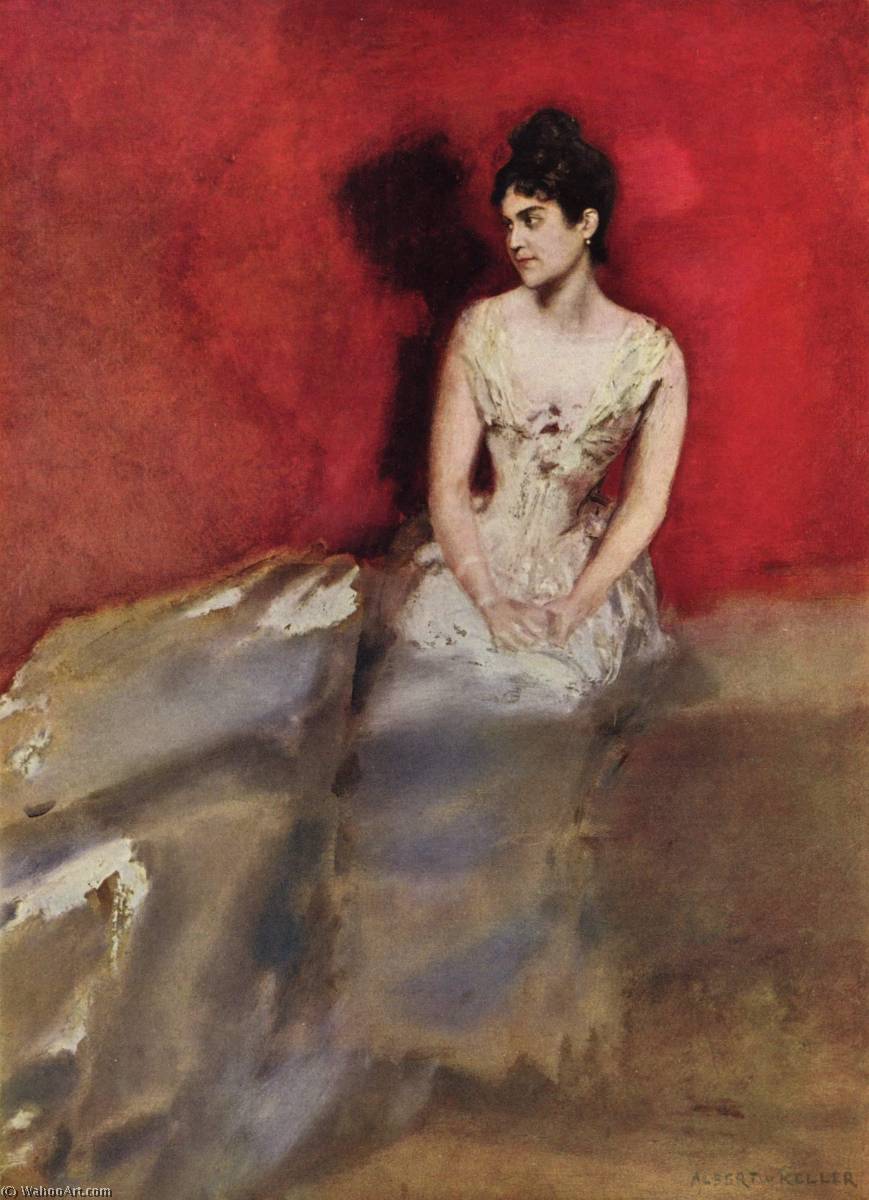
In the quiet, commanding presence of Deutsch Porträt der Frau des Künstlers, we find ourselves invited into an intimate moment captured by the master of psychological realism, Albert von Keller. Painted in 1887, this portrait is far more than a mere depiction of a seated figure; it is a profound study of character and poise. The subject, the artist's wife, sits with a dignified gravity upon a rugged stone, her gaze meeting the viewer with an expression that is both serious and deeply penetrating. There is an undeniable magnetic pull in her eyes, a silent dialogue that transcends the boundaries of time and canvas, making this piece an essential acquisition for those who value art that speaks to the human condition.
The composition is a masterclass in visual contrast and structural balance. The pristine, luminous white of her gown—adorned with delicate lace trim and a sophisticated bow at the back—serves as a brilliant focal point against the deep, velvety crimson of the background wall. This striking juxtaposition of light and shadow creates a sense of theatrical depth, pulling the figure forward into the viewer's space. The heavy, textured rock upon which she rests provides a grounded, earthy counterpoint to the ethereal lightness of her attire, suggesting a harmony between the delicate nature of femininity and the enduring strength of the natural world.
A Symphony of Technique and Symbolism
Albert von Keller’s technical prowess is on full display through his meticulous handling of texture and light. Every fold of the lace, every subtle shadow within the fabric of the dress, and the tactile quality of the stone are rendered with a precision that borders on the hyper-realistic. As a pioneer of the Munich Secession, Keller possessed a unique ability to blend the rigorous academic training of the Munich Academy with a burgeoning interest in symbolism. In this work, the choice of a red backdrop is not merely decorative; it evokes passion, vitality, and perhaps a hint of the psychological intensity that defined his later career.
For the discerning collector or interior designer, this painting offers an unparalleled opportunity to introduce a sense of historical grandeur and emotional depth into a space. The large-scale dimensions of 202 x 98 cm allow the artwork to command a room, acting as a sophisticated anchor for a gallery wall or a standalone centerpiece in a formal study. Whether placed in a contemporary setting to provide a classical contrast or within a traditional interior to enhance its period elegance, this reproduction captures the timeless allure of late 19th-century German portraiture, offering a window into an era of profound artistic transition.
Srodna umetnička dela

Biografija umetnika
The Soul Behind the Canvas: The Life and Legacy of Albert von Keller
Albert von Keller (1844–1920) stands as a singular figure in German art history—a painter who seamlessly blended the rigorous precision of realism with a burgeoning fascination for psychology and symbolism. Born in Gais, Switzerland, into a family steeped in intellectual tradition, Keller’s early life was marked by a disciplined curiosity. While his father, a professor of law, instilled in him a structured intellect, it was the pursuit of visual expression that would ultimately define his destiny. Though he initially moved toward the study of law at the Ludwig-Maximilians-Universität München, the siren call of the arts proved irresistible, leading him to abandon the courtroom for the studio, where he would spend the rest of his life exploring the profound depths of the human condition.
His formal training began at the prestigious Munich Academy under the guidance of Arthur von Ramberg. It was here that Keller developed a mastery of anatomical precision, particularly through controversial nude studies that challenged the social norms of his era. This technical foundation, however, was merely the beginning of his evolution. As he traveled extensively through Italy, France, England, and the Netherlands, Keller absorbed the luminous qualities of Impressionism and the delicate aesthetics of Japonisme. Yet, unlike many of his contemporaries who abandoned structure for pure light, Keller maintained a steadfast connection to the German Romantic tradition, creating a unique stylistic bridge between the observable world and the unseen psyche.
A Master of Psychological Realism
The true brilliance of von Keller lies in his ability to imbue portraiture and genre scenes with an almost haunting emotional resonance. He became a prominent figure in the Munich Secession, a movement that sought to push the boundaries of traditional art. His work often features female figures, rendered with a grace that oscillates between the ethereal and the tangible. Perhaps no subject was more central to his creative spirit than his wife, Irene von Eichthal. Their partnership, which lasted until her death in 1907, served as a profound muse; he would eventually paint over forty portraits of her, capturing not just her physical elegance but the very essence of her character.
In masterpieces such as Deutsch Porträt der Frau des Künstlers, one can witness his technical prowess. He utilized striking juxtapositions—such as the pristine white of a lace gown against a deep, velvety crimson background—to create a sense of theatrical depth. This mastery of light and shadow allowed him to guide the viewer's eye through a silent dialogue of texture and tone. His ability to render the tactile quality of stone or the delicate fold of fabric served a higher purpose: to ground his more symbolic and psychological themes in a reality that felt undeniably present.
The Intersection of Science, Spirit, and Symbolism
As his career progressed, von Keller’s interests drifted toward the enigmatic. In 1886, he became a member of the Munich Psychological Society, a group devoted to the study of the paranormal under Albert von Schrenck-Notzing. This period marked a fascinating shift in his oeuvre, as he began to incorporate parapsychological motifs and themes of hypnosis into his compositions. Works like Hypnosis at Schrenck Notzing's demonstrate this transition, blending the muted tones of realism with the unsettling tension of the unknown. He explored themes of vulnerability, illness, and the subconscious, often connecting these modern psychological inquiries to classical Christian symbolism.
His international breakthrough at the Paris Salon with Roman Bath solidified his reputation as a painter of great atmospheric sensitivity, drawing comparisons to masters like Monet and Renoir. However, it was his ability to navigate the shadows of the human mind that secured his historical significance. By weaving together the following elements, he created a legacy that remains vital to the study of late 19th-century art:
- Technical Precision: A rigorous academic foundation in anatomy and light.
- Psychological Depth: The exploration of the subconscious, hypnosis, and emotional interiority.
- Symbolic Narrative: The use of genre scenes to communicate complex spiritual and human truths.
- Stylistic Synthesis: A unique blend of German Romanticism, Impressionist light, and Symbolist mystery.
Today, the works of Albert von Keller serve as a poignant reminder of an era when art was transitioning from the depiction of external reality to the exploration of internal truth. He remains a pioneer who dared to look beneath the surface of the skin to find the soul within.
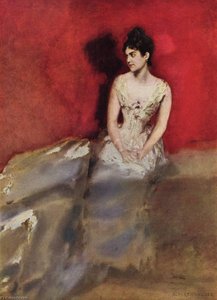
albert von keller
1844 - 1920
Kratke činjenice
- Artistic Movement Or Style: Munich Secession
- Artists Or Movements Influenced By This Artist: ['Symbolism']
- Artists Who Influenced This Artist:
- Arthur von Ramberg
- Ludwig Maximilian University
- Date Of Birth: April 27, 1844
- Date Of Death: July 14, 1920
- Full Name: Albert Ritter von Keller
- Nationality: Swiss
- Notable Artworks:
- Hypnosis at Schrenck Notzing’s
- In the moonlight
- Place Of Birth: Gais, Switzerland