 Pregledaj u prostoru
 Pošalji
 Podeli
 Detalji o delu

 Преузми
 Slični predmeti
 Rendgenski snimak
 Slajdovi
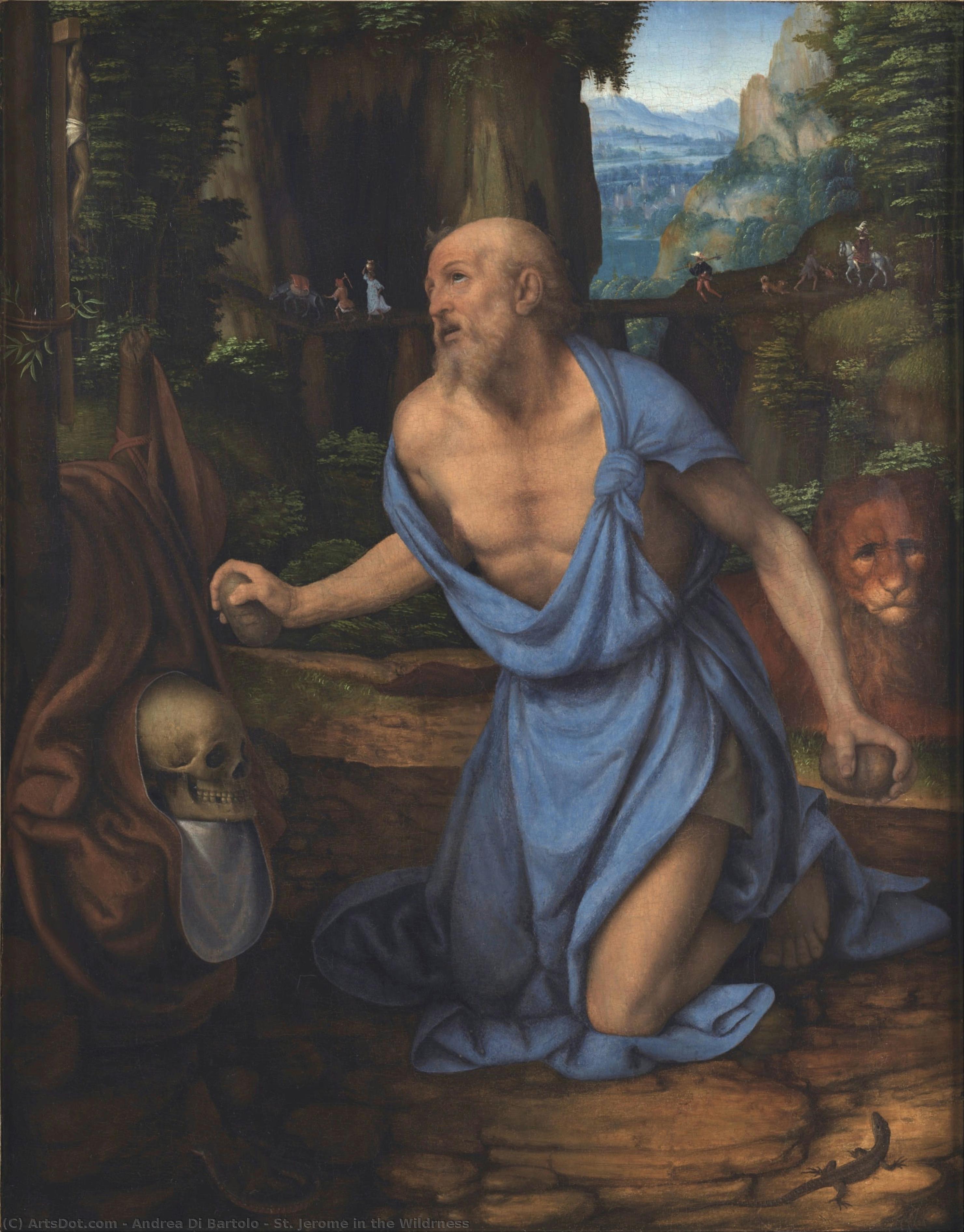
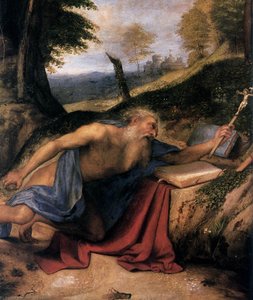
St. Jerome in the Wildrness


 Pročitaj više
Ručno rađena uljana reprodukcija
Ručno oslikano uljanim bojama na platnu u dimenzijama i okviru po vašem izboru, izrađeno po porudžbini od strane naših umetnika. ( Kupi print Kupi digitalnu sliku)




P118B $10

P118H $10

P118W $10

P438Z $10

P508JH $12

P508YH $12

P805H $10

P805Z $10

P919BZ $10

P919G $10

P919XJ $10

P959ZH $10

P968JZ $12

W106C $8

W218G $10

W218JH $8

W218Y $10

W307PJ $10

W316G $10

W316PJ $8

W316Y $10

W398PJ $8

W4111J $10

W500HY $15

W500JH $15

W692G $12

W849H $8

W940BG $15

W953PJ $8




Izaberite jednu od naših unapred definisanih veličina koje odgovaraju originalnim proporcijama umetničkog dela.

Можете унети сопствене димензије како бисте прилагодили дело одређеном оквиру или простору. Ако одабрана величина не одговара пропорцијама оригинала, слика ће бити исечена или проширена додатним елементима који се ручно насликавају. Дигитални prikaz ће вам бити послат на одобрење пре почетка производње.
Имајте на уму да преглед на екрану не одражава стварно исецање или проширење. Само приказ (mockup) ће тачно приказати коначну композицију.
Иако су доступне прилагођене величине, препоручујемо да одаберете димензију из дефинисане листе како бисте сачували оригиналне пропорције.
Nakon narudžbine, tim ArtsDot.com će klijentu putem e-pošte poslati uputstva i dostaviti prikaz predloženog rešenja
Isporuka širom sveta () za 3/4 nedelje umesto uobičajenih 5 nedelja. (21 август). Bez kompromisa po pitanju kvaliteta.

Besplatna ekspresna dostava širom sveta

Visokokvalitetno laneno platno

Kompletno osiguranje transporta

Garancija povraćaja carine i uvoznih dažbina

Garancija vernosti boja

Politika povrata u roku od 60 dana (samo u slučaju nedostataka)

Garancija povrata novca od 100%

Popust pri grupnoj kupovini
 Opcija sa staklom dostupna je samo za dimenzije manje od 110 cm

St. Jerome in the Wildrness
Tehnika reprodukcije
Dimenzije reprodukcije
-


Konačna cena
$ 263
Opis umetničkog dela
A Soul in Solitude: The Devotion of St. Jerome
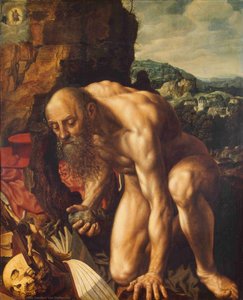
In the quiet, rugged expanse of a landscape that feels more European than Syrian, we encounter a moment of profound spiritual intensity. St. Jerome in the Wilderness is not merely a depiction of a saint; it is an immersive experience of penance and prayer. As the viewer’s eye meets the kneeling figure of St. Jerome, there is an immediate sense of the weight of devotion. The artist captures the saint in a state of deep contemplation, his body positioned in a powerful pyramidal structure that anchors the composition. This arrangement draws us into his private struggle, making the viewer a silent witness to his ascetic life among the hermits of the desert. Though historical records place Jerome in the Syrian wilderness around 374 A.D., the artist has reimagined this sacred space through a lens of familiar, mountainous terrain, creating a bridge between the biblical past and the viewer's own world.
The visual language of the piece is steeped in the meticulous traditions of the Early Netherlandish style, where every texture tells a story. The heavy, rhythmic folds of his red cardinal’s robes—a color signifying his prestigious yet burdened office—contrast beautifully with the soft blue of his inner garment. Through the masterful application of oil glazes, the artist achieves a luminous depth that makes the skin appear supple and the rocky ground feel tactile and raw. There is a deliberate tension between the smooth, light-drenched surfaces of the saint’s face and the rugged, shadowed textures of the surrounding wilderness. This interplay of light and shadow does more than create depth; it mirrors the internal conflict of a man wrestling with his own mortality and divine calling.
Symbolism and the Language of the Renaissance
Every element within this frame serves as a silent sermon, rich with the symbolic vocabulary of the Renaissance. Beside the saint, the presence of the lion—a creature often associated with both temptation and protection—serves as a powerful metaphor for the wilder impulses of the human spirit being tamed by faith. Nearby, the skull rests as a memento mori, a stark reminder of the fleeting nature of earthly existence and the inevitability of death. Even the subtle inclusion of a star on a draped cloth suggests a celestial guidance, a glimmer of hope amidst the harshness of the desert. These symbols are not merely decorative; they are intellectual anchors that invite collectors and art lovers to meditate on the deeper meanings of life, loss, and redemption.
For the discerning collector or interior designer, this painting offers more than just aesthetic beauty; it provides a focal point of profound emotional gravity. The palette, dominated by earthy browns and deep blues but punctuated by regal reds and golds, allows the work to integrate seamlessly into sophisticated environments, whether in a classical study or a contemporary gallery setting. To possess a reproduction of such a masterpiece is to bring a sense of historical continuity and spiritual stillness into a space. It is an invitation to pause, to reflect, and to find beauty in the quiet strength of a soul in prayer.
Srodna umetnička dela
![Legend Of St Francis - [23] - St Francis Mourned By St Clare — Đijoto Di Bondone, Gothic](/media/artworks/images-thumb/17/1c/171c284c41dc3ef8bca83e51c1e1e531.jpg)
Biografija umetnika
Nardo di Cione: A Florentine Lyricist of the Late Quattrocento
Born around 1320 in Florence, Nardo di Cione – often referred to as “Nardo” – stands as a pivotal figure bridging the Gothic and nascent Renaissance artistic landscapes of Italy. While his life was tragically cut short around 1365, his brief but intensely productive career left an indelible mark on Florentine painting, characterized by a lyrical sensibility, profound humanism, and a masterful command of color that foreshadowed the developments of the High Renaissance. His legacy is primarily defined by a small yet remarkably significant body of work, meticulously reconstructed through careful analysis of signed pieces and stylistic comparisons.
Nardo’s origins are deeply intertwined with the prominent Cione family, a dynasty of artists who had long held a respected position within Florentine art circles. He was one of three brothers – Orcagna, Andrea, and Jacopo – all contributing to the artistic output of their household. Orcagna, arguably the most renowned of the siblings, established a powerful workshop that exerted considerable influence over the city’s artistic scene during the latter half of the 14th century. Nardo's work, while distinct from his brother’s more monumental and often narrative-driven compositions, shares a similar commitment to emotional depth and a refined aesthetic sensibility.
Early Influences and Artistic Development
Tracing the precise trajectory of Nardo’s artistic development remains a challenging endeavor due to the scarcity of documented information about his early training. However, stylistic analysis strongly suggests that he was profoundly influenced by the traditions of Byzantine art, particularly as practiced in Florence during the preceding decades. The influence of Paolo Veneziano, a Venetian painter who spent considerable time in Florence around 1320-1365, is readily apparent in Nardo’s early works – notably the “Standing Madonna” (Institute of Arts, Minneapolis) and the frescoes in the Chapel of San Silvestro at Santa Croce. These pieces exhibit a characteristic Byzantine formality, with their hierarchical composition, flattened perspective, and emphasis on luminous color. The use of gold leaf and rich pigments—a hallmark of Byzantine painting—is also evident.
Crucially, Nardo’s work began to evolve beyond this purely Byzantine model as he matured. He gradually incorporated elements of the Florentine Gothic style, characterized by a greater naturalism in figure representation, more dynamic compositions, and a heightened sense of spatial depth. This transition is particularly noticeable in his frescoes for the chapel of Sant'Anna in Santa Maria Novella, where he skillfully blended Byzantine techniques with emerging Renaissance principles.
The Frescoes of Sant’Anna: A Masterpiece of Florentine Art
The frescoes within the chapel of Sant’Anna represent Nardo’s most significant and enduring contribution to the artistic heritage of Florence. These monumental panels, dating from approximately 1345-1350, depict scenes from the life of St. Anne – her birth, miraculous conception, and death – alongside four figures of saints. The frescoes are remarkable for their emotional intensity, delicate modeling, and harmonious color scheme. Nardo’s depiction of St. Anne, in particular, is profoundly moving, conveying a sense of vulnerability and maternal devotion that resonated deeply with viewers.
The “Last Judgment” fresco within the same chapel further demonstrates Nardo's artistic prowess. It’s a dramatic composition filled with dynamic movement and expressive figures, reflecting the influence of Giotto – another Florentine master who was actively working at the time. The panel showcases Nardo’s ability to capture both the grandeur and the terror of divine judgment.
Later Works and Legacy
Following the completion of the Sant'Anna frescoes, Nardo produced a series of smaller-scale works that further refined his artistic style. The “St. John the Baptist with Saints” (National Gallery, London), often interpreted as a triptych, exemplifies his lyrical sensibility and masterful use of color. The “Crucifixion Panel” (Galleria degli Uffizi, Florence) is another notable example of his mature style, characterized by its emotional intensity and subtle modeling.
Nardo’s life was tragically cut short in 1365, likely due to illness. Despite the brevity of his career, he left behind a remarkably coherent body of work that reveals a unique artistic voice—one marked by lyricism, humanism, and a profound sensitivity to color. His influence on subsequent generations of Florentine painters is undeniable, and his frescoes in Santa Maria Novella remain among the most celebrated masterpieces of the late Quattrocento.
Nardo di Cione’s work serves as a crucial link between the Gothic and Renaissance periods, demonstrating the complex interplay of influences that shaped the artistic landscape of Florence during this transformative era. His legacy endures not only through his surviving paintings but also through the inspiration he provided to those who followed in his footsteps.
andrea di bartolo
1365 - 1428 , Italy
Osnovne informacije
- Artistic Movement Or Style: Late Gothic/Early Renaissance
- Artists Or Movements Influenced By This Artist: ["Nardo's style"]
- Artists Who Influenced This Artist:
- Orcagna
- Paolo Veneziano
- Giottino
- Date Of Birth: ca. 1320
- Date Of Death: ca. 1365
- Full Name: Nardo di Cione
- Nationality: Italian
- Notable Artworks:
- Strozzi Chapel frescoes
- Standing Madonna
- St John the Baptist
- Place Of Birth: Firenze, Italy
Povezani članci

Giotto di Bondone: 25 Remek-dela koji definišu renesansu | ArtsDot
Istražite 25 remek-dela Giotta di Bondonea i otkrijte renesansnu umetnost u punom sjaju. Freske, oltarske slike & istorija italijanske umetnosti na ArtsDot.com! Reprodukcije vrhunskog kvaliteta za vaš dom.

El Greco: 25 Remek-dela koji definišu Viziju i Duh (Reprodukcije za vaš Dom)
Istražite 25 remek-dela El Greka! Otkrijte priče iza njegovih ikoničnih slika, baroknog stila i duboke spiritualnosti. Reprodukcije vrhunskog kvaliteta za vaš dom na ArtsDot.com.
Top 25 dela sa Bijenala u Veneciji: Umetnička remekapela za vaš dom | ArtsDot.com
Istražite 25 remekapela sa Bijenala u Veneciji! Otkrijte priče iza poznatih slikara, stilova i tehnika. Reprodukcije slika vrhunskog kvaliteta za dekoraciju enterijera. Inspiracija & kupovina na ArtsDot.com

Jacopo Tintoretto: 25 Remek-dela Venecijanskog Majstora | Reprodukcije i Inspiracija za Dom
Uronite u svet Jacopa Tintoreta! Otkrijte 25 remek-dela venecijanskog renesansnog majstora. Istražite dramatične kompozicije, bogate boje i istoriju umetnosti na ArtsDot.com. Reprodukcije slika za luksuzni enterijer.
Sacred Narratives Embodied: A Comprehensive Exploration of Religious Iconography in Art History
Explore the rich history of religious iconography in art! Discover symbolism, movements & masterpieces from Byzantine to Renaissance periods. Expert insights for collectors and enthusiasts at ArtsDot.