

 Pregledaj u prostoru
 Pošalji
 Podeli
 Detalji o delu

 Преузми
 Slični predmeti
 Rendgenski snimak
 Slajdovi
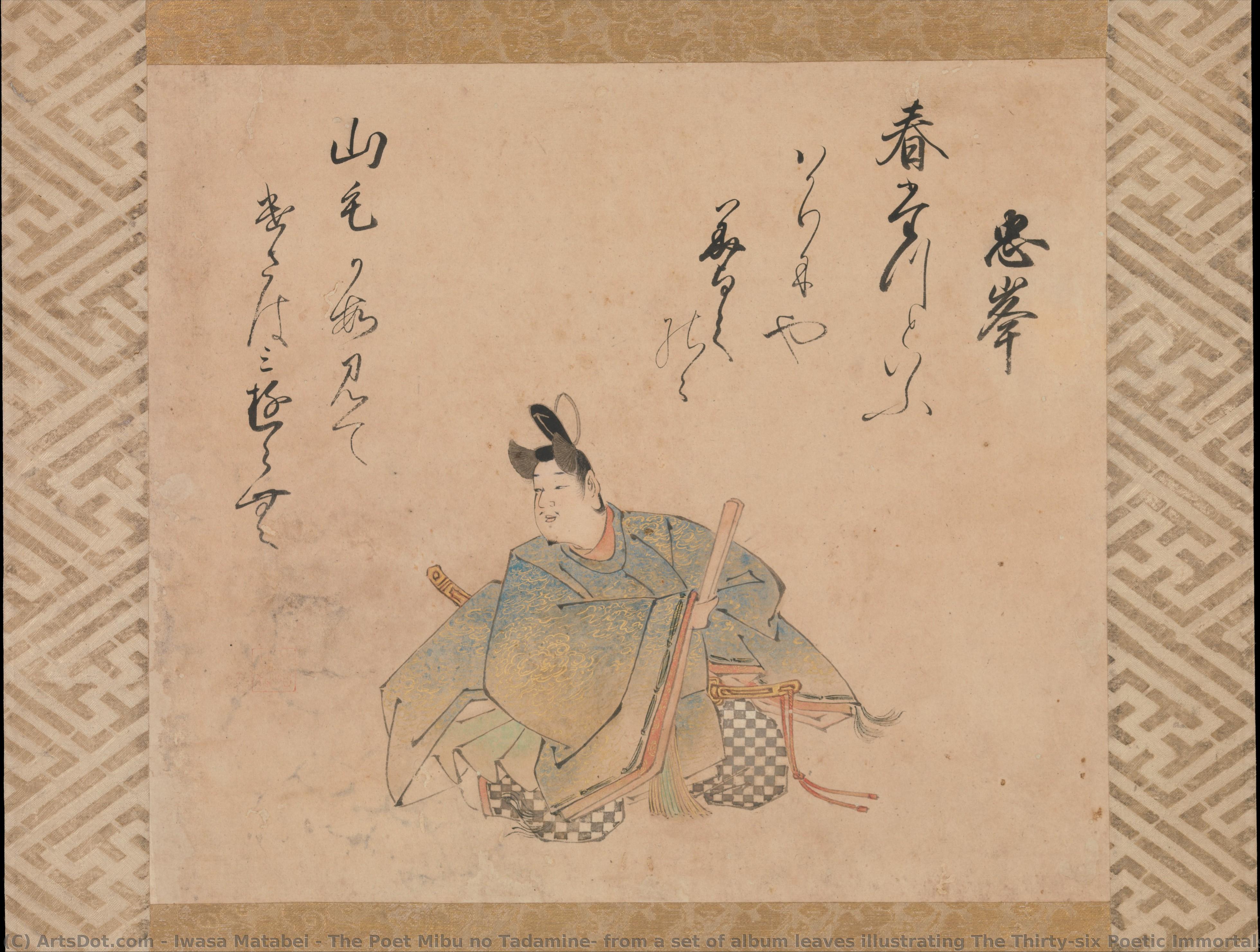
The Poet Mibu no Tadamine, from a set of album leaves illustrating The Thirty-six Poetic Immortals
 Pigment
- Nihonga
 601
601- Early Modern
 29.0cm x 32.0cm
 Pročitaj više
Ručno rađena uljana reprodukcija
Ručno oslikano uljanim bojama na platnu u dimenzijama i okviru po vašem izboru, izrađeno po porudžbini od strane naših umetnika. ( Kupi print Kupi digitalnu sliku)




P118B $10

P118H $10

P118W $10

P438Z $10

P508JH $12

P508YH $12

P805H $10

P805Z $10

P919BZ $10

P919G $10

P919XJ $10

P959ZH $10

P968JZ $12

W106C $8

W218G $10

W218JH $8

W218Y $10

W307PJ $10

W316G $10

W316PJ $8

W316Y $10

W398PJ $8

W4111J $10

W500HY $15

W500JH $15

W692G $12

W849H $8

W940BG $15

W953PJ $8




Izaberite jednu od naših unapred definisanih veličina koje odgovaraju originalnim proporcijama umetničkog dela.

Можете унети сопствене димензије како бисте прилагодили дело одређеном оквиру или простору. Ако одабрана величина не одговара пропорцијама оригинала, слика ће бити исечена или проширена додатним елементима који се ручно насликавају. Дигитални prikaz ће вам бити послат на одобрење пре почетка производње.
Имајте на уму да преглед на екрану не одражава стварно исецање или проширење. Само приказ (mockup) ће тачно приказати коначну композицију.
Иако су доступне прилагођене величине, препоручујемо да одаберете димензију из дефинисане листе како бисте сачували оригиналне пропорције.
Nakon narudžbine, tim ArtsDot.com će klijentu putem e-pošte poslati uputstva i dostaviti prikaz predloženog rešenja
Isporuka širom sveta () za 3/4 nedelje umesto uobičajenih 5 nedelja. (6 септембар). Bez kompromisa po pitanju kvaliteta.

Besplatna ekspresna dostava širom sveta

Visokokvalitetno laneno platno

Kompletno osiguranje transporta

Garancija povraćaja carine i uvoznih dažbina

Garancija vernosti boja

Politika povrata u roku od 100 dana (samo u slučaju nedostataka)

Garancija povrata novca od 100%

Popust pri grupnoj kupovini
 Opcija sa staklom dostupna je samo za dimenzije manje od 110 cm

The Poet Mibu no Tadamine, from a set of album leaves illustrating The Thirty-six Poetic Immortals
Tehnika reprodukcije
Dimenzije reprodukcije
-


Konačna cena
$ 263
Introduction to Nihonga Art Movement and Iwasa Matabei
The Nihonga art movement emerged during the Meiji period (1868-1912) as a response to the rise of Western-style painting known as Yōga. The term "Nihonga" literally translates to "pictures of Japan," emphasizing its connection to traditional Japanese art forms. Iwasa Matabei, an artist from this movement, is renowned for his unique style and contribution to Nihonga.The Poet Mibu no Tadamine: A Masterpiece by Iwasa Matabei
The Poet Mibu no Tadamine, from a Set of Album Leaves Illustrating the Thirty-six Poetic Immortals is an exquisite example of Nihonga. This painting showcases Iwasa Matabei's mastery of mineral pigments and organic materials on silk or paper. The subject matter, Mibu no Tadamine, is one of the Thirty-six Poetic Immortals, a group of esteemed poets from Japan's classical past.The Significance of Poetry in Japanese Art
For the Japanese elite, poetry was the quintessential literary experience. Idealized and deeply admired, poets were often commemorated in portraiture. In the early eleventh century, Fujiwara Kintō (966–1041) selected thirty-six 'immortal' poets from the past, and their images became a popular theme in the yamato-e painting tradition. Iwasa Matabei's work is a testament to this enduring appreciation for poetry in Japanese art.The Art of Nihonga: A Lasting Legacy
Nihonga has influenced artists around the world, and its legacy continues to inspire contemporary artists today. At ArtsDot.com, we offer high-quality reproductions of Nihonga paintings, allowing art enthusiasts to appreciate and enjoy these masterpieces in their homes or offices.Conclusion
Iwasa Matabei's The Poet Mibu no Tadamine, from a Set of Album Leaves Illustrating the Thirty-six Poetic Immortals is a remarkable piece that highlights the beauty and significance of Nihonga. As we continue to appreciate and study this art form, its influence on contemporary artists and global audiences remains an essential aspect of its lasting legacy. Explore our collection of Nihonga paintings at ArtsDot.com and experience the richness of Japanese art history in your own space.Srodna umetnička dela
Biografija umetnika
early life and influences
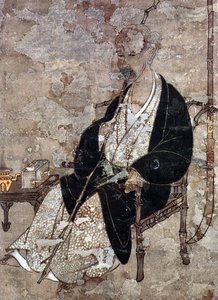
araki katsumochi, a prominent figure in japan's early tokugawa period, left an indelible mark on the art world with his genre scenes, historical illustrations, and captivating portraits. born in 1578, katsumochi was the son of araki murashige, a notable daimyō who met a tragic end, leading to katsumochi's adoption of his mother's family name, iwasa.artistic style and technique
katsumochi's work is characterized by its distinctive figures, featuring large heads and delicately drawn features. his unique brush technique, blending tosa and kanō elements, allowed him to excel in both color and monochrome ink-wash painting. despite being trained under kanō naizen of the renowned kanō school, katsumochi's style was more heavily influenced by the tosa school.notable works and legacy
one of katsumochi's most celebrated works is the series of portraits of the thirty-six poetry immortals (1640), commissioned by tokugawa iemitsu for a temple. this masterpiece, signed as "the artist matabei of the later current from tosa mitsunobu," showcases katsumochi's skill in capturing historical events and classical literature.- rakuchu rakugai zu byōbu (funaki version), a national treasure, is held by the tokyo national museum and depicts the kyoto landscape around 1615.
- hōkoku sairei zu byōbu, an important cultural property, is housed in the tokugawa art museum and showcases katsumochi's mastery of capturing festive scenes.
- katsumochi's workshop produced magnificent emakimono (picture scrolls) based on jōruri texts, with masterpieces like yamanaka tokiwa monogatari emaki, jōruri monogatari emaki, and horie monogatari emaki being designated as important cultural properties.
controversy and legacy
there is ongoing debate among scholars regarding whether katsumochi's works are indeed ukiyo-e or not. in japan, he is often regarded as the originator of ukiyo-e, while some theories suggest he was an independent tosa school painter due to his high social class patrons. conclusion katsumochi's enigmatic life and artistic contributions have left a lasting impact on japanese art. his unique style, blending traditional techniques with innovative brushwork, continues to fascinate art enthusiasts worldwide.- explore more of katsumochi's works at https://ArtsDot.com/@/araki-katsumochi
- learn about the tosa school and its influence on japanese art at the kanō school style art movement
- discover more about katsumochi's life and works at iwasa matabei - wikipedia
references
- araki katsumochi, wikipedia, https://en.wikipedia.org/wiki/iwasa_matabei
- the kanō school style art movement, ArtsDot.com, https://ArtsDot.com/@@/a@d3cpbv-history-painting-art-movement
- araki katsumochi's paintings, ArtsDot.com, https://ArtsDot.com/@/araki-katsumochi
related artists and movements
- katsushika isai, a japanese artist known for his landscapes and genre scenes, ArtsDot.com, https://ArtsDot.com/@/katsushika-isai
- the tosa school, a style of japanese art characterized by its use of gold leaf and bold colors, ArtsDot.com, https://ArtsDot.com/@@/a@d3cpbv-history-painting-art-movement
araki katsumochi
1578 - 1650 , Japan
Povezani članci

Katsushika Hokusai: 25 Remek-dela Japanskog Umetnika za Vaš Dom | ArtsDot
Uronite u svet Katsushike Hokusaija! Otkrijte 25 remek-dela japanskog umetnika, uključujući čuveni 'Veliki talas'. Ukiyo-e štampe, pejzaži i istorija iza svakog dela. Pronađite inspiraciju za dekor enterijera i kupite reprodukcije slika vrhunskog kvaliteta na ArtsDot.com.

Floating World: The Captivating Art and Legacy of Japanese Ukiyo-e
Explore the profound beauty of Japanese Ukiyo-e. Discover the history, masters like Hokusai, and the enduring legacy of the 'Floating World' through an expert art-historical lens.
Léonard Foujita: A Poetic Synthesis of Japanese Sensibility & European Modernism
Discover the captivating world of Léonard Foujita, a master bridging Japanese aesthetics & European Modernism. Explore his signature style, diverse works, and enduring legacy – essential reading for discerning art collectors.
Utagawa Kuniyoshi: A Master of Japanese Ukiyo-e – Narrative Innovation & the Fusion of Tradition with Popular Culture
Explore the captivating world of Utagawa Kuniyoshi, a master of Japanese ukiyo-e woodblock prints. Discover his innovative warrior scenes, vibrant landscapes & lasting legacy in 19th-century art history.
Tsukioka Yoshitoshi: A Master of Ukiyo-e's Final Flourish – Narrative, Innovation, and the Meiji Transition
Explore the life & art of Tsukioka Yoshitoshi, the last great master of ukiyo-e woodblock printing. Discover his dramatic warrior prints, innovative series like 'One Hundred Aspects of the Moon,' and legacy reflecting Japan's Meiji transition.