

 Pošalji
 Podeli
 Detalji o delu

 Преузми
 Slični predmeti
 Slajdovi
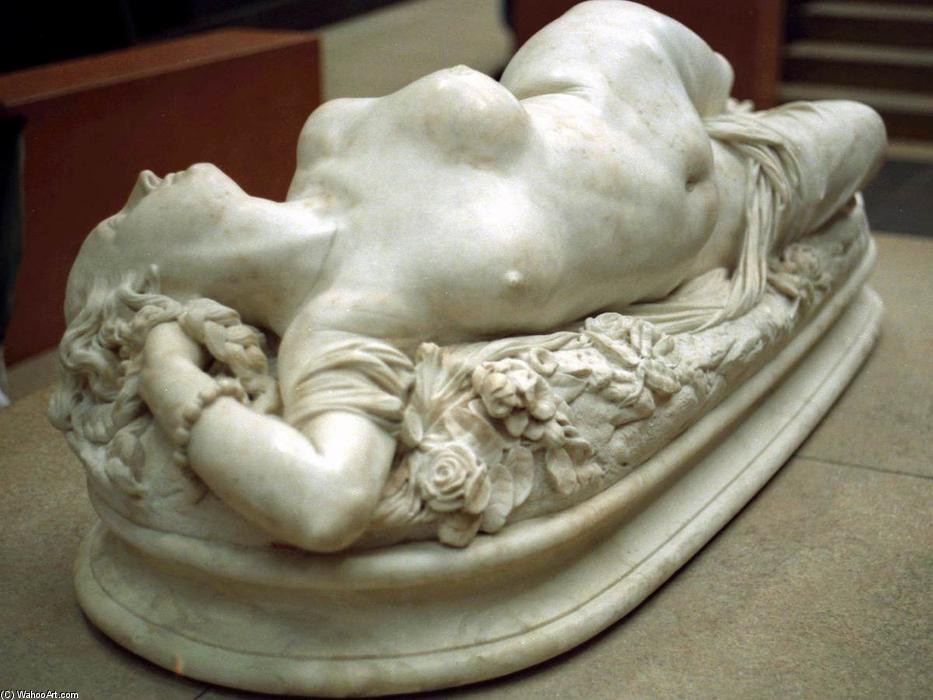
Woman Bitten by a Snake (Femme piquée par un serpent)
 Marble
- Sculpture
- Romantic Realism
 1847
1847- 19th Century
 56.0 x 180.0 cm
 Muzej d'Orsej
 Pročitaj više
Giclee štampa / Umetnički otisak
Giclée štampa ili print na platnu muzejskog kvaliteta uz brzu proizvodnju i fleksibilne opcije završne obrade. ( Kupi ručno naslikanu sliku Kupi digitalnu sliku)




































Izaberite jednu od naših unapred definisanih veličina koje odgovaraju originalnim proporcijama umetničkog dela.

Možete uneti sopstvene dimenzije kako biste umetničko delo prilagodili specifičnom okviru ili prostoru. Ako odabrani format ne odgovara proporcijama originalne slike, mi ćemo ili iscrtati deo dela ili proširiti sliku pomoću ogledane ivice ili jednobojnog popunjavanja. Digitalni prikaz će vam biti poslat na odobrenje pre početka proizvodnje.
Imajte na umu da pregled na ekranu ne odražava stvarno iscrtavanje ili proširivanje. Samo će prikaz (mockup) precizno pokazati finalnu kompoziciju.
Iako su prilagođene dimenzije dostupne, preporučujemo da odaberete dimenziju sa unapred definisane liste kako biste očuvali originalne proporcije.
Dostava širom sveta () za 2 nedelje umesto uobičajenih 4/5 nedelja. (29 август)

Besplatna ekspresna dostava širom sveta

Visokokvalitetno laneno platno

Kompletno osiguranje transporta

Garancija povraćaja carine i uvoznih dažbina

Garancija vernosti boja

Politika povrata u roku od 60 dana (samo u slučaju nedostataka)

Garancija povrata novca od 100%

Popust pri grupnoj kupovini
 Opcija sa staklom dostupna je samo za dimenzije manje od 110 cm

Woman Bitten by a Snake (Femme piquée par un serpent)
Giclee štampa / Umetnički otisak
Dimenzije reprodukcije
-


Konačna cena
$ 62
Woman Bitten by a Snake – Auguste Clésinger
Auguste Clésinger’s “Woman Bitten by a Serpent,” sculpted in 1847 from Carrara marble, remains an arresting testament to Romantic artistic ambition and the enduring fascination with eroticism within classical ideals. Now housed at the Musée d'Orsay in Paris—a location that underscores its significance as one of the Salon’s most scandalous achievements—the sculpture transcends mere depiction; it embodies a profound exploration of vulnerability, pain, and desire. Its creation coincided with a pivotal moment in artistic history, marking a decisive departure from Neoclassical restraint toward a more emotionally charged realism championed by figures like Théophile Gautier and Charles Baudelaire.The Model and Context: Apollonie Sabatier
The genesis of “Woman Bitten by a Serpent” lies in the collaboration between Clésinger and Apollonie Sabatier, a Parisian courtesan who captivated numerous artists of her era. Sabatier’s nude pose—a deliberate allusion to classical sculptures portraying idealized beauty—was meticulously crafted from life casts, ensuring unparalleled accuracy in capturing the contours of human flesh and conveying the visceral experience of agony. This method, favored by Clésinger, exemplifies his commitment to realism while simultaneously referencing the artistic traditions of antiquity. The sculpture’s debut at the Salon of 1847 provoked considerable controversy, fueled by critiques that questioned the propriety of portraying nudity in such a provocative manner—a debate that continues to resonate within art historical discourse.Technique and Material Considerations
Clésinger's masterful manipulation of marble is evident throughout the sculpture’s surface texture. The artist painstakingly achieved subtle variations in tone and luminosity, mirroring the nuances of human skin and conveying the palpable sensation of pain. Detailed modeling—particularly on the thighs—demonstrates Clésinger’s meticulous attention to anatomical precision, reflecting his profound understanding of sculptural technique. Furthermore, the incorporation of delicate floral ornamentation—primarily lilies—adds a layer of symbolic richness to the composition. Lilies traditionally represent purity and resurrection, subtly juxtaposing the vulnerability depicted in the woman's pose with an aspiration toward spiritual renewal.Symbolism and Emotional Resonance
Beyond its technical brilliance, “Woman Bitten by a Serpent” operates on multiple levels of symbolism. The snake itself—a recurring motif in Western mythology—represents temptation, danger, and mortality, embodying the destructive forces that threaten human equilibrium. Simultaneously, however, the sculpture speaks to themes of resilience and transformation. The woman’s contorted posture conveys intense suffering, yet her gaze retains a serene composure—suggesting an inner fortitude capable of overcoming adversity. This duality underscores Clésinger's artistic intention: to confront viewers with uncomfortable truths about human experience while simultaneously affirming the capacity for beauty and grace amidst pain.Legacy and Influence
“Woman Bitten by a Serpent” stands as a cornerstone of Romantic sculpture, profoundly influencing subsequent artists who sought to express emotion and psychological complexity in their works. Its daring aesthetic—characterized by unflinching realism combined with sensual allure—challenged prevailing artistic conventions and paved the way for explorations into themes of eroticism and vulnerability that would continue to captivate audiences throughout the Victorian era. Today, reproductions of this iconic sculpture adorn homes and galleries worldwide, serving as enduring reminders of Clésinger’s artistic genius and the transformative power of art history.Srodna umetnička dela
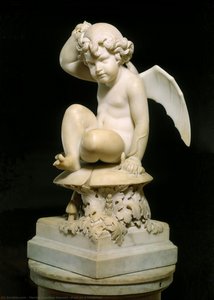
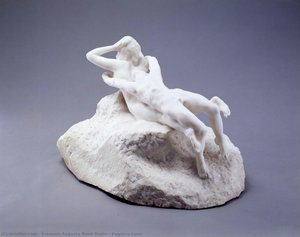
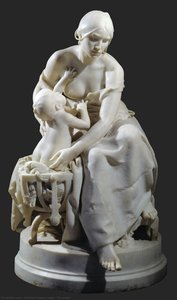

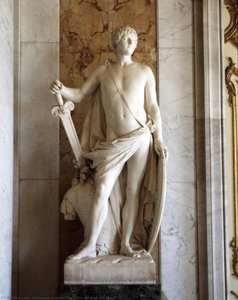
Biografija umetnika
Auguste Clésinger: Life and Legacy
Early Life and Training
- Born: October 22, 1814, in Besançon, France.
- Auguste Clésinger came from an artistic family; his father, Georges-Philippe Clésinger, was a sculptor who provided Auguste with his initial training.
- This early exposure instilled in him a foundational understanding of sculptural techniques and aesthetics.
Artistic Development and Style
- Clésinger’s artistic style evolved through the 19th century, initially embracing Neoclassical principles but gradually incorporating elements of Realism and Romanticism.
- He skillfully blended technical precision with emotional intensity in his works.
- His sculptures often depict dramatic narratives and sensuous figures, showcasing a mastery of anatomy and form.
Major Works and Achievements
- Woman Bitten by a Serpent (1847): This sculpture caused a sensation at the Paris Salon due to its dramatic realism and erotic undertones. It was modeled from life casts of Apollonie Sabatier.
- Madame Sabatier (1847): A marble portrait of his model, Apollonie Sabatier, further establishing Clésinger’s reputation for capturing beauty and sensuality.
- Chopin's Funerary Monument (1850): Commissioned after the composer Frédéric Chopin’s death, this white marble monument at Père Lachaise Cemetery is a poignant tribute to the musician.
- Angel of Grief: A deeply moving sculpture embodying Baroque drama and pathos.
- He also created busts of prominent figures like Rachel Félix and Théophile Gautier, and a statue of Louise of Savoy.
Influences and Relationships
- Influenced by: His father, Georges-Philippe Clésinger, provided his initial artistic foundation.
- Clésinger’s association with Apollonie Sabatier, a salonnière and mistress of several prominent artists including Charles Baudelaire, exposed him to intellectual and artistic circles.
- His marriage in 1847 to Solange Dudevant, daughter of George Sand, further connected him to literary society.
Historical Significance and Legacy
- Clésinger’s work reflects the artistic currents of 19th-century France, bridging Neoclassicism with emerging Realist tendencies.
- Recognition: He received the Knight's Cross of the Légion d'honneur in 1849 and was promoted to Officer in 1864.
- His sculptures continue to be admired for their technical skill, emotional depth, and dramatic impact. His works are displayed at prominent museums such as the Musée d’Orsay.
- Death: He died on January 5, 1883, in Paris, and is buried in Père Lachaise Cemetery.
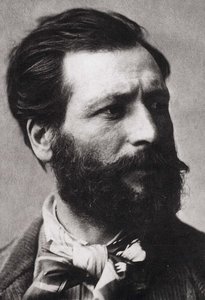
auguste clésinger
1814 - 1883 , France
Osnovne informacije
- Birth Date: 1814-10-22
- Birth Place: Besançon, France
- Death Date: 1883-01-05
- Influenced: None, 'influenced by': 'Georges-Philippe Clésinger (father)', 'movement': ['Realism', 'Romanticism'], 'name': 'Auguste Clésinger', 'nationality': 'French', 'notable works': ['Woman Bitten by a Serpent', 'Angel of Grief', 'Madame Sabatier',
Povezani članci

Bronze Sculptures That Defined Art History | ArtsDot
Journey through art history with our Top 10 bronze sculptures! Explore masterpieces by Rodin, Michelangelo & more. Discover stories behind iconic statues and find museum-quality reproductions for your home decor at ArtsDot.com.
The Enduring Allure of Marble in Art History: From Classical Sculpture to Modern Abstraction
Explore the captivating history of marble sculpture from ancient Greece to modern art. Discover renowned artists like Canova & Michelangelo, carving techniques, and investment insights at ArtsDot.

The Enduring Form: Exploring Themes & Techniques in Sculpture Across Historical Periods
Explore the rich history of sculpture from ancient masterpieces to contemporary innovations. Discover key techniques, influential artists & investment potential for discerning art collectors.

Bronze Age to Modern Masters: 10 Sculptures That Redefined Art | ArtsDot
Journey through art history with 10 legendary bronze sculptures – from Michelangelo's David to Rodin’s Thinker. Explore the stories, techniques & timeless beauty of these masterpieces. Find museum-quality reproductions & elevate your home decor on ArtsDot.com.

The Enduring Form: Sculpture Across History, Technique & Emotional Resonance
Explore the rich history of sculpture with ArtsDot. Discover key techniques, influential artists & investment potential for discerning collectors. Expert insights into valuing and collecting timeless masterpieces.

