

 Pregledaj u prostoru
 Pošalji
 Podeli
 Detalji o delu

 Преузми
 Slični predmeti
 Rendgenski snimak
 Slajdovi
 Stats
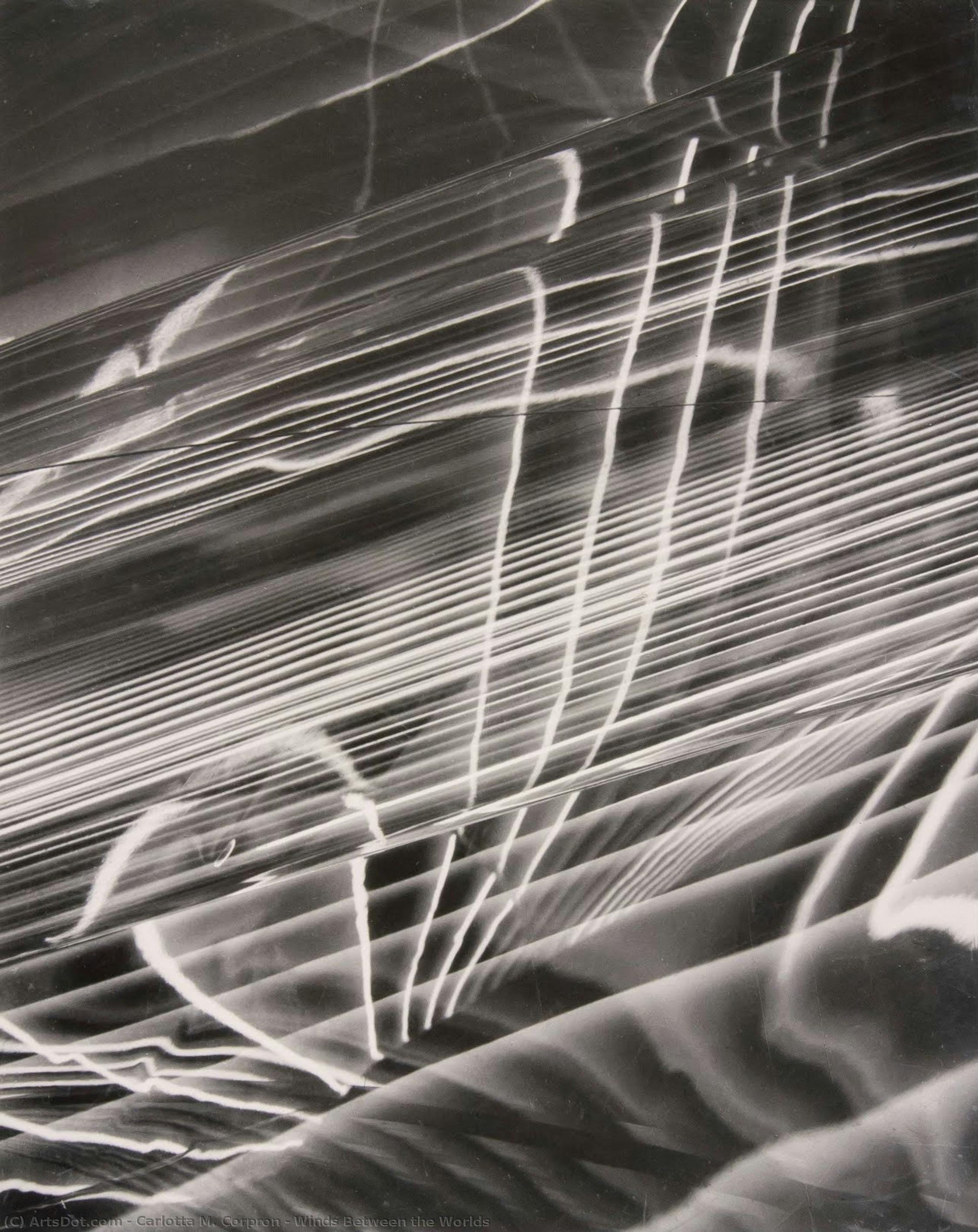
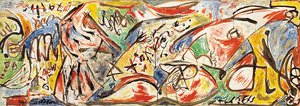
StatsWinds Between the Worlds
 Acrylic On Canvas
- WallArt
- Abstract Expressionism
 1948
1948- Modern
 26.0 x 33.0 cm
 Amon Carter Museum of American Art
 Pročitaj više
Kupite digitalnu sliku visoke rezolucije i poboljšanog kvaliteta, koja je znatno superiornija od onoga što vidite u online prikazu.
Svaka datoteka je pedantno pripremljena od strane naših stručnjaka koristeći napredne alate i profesionalnu ručnu retušu. Osiguravamo da svaka slika ima izuzetnu oštrinu, preciznu reprodukciju boja i fine detalje.
Konačna datoteka se dostavlja putem e-pošte u roku od 72 sata, optimizovana za neposrednu upotrebu u profesionalnim, izdavačkim i štamparskim okruženjima. To je isti kvalitet kojem veruju vrhunski studiji dizajna, izdavači i galerije.
Digitalna slika
Preuzmite datoteku visoke rezolucije za ličnu upotrebu, štampanje i kreativne projekte. ( Switch to Print Kupi ručno naslikanu sliku)
Uključeno uz svaku porudžbinu digitalne slike
Profesionalna digitalna isporuka, zagarantovana
Kada odaberete ArtsDot.com, ne dobijate samo sliku – vi primate profesionalno unapređeno digitalno umetničko delo, izrađeno sa najvećom preciznošću i uz garanciju zadovoljstva. Evo svega što automatski dolazi uz vašu porudžbinu:

Brza dostava putem e-pošte
Vaša digitalna slika visoke rezolucije biće vam poslata putem e-pošte u roku od 72 sata od poručivanja – spremna za trenutnu upotrebu.

Digitalna datoteka unapređena veštačkom inteligencijom
Vaše umetničko delo je profesionalno optimizovano korišćenjem naprednih AI alata i ručne obrade, čime se osiguravaju maksimalni detalji, oštrina i preciznost boja.

Besplatna ponovna isporuka doživotno
Slučajno ste obrisali ili izgubili svoju datoteku? Ne brinite – poslaćemo vam je ponovo u bilo kom trenutku, potpuno besplatno.

Bez troškova uvoza – zauvek
Uživajte u svojim umetničkim delima trenutno, bez carine, dažbina ili troškova dostave – digitalni download je uvek bez poreza.

Garancija vernosti boja
Uz pomoć profesionalnih alata i upravljanja bojama, osiguravamo da vaša digitalna slika što vernije odražava originalne boje.

Garancija zadovoljstva od 100 dana
Ako niste zadovoljni svojom digitalnom slikom, izvršićemo reviziju ili ćemo vam vratiti 100% novca u roku od 100 dana – bez ikakvih pitanja.

100% garancija povrata novca
Niste zadovoljni? Dobijte puni povraćaj novca u roku od 100 dana od prijema digitalne datoteke – bez suvišnih pitanja.

Popusti na velike porudžbine
Kupite 3 slike, uštedite 10% - Kupite 5 slika, uštedite 15% - Kupite 10+ slika, uštedite 20%. Odlično za kreativne projekte, galerije i agencije.
Winds Between the Worlds: A Dance of Line and Light by Carlotta M. Corpron
Carlotta M. Corpron’s “Winds Between the Worlds,” painted in 1948, is more than just an abstract composition; it's a carefully constructed meditation on movement, energy, and the unseen forces that shape our perception of reality. This captivating piece, measuring 26 x 33 cm, offers a rare glimpse into the mind of a pioneering American artist who quietly yet powerfully contributed to the burgeoning field of abstract expressionism during a pivotal moment in art history. The photograph itself – a meticulously rendered grayscale image – serves as an exquisite window into Corpron’s artistic process and her profound understanding of light and texture.
A Bauhaus-Influenced Vision
Born in Erie, Pennsylvania, in 1901, Carlotta Corpron's life was marked by a remarkable journey of observation and experimentation. Her father’s work as a medical missionary in India instilled within her a deep appreciation for the world beyond the familiar, fostering an independent spirit and a keen eye for detail – qualities that would become central to her artistic practice. Corpron’s work is deeply rooted in the principles of the Bauhaus movement, emphasizing geometric abstraction and exploring the relationship between form and color (though here, the monochrome palette amplifies the impact). This influence is evident in the deliberate arrangement of lines, creating a dynamic composition that feels both controlled and utterly free.
- Historical Context: The late 1940s were a time of significant artistic innovation. Abstract expressionism was gaining momentum, challenging traditional representational art and exploring new ways to convey emotion and ideas through non-objective forms.
- Bauhaus Principles: Corpron’s work reflects the Bauhaus emphasis on functional form, geometric abstraction, and the exploration of materials – in this case, paint itself – as expressive elements.
The Language of Line and Texture
“Winds Between the Worlds” is dominated by a masterful manipulation of line. Varying in thickness and intensity, these lines swirl and intersect, creating a sense of perpetual motion that draws the viewer’s eye across the canvas. The artist's technique – likely employing brushstrokes or perhaps even layering techniques – results in a rich textural landscape; smooth areas contrast with grainy patches, inviting close inspection and stimulating tactile imagination. The grayscale palette intensifies these textures, highlighting the physicality of the paint and adding to the artwork’s ethereal quality.
Symbolism and Emotional Resonance
The swirling lines undoubtedly evoke a sense of wind, currents, or perhaps even unseen energies – aligning with the painting's evocative title. The monochromatic color scheme contributes significantly to the work’s contemplative mood, inviting introspection and encouraging viewers to project their own emotions onto the composition. There is an undeniable feeling of dynamism and fluidity, suggesting a constant state of flux and transformation.
A Timeless Masterpiece – A Reproduction for Your Space
ArtsDot offers meticulously crafted hand-painted reproductions of “Winds Between the Worlds,” ensuring that you experience the full impact of Corpron’s vision. Each reproduction is created using archival quality materials, guaranteeing its longevity and preserving the nuances of the original artwork. This piece would be a stunning addition to any collection, bringing a touch of abstract elegance and contemplative energy to your home or office. Its timeless appeal makes it an ideal choice for interior designers seeking to create spaces that inspire and provoke thought.
Srodna umetnička dela
Biografija umetnika
Carlotta M. Corpron: Weaving Light and Reflection into the American Abstract
Carlotta Mae Corpron (December 9, 1901 – April 17, 1988) remains a quietly significant figure in the development of American abstract photography. Born in Erie, Pennsylvania, and later residing primarily in Texas, her career spanned seven decades, marked by an unwavering dedication to exploring the subtle poetry of light and its interaction with form. While she didn’t achieve widespread fame during her lifetime, Corpron's innovative techniques and deeply personal vision have earned her recognition as a key pioneer of Bauhaus-influenced photography within the Lone Star State and a crucial voice in the burgeoning field of abstract art.
Corpron’s early life was shaped by a unique upbringing. Her father served as a medical missionary in India, exposing her to a world far removed from the American Midwest. This period instilled in her a sense of independence and observation—qualities that would profoundly influence her artistic approach. Returning to the United States in 1920, she pursued formal education at Michigan State Normal College and Columbia University’s Teachers College, acquiring a solid foundation in art education and design. However, it was her initial foray into photography as a teaching tool – capturing the intricate patterns of nature for her students – that truly ignited her artistic passion.
The Influence of Bauhaus and Moholy-Nagy
Corpron’s photographic style underwent a dramatic transformation in the early 1940s, largely due to the impact of László Moholy-Nagy, a prominent figure in the Bauhaus movement. When Moholy-Nagy visited Denton, Texas, as a visiting instructor at Texas State College for Women (now Texas Woman’s University), he introduced Corpron to the revolutionary techniques of “photogram” – creating images without a camera, using light and objects placed on photographic paper. This process liberated her from traditional compositional constraints and opened up entirely new avenues for experimentation.
However, it was her collaboration with Gyorgy Kepes, Moholy-Nagy’s associate, that proved to be the most formative influence. Kepes recognized Corpron's innate talent and encouraged her to delve deeper into the manipulation of light itself. He introduced her to the “light box,” a device designed for controlled photographic studies of illumination, allowing her to meticulously dissect and reconstruct light patterns. Kepes’s emphasis on exploring the language of vision—the way we perceive and interpret the world through our senses—resonated deeply with Corpron's artistic sensibilities, shaping her subsequent work.
A Distinctive Style: Light Drawings and Space Compositions
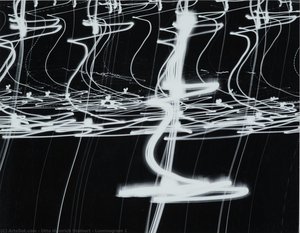
Corpron’s photographic output during this period is characterized by a remarkable sensitivity to light. Her “Light Drawings,” created by tracking the movement of light sources – often the vibrant glow of carnival rides – resulted in dynamic, almost ethereal images filled with streaks and patterns. These works demonstrated her ability to capture fleeting moments of illumination and translate them into visually arresting compositions.
Perhaps even more significant were her “Space Compositions.” These pieces, frequently utilizing simple objects like eggs, shells, or glass, explored the way light interacted with three-dimensional form. By carefully controlling the placement of these elements and manipulating reflected light, Corpron created images that seemed to defy perspective, evoking a sense of depth and mystery—as if peering into an underwater realm. Her “Fluid Light Designs,” utilizing translucent materials like plastic, further showcased her mastery of reflection and refraction, producing shimmering, almost liquid-like effects.
Legacy and Recognition
Carlotta Corpron’s influence extends far beyond the confines of Texas. Her pioneering work in abstract photography helped to pave the way for subsequent generations of artists exploring light as a subject matter. While she remained largely outside the mainstream art world during her lifetime, her photographs are now recognized as important contributions to American abstract art history. The Amon Carter Museum of American Art has included several of her works in its permanent collection, and her archive—containing over 800 negatives—provides invaluable insight into her creative process.
Her legacy is also preserved through the work of her students, including Ida Lansky and Barbara Maples, who were profoundly influenced by Corpron’s unique vision. Further research can be found on platforms like Wikipedia, offering a comprehensive overview of her life and career. Carlotta M. Corpron's dedication to capturing the subtle beauty of light continues to inspire artists today.
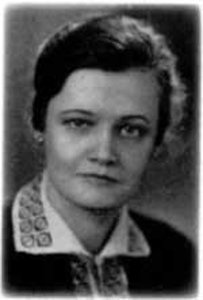
carlotta m. corpron
1901 - 1988 , United States of America
Kratke činjenice
- Artistic Movement Or Style: Abstract photography, Bauhaus influence
- Artists Or Movements Influenced By This Artist: ['Bauhaus photography']
- Artists Who Influenced This Artist:
- László Moholy-Nagy
- György Kepes
- Date Of Birth: December 9, 1901
- Date Of Death: April 17, 1988
- Full Name: Carlotta M. Corpron
- Nationality: American
- Notable Artworks:
- Winds between the worlds
- Design with oil tank
- Coral and starfish
- Place Of Birth: Erie, Pennsylvania, USA