

 Pregledaj u prostoru
 Pošalji
 Podeli
 Detalji o delu

 Преузми
 Slični predmeti
 Rendgenski snimak
 Slajdovi
Guns, Germs and Steel


 Pročitaj više
Giclee štampa / Umetnički otisak
Giclée štampa ili print na platnu muzejskog kvaliteta uz brzu proizvodnju i fleksibilne opcije završne obrade. ( Kupi ručno naslikanu sliku Kupi digitalnu sliku)




P118B $10

P118H $10

P118W $10

P438Z $10

P508JH $12

P508YH $12

P805H $10

P805Z $10

P919BZ $10

P919G $10

P919XJ $10

P959ZH $10

P968JZ $12

W106C $8

W218G $10

W218JH $8

W218Y $10

W307PJ $10

W316G $10

W316PJ $8

W316Y $10

W398PJ $8

W4111J $10

W500HY $15

W500JH $15

W692G $12

W849H $8

W940BG $15

W953PJ $8




Izaberite jednu od naših unapred definisanih veličina koje odgovaraju originalnim proporcijama umetničkog dela.

Možete uneti sopstvene dimenzije kako biste umetničko delo prilagodili specifičnom okviru ili prostoru. Ako odabrani format ne odgovara proporcijama originalne slike, mi ćemo ili iscrtati deo dela ili proširiti sliku pomoću ogledane ivice ili jednobojnog popunjavanja. Digitalni prikaz će vam biti poslat na odobrenje pre početka proizvodnje.
Imajte na umu da pregled na ekranu ne odražava stvarno iscrtavanje ili proširivanje. Samo će prikaz (mockup) precizno pokazati finalnu kompoziciju.
Iako su prilagođene dimenzije dostupne, preporučujemo da odaberete dimenziju sa unapred definisane liste kako biste očuvali originalne proporcije.
Dostava širom sveta () za 2 nedelje umesto uobičajenih 4/5 nedelja. (7 септембар)

Besplatna ekspresna dostava širom sveta

Visokokvalitetno laneno platno

Kompletno osiguranje transporta

Garancija povraćaja carine i uvoznih dažbina

Garancija vernosti boja

Politika povraćaja u roku od 100 dana (isključivo u slučaju nedostataka)

Garancija povrata novca od 100%

Popust pri grupnoj kupovini
 Opcija sa staklom dostupna je samo za dimenzije manje od 110 cm

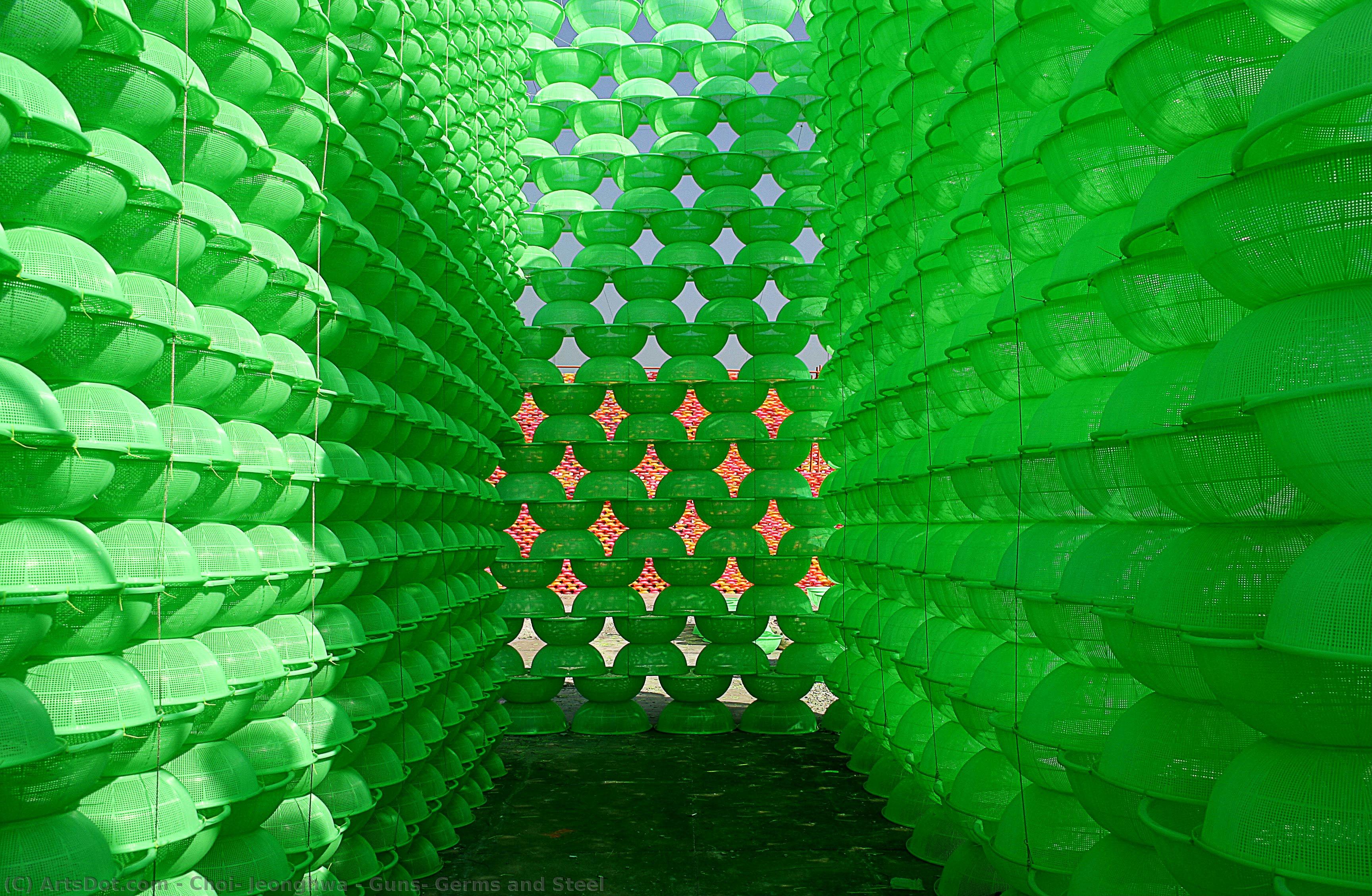
Guns, Germs and Steel
Giclee štampa / Umetnički otisak
Dimenzije reprodukcije
-


Konačna cena
$ 62
A Kaleidoscope of Connectivity: Exploring Guns, Germs and Steel
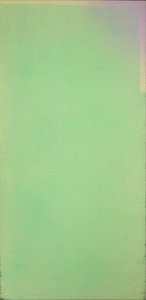
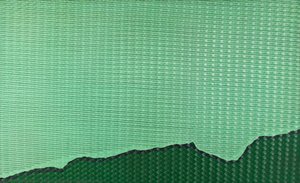
In the vibrant and often surreal landscape of contemporary Korean art, Choi Jeonghwa stands as a master of transforming the mundane into the monumental. His work, Guns, Germs and Steel, serves as a mesmerizing portal into a world where structure meets spontaneity. At first glance, the viewer is pulled into a lush, verdant tunnel, a passage that feels both organic and meticulously constructed. This green corridor is not merely a void but a living entity, adorned with an array of multicolored circles that cling to the walls like celestial bodies or biological cells. The interplay of red, blue, and yellow spheres creates a rhythmic pulse within the composition, guiding the eye through a labyrinthine journey that feels simultaneously claustrophobic and infinitely expansive.
The technique employed in this piece evokes a sense of layered depth, reminiscent of both industrial design and natural growth. Each circle, varying in size and shape, acts as a focal point of light and color, breaking the monochromatic dominance of the green tunnel. This juxtaposition suggests a tension between the controlled environment of human construction and the chaotic beauty of biological life. For the discerning collector or interior designer, this painting offers a profound sense of movement; it is a piece that breathes within a room, providing a dynamic energy that shifts as one moves around it. The way the light seems to catch the edges of these colorful orbs creates an illusion of three-dimensionality, making the canvas feel less like a flat surface and more like a window into another dimension.
Symbolism and the Echoes of History
The title, Guns, Germs and Steel, carries heavy historical and sociological weight, referencing the forces that have shaped human civilization. While the visual elements appear playful and abstract, there is an underlying intellectual gravity to the work. The tunnel can be interpreted as the passage of time or the trajectory of human progress—a corridor shaped by the very tools and biological realities mentioned in its name. The colorful circles may represent the diverse cultures, populations, or even the microscopic organisms that have traveled through these historical conduits, leaving their mark on the walls of our collective memory. Choi Jeonghwa masterfully balances this heavy conceptual framework with an aesthetic of playfulness, ensuring that the art remains accessible and emotionally resonant.
For those looking to integrate a piece of such profound depth into a curated space, Guns, Germs and Steel offers more than just visual appeal; it offers a conversation. It invites contemplation on how much of our modern world is built upon the remnants of the past and how much of our beauty is derived from the unexpected intersections of technology and nature. Whether placed in a minimalist contemporary gallery or as a bold statement piece in a sophisticated residential study, this artwork serves as a captivating reminder of the complex, colorful, and often turbulent journey of existence.
Srodna umetnička dela
Biografija umetnika
The Alchemy of the Everyday: The Visionary World of Choi Jeonghwa
In the vibrant, neon-soaked landscape of contemporary art, few figures command attention with as much playful audacity as Choi Jeonghwa. Born in Seoul in 1961, Choi has emerged not merely as a sculptor or a designer, but as a master of transformation. His practice is a profound meditation on the ephemeral nature of modern life, achieved through the radical reimagining of the mundane. By breathing new life into discarded plastics, polystyrene, and mass-produced trinkets, he bridges the gap between high art and the kitsch of daily existence, creating a visual language that is as much about ecological awareness as it is about pure, unadulterated joy.
Choi’s artistic journey is deeply intertwined with the rapid metamorphosis of Seoul itself. Growing up amidst the city's burgeoning creative energy, he developed an early fascination with the intersection of graphic design, industrial aesthetics, and the sheer visual density of urban life. This multidisciplinary foundation allowed him to approach sculpture without the constraints of traditional medium-specific boundaries. His work does not merely sit in a gallery; it breathes within the space, often expanding into monumental installations that challenge our perceptions of scale and value. He possesses a unique ability to take the "cheap" and the "disposable"—materials often ignored or reviled by the art establishment—and elevate them to the status of breathtaking spectacle.
Influences and the Spirit of Rebellion
The conceptual heartbeat of Choi’s work is deeply rooted in the avant-garde traditions of Fluxus and Dadaism. These movements, which championed absurdity, chance, and the dismantling of academic hierarchies, provided him with a blueprint for artistic rebellion. From these influences, Choi inherited a belief that art should be accessible, humorous, and even provocative. He rejects the solemnity often associated with fine art, opting instead for an aesthetic of "pop" that invites the viewer to participate in a shared moment of wonder. This spirit of experimentation is evident in his mastery of unconventional materials; he manip deconstructed wires, recycled plastics, and inflated balloons to create structures that feel both weightless and imposing.
His development as an artist was marked by a rigorous commitment to the tactile reality of his chosen media. Rather than seeking permanence through bronze or marble, Choi embraces the temporary. His sculptures often mirror the lifecycle of the objects they are composed of—vibrant, blooming, and eventually subject to the same decay as the consumer culture they critique. This tension between the spectacular visual impact and the inherent fragility of the materials creates a poignant dialogue about consumption, waste, and the fleeting nature of beauty in a globalized society.
Global Recognition and Lasting Legacy
The international art community has long recognized Choi’s ability to turn the ephemeral into the iconic. One of his most celebrated achievements remains the “White Lotus,” a colossal, ethereal flower constructed from inflated polystyrene that captivated audiences at the 2005 Venice Biennale. This work served as a definitive statement of his artistic philosophy: using the most humble, mass-produced elements to create something of transcendent, monumental beauty. Such works have cemented his reputation as an artist who can navigate the complexities of public art, architecture, and installation with seamless grace.
Beyond the gallery walls, Choi Jeonghwa’s significance lies in his ability to democratize the aesthetic experience. His large-scale installations often function as public interventions, transforming urban spaces into playgrounds of color and light. Through his work, he forces a confrontation with our ecological footprint, reminding us that even in the debris of our consumerist habits, there is a profound potential for rebirth. His legacy is one of continuous reinvention, proving that art is not found in the preciousness of the material, but in the transformative power of the artist's gaze.
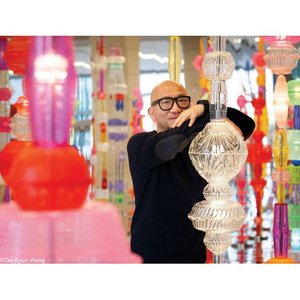
choi, jeonghwa
1961 - , South Korea
Osnovne informacije
- Artistic Movement Or Style: Contemporary Sculpture
- Date Of Birth: Seoul, South Korea (1961)
- Date Of Death: Living
- Full Name: Choi Jeonghwa
- Nationality: Korean
- Notable Artworks:
- White Lotus
- Breathing Flower
- Place Of Birth: Seoul
Povezani članci
Verdant Visions: Exploring the Symbolism & Aesthetic Impact of Green in Art History
Explore the rich history & symbolism of green in art! Discover iconic paintings, techniques, and how to bring verdant harmony into your home with ArtsDot's expert guide.

Kandinsky's Masterpieces: 25 Paintings That Define Abstract Art | ArtsDot
Journey through Wassily Kandinsky's 25 most iconic abstract paintings. Explore his revolutionary use of color, form & spiritual expressionism. Find museum-quality Kandinsky reproductions and elevate your home decor with ArtsDot.com. Discover all masterpieces on ArtsDot.com!
Abstraktni Ekspresionizam: 10 Remek Dela Koja Su Definisala Pokret
Otkrijte 10 remek dela koja su definisala apstraktni ekspresionizam! Istražite dela Pola Krausa, Džejson Poloka i drugih. Saznajte priče iza umetnosti i inspirisanje za dekoraciju doma. Eksplorirajte kolekciju na ArtsDot.com!

Top 10 dela geometrijske apstrakcije koje morate videti | ArtsDot.com
Istražite 10 remek-dela geometrijske apstrakcije – Mondrian, Malevič i Kandinski. Otkrijte priče iza ovih ikoničnih slika i pronađite inspiraciju za dekoraciju enterijera sa ArtsDot.com! Reprodukcije vrhunskog kvaliteta.
Emerald Visions: Top 10 Paintings Dominated by Cadmium Green |
Explore 10 iconic paintings where cadmium green reigns supreme! From Monet to Van Gogh, discover the stories behind these masterpieces & the power of color. Find museum-quality art reproductions and elevate your home decor on .