

 Pregledaj u prostoru
 Pošalji
 Podeli
 Detalji o delu

 Преузми
 Slični predmeti
 Rendgenski snimak
 Slajdovi
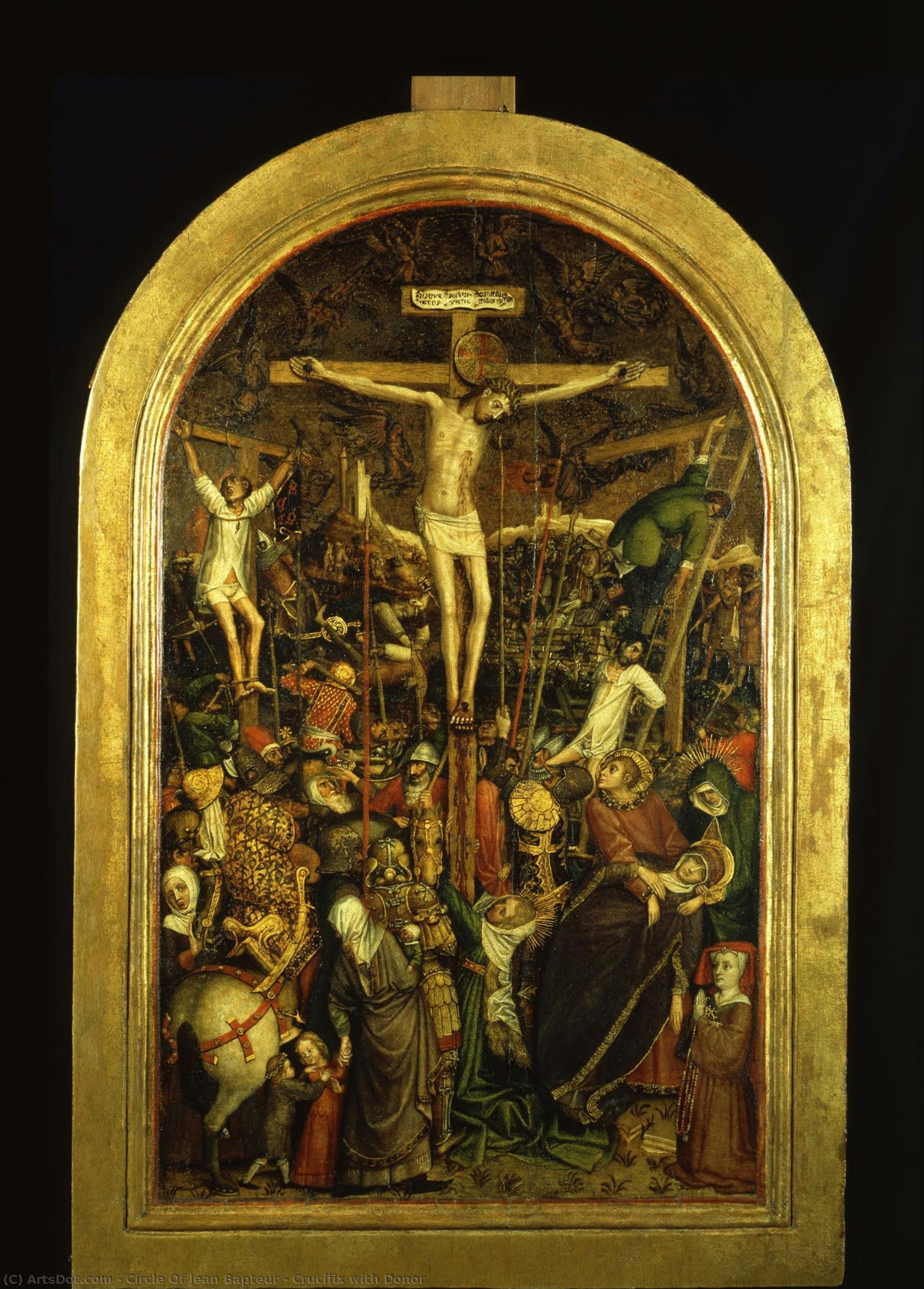
Crucifix with Donor
 Late Gothic
 Late Medieval
 48.0 x 79.0 cm
 Palazzo Madama
 Pročitaj više
Ručno rađena uljana reprodukcija
Ručno oslikano uljanim bojama na platnu u dimenzijama i okviru po vašem izboru, izrađeno po porudžbini od strane naših umetnika. ( Kupi print Kupi digitalnu sliku)




P118B $10

P118H $10

P118W $10

P438Z $10

P508JH $12

P508YH $12

P805H $10

P805Z $10

P919BZ $10

P919G $10

P919XJ $10

P959ZH $10

P968JZ $12

W106C $8

W218G $10

W218JH $8

W218Y $10

W307PJ $10

W316G $10

W316PJ $8

W316Y $10

W398PJ $8

W4111J $10

W500HY $15

W500JH $15

W692G $12

W849H $8

W940BG $15

W953PJ $8




Izaberite jednu od naših unapred definisanih veličina koje odgovaraju originalnim proporcijama umetničkog dela.

Можете унети сопствене димензије како бисте прилагодили дело одређеном оквиру или простору. Ако одабрана величина не одговара пропорцијама оригинала, слика ће бити исечена или проширена додатним елементима који се ручно насликавају. Дигитални prikaz ће вам бити послат на одобрење пре почетка производње.
Имајте на уму да преглед на екрану не одражава стварно исецање или проширење. Само приказ (mockup) ће тачно приказати коначну композицију.
Иако су доступне прилагођене величине, препоручујемо да одаберете димензију из дефинисане листе како бисте сачували оригиналне пропорције.
Nakon narudžbine, tim ArtsDot.com će klijentu putem e-pošte poslati uputstva i dostaviti prikaz predloženog rešenja
Isporuka širom sveta () za 3/4 nedelje umesto uobičajenih 5 nedelja. (6 септембар). Bez kompromisa po pitanju kvaliteta.

Besplatna ekspresna dostava širom sveta

Visokokvalitetno laneno platno

Kompletno osiguranje transporta

Garancija povraćaja carine i uvoznih dažbina

Garancija vernosti boja

Politika povrata u roku od 100 dana (samo u slučaju nedostataka)

Garancija povrata novca od 100%

Popust pri grupnoj kupovini
 Opcija sa staklom dostupna je samo za dimenzije manje od 110 cm

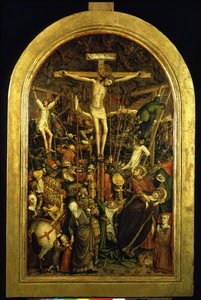
Crucifix with Donor
Tehnika reprodukcije
Dimenzije reprodukcije
-


Konačna cena
$ 263
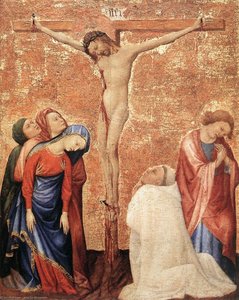
A Vision of Devotion: The Drama of the Crucifix with Donor
In the quiet intensity of this Late Gothic masterpiece, the viewer is thrust into the heart of a profound theological moment. Crucifix with Donor serves as more than just a religious icon; it is a window into the turbulent soul of the 15th century. At its center, the crucified Christ hangs suspended, a focal point of divine suffering that anchors an otherwise chaotic and swirling composition. Surrounding this central tragedy is a crowd that feels startlingly alive—a sea of humanity captured in various states of grief, awe, and devotion. The presence of Mary Magdalene and Saint John provides a familiar emotional anchor, yet the inclusion of a donor, dressed in the exquisite fashions of 1435-1445, bridges the gap between the celestial event and the earthly realm of the viewer, inviting us to participate in this eternal act of worship.
The artistry of this work, attributed to the circle of Jean Bapteur, reveals a fascinating intersection between the delicate world of manuscript illumination and the grander scale of panel painting. One can sense the influence of the master illuminator in the meticulous attention paid to the minute details: the intricate embroidery of the garments, the subtle textures of the fabrics, and the breathtakingly precise landscape that recedes into the distance. This technique creates a sensory richness that is both intimate and expansive. The painter’s ability to render precious details against a backdrop of atmospheric depth suggests a hand trained in the prestigious courts of Savoy, where every stitch of cloth and every leaf in the background was an opportunity for spiritual storytelling.
Beyond its technical brilliance, the painting possesses a visceral emotional power that remains undiminished by the passage of centuries. There is a palpable sense of horror and tension derived from the crowded, restless movement of the figures, which contrasts sharply with the stillness of the cross. This duality—the frantic energy of the world versus the sacrificial silence of Christ—creates a psychological depth that captivates the modern eye. For the collector or the interior designer, this piece offers a profound sense of history and gravity. It is an artwork that does not merely decorate a space but transforms it, providing a centerpiece of contemplative beauty and historical weight that speaks to the enduring human search for meaning amidst the chaos of existence.
Srodna umetnička dela
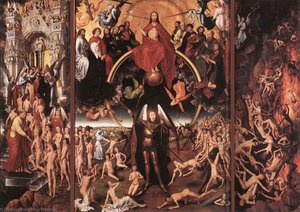
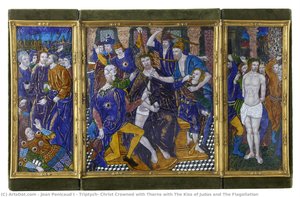
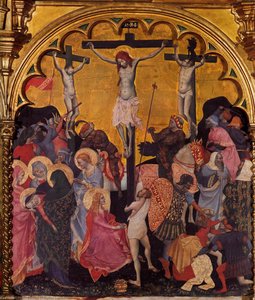
Biografija umetnika
Jean Bapteur: The Shadowed Master of Savoy
Jean Bapteur, a name often whispered in the halls of medieval art history, remains an enigmatic figure despite his significant contributions to the visual world of 15th-century Savoy. Born around 1427 in Fribourg, Switzerland – though his early life is shrouded in some mystery – he emerged as a pivotal illuminator and painter for the powerful dukes of Savoie, leaving behind a legacy primarily embodied by the breathtaking Apocalypse manuscript now housed in the Bibliothèque Nationale de France. His work isn’t characterized by flamboyant self-promotion; rather, it speaks volumes through its exquisite detail, subtle symbolism, and a quiet mastery that belies his relative obscurity. Bapteur's artistic journey began with a period of residence in Geneva, where he likely honed his skills before being summoned to Morges around 1428. It was here, within the walls of the ducal court, that he truly flourished, becoming the principal illuminator for decades and fundamentally shaping the visual language of Savoyard heraldry and religious iconography. His early training is believed to have been influenced by a confluence of artistic currents – the meticulous craftsmanship of Flemish miniature painting, the vibrant color palettes of Italian Renaissance frescoes (particularly those of Giotto), and the sophisticated decorative traditions of Burgundy. This synthesis resulted in a style that’s both deeply rooted in established practices and uniquely his own: a delicate balance between formal precision and expressive detail. The cornerstone of Bapteur's fame rests upon the Apocalypse manuscript, an extraordinary work commissioned by Duke Amédée VIII and completed under his son, Louis Ier. This illuminated manuscript, a monumental testament to the Book of Revelation, is not merely a collection of beautifully rendered images; it’s a complex narrative tapestry woven with theological symbolism, dynastic claims, and subtle political messaging. Bapteur's role extended far beyond simple illumination; he was deeply involved in the design and execution of the entire manuscript, overseeing the creation of its borders, heraldic devices, and numerous decorative elements. The sheer scale of the project – spanning over 300 pages – speaks to the immense importance placed on visual representation within the ducal court. The meticulous detail evident in each miniature, from the intricate folds of drapery to the expressive faces of biblical figures, reveals a painter deeply attuned to both technical skill and artistic nuance. Beyond the Apocalypse manuscript, Bapteur’s oeuvre encompasses a remarkable range of decorative commissions. He served as a valued designer for the court, creating tapestries, tent cloths, banners, and even theatrical costumes – demonstrating a versatility rarely found in artists of his time. His work frequently incorporated heraldic symbols—the lions of Savoy, the fleur-de-lis—and elaborate arabesques, reflecting the prevailing aesthetic trends of the period while simultaneously asserting the ducal family’s authority and prestige. Furthermore, Bapteur's involvement extended to ecclesiastical projects, including the decoration of church portals in Fribourg, showcasing his ability to adapt his style to diverse contexts and audiences. The influence of Jean Bapteur on subsequent generations of artists is surprisingly subtle yet profound. While he didn’t actively seek recognition during his lifetime, his meticulous technique and innovative approach to illumination set a standard for future illuminators working in the Savoyard court. His work served as a model for those who followed, shaping the visual vocabulary of medieval art in the region. His legacy is not one of grand pronouncements or revolutionary innovations, but rather one of quiet dedication, technical mastery, and an unwavering commitment to his craft – a testament to the enduring power of artistic skill and the subtle yet significant contributions of artists often overlooked by the broader historical narrative.A Legacy in Detail
- Key Works: Apocalypse manuscript of the Dukes of Savoy (Bibliothèque Nationale de France), decorations for church portals in Fribourg, heraldic designs for the ducal court.
- Influences: Flemish miniature painting, Italian Renaissance fresco traditions (Giotto), Burgundian decorative arts.
- Technique: Meticulous attention to detail, masterful use of color and perspective, integration of heraldic symbolism and religious iconography.
- Historical Context: Active during a period of political and artistic transition in Savoy, serving as a key visual communicator for the ducal court. His work reflects both the established traditions of medieval art and the emerging influences of the Renaissance.
circle of jean bapteur
Switzerland
Osnovne informacije
- Artistic Movement Or Style: Manuscript illumination
- Artists Or Movements Influenced By This Artist: ['Franco-Flemish style']
- Artists Who Influenced This Artist: ['Limbourg brothers']
- Full Name: Jean Bapteur
- Nationality: Swiss
- Notable Artworks: ['Apocalypse of the Dukes of Savoy']
- Place Of Birth: Fribourg, Switzerland
Povezani članci
The Radiant Dusk of Medieval Vision: Exploring Late Gothic Art's Synthesis of Faith, Form & Emotionality (c. 1300-1500)
Explore the exquisite beauty & spiritual depth of Late Gothic art (c. 1300-1500). Discover key artists, symbolism, and its lasting influence on the Renaissance. Expert insights at ArtsDot.
Beyond Borders: The Spiritual & Stylistic Innovations of International Gothic Art
Explore the exquisite beauty & spiritual depth of International Gothic art. Discover key artists like Simone Martini & Pol de Limbourg, its origins, symbolism, and lasting influence on European painting. Expert insights at ArtsDot.
Late Medieval Masterpieces: 10 Artworks That Defined an Era | ArtsDot
Journey through 10 defining Late Medieval masterpieces – from Giotto's frescoes to Jan van Eyck’s realism. Explore the stories, techniques & vibrant colors of Gothic art. Find museum-quality reproductions and elevate your home decor with ArtsDot.com! Discover all masterpieces on ArtsDot.com
The Shadow of Faith: Exploring Gothic Art's Spiritual Intensity & Architectural Innovation
Explore the spiritual intensity & architectural innovation of Gothic art! Discover the symbolism behind cathedrals, stained glass & master artists like Giotto and Monet. A deep dive into medieval history & artistic expression.

Fra Anđeo: 25 Remek-dela Renesansnog Duha za Vaš Dom | ArtsDot
Uronite u svet Fra Anđela – 25 remek-dela renesansnog slikara. Otkrijte priče iza njegovih čuvenih fresaka i oltarskih slika, inspiracija za enterijer i duhovni mir. Kupite reprodukcije vrhunskog kvaliteta na ArtsDot.com!