

 Pregledaj u prostoru
 Pošalji
 Podeli
 Detalji o delu

 Преузми
 Slični predmeti
 Rendgenski snimak
 Slajdovi
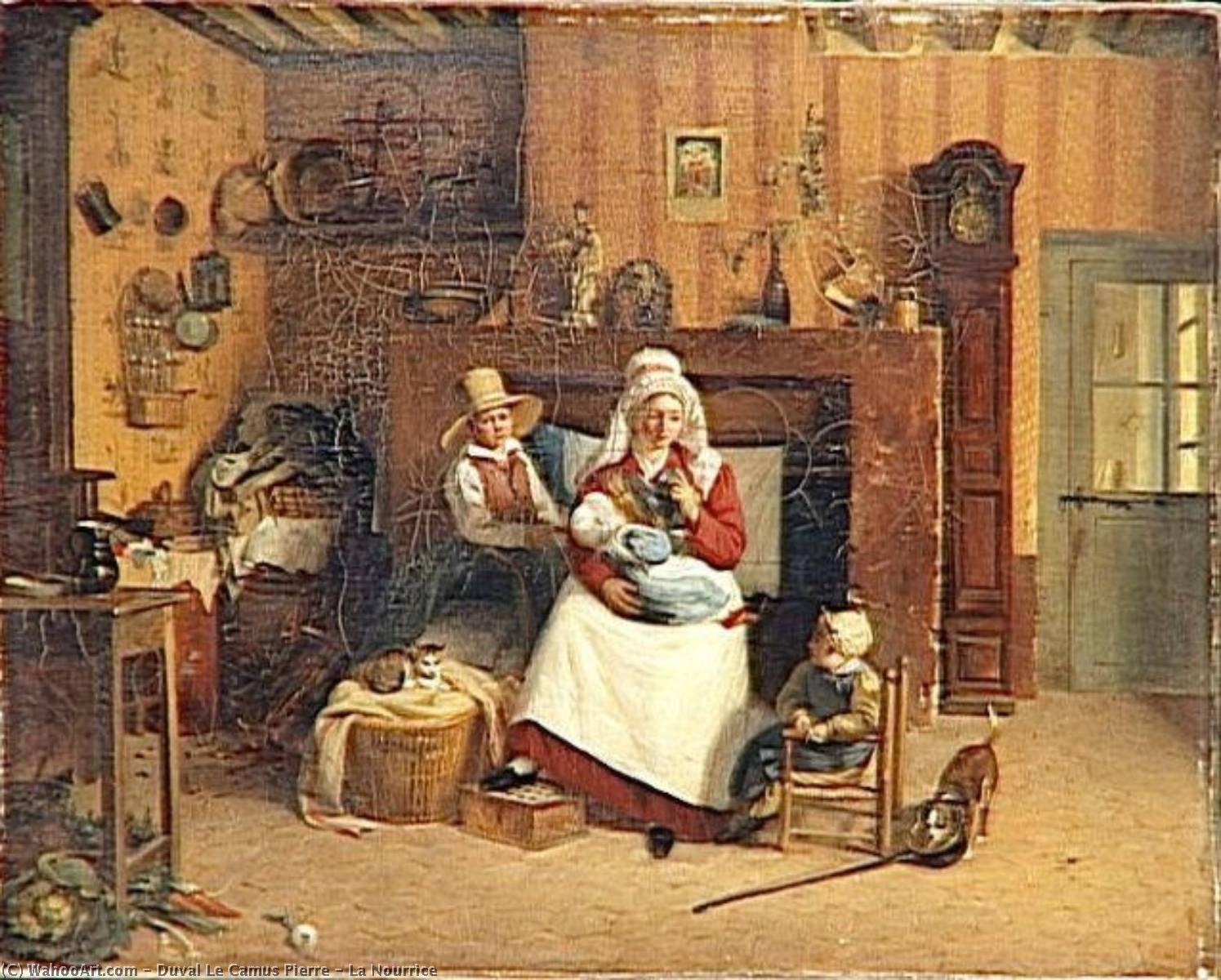
La Nourrice


 Pročitaj više
Kupite digitalnu sliku visoke rezolucije i poboljšanog kvaliteta, koja je znatno superiornija od onoga što vidite u online prikazu.
Svaka datoteka je pedantno pripremljena od strane naših stručnjaka koristeći napredne alate i profesionalnu ručnu retušu. Osiguravamo da svaka slika ima izuzetnu oštrinu, preciznu reprodukciju boja i fine detalje.
Konačna datoteka se dostavlja putem e-pošte u roku od 72 sata, optimizovana za neposrednu upotrebu u profesionalnim, izdavačkim i štamparskim okruženjima. To je isti kvalitet kojem veruju vrhunski studiji dizajna, izdavači i galerije.
Digitalna slika
Preuzmite datoteku visoke rezolucije za ličnu upotrebu, štampanje i kreativne projekte. ( Kupi print Kupi ručno naslikanu sliku)
Uključeno uz svaku porudžbinu digitalne slike
Profesionalna digitalna isporuka, zagarantovana
Kada odaberete ArtsDot.com, ne dobijate samo sliku – vi primate profesionalno unapređeno digitalno umetničko delo, izrađeno sa najvećom preciznošću i uz garanciju zadovoljstva. Evo svega što automatski dolazi uz vašu porudžbinu:

Brza dostava putem e-pošte
Vaša digitalna slika visoke rezolucije biće vam poslata putem e-pošte u roku od 72 sata od poručivanja – spremna za trenutnu upotrebu.

Digitalna datoteka unapređena veštačkom inteligencijom
Vaše umetničko delo je profesionalno optimizovano korišćenjem naprednih AI alata i ručne obrade, čime se osiguravaju maksimalni detalji, oštrina i preciznost boja.

Besplatna ponovna isporuka doživotno
Slučajno ste obrisali ili izgubili svoju datoteku? Ne brinite – poslaćemo vam je ponovo u bilo kom trenutku, potpuno besplatno.

Bez troškova uvoza – zauvek
Uživajte u svojim umetničkim delima trenutno, bez carine, dažbina ili troškova dostave – digitalni download je uvek bez poreza.

Garancija vernosti boja
Uz pomoć profesionalnih alata i upravljanja bojama, osiguravamo da vaša digitalna slika što vernije odražava originalne boje.

Garancija zadovoljstva od 100 dana
Ako niste zadovoljni svojom digitalnom slikom, izvršićemo reviziju ili ćemo vam vratiti 100% novca u roku od 100 dana – bez ikakvih pitanja.

100% garancija povrata novca
Niste zadovoljni? Dobijte puni povraćaj novca u roku od 100 dana od prijema digitalne datoteke – bez suvišnih pitanja.

Popusti na velike porudžbine
Kupite 3 slike, uštedite 10% - Kupite 5 slika, uštedite 15% - Kupite 10+ slika, uštedite 20%. Odlično za kreativne projekte, galerije i agencije.
A Tapestry of Domestic Warmth: Exploring "La Nourrice"
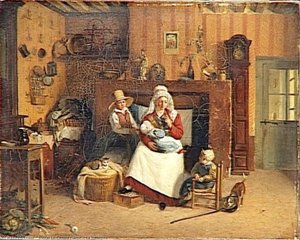
To stand before Duval Le Camus Pierre's "La Nourrice" is to step unceremoniously into the heart of a bygone era, a world steeped in the comforting rhythms of daily life. This painting is far more than a mere depiction of a feeding scene; it is an immersive portrait of domesticity itself. The air within the canvas feels thick with the scent of woodsmoke and warm bread, inviting the viewer to slow their own hurried pace and simply observe. Le Camus masterfully composes a scene that is wonderfully crowded yet possesses an undeniable sense of balance. Every figure, from the central nurse attending to the baby to the surrounding family members and watchful animals—the dog and the cats—contributes to a rich, interwoven narrative tapestry.
Mastery in Realism and Texture
Technically, the work is a profound exercise in Realism, yet it carries the emotional resonance that hints at Romantic sensibilities. Le Camus’s handling of oil paint on canvas allows us to appreciate the sheer physicality of the scene. Observe the brushwork; it speaks of an artist deeply attuned to texture. Whether it is the rough grain suggested on a wooden beam, the soft fur of the resting animals, or the varied folds in the simple garments, the surface vibrates with palpable detail. The light, diffused and seemingly entering from an unseen window to the right, plays across these textures, creating deep pockets of shadow that lend incredible volume and depth to the composition. This careful use of perspective draws the eye inward, guiding us through the cluttered but harmonious space.
The Symbolism of Lived-In Life
Symbolically, "La Nourrice" speaks volumes about community, sustenance, and the enduring nature of caregiving. The presence of the animals is particularly noteworthy; they are not mere props but integral members of this domestic ecosystem, symbolizing loyalty and the interconnectedness of life within a family unit. In an age of profound social change, as Le Camus chronicled in his time, these quiet moments became potent symbols of stability. The entire arrangement celebrates the foundational pillars of society: family bonds nurtured through tireless, everyday acts of devotion.
A Touch of 19th-Century French Intimacy
Considering its context within 19th-century France, this painting offers an intimate window into a life that was both humble and deeply rich in human connection. Le Camus, whose background perhaps informed his keen eye for materials and light, captures the quiet dignity of working-class or middle-class existence. For the collector or designer, this piece transcends mere decoration; it is an artifact of emotional history. Reproducing such a work allows one to bring not just color and form into a space, but a palpable sense of enduring warmth—a sanctuary captured on canvas.
Srodna umetnička dela
Biografija umetnika
Pierre Duval Le Camus: A Window into 19th-Century French Life
Born in Lisieux, Normandy, in 1790, Pierre Duval Le Camus emerged as a significant figure in the landscape of 19th-century French painting. More than simply a recorder of scenes, he meticulously captured the rhythms and textures of daily life – the domesticity of middle-class homes, the bustle of Parisian streets, and the quiet moments of rural existence. His work offers a remarkably intimate glimpse into a vanishing era, revealing both the charm and the constraints of French society during a period of profound social and political change. Le Camus’s artistic journey was deeply intertwined with his family history; he was the son of a master glazier, a trade that initially shaped his early artistic sensibilities – an appreciation for light, texture, and the subtle beauty of everyday materials.
Le Camus's formal training began under the tutelage of Claude Gautherot in Paris. This initial exposure to Parisian art circles proved pivotal, laying the groundwork for his later studies with the renowned Jacques-Louis David at the École des Beaux-Arts. David’s influence is particularly evident in Le Camus’s early works – a commitment to anatomical accuracy, a restrained palette, and a focus on narrative clarity. However, unlike David's grand historical scenes, Le Camus quickly established his own distinct style, one characterized by a remarkable sensitivity to detail and an ability to imbue seemingly mundane subjects with profound emotional resonance. He wasn’t interested in heroic narratives; instead, he sought to reveal the quiet dignity of ordinary people.
Le Camus's career blossomed during the Salon era, a period dominated by official exhibitions that served as crucial platforms for artists to gain recognition and sell their work. From 1819 until his death in 1854, he consistently exhibited at the Paris Salon, steadily building a reputation for his genre scenes and portraits. His subjects were remarkably diverse – from intimate domestic interiors depicting women engaged in everyday tasks (such as “La Nourrice,” a poignant portrayal of a wet nurse tending to an infant) to lively street scenes capturing the energy of Parisian commerce. Notably, he was commissioned by prominent figures of the era, including members of the royal family and influential politicians, further solidifying his position within the artistic establishment.
A key element of Le Camus’s success lay in his ability to capture a sense of authenticity. He avoided romanticized depictions, instead presenting scenes with an honest and unvarnished realism. His brushwork is often loose and expressive, conveying a sense of immediacy and spontaneity. The use of light and shadow is particularly masterful, creating a palpable atmosphere within each scene. His paintings weren’t merely representations; they were imbued with a subtle emotional depth that resonated deeply with viewers. He was awarded second place at the Prix de Rome in 1838, a significant achievement that signaled his rising talent.
The Duchess of Berry and the Portraiture of Parisian Society
Le Camus’s artistic trajectory took a particularly notable turn when he secured commissions from members of the French aristocracy. His portrait of M. Courtin, Procureur Impérial à Paris, exemplifies this shift. The painting showcases not only Le Camus's technical skill but also his ability to capture the nuances of social status and personality. The subject’s attire, posture, and expression all contribute to a carefully constructed image of wealth, authority, and refinement. This commission opened doors to further opportunities within Parisian high society, leading to portraits of prominent figures like Louis XVIII and Louis-Philippe – kings who shaped the political landscape of France during this period.
The Duchess of Berry, Marie-Caroline of Bourbon-Two-Sicilies, became a particularly important patron. She commissioned several works from Le Camus, including “La Nourrice,” a tender depiction of a wet nurse tending to an infant – a scene that speaks volumes about the realities of family life in 19th-century France. The painting’s quiet intimacy and emotional resonance cemented Le Camus's reputation as a master of domestic portraiture. The fact that he was chosen as her preferred painter underscores his ability to capture not just physical likeness but also the essence of his subjects.
Technique and Artistic Influences
Le Camus’s artistic style evolved over time, reflecting both his formal training and his own unique sensibilities. Initially influenced by David's emphasis on anatomical accuracy and narrative clarity, he gradually developed a more personal and expressive approach. His brushwork became looser and more fluid, allowing for greater spontaneity and emotional impact. He skillfully employed light and shadow to create depth and atmosphere, drawing inspiration from the techniques of artists such as Jean-Auguste-Dominique Ingres, whose influence can be seen in his meticulous attention to detail and his use of color.
However, Le Camus’s artistic vision was distinctly rooted in the realities of French life. He avoided the grandiosity and theatricality that characterized some of his contemporaries, instead focusing on capturing the quiet dignity of ordinary people. His paintings are imbued with a subtle emotional depth that resonates deeply with viewers – a testament to his keen observation skills and his ability to capture the essence of human experience.
Legacy and Historical Significance
Pierre Duval Le Camus died in Saint-Cloud in 1854, leaving behind a significant body of work that offers a valuable window into 19th-century French life. His paintings are housed in prominent museums throughout France, including the Louvre, Musée des Beaux-Arts de Bordeaux, and Musée Thomas-Henry, ensuring that his artistic legacy continues to be appreciated by generations of art lovers. Le Camus’s meticulous depictions of domesticity, Parisian street scenes, and portraits of prominent figures provide a rich and nuanced portrait of French society during a period of profound social and political change.
Beyond his individual achievements, Le Camus represents a crucial link in the chain of French painting – bridging the gap between the Neoclassical traditions of David and the emerging Realist movements of the 19th century. His work exemplifies the enduring appeal of genre painting, demonstrating its ability to capture not just visual likeness but also the essence of human experience. Le Camus’s legacy lies in his ability to transform everyday scenes into works of art – revealing the beauty and dignity that can be found in the most ordinary of lives.
duval le camus pierre
1790 - 1854
Kratke činjenice
- Artistic Movement Or Style: Genre & Portrait
- Artists Or Movements Influenced By This Artist: ['Classical Portraiture']
- Artists Who Influenced This Artist: ['David']
- Date Of Birth: Feb 13, 1790
- Date Of Death: July 29, 1854
- Full Name: Pierre Duval Le Camus
- Nationality: French
- Notable Artworks:
- La Nourrice
- Portrait M. Courtin
- Place Of Birth: Lisieux, France