

 Pregledaj u prostoru
 Pošalji
 Podeli
 Detalji o delu

 Преузми
 Slični predmeti
 Rendgenski snimak
 Slajdovi
 Statistika
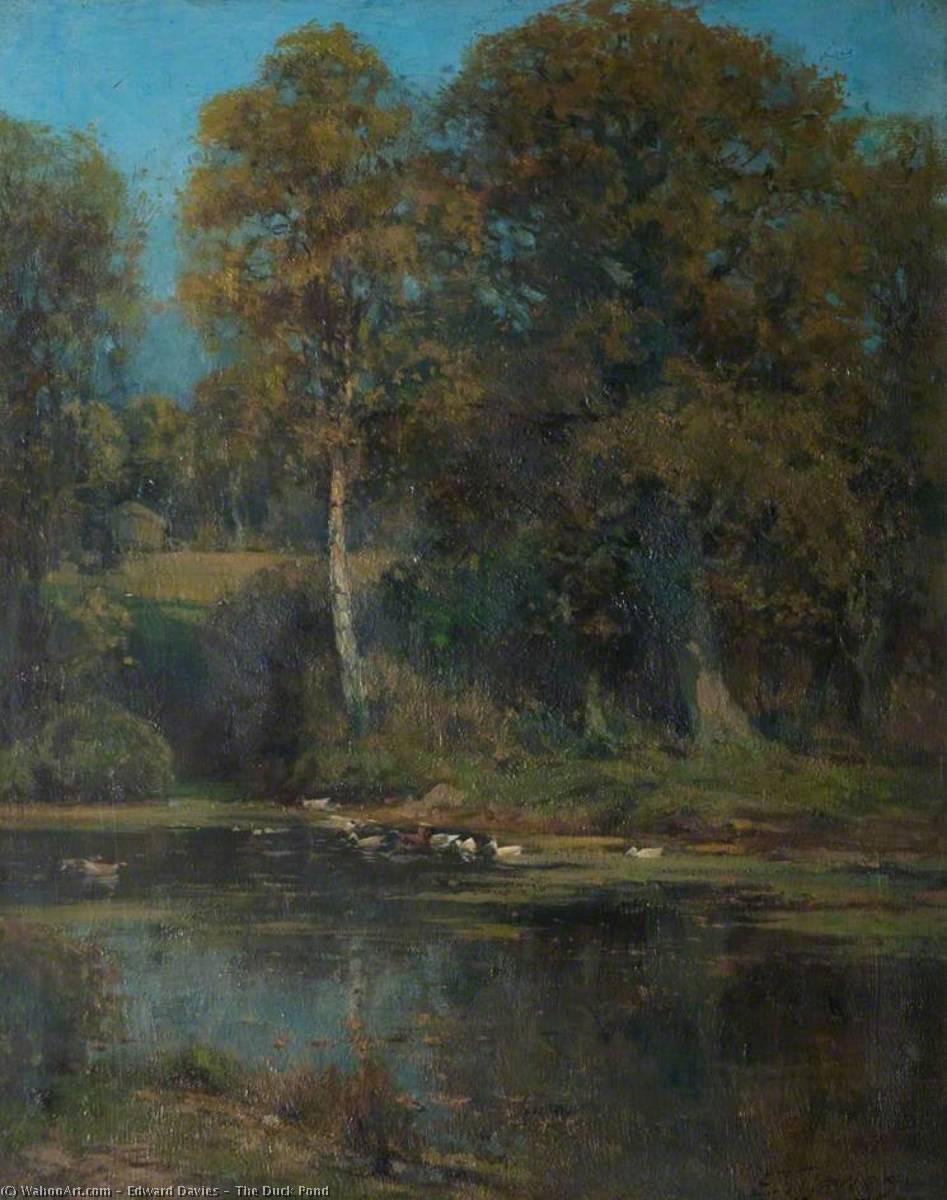
The Duck Pond
 51.0 x 41.0 cm
 New Walk Museum - Art Gallery
 Pročitaj više
Giclee štampa / Umetnički otisak
Giclée štampa ili print na platnu muzejskog kvaliteta uz brzu proizvodnju i fleksibilne opcije završne obrade. ( Kupi ručno naslikanu sliku Pređi na digitalnu sliku)




































Izaberite jednu od naših unapred definisanih veličina koje odgovaraju originalnim proporcijama umetničkog dela.

Možete uneti sopstvene dimenzije kako biste umetničko delo prilagodili specifičnom okviru ili prostoru. Ako odabrani format ne odgovara proporcijama originalne slike, mi ćemo ili iscrtati deo dela ili proširiti sliku pomoću ogledane ivice ili jednobojnog popunjavanja. Digitalni prikaz će vam biti poslat na odobrenje pre početka proizvodnje.
Imajte na umu da pregled na ekranu ne odražava stvarno iscrtavanje ili proširivanje. Samo će prikaz (mockup) precizno pokazati finalnu kompoziciju.
Iako su prilagođene dimenzije dostupne, preporučujemo da odaberete dimenziju sa unapred definisane liste kako biste očuvali originalne proporcije.
Dostava širom sveta () za 2 nedelje umesto uobičajenih 4/5 nedelja. (8 септембар)

Besplatna ekspresna dostava širom sveta

Visokokvalitetno laneno platno

Kompletno osiguranje transporta

Garancija povraćaja carine i uvoznih dažbina

Garancija vernosti boja

Politika povraćaja u roku od 100 dana (isključivo u slučaju nedostataka)

Garancija povrata novca od 100%

Popust pri grupnoj kupovini
 Opcija sa staklom dostupna je samo za dimenzije manje od 110 cm

The Duck Pond
Giclee štampa / Umetnički otisak
Dimenzije reprodukcije
-


Konačna cena
$ 62
Srodna umetnička dela










Biografija umetnika
The Architect of Molecular Innovation: The Dual Legacy of George Edward Davis
In the grand, sweeping tapestry of the nineteenth century—an era where the soot of the Industrial Revolution collided with the burgeoning light of scientific inquiry—few figures cast a shadow as profound yet specialized as George Edward Davis. To understand Davis is to witness a rare convergence of two seemingly disparate worlds: the tactile, emotive realm of fine art and the rigorous, invisible architecture of chemical engineering. While his contemporaries were often preoccupied with capturing the fleeting light of the English or American landscape on canvas, Davis sought to map the very flows of matter itself, bridging the gap between the aesthetic appreciation of nature and the mathematical precision of modern industry.
Born in 1850, Davis’s early life was defined by a transition from traditional craft to scientific mastery. His journey began not with a paintbrush, but with the scent of leather and glue during an apprenticeship in bookbinding at the age of fourteen. This early immersion in the meticulous details of physical form provided a foundational discipline that would later inform his scientific observations. Driven by an insatiable curiosity, he moved toward higher learning at the Slough Mechanics Institute and the prestigious Royal School of Mines in London. It was here that the artist’s eye began to merge with the engineer’s intellect, as he developed a fascination with the molecular structures that underpin our physical reality.
A Revolutionary Vision: Stereoscopic Projection and Scientific Realism
Davis’s most significant contribution to the visual record of his time was his ability to redefine how we perceive industrial progress. In 1893, he published “The Handbook of Chemical Engineering,” a work that transcended the standard technical manual of the period. Rather than relying on flat, two-dimensional topographical sketches, Davis employed a revolutionary technique: stereoscopic projection. By utilizing twin cameras positioned at slight intervals, he captured scenes of factories, refineries, and laboratories with a profound sense of depth and three-dimensionality.
This method was far more than a mere technical gimmick; it was a philosophical statement. Through these stereoscopic images, Davis aimed to educate the viewer on the complex, layered realities of modern industry, elevating scientific illustration to a form of high realism. His work allowed the observer to step into the heart of the machine, noticing the subtle gradations of light reflecting off steel and the intricate textures of industrial processes. In doing so, he fundamentally reshaped the perception of landscape painting, proving that the "industrial landscape" possessed a beauty and a structural complexity worthy of the most rigorous artistic scrutiny.
The Enduring Impression of a Visionary
Though his name may not always occupy the same immediate spotlight as titans like John Singer Sargent, the historical significance of George Edward Davis lies in his role as a pioneer of interdisciplinary vision. He stood at the threshold of a new age, where the boundaries between the observer and the observed were being redrawn by technology. His ability to apply the sensitivity of an artist to the precision of a chemist allowed him to document a world in transition—a world moving from the organic rhythms of nature toward the structured complexity of the chemical age.
The legacy of Davis remains etched in both the annals of science and the history of visual documentation. His life serves as a testament to the idea that true innovation often occurs at the intersection of different disciplines. Whether through his evocative watercolors of New England coastlines or his groundbreaking stereoscopic engineering diagrams, Davis reminded us that to truly see the world, one must possess both the heart of an artist and the mind of an architect.

Osnovne informacije
- Artistic Movement Or Style: Regionalist Art Style
- Artists Who Influenced This Artist: ['John Singer Sargent']
- Date Of Birth: (1850)
- Date Of Death: (1907)
- Full Name: George Edward Davis
- Nationality: American
- Notable Artworks:
- Wolf Point
- Mrs. Edward Davis and her Son, Livingston
- Mrs. Edward L. Davis and Her Son Livingston
- Place Of Birth: Philadelphia, Pennsylvania