

 Pregledaj u prostoru
 Pošalji
 Podeli
 Detalji o delu

 Преузми
 Slični predmeti
 Rendgenski snimak
 Slajdovi
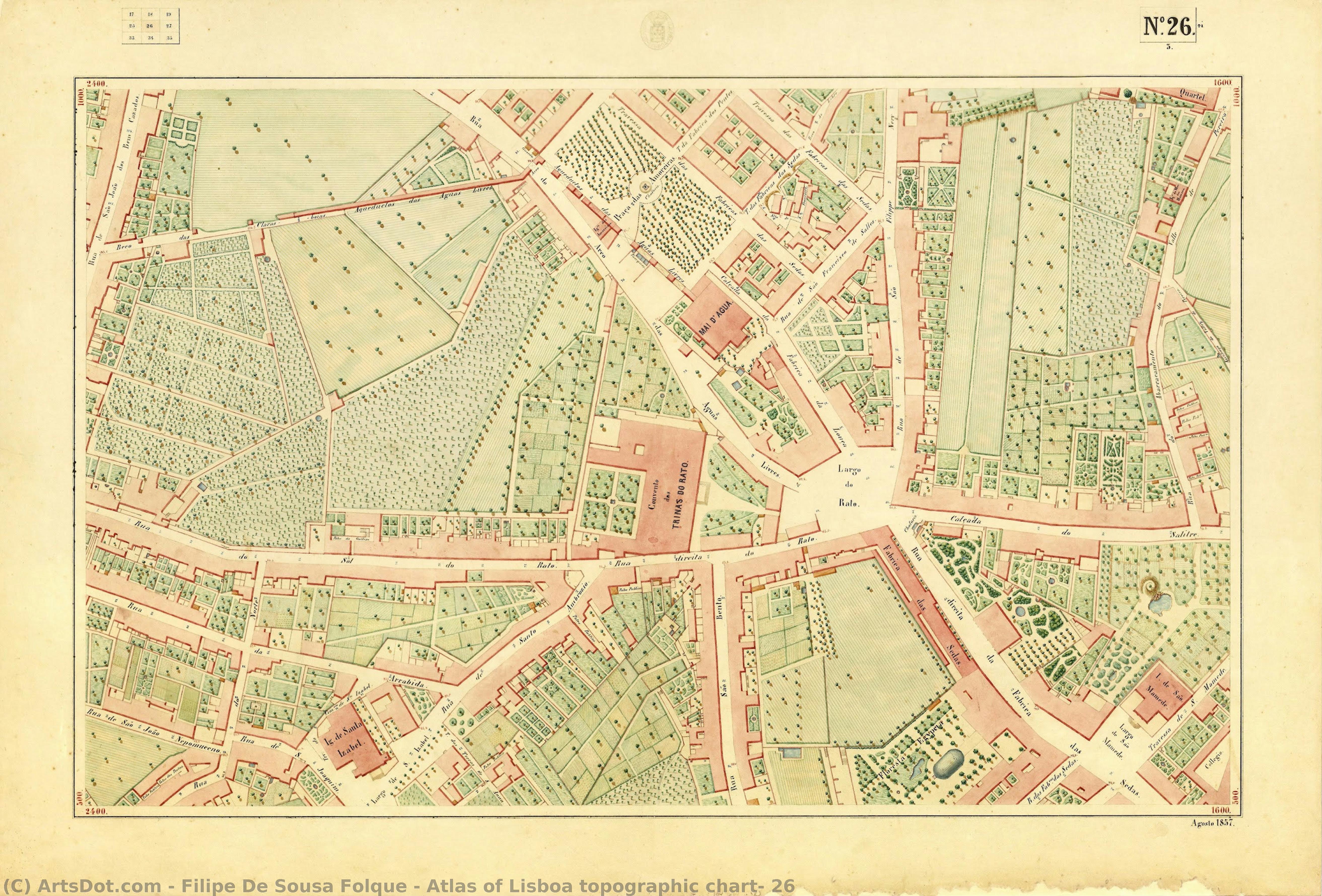
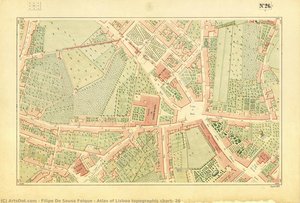
Atlas of Lisboa topographic chart, 26
 Cartography
 1857
1857- 19th Century
 92.0 x 62.0 cm
 Lisboa Municipal Archive
 Pročitaj više
Kupite digitalnu sliku visoke rezolucije i poboljšanog kvaliteta, koja je znatno superiornija od onoga što vidite u online prikazu.
Svaka datoteka je pedantno pripremljena od strane naših stručnjaka koristeći napredne alate i profesionalnu ručnu retušu. Osiguravamo da svaka slika ima izuzetnu oštrinu, preciznu reprodukciju boja i fine detalje.
Konačna datoteka se dostavlja putem e-pošte u roku od 72 sata, optimizovana za neposrednu upotrebu u profesionalnim, izdavačkim i štamparskim okruženjima. To je isti kvalitet kojem veruju vrhunski studiji dizajna, izdavači i galerije.
Digitalna slika
Preuzmite datoteku visoke rezolucije za ličnu upotrebu, štampanje i kreativne projekte. ( Kupi print Kupi ručno naslikanu sliku)
Uključeno uz svaku porudžbinu digitalne slike
Profesionalna digitalna isporuka, zagarantovana
Kada odaberete ArtsDot.com, ne dobijate samo sliku – vi primate profesionalno unapređeno digitalno umetničko delo, izrađeno sa najvećom preciznošću i uz garanciju zadovoljstva. Evo svega što automatski dolazi uz vašu porudžbinu:

Brza dostava putem e-pošte
Vaša digitalna slika visoke rezolucije biće vam poslata putem e-pošte u roku od 72 sata od poručivanja – spremna za trenutnu upotrebu.

Digitalna datoteka unapređena veštačkom inteligencijom
Vaše umetničko delo je profesionalno optimizovano korišćenjem naprednih AI alata i ručne obrade, čime se osiguravaju maksimalni detalji, oštrina i preciznost boja.

Besplatna ponovna isporuka doživotno
Slučajno ste obrisali ili izgubili svoju datoteku? Ne brinite – poslaćemo vam je ponovo u bilo kom trenutku, potpuno besplatno.

Bez troškova uvoza – zauvek
Uživajte u svojim umetničkim delima trenutno, bez carine, dažbina ili troškova dostave – digitalni download je uvek bez poreza.

Garancija vernosti boja
Uz pomoć profesionalnih alata i upravljanja bojama, osiguravamo da vaša digitalna slika što vernije odražava originalne boje.

Garancija zadovoljstva u roku od 60 dana
Ako niste zadovoljni svojom digitalnom slikom, revidirat ćemo je ili vratiti 100% novca u roku od 60 dana – bez ikakvih pitanja.

100% garancija povrata novca
Niste zadovoljni? Obezbedite pun povrat novca u roku od 60 dana od trenutka kada ste primili svoju digitalnu datoteku – bez suvišnih pitanja.

Popusti na velike porudžbine
Kupite 3 slike, uštedite 10% - Kupite 5 slika, uštedite 15% - Kupite 10+ slika, uštedite 20%. Odlično za kreativne projekte, galerije i agencije.
Opis kolekcionarskog dela
A Window into Mid-Century Lisbon
To gaze upon the Atlas of Lisboa topographic chart, 26 is to embark on a profound journey through time, stepping directly into the heart of Portugal in 1857. Created by the meticulous hand of Filipe de Sousa Folque, this extraordinary work transcends the boundaries of mere cartography, offering instead a soulful portrait of a city in transition. The painting captures the intricate tapestry of Lisbon’s streets, where the architectural grandeur of churches and historic structures stands in silent dialogue with the verdant patches of trees scattered throughout the urban landscape. Every line and stroke serves as a testament to a bygone era, inviting the viewer to wander through a labyrinth of history where the layout of the city tells a story of growth, resilience, and classical elegance.
The artistry of Folque lies in his ability to marry the precision of an engineer with the delicate touch of a romanticist. As a mathematician and military engineer, he possessed an unparalleled eye for detail, ensuring that every street corner and labeled section is rendered with topographical accuracy. Yet, there is a warmth within this technical mastery; the subtle inclusion of tiny figures—the residents of Lisbon moving through their daily lives—infuses the map with a breathing, human element. This delicate balance between scientific observation and artistic expression creates a piece that is as much a work of fine art as it is a historical document, making it an invaluable treasure for those who appreciate the intersection of science and beauty.
Timeless Elegance for the Discerning Collector
For the interior designer or the passionate art collector, this reproduction offers more than just visual appeal; it provides a sophisticated focal point that anchors a room with historical gravity. The muted, antique palette and the intricate, fine-lined detail of the 1857 topography lend themselves beautifully to various decor styles, from the stately atmosphere of a traditional library to the curated minimalism of a modern gallery space. The piece evokes a sense of nostalgia and intellectual curiosity, acting as a conversation starter that celebrates the heritage of European urbanism.
Integrating such a masterpiece into a living space allows for a layer of storytelling within the home. It is an invitation to contemplate the passage of time and the enduring spirit of Lisbon. Whether displayed in a grand study or as part of a curated gallery wall, this work brings an air of academic prestige and old-world charm. Owning a high-quality reproduction of Folque’s work is not merely about decorating a wall; it is about preserving a fragment of the 19th century, ensuring that the meticulous beauty of the Portuguese soul continues to inspire generations to come.
Srodna umetnička dela

Biografija umetnika
The Mathematical Eye and the Romantic Soul
Born in the historic town of Portalegre in 1800, Filipe de Sousa Folque was a man whose life was defined by the delicate tension between scientific rigor and artistic observation. His journey began under the scholarly shadows of Coimbra University, where he mastered the complexities of mathematics. This academic foundation did more than just provide him with technical skill; it gifted him an analytical lens through which to view the world—a lens that would eventually transform the way Portugal saw itself. As a figure emerging during the Romantic era, Folque possessed the rare ability to look at a landscape and see both its measurable coordinates and its inherent spirit.His upbringing instilled in him a deep appreciation for precision, a quality that would become the hallmark of his later contributions to cartography. By blending the Enlightenment ideals of his education with the burgeoning romanticism of his era, he prepared himself to document not just the earth, but the very essence of the Portuguese landscape.
Engineering the Nation's Boundaries
Folque’s career was far from a solitary pursuit of academic excellence; it was deeply embedded in the service of his nation and its physical expansion. His military trajectory, moving from the Armada to the Army, instilled in him a disciplined approach to the terrain of Portugal. Through his roles within the Ministry of Works and his leadership of the Geodesic and Topographic Commission, he became an architect of the country's very infrastructure. He was not merely recording what existed but was actively shaping the scientific landscape by establishing the Course of Engineer Hydrographer at the Academia Portuguesa, recognizing that the future of Portugal’s maritime identity depended on specialized, technical knowledge.His professional life was a tapestry of diverse responsibilities:
- Service within the Portuguese Armada and later the Army.
- Leadership of the Geodesic and Topographic Commission of the Kingdom.
- The establishment of specialized hydrographic engineering education.
- Directing the General Directorate of Geodetic, Topographic, Hydrographic, and Geological Works.
The Atlas of Lisboa: A Cartographic Masterpiece
Perhaps his most enduring legacy is the Atlas of Lisboa, a monumental achievement completed in 1860 under the commission of King Luís I. This was not merely a collection of maps; it was a profound visual narrative of a city in transition. In these charts, the precision of an engineer meets the delicate touch of a romanticist. One can trace the intricate tapestry of Lisbon’s streets, where the architectural grandeur of historic churches and the verdant patches of urban greenery are rendered with breathtaking accuracy.Yet, beyond the topographical data, there is a warmth to his work—the subtle inclusion of tiny figures moving through the streets breathes life into the paper, turning a technical document into a soulful portrait of mid-century Lisbon. To study Folque’s maps is to wander through a labyrinth of history, where every line serves as a testament to a bygone era of elegance and resilience. His work remains a cornerstone of Lisbon’s visual heritage, proving that true cartography is as much an art form as it is a scientific discipline.
filipe de sousa folque
1800 - 1874 , Portugal
Kratke činjenice
- Artistic Movement Or Style: Cartography
- Artists Or Movements Influenced By This Artist: ['None Known']
- Artists Who Influenced This Artist: ['None Known']
- Date Of Birth: November 28, 1800
- Date Of Death: December 27, 1874
- Full Name: Filipe de Sousa Folque
- Nationality: Portuguese
- Notable Artworks: ['Atlas of Lisboa']
- Place Of Birth: Portalegre, Portugal

