A Legacy of Precision and Purpose
The life of David Martin Scott Steel, Baron Steel of Aikwood, is a remarkable tapestry woven from the threads of political leadership and profound artistic sensitivity. Born on March 31, 1938, in the historic town of Kirkcaldy, Fife, his early years were shaped by a rich heritage of Scottish tradition and global perspective. Raised between the rugged landscapes of Scotland and the vibrant expanses of Kenya, Steel developed an eye for detail and a deep appreciation for the nuances of the natural world—qualities that would later define both his legislative contributions and his artistic endeavors. As the son of a prominent Church of Scotland minister, he was immersed in an environment where intellectual rigor and moral clarity were paramount, providing a foundation for a life dedicated to service and expression.
His academic journey at the University of Edinburgh served as a crucible for his developing intellect. Studying Law, he did not merely absorb legal statutes but honed a sharp, analytical mind capable of dissecting complex structures, whether they be social, political, or visual. This period of intense study was balanced by an early immersion in the arts and liberal politics, where he learned to navigate the delicate interplay between structure and freedom. It was during these formative years that the seeds of his dual identity were sown: the disciplined legal scholar and the observant artist, both seeking to find order and beauty within the complexities of human existence.
The Intersection of Artistry and Advocacy
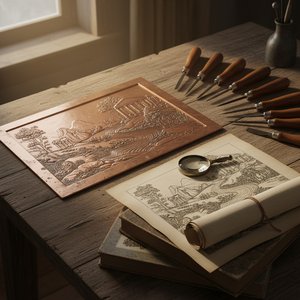
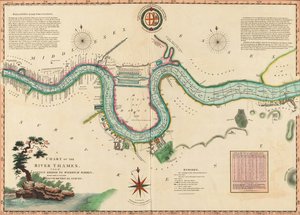
While history often remembers Steel for his commanding presence in the British Parliament, his artistic soul found a unique voice through the medium of engraving. His work, such as the evocative 'River Thames', demonstrates a mastery of line and light that transcends mere documentation. In these engravings, one can sense the same precision required in the halls of Westminster, yet applied with a much more lyrical intent. The stark contrasts and intricate textures of his prints reflect a deep engagement with the physical world, capturing the movement of water and the permanence of stone with an almost meditative focus.
The development of his artistic style was inextricably linked to his political evolution. As he rose through the ranks of the Liberal Party, eventually serving as its leader, the pressures of high-stakes diplomacy and legislative reform provided a stark contrast to the quiet, solitary labor of the engraver. This tension between the public figure and the private creator allowed for a unique creative tension in his work. His engravings do not merely depict landscapes; they capture a sense of place and time, reflecting a life lived at the center of historical change. The meticulousness required to etch fine details into metal mirrors the careful deliberation he brought to landmark legislation, such as the Abortion Act 1967, which fundamentally altered the social fabric of the United Kingdom.
A Lasting Impression on the Cultural Landscape
The historical significance of David Steel lies in his ability to inhabit two seemingly disparate worlds with equal grace. In the political arena, he was a transformative figure, navigating the complexities of the Liberal-SDP Alliance and contributing to the very architecture of modern British governance. As a Member of Parliament, a Member of the Scottish Parliament, and a life peer, his influence was felt across decades of shifting political tides. Yet, beyond the legislative records and parliamentary debates, there remains his contribution to the visual arts—a legacy of fine lines and enduring imagery.
To view his work is to witness a dialogue between the observer and the observed. His ability to translate the grandeur of the British landscape into the intimate scale of an engraving offers a window into a mind that found solace in the permanence of art amidst the volatility of politics. His life stands as a testament to the idea that the analytical and the aesthetic are not opposing forces, but rather two sides of the same human impulse: the desire to understand, to record, and to leave behind something of lasting beauty and truth.