

 Pregledaj u prostoru
 Pošalji
 Podeli
 Detalji o delu

 Преузми
 Slični predmeti
 Rendgenski snimak
 Slajdovi
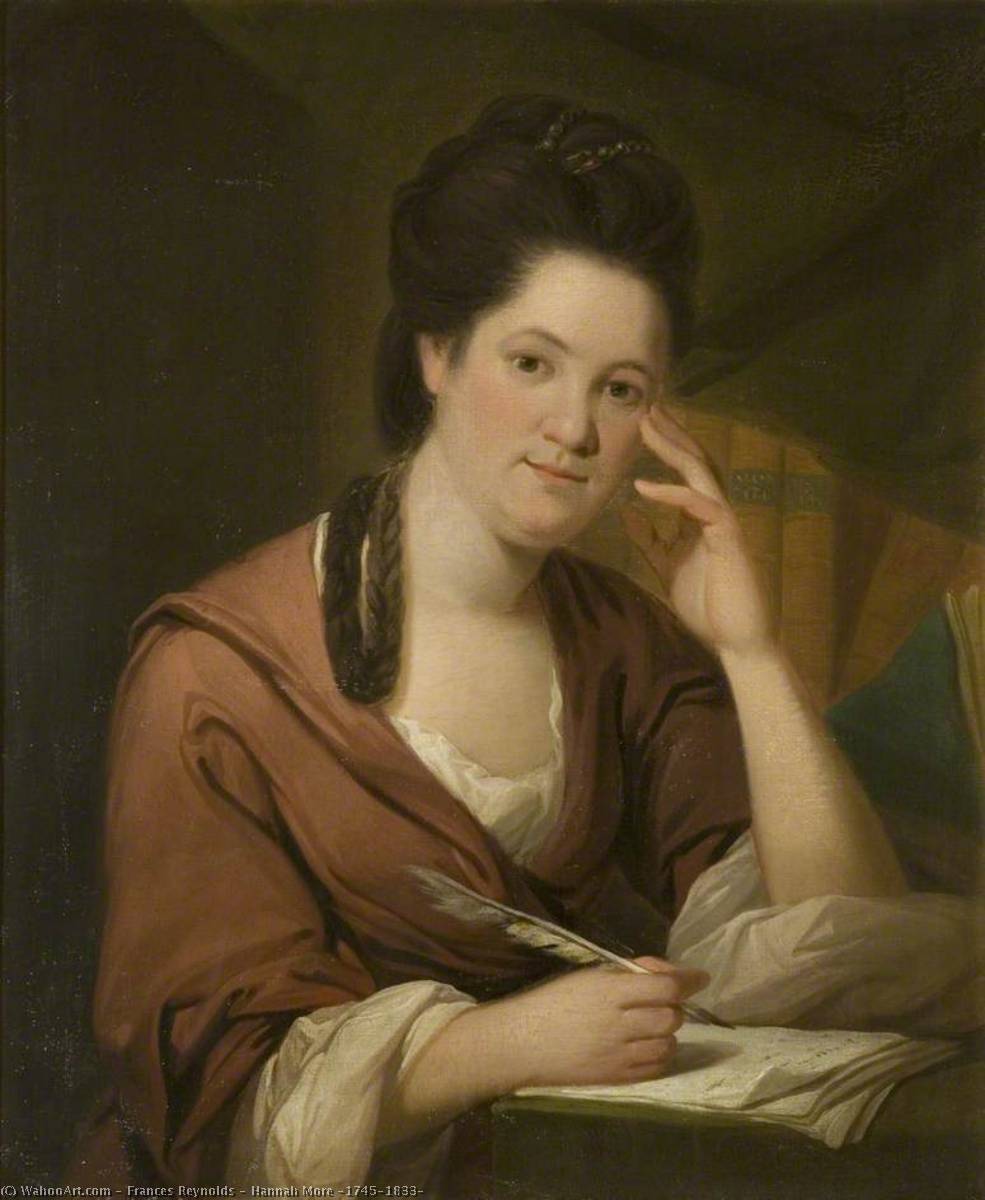
Hannah More (1745–1833)
 1780
1780 74.0 x 61.0 cm
 Bristol Museum - Art Gallery
 Pročitaj više
Giclee štampa / Umetnički otisak
Giclée štampa ili print na platnu muzejskog kvaliteta uz brzu proizvodnju i fleksibilne opcije završne obrade. ( Kupi ručno naslikanu sliku Kupi digitalnu sliku)




































Izaberite jednu od naših unapred definisanih veličina koje odgovaraju originalnim proporcijama umetničkog dela.

Možete uneti sopstvene dimenzije kako biste umetničko delo prilagodili specifičnom okviru ili prostoru. Ako odabrani format ne odgovara proporcijama originalne slike, mi ćemo ili iscrtati deo dela ili proširiti sliku pomoću ogledane ivice ili jednobojnog popunjavanja. Digitalni prikaz će vam biti poslat na odobrenje pre početka proizvodnje.
Imajte na umu da pregled na ekranu ne odražava stvarno iscrtavanje ili proširivanje. Samo će prikaz (mockup) precizno pokazati finalnu kompoziciju.
Iako su prilagođene dimenzije dostupne, preporučujemo da odaberete dimenziju sa unapred definisane liste kako biste očuvali originalne proporcije.
Dostava širom sveta () za 2 nedelje umesto uobičajenih 4/5 nedelja. (7 септембар)

Besplatna ekspresna dostava širom sveta

Visokokvalitetno laneno platno

Kompletno osiguranje transporta

Garancija povraćaja carine i uvoznih dažbina

Garancija vernosti boja

Politika povrata u roku od 100 dana (samo u slučaju nedostataka)

Garancija povrata novca od 100%

Popust pri grupnoj kupovini
 Opcija sa staklom dostupna je samo za dimenzije manje od 110 cm

Hannah More (1745–1833)
Giclee štampa / Umetnički otisak
Dimenzije reprodukcije
-


Konačna cena
$ 62
Srodna umetnička dela










Biografija umetnika
Frances Reynolds (1729–1807): Sister of Genius, Keeper of Memory
Frances Reynolds was a remarkable English artist whose life intersected profoundly with the artistic landscape of her era, primarily through her association with Sir Joshua Reynolds. Born in 1729, she emerged from a family steeped in intellectual pursuits and familial connections to prominent figures like Samuel Johnson and Sir Joshua Reynolds himself—a lineage that undeniably shaped her artistic sensibilities and personal trajectory. Unlike many artists of her time who pursued fame and fortune, Reynolds prioritized preserving the legacy of her brother’s achievements, dedicating herself tirelessly to maintaining his house after his relocation to London and safeguarding his cherished possessions. This devotion wasn't merely filial piety; it represented a deep appreciation for tradition and an unwavering commitment to honoring familial bonds. Reynolds’ artistic journey began with miniature painting—a favored medium during the Georgian period—where she honed her skills under the tutelage of renowned artists like Edward Lye, absorbing techniques and stylistic considerations that would inform her later endeavors. Her early works showcased a meticulous attention to detail and an understated elegance characteristic of the genre, reflecting the prevailing aesthetic sensibilities of the time. However, Reynolds’ artistic ambitions extended beyond mere replication; she sought to capture not just likeness but also essence—to convey mood and emotion through subtle nuances of color and composition. This pursuit of expressive artistry distinguishes her from many of her contemporaries who prioritized technical accuracy above all else. A pivotal moment in Reynolds' life arrived with her relocation to Paris in 1768, where she resided alongside Miss Flint, fostering connections within the artistic circles of Enlightenment France. Exposure to Parisian culture and intellectual discourse undoubtedly broadened her horizons and stimulated her creative imagination. During this period, she encountered Samuel Johnson, whose friendship proved invaluable—Johnson recognized Reynolds’ talent and championed her work, offering encouragement and admiration for her artistic endeavors. Their correspondence reveals a shared passion for literature and art, underscoring the importance of social connections in shaping an artist's intellectual development. Reynolds’ most celebrated achievement was undoubtedly her portrait of Sir Joshua Reynolds himself—a piece that exemplifies her mastery of technique and her ability to convey psychological depth. However, Johnson famously critiqued the painting, deeming it “grimly ghost,” highlighting Reynolds’ reluctance to fully embrace stylistic innovation. Despite this criticism, Reynolds remained steadfast in her commitment to traditional artistic conventions, prioritizing accuracy and subtlety over flamboyant experimentation—a decision that reflects a broader trend within English art during the late 18th century. Reynolds passed away peacefully in Westminster on November 1st, 1807, leaving behind an enduring legacy as a devoted sister, a meticulous artist, and a woman who championed the preservation of familial heritage. Her work continues to fascinate scholars and collectors alike—a testament to her artistic vision and her unwavering dedication to honoring the memory of her brother’s accomplishments. She is remembered not merely for her technical prowess but also for her profound understanding of human emotion and her ability to translate complex psychological states into visual form.
frances reynolds
1729 - 1807
Osnovne informacije
- Artistic Movement Or Style: Miniature painting
- Artists Or Movements Influenced By This Artist: Portraiture
- Artists Who Influenced This Artist: Sir Joshua Reynolds
- Date Of Birth: 1729
- Date Of Death: 1807
- Full Name: Frances Reynolds
- Nationality: British
- Notable Artworks: ['The Duchess of Dorset']
- Place Of Birth: England