


 Pošalji
 Podeli
 Detalji o delu

 Преузми
 Slični predmeti
 Slajdovi
 Statistika
Decoration for the Russian Bazaar Obverse


 Pročitaj više
Giclee štampa / Umetnički otisak
Giclée štampa ili print na platnu muzejskog kvaliteta uz brzu proizvodnju i fleksibilne opcije završne obrade. ( Kupi ručno naslikanu sliku Pređi na digitalnu sliku)




































Izaberite jednu od naših unapred definisanih veličina koje odgovaraju originalnim proporcijama umetničkog dela.

Možete uneti sopstvene dimenzije kako biste umetničko delo prilagodili specifičnom okviru ili prostoru. Ako odabrani format ne odgovara proporcijama originalne slike, mi ćemo ili iscrtati deo dela ili proširiti sliku pomoću ogledane ivice ili jednobojnog popunjavanja. Digitalni prikaz će vam biti poslat na odobrenje pre početka proizvodnje.
Imajte na umu da pregled na ekranu ne odražava stvarno iscrtavanje ili proširivanje. Samo će prikaz (mockup) precizno pokazati finalnu kompoziciju.
Iako su prilagođene dimenzije dostupne, preporučujemo da odaberete dimenziju sa unapred definisane liste kako biste očuvali originalne proporcije.
Dostava širom sveta () za 2 nedelje umesto uobičajenih 4/5 nedelja. (8 септембар)

Besplatna ekspresna dostava širom sveta

Visokokvalitetno laneno platno

Kompletno osiguranje transporta

Garancija povraćaja carine i uvoznih dažbina

Garancija vernosti boja

Politika povraćaja u roku od 100 dana (isključivo u slučaju nedostataka)

Garancija povrata novca od 100%

Popust pri grupnoj kupovini
 Opcija sa staklom dostupna je samo za dimenzije manje od 110 cm

Decoration for the Russian Bazaar Obverse
Giclee štampa / Umetnički otisak
Dimenzije reprodukcije
-


Konačna cena
$ 62
A Relic of Elegance: The Russian Bazaar Obverse
In the quiet intersection of history and artistry lies the Decoration for the Russian Bazaar Obverse, a bronze masterpiece that serves as a tactile window into the year 1916. This exquisite medal is far more than a mere commemorative object; it is a sculptural narrative captured in metal. The piece presents a striking composition where heraldic grandeur meets the meticulous craftsmanship of a bygone era. At its heart, a central shield, crowned with regal authority and flanked by sweeping wings, commands the viewer's attention. Below this emblem, the delicate interplay of a sword crossed over a shield evokes a sense of chivalry and historical weight, suggesting a moment in time when even a social gathering—a bazaar—was marked with the solemnity of a state event.
The artistry of the medal is defined by its profound textural depth. The embossed lettering, rendered in an elegant, flowing script, wraps around the perimeter like a whispered secret from the past, reading "SOVIET RUSSIAN BAZAAR OBVERSE"* and anchoring the piece to the specific dates of December 4-12, 1916. This precision in relief work creates a play of light and shadow that breathes life into the bronze, making the object feel dynamic rather than static. The attached ribbon, with its rhythmic stripes of red, white, and blue, provides a vibrant chromatic contrast to the somber, earthy tones of the metal, echoing the historical spirit of the Russian identity through a sophisticated palette.
Historical Resonance and Symbolic Depth
To hold an image of this medal is to touch the pulse of early 20th-century history. The year 1916 was a period of immense global transformation, and this decoration captures a localized moment of cultural significance amidst a changing world. The symbolism embedded within the design—the wings representing transcendence, the crown denoting sovereignty, and the crossed weaponry signifying protection—speaks to a universal language of honor and prestige. For the collector or the historian, the piece offers an evocative connection to the social fabric of the era, where community events were celebrated with the same gravity as military triumphs.
For those looking to integrate such historical grandeur into a contemporary interior, this reproduction offers a unique opportunity for sophisticated decoration. The neutral, focused presentation of the medal allows it to serve as a powerful focal point in a curated gallery wall or as a conversation piece within a study lined with leather-bound books. It brings an air of academic prestige and old-world charm to any space, appealing to the sensibilities of interior designers who seek to blend the weight of history with modern aesthetic elegance. This is not merely a depiction of an object; it is an invitation to contemplate the enduring beauty of commemorative art.
Srodna umetnička dela



Biografija umetnika
Isaac Whitehead: Bridging Irish Roots and Australian Landscapes
Isaac Joseph Whitehead (c. 1819 – 1881) stands as a quietly significant figure in the history of Victorian art, a man whose career spanned continents and blended diverse artistic pursuits. Born in Dublin, Ireland, to a family steeped in craftsmanship—his father a carver and gilder—Whitehead’s early life instilled within him an appreciation for detail, texture, and the meticulous application of hand skills. This foundation would prove crucial as he transitioned from drawing with a style reminiscent of the celebrated James Arthur O'Connor and Thomas Sautelle Roberts to establishing himself as a prominent picture framer and, ultimately, a watercolor and pastel landscape artist.
Whitehead’s artistic journey began in Dublin, where he honed his skills before embarking on a pivotal emigration around 1853 or 1858. This move took him and his family to Victoria, Australia – a region that would become the defining focus of his later career. The Australian landscape, with its vast eucalyptus forests, rolling hills, and dramatic coastlines, captivated Whitehead, providing an endless source of inspiration for his paintings. He wasn’t merely documenting these scenes; he sought to capture their essence, imbuing them with a sense of atmosphere and tranquility.
A Dual Career: Art and Craftsmanship
Whitehead's professional life was remarkably multifaceted. While he is primarily remembered for his artwork, particularly his evocative landscapes, it’s important to acknowledge the significant role he played as a picture framer. Beginning his business at 5 Church Lane, Dame Street in Dublin, Whitehead quickly gained recognition for his ornate and meticulously crafted frames. These weren't simply functional objects; they were considered works of art themselves, often adorned with intricate floral designs – a testament to his father’s legacy and his own refined aesthetic sensibilities.
This dual career—artist and framer—provided Whitehead with invaluable connections within the artistic community. He collaborated with prominent Victorian artists like Louis Buvelot, Nicholas Chevalier, and Eugene von Guérard, showcasing their work in his framing business and gaining insights into contemporary art trends. This network facilitated his own artistic development and contributed to his growing reputation.
The Style of a Pioneer
Whitehead’s artistic style evolved significantly throughout his career. Initially influenced by the Romanticism prevalent in Ireland, particularly the detailed landscapes of O'Connor and Roberts, he gradually developed a distinct approach characterized by a meticulous attention to botanical detail and a subtle use of color. His paintings of Gippsland forests – a region renowned for its lush vegetation – are particularly noteworthy. These works aren’t simply representations of scenery; they are studies in light, shadow, and texture, capturing the feeling of being immersed within these ancient woodlands.
Interestingly, Whitehead's work also reveals an unexpected connection to New Zealand. Despite no documented visits, he produced two seascapes – "Ocean Beach (Back Beach, Sorrento)" and “Entrance to Anita Bay, Milford Sound” – that demonstrate a keen understanding of the country’s dramatic coastline. This suggests either a deep interest in New Zealand art or perhaps a correspondence with artists working there.
Recognition and Legacy
Despite facing challenges as an immigrant artist, Whitehead achieved considerable recognition during his lifetime. He was a member of both the New South Wales Academy of Art and the Victorian Academy of Arts, receiving awards for his work – a medal at the 1875 Victorian Intercolonial Preparatory to the Philadelphia Centenary Exhibition and a silver medal at the Paris Universal Exhibition in 1878. His paintings were subsequently exhibited at prestigious events such as the 1884 Victorian Jubilee Exhibition, the 1886 London Colonial and Indian Exhibition, and the 1888 Melbourne Centennial Intercolonial Exhibition, solidifying his place within the Victorian art scene.
Isaac Whitehead’s legacy extends beyond his individual artworks. He represents a fascinating intersection of Irish heritage, Australian identity, and artistic innovation. His career exemplifies the challenges faced by immigrant artists seeking recognition while simultaneously highlighting the enduring appeal of landscape painting and the importance of craftsmanship in shaping an artist's vision.
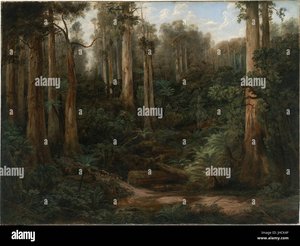
isaac joseph whitehead
1881 , Ireland
Osnovne informacije
- Artistic Movement Or Style: Victorian styles
- Artists Or Movements Influenced By This Artist: ['Romanticism']
- Artists Who Influenced This Artist:
- James Arthur O'Connor
- Thomas Sautelle Roberts
- Date Of Birth: c. 1819
- Date Of Death: 1881
- Full Name: Isaac Joseph Whitehead
- Nationality: Irish-Australian
- Notable Artworks: ['In the Sassafras Valley']
- Place Of Birth: Dublin, Ireland
Povezani članci

Crimson Threads of Narrative: Exploring Symbolism & Representation in Artworks Featuring the Red Dress
Explore the rich symbolism of the red dress in art history! From ancient power displays to iconic portraits like Cézanne’s 'Madame Cezanne', discover the cultural and artistic significance behind this captivating color. Expert analysis & insights.

The Enduring Legacy of Bronze: A Historical & Artistic Exploration for the Collector
Explore the rich history & enduring appeal of bronze sculpture with expert insights for collectors at ArtsDot. Learn about casting techniques, iconic artists, collecting tips & contemporary interpretations.

Bronze Age to Modern Masters: 10 Sculptures That Redefined Art | ArtsDot
Journey through art history with 10 legendary bronze sculptures – from Michelangelo's David to Rodin’s Thinker. Explore the stories, techniques & timeless beauty of these masterpieces. Find museum-quality reproductions & elevate your home decor on ArtsDot.com.

The Enduring Legacy of Bronze: History, Technique & Artistic Expression for the Collector
Explore the rich history & enduring appeal of bronze sculpture with expert insights for collectors at ArtsDot. Learn about casting techniques, iconic artists, and collecting tips.

The Enduring Legacy of Bronze Sculpture: Technique, Symbolism & Cultural Impact
Explore the rich history & enduring appeal of bronze sculpture with expert insights for collectors. Learn about casting techniques, iconic artists, collecting tips & contemporary interpretations at ArtsDot.