 Pregledaj u prostoru
 Pošalji
 Podeli
 Detalji o delu

 Преузми
 Slični predmeti
 Rendgenski snimak
 Slajdovi
 Statistika
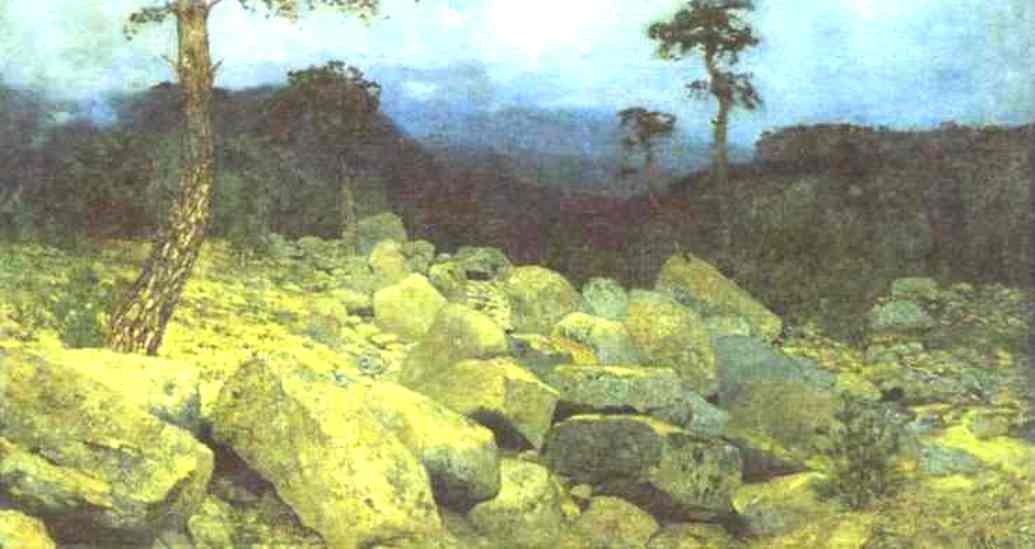
In the Mountains in the Crimea


 Pročitaj više
Ručno rađena uljana reprodukcija
Ručno oslikano uljanim bojama na platnu u dimenzijama i okviru po vašem izboru, izrađeno po porudžbini od strane naših umetnika. ( Pređi na štampu Pređi na digitalnu sliku)




P118B $10

P118H $10

P118W $10

P438Z $10

P508JH $12

P508YH $12

P805H $10

P805Z $10

P919BZ $10

P919G $10

P919XJ $10

P959ZH $10

P968JZ $12

W106C $8

W218G $10

W218JH $8

W218Y $10

W307PJ $10

W316G $10

W316PJ $8

W316Y $10

W398PJ $8

W4111J $10

W500HY $15

W500JH $15

W692G $12

W849H $8

W940BG $15

W953PJ $8




Izaberite jednu od naših unapred definisanih veličina koje odgovaraju originalnim proporcijama umetničkog dela.

Можете унети сопствене димензије како бисте прилагодили дело одређеном оквиру или простору. Ако одабрана величина не одговара пропорцијама оригинала, слика ће бити исечена или проширена додатним елементима који се ручно насликавају. Дигитални prikaz ће вам бити послат на одобрење пре почетка производње.
Имајте на уму да преглед на екрану не одражава стварно исецање или проширење. Само приказ (mockup) ће тачно приказати коначну композицију.
Иако су доступне прилагођене величине, препоручујемо да одаберете димензију из дефинисане листе како бисте сачували оригиналне пропорције.
Nakon narudžbine, tim ArtsDot.com će klijentu putem e-pošte poslati uputstva i dostaviti prikaz predloženog rešenja
Isporuka širom sveta () za 3/4 nedelje umesto uobičajenih 5 nedelja. (9 септембар). Bez kompromisa po pitanju kvaliteta.

Besplatna ekspresna dostava širom sveta

Visokokvalitetno laneno platno

Kompletno osiguranje transporta

Garancija povraćaja carine i uvoznih dažbina

Garancija vernosti boja

Politika povraćaja u roku od 100 dana (isključivo u slučaju nedostataka)

Garancija povrata novca od 100%

Popust pri grupnoj kupovini
 Opcija sa staklom dostupna je samo za dimenzije manje od 110 cm

In the Mountains in the Crimea
Tehnika reprodukcije
Dimenzije reprodukcije
-


Konačna cena
$ 263
The Soul of the Russian Landscape: Levitan’s “In the Crimea Mountains”
Isaac Ilyich Levitan's "In the Crimea Mountains," painted in 1886, isn’t merely a depiction of a landscape; it’s a profound meditation on solitude, memory, and the enduring spirit of nature. This evocative scene, rendered with his signature atmospheric realism, transports us to the rugged beauty of the Crimean mountains – a region that held a particularly poignant significance for Levitan throughout his life. The painting captures a moment suspended in time, a fleeting glimpse into a world both familiar and deeply melancholic.
Levitan’s style is often described as “moodscapes,” and "In the Crimea Mountains" exemplifies this perfectly. He eschewed dramatic vistas or heroic portrayals of nature, instead focusing on subtle shifts in light, color, and texture to convey a sense of quiet contemplation. The brushstrokes are loose and expressive, creating an almost hazy effect that blurs the boundaries between foreground and background. This technique wasn’t simply about visual accuracy; it was a deliberate attempt to capture the *feeling* of being immersed within the landscape – a feeling of both awe and gentle sadness.
A Crimean Connection: Levitan's Personal Landscape
Levitan’s deep connection to Crimea is undeniable, and this painting serves as a testament to that bond. Born in Kyiv but spending much of his childhood and formative years in the Crimean Peninsula, the region became inextricably linked with his artistic vision. The stark beauty of the mountains, the vastness of the sky, and the quiet solitude of the landscape provided him with an endless source of inspiration. It’s believed that this particular scene was painted during a personal visit to the Crimea, possibly reflecting memories of a lost loved one or a yearning for simpler times.
The Crimean Mountains themselves hold symbolic weight within Russian art and culture. They represent resilience, endurance, and the enduring power of nature – qualities often associated with the Russian soul. Levitan’s choice to depict them in this subdued, almost mournful light suggests a deeper resonance than mere topographical representation; he's tapping into something primal and deeply felt.
Technique and Atmosphere: The Language of Color
Levitan masterfully employs color to create an atmosphere of profound tranquility. The dominant hues are muted blues, grays, and browns – colors that evoke the cool, damp air of the mountains and the weathered stone of the rocks. Notice how he uses subtle gradations of tone to suggest depth and distance, creating a sense of vastness without resorting to dramatic contrasts. The occasional splashes of green in the sparse vegetation offer brief moments of vibrancy, hinting at life amidst the prevailing stillness.
His technique is characterized by layering – multiple thin washes of paint applied over time to build up texture and create a luminous effect. This approach allows him to capture the fleeting quality of light and shadow, imbuing the scene with an almost ethereal quality. The rocks themselves are rendered with remarkable detail, their rough surfaces conveying a sense of age and permanence.
Emotional Resonance: A Portrait of Longing
"In the Crimea Mountains" isn’t simply a pretty landscape; it's a deeply emotional work that speaks to universal themes of loss, memory, and the search for solace. The solitary figure implied within the composition – perhaps a shepherd or a traveler – embodies a sense of quiet contemplation and longing. The painting invites us to step into this space of stillness and reflect on our own relationship with nature and the passage of time.
Reproductions, meticulously crafted by skilled artisans, allow us to experience the full impact of Levitan’s vision. Each brushstroke is faithfully recreated, capturing the subtle nuances of color and texture that make this painting so captivating. Whether displayed in a grand salon or a cozy study, “In the Crimea Mountains” offers a timeless reminder of the beauty and power of the natural world – and the enduring resonance of Levitan’s artistic genius.
Srodna umetnička dela
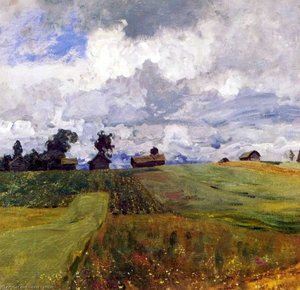
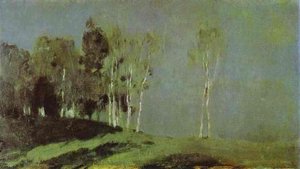
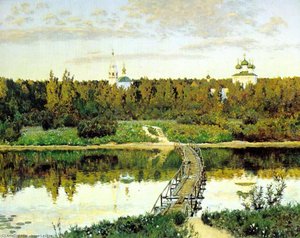
Biografija umetnika
A Symphony of the Russian Soul: The Life and Art of Isaak Ilyich Levitan
Isaak Ilyich Levitan, a name synonymous with the evocative power of Russian landscape painting, was more than just a chronicler of nature; he was a poet of the land, a translator of its moods into visual form. Born in 1860 in Kibarty (present-day Lithuania) to a Jewish family who later settled in Moscow, Levitan’s life was marked by both profound hardship and an unwavering dedication to his art. The early loss of his mother and father instilled within him a sensitivity that would permeate his canvases with a melancholic beauty. This sense of longing, coupled with the restrictions imposed upon Jewish communities in Tsarist Russia, fueled a desire to find solace and expression in the natural world. He entered the Moscow School of Painting, Sculpture and Architecture in 1873, where he came under the tutelage of Alexei Savrasov, whose influence would prove pivotal in shaping Levitan’s artistic vision. It was Savrasov who nurtured his student's innate ability to capture not merely the appearance of nature, but its very essence—its atmosphere, its emotional resonance.The Birth of a ‘Mood Landscape’
Levitan quickly distinguished himself as an artist capable of conveying profound emotion through landscape. He wasn’t interested in topographical accuracy for its own sake; rather, he sought to imbue his paintings with a sense of *mood*, a feeling that resonated deep within the viewer's soul. This approach earned him the title of pioneer of the “mood landscape,” a genre that moved beyond simple representation to explore the spiritual connection between humanity and nature. His palette was often subdued, favoring naturalistic colors and poetic elements over vibrant displays. He masterfully employed light and shadow, creating atmospheric effects that evoked feelings of tranquility, solitude, or even quiet despair. Works like *Autumn Day. Sokolniki* (1879), painted when he was just nineteen years old, already demonstrated this remarkable ability to capture the subtle nuances of the Russian countryside. The painting’s muted tones and delicate rendering of light create a sense of wistful nostalgia, hinting at the transience of beauty and the inevitability of change. Later masterpieces such as *The Vladimirka Road* (1892) and *Eternal Rest* (1894), prominently displayed in the Tretyakov Gallery, further solidified his reputation as a master of emotional landscape painting.Influences and Artistic Kinships
While deeply indebted to Savrasov’s influence, Levitan was also receptive to other artistic currents. He collaborated with fellow artists like Konstantin Korovin, Mikhail Nesterov, and Nikolai Chekhov—the brother of the renowned playwright Anton Chekhov, who became a lifelong friend. This circle fostered an environment of creative exchange and mutual support. Though he briefly experimented with Impressionistic techniques, Levitan never fully embraced the movement, maintaining a uniquely Russian sensibility in his work. He found inspiration not only in the visual world but also in music and literature, seeking to translate their emotional power into his paintings. His designs for scenery for Savva Mamontov’s private Russian Opera demonstrate his versatility and willingness to explore different artistic mediums. The influence of these collaborations and experiences can be seen in works like *Spring Flood*, *Stormy Day*, *Vesper Chimes* and *Silent Cloister*, each a testament to his evolving style and deepening understanding of the emotional landscape.Major Achievements and Legacy
Levitan’s ascension to prominence within the Russian art world was marked by several significant milestones. Elected to the Imperial Academy of Arts in 1897, he recognized as one of Russia's foremost landscape painters. This honor underscored his artistic merit and cemented his position as a leading figure in the Peredvizhniki movement—a group of artists committed to depicting Russian life and nature with uncompromising realism and emotional honesty. He continued to teach at Moscow School of Painting, Sculpture and Architecture, nurturing the talent of aspiring artists and shaping the future direction of landscape painting. His enduring legacy resides not merely in his artistic output but also in his profound contribution to Russian cultural heritage—a testament to the transformative power of art to capture the spirit of an era and inspire generations to come. He passed away peacefully in 1900, leaving behind a body of work that continues to captivate audiences worldwide. His paintings remain a poignant reminder of Russia’s melancholic beauty and the enduring resonance of human emotion within the natural world.Final Resting Place
Levitan's remains were interred in Novodevichy Cemetery in Moscow alongside Anton Chekhov—a symbolic union reflecting their shared artistic kinship and devotion to portraying the soul of Russia. His canvases stand as timeless expressions of melancholy, solitude, and profound contemplation—a legacy that secures his place among the greatest landscape painters of all time.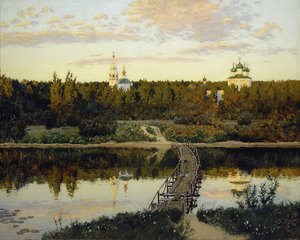
Исаак Ильич Левитан
1860 - 1900 , Русија
Osnovne informacije
- Artistic Movement Or Style: Mood Landscape, Realizam
- Artists Who Influenced This Artist:
- Aleksei Savrasov
- Vasily Polenov
- Konstantin Korovin
- Date Of Birth: August 30, 1860
- Date Of Death: July 22, 1900
- Full Name: Isaak Ilyich Levitan
- Nationality: Ruski
- Notable Artworks:
- Autunm Day. Sokolniki
- Vladimirska cesta
- Večiti mir
- Prolećna poplava
- Buranij dan
- Vecer čas
- Place Of Birth: Kibarty, Lithuania
Povezani članci

25 Remek-dela Džona Konstebla: Lepota Engleske na Platnu | ArtsDot
Uronite u svet Džona Konstebla! Otkrijte 25 remek-dela engleskog pejzaža, romantizma i seoske idile. Kupite reprodukcije slika vrhunskog kvaliteta za dekoraciju enterijera na ArtsDot.com.
Fyodor Vasilyev: A Poetic Vision of Russian Landscape – Life, Legacy, and the Transience of Nature
Explore the captivating world of Fyodor Vasilyev, a pioneering Russian landscape painter. Discover his lyrical style, influential works like 'Clouds' & lasting legacy. Learn about his life, artistic journey & impact on Russian art history.

Glavna dela koja su definisala Romantični pejzaž: 10 remek-dela za vaš dom
Otkrijte 10 remek-dela romantičnog pejzažnog slikarstva! Uronite u svet Claude Lorraina, Caspara David Friedricha i Turnera. Ispričane priče umetnosti, inspiracija za dekoraciju doma. Kvalitetne reprodukcije na ArtsDot.com – istražite celu kolekciju online!
Aleksey Savrasov: The Poetic Realism That Defined Russian Landscape Painting
Explore the poetic realism of Aleksey Savrasov, founder of Russian lyrical landscape painting. Discover his masterpieces like 'The Rooks Have Returned' and learn about his lasting influence on 19th-century art. ArtsDot offers high-quality reproductions.

Evocations of Place: A Historical Journey Through Landscape Art
Explore the rich history of landscape art with ArtsDot. Discover renowned artists, movements like Impressionism & Romanticism, and expert guidance for collecting timeless pieces. Find your perfect serene escape today!