

 Pregledaj u prostoru
 Pošalji
 Podeli
 Detalji o delu

 Преузми
 Slični predmeti
 Rendgenski snimak
 Slajdovi
 Statistika
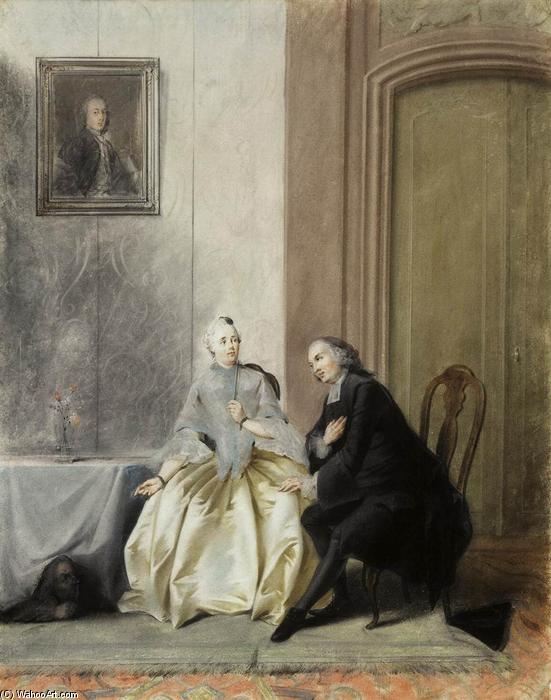
Scene from Molière's Tartuffe
 Rococo Style
 1795
1795 61.0 x 48.0 cm
 Hermitage Museum
 Pročitaj više
Kupite digitalnu sliku visoke rezolucije i poboljšanog kvaliteta, koja je znatno superiornija od onoga što vidite u online prikazu.
Svaka datoteka je pedantno pripremljena od strane naših stručnjaka koristeći napredne alate i profesionalnu ručnu retušu. Osiguravamo da svaka slika ima izuzetnu oštrinu, preciznu reprodukciju boja i fine detalje.
Konačna datoteka se dostavlja putem e-pošte u roku od 72 sata, optimizovana za neposrednu upotrebu u profesionalnim, izdavačkim i štamparskim okruženjima. To je isti kvalitet kojem veruju vrhunski studiji dizajna, izdavači i galerije.
Digitalna slika
Preuzmite datoteku visoke rezolucije za ličnu upotrebu, štampanje i kreativne projekte. ( Pređi na štampu Kupi ručno naslikanu sliku)
Uključeno uz svaku porudžbinu digitalne slike
Profesionalna digitalna isporuka, zagarantovana
Kada odaberete ArtsDot.com, ne dobijate samo sliku – vi primate profesionalno unapređeno digitalno umetničko delo, izrađeno sa najvećom preciznošću i uz garanciju zadovoljstva. Evo svega što automatski dolazi uz vašu porudžbinu:

Brza dostava putem e-pošte
Vaša digitalna slika visoke rezolucije biće vam poslata putem e-pošte u roku od 72 sata od poručivanja – spremna za trenutnu upotrebu.

Digitalna datoteka unapređena veštačkom inteligencijom
Vaše umetničko delo je profesionalno optimizovano korišćenjem naprednih AI alata i ručne obrade, čime se osiguravaju maksimalni detalji, oštrina i preciznost boja.

Besplatna ponovna isporuka doživotno
Slučajno ste obrisali ili izgubili svoju datoteku? Ne brinite – poslaćemo vam je ponovo u bilo kom trenutku, potpuno besplatno.

Bez troškova uvoza – zauvek
Uživajte u svojim umetničkim delima trenutno, bez carine, dažbina ili troškova dostave – digitalni download je uvek bez poreza.

Garancija vernosti boja
Uz pomoć profesionalnih alata i upravljanja bojama, osiguravamo da vaša digitalna slika što vernije odražava originalne boje.

Garancija zadovoljstva od 100 dana
Ako niste zadovoljni svojom digitalnom slikom, izvršićemo reviziju ili ćemo vam vratiti 100% novca u roku od 100 dana – bez ikakvih pitanja.

100% garancija povrata novca
Niste zadovoljni? Dobijte puni povraćaj novca u roku od 100 dana od prijema digitalne datoteke – bez suvišnih pitanja.

Popusti na velike porudžbine
Kupite 3 slike, uštedite 10% - Kupite 5 slika, uštedite 15% - Kupite 10+ slika, uštedite 20%. Odlično za kreativne projekte, galerije i agencije.
Artistic Style and Composition
The painting's composition is characterized by a soft and delicate appearance, thanks to the use of pastel. The artist's attention to detail is evident in the intricate facial expressions and body language of the characters. The scene depicts a moment from Molière's play Tartuffe, where two figures are engaged in a conversation or interaction. The woman, dressed in a yellow dress, appears to be listening or waiting for someone, while the man, kneeling beside her, conveys distress or sadness.Artist and Museum
Jacobus Buys was a Dutch painter and printmaker, known for his refined interior scenes and theatrical compositions. His work can be found in various museums, including The Hermitage, which houses an impressive collection of European art. To learn more about Jacobus Buys and his artwork, visit the ArtsDot.com website, which offers a wide range of information on artists and their paintings.- Pastel painting: A soft and delicate technique used by Jacobus Buys to create the Scene from Molière's Tartuffe.
- Theatrical composition: The painting's arrangement of characters and setting, which captures a moment from Molière's play.
- European art: The style and period of the painting, which can be found in museums such as The Hermitage.
The Scene from Molière's Tartuffe is a remarkable example of Jacobus Buys' skill in capturing the essence of a theatrical scene, and its beauty can be appreciated by art lovers around the world.
Srodna umetnička dela

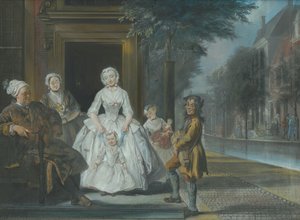
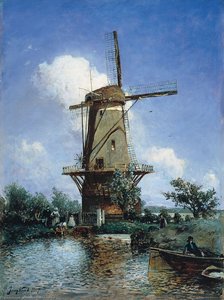
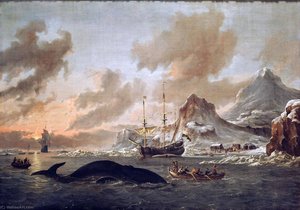
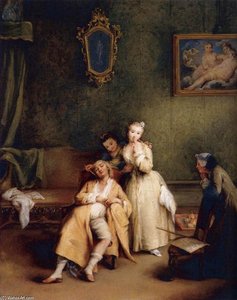
Biografija umetnika
A Life Dedicated to Rococo Elegance: Jacobus Buys
Born in Amsterdam in 1724, Jacobus Buys emerged into a world steeped in the refined sensibilities of the Dutch Rococo period. His father, a wig-maker, provided a stable upbringing, though young Jacobus’s artistic inclinations quickly steered him toward a different path. He embarked on his formal training under Cornelis Pronk and later with Jacob de Wit, both established figures within Amsterdam's art circles. This early education laid the foundation for Buys’s distinctive style—a delicate balance between portraiture, theatrical scene painting, and an exquisite attention to detail that would define his career. He further honed his skills studying under Cornelis Troost, solidifying his mastery of technique and composition before eventually assuming a leadership role as director of the Amsterdam Drawing Academy.From Portraits to Playful Scenes: The Breadth of Buys’s Oeuvre
Buys was remarkably versatile, embracing a wide range of subjects throughout his artistic life. While he is perhaps best known for his elegant portraits, capturing the likenesses and social standing of Amsterdam's elite, his interests extended far beyond mere representation. He skillfully designed bas-reliefs and intricate tapestries, demonstrating an aptitude for decorative arts. A significant portion of his work involved creating book illustrations, showcasing a precision and narrative flair that appealed to a broader audience. However, it was his theatrical scenes—particularly those inspired by the works of Molière—that truly allowed Buys’s artistic personality to flourish. His pastel depiction of a scene from *Tartuffe*, now housed in The Hermitage Museum, is a testament to this passion. The work isn't simply an illustration; it’s a vibrant interpretation brimming with character and dramatic tension, revealing his deep understanding of both human psychology and the art of visual storytelling. He wasn’t merely copying plays but translating them into a visually compelling language that resonated with 18th-century audiences.Influences and Artistic Development
The influence of earlier Dutch masters is subtly present in Buys's work, particularly in his meticulous attention to detail and the use of light and shadow reminiscent of the Golden Age painters. However, he wasn’t simply replicating past styles; he synthesized these influences with the prevailing Rococo aesthetic sweeping across Europe. The lightness of palette, the graceful poses, and the emphasis on aristocratic leisure all point to a deliberate engagement with contemporary trends. His studies under Pronk and de Wit undoubtedly shaped his understanding of color theory and composition, while Troost likely instilled in him a deeper appreciation for portraiture techniques. Buys’s ability to seamlessly blend these influences—the Dutch tradition of realism with the French Rococo's emphasis on elegance and ornamentation—is what sets him apart. He also demonstrated an interest in copying works from renowned 17th-century artists, not as imitation but as a means of learning and refining his own skills.A Member of the Guild and Lasting Legacy
In 1750, Jacobus Buys achieved a significant milestone by becoming a member of Amsterdam's prestigious Guild of St Luke, solidifying his position within the city’s artistic community. This membership not only validated his skills but also opened doors to commissions from prominent patrons. He continued working diligently until his death in 1801, leaving behind a substantial body of work that offers valuable insights into Dutch society and artistic tastes during the late 18th century. While perhaps not as widely celebrated as some of his contemporaries, Buys’s contributions are increasingly recognized for their refined technique, elegant compositions, and insightful portrayals of both individuals and dramatic narratives. His paintings provide a window into a world of aristocratic leisure, theatrical spectacle, and the enduring power of storytelling through art. His legacy lies in his ability to capture the spirit of the Rococo era with grace, precision, and a distinctly Dutch sensibility.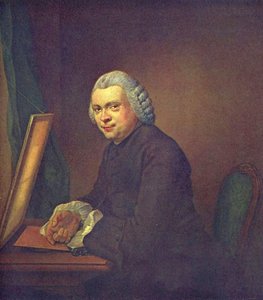
jacobus buys
1724 - 1801 , Netherlands
Kratke činjenice
- Artistic Movement Or Style: Rococo
- Artists Who Influenced This Artist:
- Cornelis Pronk
- Jacob de Wit
- Cornelis Troost
- Date Of Birth: 1724 Amsterdam Netherlands
- Date Of Death: 1801 Amsterdam Netherlands
- Full Name: Jacobus Buys
- Nationality: Dutch
- Notable Artworks:
- Portrait of Elisabeth Troost
- Scene from Molière's Tartuffe
- Place Of Birth: Amsterdam Netherlands