

 Pregledaj u prostoru
 Pošalji
 Podeli
 Detalji o delu

 Преузми
 Slični predmeti
 Rendgenski snimak
 Slajdovi
 Statistika
The Green Dress


 Pročitaj više
Kupite digitalnu sliku visoke rezolucije i poboljšanog kvaliteta, koja je znatno superiornija od onoga što vidite u online prikazu.
Svaka datoteka je pedantno pripremljena od strane naših stručnjaka koristeći napredne alate i profesionalnu ručnu retušu. Osiguravamo da svaka slika ima izuzetnu oštrinu, preciznu reprodukciju boja i fine detalje.
Konačna datoteka se dostavlja putem e-pošte u roku od 72 sata, optimizovana za neposrednu upotrebu u profesionalnim, izdavačkim i štamparskim okruženjima. To je isti kvalitet kojem veruju vrhunski studiji dizajna, izdavači i galerije.
Digitalna slika
Preuzmite datoteku visoke rezolucije za ličnu upotrebu, štampanje i kreativne projekte. ( Pređi na štampu Kupi ručno naslikanu sliku)
Uključeno uz svaku porudžbinu digitalne slike
Profesionalna digitalna isporuka, zagarantovana
Kada odaberete ArtsDot.com, ne dobijate samo sliku – vi primate profesionalno unapređeno digitalno umetničko delo, izrađeno sa najvećom preciznošću i uz garanciju zadovoljstva. Evo svega što automatski dolazi uz vašu porudžbinu:

Brza dostava putem e-pošte
Vaša digitalna slika visoke rezolucije biće vam poslata putem e-pošte u roku od 72 sata od poručivanja – spremna za trenutnu upotrebu.

Digitalna datoteka unapređena veštačkom inteligencijom
Vaše umetničko delo je profesionalno optimizovano korišćenjem naprednih AI alata i ručne obrade, čime se osiguravaju maksimalni detalji, oštrina i preciznost boja.

Besplatna ponovna isporuka doživotno
Slučajno ste obrisali ili izgubili svoju datoteku? Ne brinite – poslaćemo vam je ponovo u bilo kom trenutku, potpuno besplatno.

Bez troškova uvoza – zauvek
Uživajte u svojim umetničkim delima trenutno, bez carine, dažbina ili troškova dostave – digitalni download je uvek bez poreza.

Garancija vernosti boja
Uz pomoć profesionalnih alata i upravljanja bojama, osiguravamo da vaša digitalna slika što vernije odražava originalne boje.

Garancija zadovoljstva od 100 dana
Ako niste zadovoljni svojom digitalnom slikom, izvršićemo reviziju ili ćemo vam vratiti 100% novca u roku od 100 dana – bez ikakvih pitanja.

100% garancija povrata novca
Niste zadovoljni? Dobijte puni povraćaj novca u roku od 100 dana od prijema digitalne datoteke – bez suvišnih pitanja.

Popusti na velike porudžbine
Kupite 3 slike, uštedite 10% - Kupite 5 slika, uštedite 15% - Kupite 10+ slika, uštedite 20%. Odlično za kreativne projekte, galerije i agencije.
A Moment Frozen in Emerald: Unpacking Jane Peterson’s “The Green Dress”
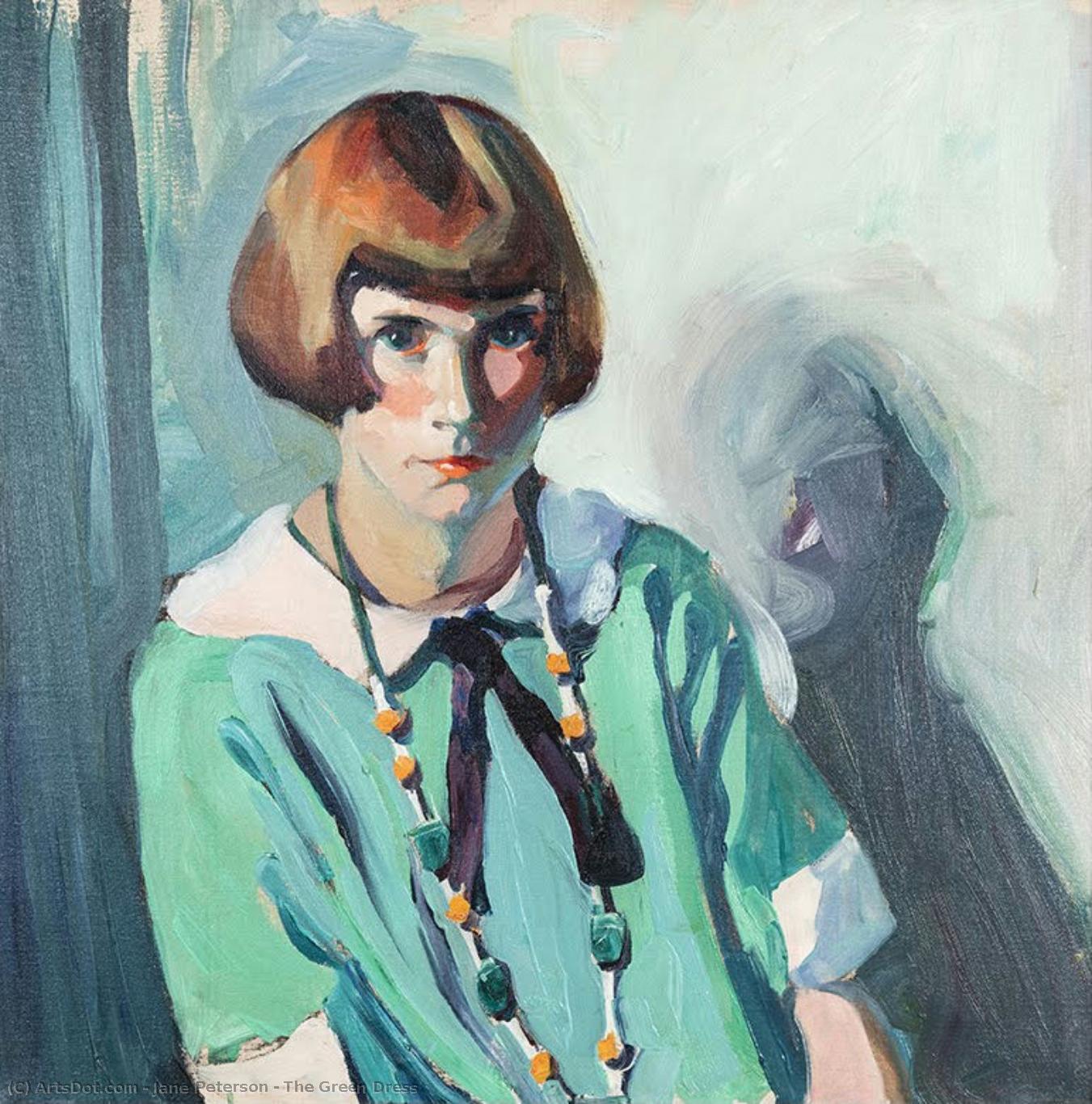
Jane Peterson's "The Green Dress," painted around 1920, isn’t merely a portrait; it’s a carefully constructed tableau of the burgeoning modernity sweeping through America. It captures a fleeting moment – a shared glance, a whispered secret – within the opulent confines of a private home, yet simultaneously speaks volumes about the seismic shifts occurring in women's roles and societal expectations during the Jazz Age. The painting immediately draws the eye to its subject: a woman, poised with an almost melancholic grace, draped in a dress that is both exquisitely detailed and subtly revolutionary.

Impressionistic Detail and the Language of Light
Peterson’s technique is firmly rooted in Impressionism, yet she transcends simple replication. She masterfully employs broken brushstrokes to capture the play of light on fabric – a shimmering effect achieved through layering translucent washes of color. The green itself isn't a single hue but a complex blend, shifting from deep emerald to lighter jade depending on the angle of observation. This subtle variation creates an illusion of depth and movement, as if the dress is subtly breathing with the light. Notice how she renders the folds and drapes, not with sharp outlines, but with delicate gradations that suggest volume and texture. The background, rendered in muted tones, serves to heighten the drama of the subject, drawing our attention entirely to the woman and her attire.
A Portrait of a Changing Era
“The Green Dress” is inextricably linked to the social and cultural context of its creation. The early 1920s witnessed a dramatic transformation in American society – the end of World War I brought with it a sense of liberation, while the passage of the 19th Amendment granting women the right to vote symbolized a newfound political voice. The restrictive corsets and elaborate hairstyles of previous decades were yielding to looser silhouettes and shorter bobs, reflecting a shift towards greater freedom and self-expression for women. Peterson’s subject embodies this change: her short hair, flowing dress, and contemplative gaze all suggest a woman comfortable in her own skin, unafraid to look beyond the confines of traditional expectations. The presence of another figure in the background – partially obscured – hints at a shared intimacy, perhaps a lover or confidante, further reinforcing the theme of female empowerment.
Symbolism and Emotional Resonance
The dress itself is laden with symbolic weight. Its vibrant green color represents vitality, growth, and renewal—a fitting emblem for a generation embracing new possibilities. The bow in her hair, a fashionable accessory of the era, adds a touch of playful elegance. Yet, the woman’s pensive expression – her gaze directed towards an unseen horizon – hints at underlying melancholy or perhaps a quiet contemplation of the changes unfolding around her. The painting isn't simply a depiction of a fashionable woman; it’s a meditation on identity, freedom, and the complexities of navigating a rapidly evolving world. “The Green Dress” remains a poignant reminder of a pivotal moment in American history—a moment captured with exquisite detail and profound emotional resonance by Jane Peterson.
Srodna umetnička dela


Biografija umetnika
A Life Immersed in Color and Light
Jane Peterson, born Jennie Christine Peterson on November 28, 1876, in Elgin, Illinois, emerged as a pivotal figure in American art during the early 20th century. Her journey from a small-town upbringing to becoming a celebrated Impressionist and Expressionist painter is one of unwavering dedication, artistic exploration, and a keen eye for capturing the vibrancy of life. Peterson’s father, employed by the Elgin Watch Company, instilled a sense of precision, while her mother nurtured her innate artistic talent, providing crucial support that would shape her future. Even as a young girl, she demonstrated an intuitive grasp of painting, though formal training initially remained elusive. A transformative experience at the 1893 Columbian Exposition in Chicago ignited her passion, exposing her to the groundbreaking works of American Impressionists like Childe Hassam and Edmund Tarbell. This encounter proved decisive, inspiring Peterson to pursue formal art education at the Pratt Institute in Brooklyn, New York, beginning in 1895.European Influences and Artistic Flourishing
Securing a loan from her mother, Peterson immersed herself in the rigorous curriculum at Pratt, graduating in 1901. She continued her studies at the Art Students League with Frank DuMond, honing her skills before embarking on what would become a series of formative “Grand Tours” of Europe starting in 1907. These travels were not merely sightseeing expeditions; they were immersive artistic pilgrimages. In Venice and London, she studied under Frank Brangwyn, absorbing his dynamic compositions and bold brushwork. Madrid brought her into the orbit of Joaquin Sorolla, whose masterful use of light and color would profoundly influence Peterson’s style, leading to a loosening of her technique and a more vibrant palette after 1909. Paris proved equally enriching, with mentorship from Jacques Blanche and André Lhote, and regular attendance at the salon hosted by Gertrude and Leo Stein, where she encountered luminaries like Pablo Picasso and Henri Matisse. This exposure to avant-garde movements—Fauvism, Cubism, and beyond—broadened her artistic horizons and encouraged experimentation. A solo trip to Egypt and Algiers in 1910 further expanded her subject matter and demonstrated a remarkable independence of spirit. Peterson’s style became a unique synthesis of Impressionism, Neo-Impressionism, Post-Impressionism, Art Nouveau, the Nabi group, and Fauvism—a testament to her ability to absorb diverse influences and forge her own artistic path.A Multifaceted Career and Enduring Legacy
Peterson’s career was remarkably multifaceted. She balanced her artistic pursuits with a commitment to education, holding teaching positions at Elmira, New York; the Maryland Institute in Baltimore; and the Art Students League (1913-1919), where she specialized in watercolor painting. She also served as Drawing Supervisor for the Brooklyn Public Schools, demonstrating a dedication to fostering creativity in others. Throughout her career, Peterson exhibited extensively, with over 80 one-woman shows—a testament to her growing recognition and demand. Notable exhibitions included a solo show at the Société des Artistes Français in 1908 and the St. Botolph Club in Boston in 1909. In 1916, she showcased works painted during travels with Louis Comfort Tiffany, highlighting landscapes and gardens. During World War I, Peterson contributed her artistic talents to support the war effort, creating paintings for Liberty Loans and the American Red Cross. A particularly memorable expedition occurred in 1919 when she traveled extensively aboard Tiffany’s private railway car, capturing the beauty of the American landscape. She was an active member of numerous art organizations, including the Allied Artists of America, the American Watercolor Society, and the National Association of Women Painters and Sculptors. Peterson also shared her expertise through writing, authoring *Flower Painting* in 1946.Later Years and Lasting Impact
Peterson’s personal life included marriages to M. Bernard Philipp (until his death in 1929) and later to James S. McCarty (divorced in 1939). Following her first husband's passing, she increasingly focused on painting flowers, particularly zinnias, finding solace and inspiration in their delicate beauty. Sadly, arthritis eventually curtailed her ability to paint in the mid-1950s, but her artistic legacy remained secure. Jane Peterson passed away on August 14, 1965, leaving behind a rich body of work that continues to captivate audiences today. Her paintings are now held in prestigious institutions such as the Metropolitan Museum of Art, the Museum of the City of New York, the National Museum of Women in the Arts, the Hirshhorn Museum, the Pennsylvania Academy of the Fine Arts, and the Philadelphia Museum of Art. Jane Peterson is rightfully recognized as a significant American Impressionist and Expressionist painter who skillfully blended diverse artistic influences into her unique style, contributing significantly to the development of American art in the early 20th century. Her ability to capture light, color, and emotion with such vibrancy ensures that her work will continue to inspire and delight for generations to come—a testament to a life truly immersed in the pursuit of beauty. Her paintings are not merely representations of scenes; they are expressions of feeling, imbued with a sense of joy and wonder.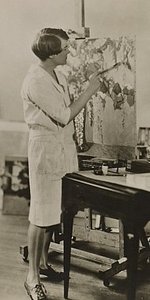
Jane Peterson
1876 - 1965 , United States of America
Kratke činjenice
- Artistic Movement Or Style: Impressionism/Expressionism
- Artists Who Influenced This Artist:
- Sorolla
- Brangwyn
- Blanche
- Lhote
- Date Of Birth: November 28, 1876
- Date Of Death: August 14, 1965
- Full Name: Jane Peterson
- Nationality: American
- Notable Artworks:
- Petunias
- Turkish Fountain
- The Green Dress
- Place Of Birth: Elgin, USA