

 Pregledaj u prostoru
 Pošalji
 Podeli
 Detalji o delu

 Преузми
 Slični predmeti
 Rendgenski snimak
 Slajdovi
 Statistika
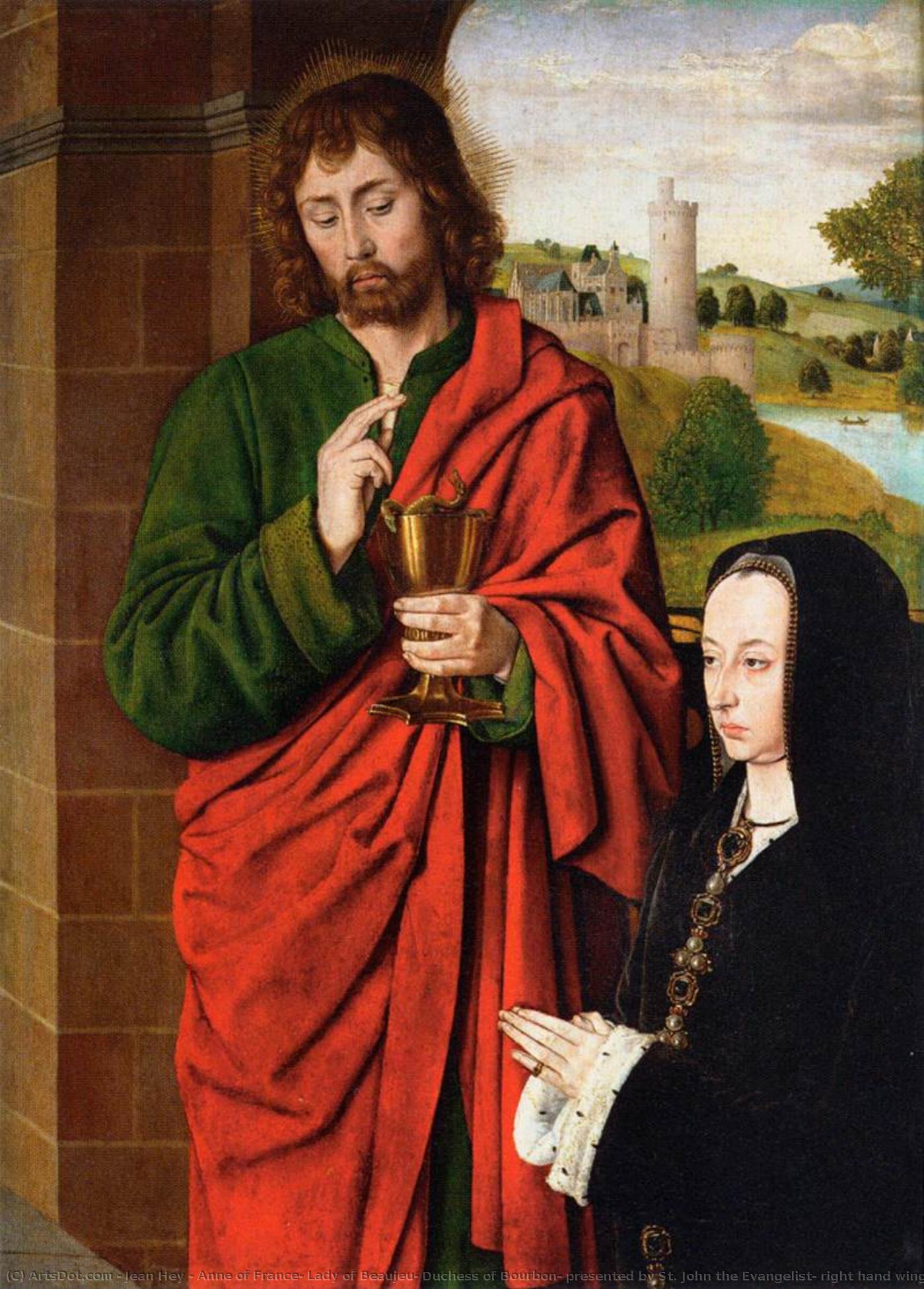
Anne of France, Lady of Beaujeu, Duchess of Bourbon, presented by St. John the Evangelist, right hand wing of a triptych
 Oil On Canvas
- WallArt
- Northern Renaissance
 1492
1492- Renaissance
 53.0 x 73.0 cm
 Louvre
 Pročitaj više
Kupite digitalnu sliku visoke rezolucije i poboljšanog kvaliteta, koja je znatno superiornija od onoga što vidite u online prikazu.
Svaka datoteka je pedantno pripremljena od strane naših stručnjaka koristeći napredne alate i profesionalnu ručnu retušu. Osiguravamo da svaka slika ima izuzetnu oštrinu, preciznu reprodukciju boja i fine detalje.
Konačna datoteka se dostavlja putem e-pošte u roku od 72 sata, optimizovana za neposrednu upotrebu u profesionalnim, izdavačkim i štamparskim okruženjima. To je isti kvalitet kojem veruju vrhunski studiji dizajna, izdavači i galerije.
Digitalna slika
Preuzmite datoteku visoke rezolucije za ličnu upotrebu, štampanje i kreativne projekte. ( Pređi na štampu Kupi ručno naslikanu sliku)
Uključeno uz svaku porudžbinu digitalne slike
Profesionalna digitalna isporuka, zagarantovana
Kada odaberete ArtsDot.com, ne dobijate samo sliku – vi primate profesionalno unapređeno digitalno umetničko delo, izrađeno sa najvećom preciznošću i uz garanciju zadovoljstva. Evo svega što automatski dolazi uz vašu porudžbinu:

Brza dostava putem e-pošte
Vaša digitalna slika visoke rezolucije biće vam poslata putem e-pošte u roku od 72 sata od poručivanja – spremna za trenutnu upotrebu.

Digitalna datoteka unapređena veštačkom inteligencijom
Vaše umetničko delo je profesionalno optimizovano korišćenjem naprednih AI alata i ručne obrade, čime se osiguravaju maksimalni detalji, oštrina i preciznost boja.

Besplatna ponovna isporuka doživotno
Slučajno ste obrisali ili izgubili svoju datoteku? Ne brinite – poslaćemo vam je ponovo u bilo kom trenutku, potpuno besplatno.

Bez troškova uvoza – zauvek
Uživajte u svojim umetničkim delima trenutno, bez carine, dažbina ili troškova dostave – digitalni download je uvek bez poreza.

Garancija vernosti boja
Uz pomoć profesionalnih alata i upravljanja bojama, osiguravamo da vaša digitalna slika što vernije odražava originalne boje.

Garancija zadovoljstva od 100 dana
Ako niste zadovoljni svojom digitalnom slikom, izvršićemo reviziju ili ćemo vam vratiti 100% novca u roku od 100 dana – bez ikakvih pitanja.

100% garancija povrata novca
Niste zadovoljni? Dobijte puni povraćaj novca u roku od 100 dana od prijema digitalne datoteke – bez suvišnih pitanja.

Popusti na velike porudžbine
Kupite 3 slike, uštedite 10% - Kupite 5 slika, uštedite 15% - Kupite 10+ slika, uštedite 20%. Odlično za kreativne projekte, galerije i agencije.
A Vision of Burgundian Splendor
In the quiet, hallowed corridors of the Moulins Cathedral, there exists a window into a vanished era of French majesty. The painting Anne of France, Lady of Beaujeu, Duchess of Bourbon, presented by St. John the Evangelist serves as more than just a religious icon; it is a profound encounter with the dignity of the late fifteenth century. Created in 1492 by the enigmatic master Jean Hey, this right-hand wing of a monumental triptych captures a moment where the earthly and the divine intersect. The subject, Anne of France—a woman of immense political power and historical significance—is depicted not merely as a mortal ruler, but as a figure enveloped in spiritual grace. Through the delicate hand of the Master of Moulins, we witness the seamless blending of courtly elegance with deep, contemplative devotion.
The composition is a masterclass in the Early Netherlandish tradition, characterized by an almost tactile attention to detail that invites the viewer to linger. Jean Hey employs a subtle sfumato technique, softening the edges of the figures to create a sense of atmospheric depth and lifelike presence. The light does not merely strike the surface; it seems to emanate from within the very fabric of the scene, illuminating the rich textures of the Duchess's attire and the luminous skin tones that define her noble countenance. This meticulous approach to texture—from the heavy, opulent folds of velvet to the subtle sheen of precious metals—creates a sensory experience that transcends the flat plane of the panel, making the historical moment feel vibrantly alive.
Symbolism and the Divine Connection
Beyond its aesthetic brilliance, the artwork is steeped in a complex layer of religious and political symbolism. The presence of St. John the Evangelist acting as a presenter for Anne of France serves to sanctify her lineage and her rule. This arrangement suggests that her authority is not merely derived from her royal blood as the daughter of Louis XI, but is also divinely ordained. The saintly figure acts as a bridge between the celestial realm and the Burgundian court, grounding the political reality of the Duchess in the eternal truths of the Christian faith. For the contemporary viewer, this creates an emotional resonance that speaks to the universal human desire for protection and spiritual legitimacy.
The interplay of light and shadow within the piece further enhances its symbolic weight. The shadows are not merely absences of light but are used to sculpt the figures, providing a sense of gravity and permanence. This technique reflects the burgeoning humanist spirit of the age—an era caught between the rigid structures of the Middle Ages and the inquisitive naturalism of the Renaissance. For collectors and interior designers, this painting offers a profound sense of "quiet grandeur." It is a piece that does not shout for attention through garish colors, but rather commands respect through its sophisticated palette and the soulful, introspective gaze of its subjects.
An Enduring Legacy for the Modern Collector
Integrating a high-quality reproduction of this masterpiece into a contemporary space offers an opportunity to introduce historical depth and intellectual sophistication. Whether placed in a curated gallery setting or as a focal point in a refined living area, the work brings with it the aura of the Bourbon court. The painting’s ability to evoke both the opulence of the Renaissance and the solemnity of religious devotion makes it a versatile choice for those looking to create an atmosphere of timelessness and prestige.
To possess such a work is to hold a fragment of history—a piece of the "Master of Moulins" legacy that continues to captivate scholars and art lovers alike. It serves as a reminder of a time when art was the ultimate vessel for storytelling, power, and prayer. For the discerning eye, this reproduction is not just a decoration; it is an invitation to contemplate the enduring beauty of the human spirit and the magnificent artistry of the Early Renaissance.
Srodna umetnička dela

Biografija umetnika
The Enigmatic Shadow of the Bourbon Court
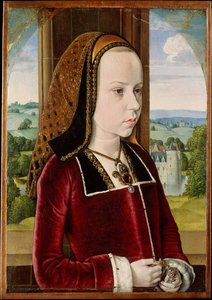
In the twilight of the fifteenth century, amidst the opulent courts of France and Burgundy, there emerged a painter whose name would become synonymous with a profound, quiet mastery. Jean Hey, often whispered in art historical circles as the Master of Moulins, remains one of the most captivating enigmas of the Early Netherlandish period. While the biographical details of his life are shrouded in the mists of time—with only scant records suggesting he may have been active around 1475 and perhaps spent his final years in Paris—his brushwork speaks with an unmistakable and enduring voice. His identity, once a puzzle of fragmented documentation, now stands as a testament to a period where artistic brilliance often transcended the need for personal fame.
The origins of Hey’s talent are steeped in scholarly speculation, fueling a narrative of cross-cultural influence that defines his very essence. Many historians believe his stylistic foundations were laid under the tutelage of Hugo van der Goes, the titan of Flemish Primitivism. This connection is evident in the way Hey breathes life into his subjects through a meticulous attention to detail and a sophisticated use of light. His work represents a sublime intersection of Northern Renaissance realism and a burgeoning French elegance, creating a visual language that is both structurally rigorous and emotionally tender.
A Masterpiece of Devotion: The Moulins Triptych
The pinnacle of Jean Hey’s career, and perhaps the most significant achievement of his entire oeuvre, is the monumental Moulins Triptych housed in the Moulins Cathedral. Completed around 1494-1495, this work serves as a breathtaking window into the spiritual and political heart of the Bourbon court. The central panel, depicting the Madonna and Child adored by celestial angels, radiates a serene divinity that anchors the entire composition. However, it is the flanking wings that truly ground the divine in the earthly realm, presenting poignant portraits of the era's nobility.
Through these panels, Hey captures the essence of Burgundian prestige with unparalleled skill:
- Peter II, Duke of Bourbon: Presented by Saint Peter, this portrait showcases the artist's ability to render heavy fabrics and the solemn dignity of high office.
- Anne de Beaujeu, Duchess of Bourbon: A masterpiece of Early Renaissance elegance, where subtle sfumato shading captures the delicate features and aristocratic grace of one of France's most powerful women.
- The Presence of Suzanne: The inclusion of the Duke’s daughter adds a layer of familial intimacy to the grand religious narrative, showcasing Hey's talent for humanizing the divine.
Legacy of Light and Detail
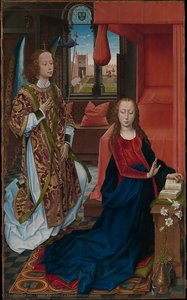
Beyond the grand scale of his triptychs, Jean Hey’s smaller works—ranging from intimate portraits to profound biblical scenes—reveal a painter obsessed with the interplay of light and texture. In works such as The Annunciation and Meeting at the Golden Gate, one observes a dramatic use of lighting that predates many later Renaissance developments, lending a sense of theatricality to sacred moments. His ability to render the tactile quality of velvet, the cold sheen of armor, and the soft glow of skin remains a hallmark of his technical prowess.
The historical significance of Jean Hey lies not just in the beauty of his surviving panels, but in his role as a bridge between traditions. He took the meticulous, almost scientific realism of the Netherlandish masters and infused it with a lyrical, French sensibility. Though his life was brief and much of his biography remains lost to history, his legacy is preserved in every meticulously painted fold of drapery and every soulful gaze captured on panel. He remains a pivotal figure whose work continues to illuminate the transition from the medieval spirit to the dawn of the modern era.
Jean Hey
1475 - 1505 , United Kingdom
Kratke činjenice
- Artistic Movement Or Style: Early Netherlandish
- Artists Or Movements Influenced By This Artist: ['Bourbon Court']
- Artists Who Influenced This Artist: ['Hugo van der Goes']
- Date Of Death: c. 1505
- Full Name: Jean Hey
- Nationality: Dutch
- Notable Artworks:
- The Annunciation
- Portrait of Charles II of Bourbon
- Meeting at the Golden Gate
- Moulins Triptych
- Place Of Birth: United Kingdom