 Pregledaj u prostoru
 Pošalji
 Podeli
 Detalji o delu

 Преузми
 Slični predmeti
 Rendgenski snimak
 Slajdovi
 Statistika
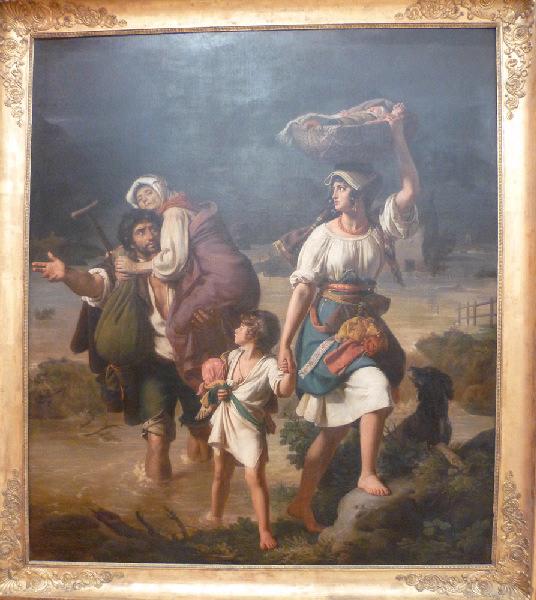
Une famille de Contadini surprise par un prompt débordement du Tibre dit Paysans de la campagne romaine fuyant une inondation dit autrefois l'inondation
 Pročitaj više
Ručno rađena uljana reprodukcija
Ručno oslikano uljanim bojama na platnu u dimenzijama i okviru po vašem izboru, izrađeno po porudžbini od strane naših umetnika. ( Pređi na štampu Pređi na digitalnu sliku)




































Izaberite jednu od naših unapred definisanih veličina koje odgovaraju originalnim proporcijama umetničkog dela.

Можете унети сопствене димензије како бисте прилагодили дело одређеном оквиру или простору. Ако одабрана величина не одговара пропорцијама оригинала, слика ће бити исечена или проширена додатним елементима који се ручно насликавају. Дигитални prikaz ће вам бити послат на одобрење пре почетка производње.
Имајте на уму да преглед на екрану не одражава стварно исецање или проширење. Само приказ (mockup) ће тачно приказати коначну композицију.
Иако су доступне прилагођене величине, препоручујемо да одаберете димензију из дефинисане листе како бисте сачували оригиналне пропорције.
Nakon narudžbine, tim ArtsDot.com će klijentu putem e-pošte poslati uputstva i dostaviti prikaz predloženog rešenja
Isporuka širom sveta () za 3/4 nedelje umesto uobičajenih 5 nedelja. (10 септембар). Bez kompromisa po pitanju kvaliteta.

Besplatna ekspresna dostava širom sveta

Visokokvalitetno laneno platno

Kompletno osiguranje transporta

Garancija povraćaja carine i uvoznih dažbina

Garancija vernosti boja

Politika povraćaja u roku od 100 dana (isključivo u slučaju nedostataka)

Garancija povrata novca od 100%

Popust pri grupnoj kupovini
 Opcija sa staklom dostupna je samo za dimenzije manje od 110 cm

Une famille de Contadini surprise par un prompt débordement du Tibre dit Paysans de la campagne romaine fuyant une inondation dit autrefois l'inondation
Tehnika reprodukcije
Dimenzije reprodukcije
-


Konačna cena
$ 263
Srodna umetnička dela








Biografija umetnika
The Master of History: The Life and Legacy of Jean-Victor Schnetz
In the grand tapestry of nineteenth-century French art, few threads are as intricately woven between the disciplined precision of Neoclassicism and the turbulent passion of Romanticism as those belonging to Jean-Victor Schnetz. Born on April 14, 1787, in the regal surroundings of Versailles, Schnetz emerged from an era defined by monumental shifts in political and aesthetic thought. His early artistic formation was profoundly shaped by the shadow of the legendary Jacques-Louis David, the titan of Neoclassicism. Under David’s rigorous tutelage, Schnetz mastered the art of anatomical accuracy, balanced composition, and a certain sculptural clarity that would remain a hallmark of his technical prowess throughout his long career.
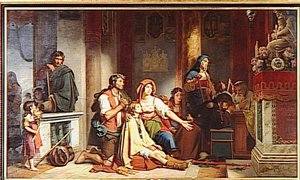
As the decades progressed, however, the rigid structures of the Davidian school began to yield to a more emotive and dramatic sensibility. Schnetz proved himself not merely a student of tradition but a versatile visionary capable of navigating this profound stylistic evolution. While his foundational training instilled in him a meticulous attention to detail—evident in works such as “LE VOEU A LA MADONNE”—his heart increasingly beat in rhythm with the Romantic movement. He began to infuse his canvases with a sense of narrative urgency and emotional depth, moving away from static idealism toward the capturing of fleeting, high-stakes moments in human history.
A Career of Grandeur and Institutional Eminence
The trajectory of Schnetz’s life was marked by significant professional triumphs that elevated him to the highest echelons of the French art world. His ability to blend historical accuracy with dramatic flair earned him the respect of royal patrons and secured his place in the most prestigious galleries of Europe. His works found permanent homes in institutions that remain pillars of cultural heritage today, including the Louvre Museum and the Petit Palais in Paris.
Beyond the easel, Schnetz was a pivotal figure in the institutional life of French art. His influence extended far beyond his own brushstrokes through several key roles:
- Academic Recognition: His election to the Académie des Beaux-Arts in 1837 served as a formal validation of his mastery and standing among his peers.
- Leadership in Rome: Serving twice as the Director of the French Academy in Rome (1841–1846 and 1853–1866), he acted as a vital mentor to a new generation of painters, fostering an environment where classical tradition could meet modern innovation.
- National Honors: His contributions to French culture were recognized with the prestigious Legion of Honor, receiving both the Knight’s Cross in 1825 and the Commander’s Cross in 1866.
The Narrative Canvas: Historical Depth and Emotional Resonance
To gaze upon a Schnetz painting is to witness history unfolding with theatrical intensity. His oeuvre is characterized by a profound dedication to historical and genre scenes, often focusing on pivotal European milestones. He possessed a unique ability to transform a mere chronicle of events into a living, breathing drama. One of his most evocative achievements is “The Battle for the Town Hall,” painted in 1830, which captures the raw, chaotic energy of the July Revolution with an emotional charge that resonates long after the viewer has turned away.
His technical approach often utilized oil on canvas to create rich textures and deep, atmospheric lighting, a technique that allowed him to bridge the gap between the clarity of his Neoclassical roots and the moody, chiaroscuro-driven aesthetics of Romanticism. Whether depicting the solemnity of a monarch receiving an envoy or the frantic movement of a battlefield, Schnetz maintained a sense of dignity and structural integrity. His legacy remains that of a painter who did not merely record the past but breathed life into it, ensuring that the triumphs and tribulations of history were preserved through the lens of profound human emotion.
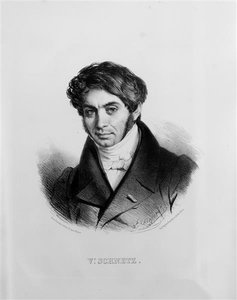
jean victor schnetz
1787 - 1870 , France
Osnovne informacije
- Artistic Movement Or Style: Academic Painter
- Artists Or Movements Influenced By This Artist: ['Romanticism']
- Artists Who Influenced This Artist: ['Jacques-Louis David']
- Date Of Birth: Versailles, France (1787)
- Date Of Death: 1870
- Full Name: Jean Victor Schnetz
- Nationality: French
- Notable Artworks:
- The Battle for the Town Hall, 28 July 1830
- LE VOEU A LA MADONE
- Place Of Birth: Versailles