

 Pregledaj u prostoru
 Pošalji
 Podeli
 Detalji o delu

 Преузми
 Slični predmeti
 Rendgenski snimak
 Slajdovi
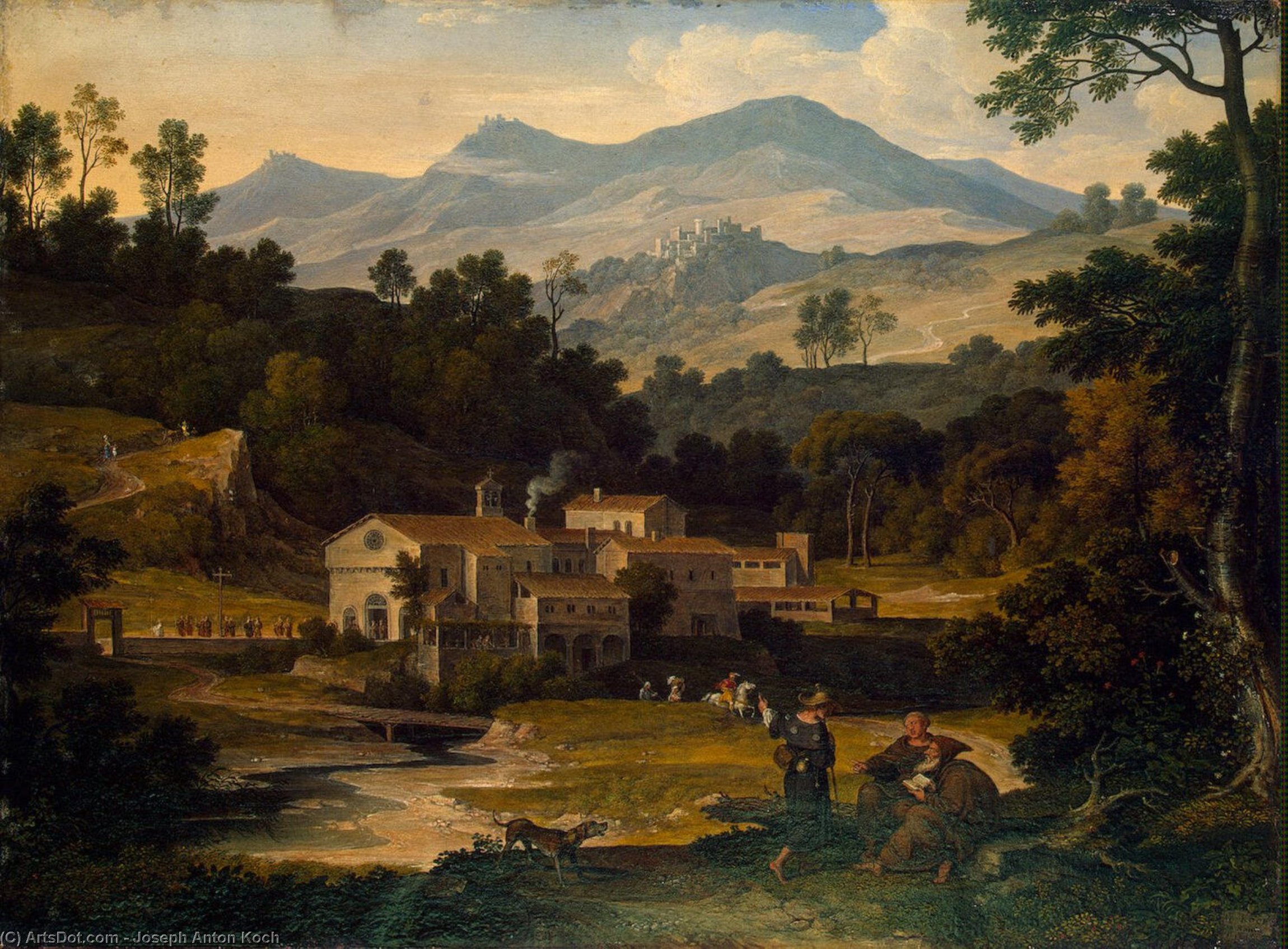
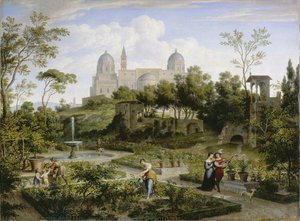
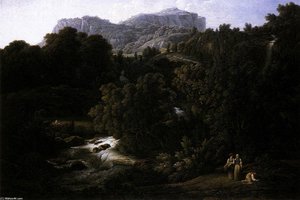
Monastery of San Francesco di Civitella in the Sabine Mountains
 Oil On Canvas
- WallArt
- Neoclassicism/Romanticism
 1812
1812 34.0 x 46.0 cm
 Hermitage Museum
 Pročitaj više
Giclee štampa / Umetnički otisak
Giclée štampa ili print na platnu muzejskog kvaliteta uz brzu proizvodnju i fleksibilne opcije završne obrade. ( Kupi ručno naslikanu sliku Kupi digitalnu sliku)




P118B $10

P118H $10

P118W $10

P438Z $10

P508JH $12

P508YH $12

P805H $10

P805Z $10

P919BZ $10

P919G $10

P919XJ $10

P959ZH $10

P968JZ $12

W106C $8

W218G $10

W218JH $8

W218Y $10

W307PJ $10

W316G $10

W316PJ $8

W316Y $10

W398PJ $8

W4111J $10

W500HY $15

W500JH $15

W692G $12

W849H $8

W940BG $15

W953PJ $8




Izaberite jednu od naših unapred definisanih veličina koje odgovaraju originalnim proporcijama umetničkog dela.

Možete uneti sopstvene dimenzije kako biste umetničko delo prilagodili specifičnom okviru ili prostoru. Ako odabrani format ne odgovara proporcijama originalne slike, mi ćemo ili iscrtati deo dela ili proširiti sliku pomoću ogledane ivice ili jednobojnog popunjavanja. Digitalni prikaz će vam biti poslat na odobrenje pre početka proizvodnje.
Imajte na umu da pregled na ekranu ne odražava stvarno iscrtavanje ili proširivanje. Samo će prikaz (mockup) precizno pokazati finalnu kompoziciju.
Iako su prilagođene dimenzije dostupne, preporučujemo da odaberete dimenziju sa unapred definisane liste kako biste očuvali originalne proporcije.
Dostava širom sveta () za 2 nedelje umesto uobičajenih 4/5 nedelja. (2 септембар)

Besplatna ekspresna dostava širom sveta

Visokokvalitetno laneno platno

Kompletno osiguranje transporta

Garancija povraćaja carine i uvoznih dažbina

Garancija vernosti boja

Politika povrata u roku od 60 dana (samo u slučaju nedostataka)

Garancija povrata novca od 100%

Popust pri grupnoj kupovini
 Opcija sa staklom dostupna je samo za dimenzije manje od 110 cm

Monastery of San Francesco di Civitella in the Sabine Mountains
Giclee štampa / Umetnički otisak
Dimenzije reprodukcije
-


Konačna cena
$ 62
The Serene Majesty of Civitella: Joseph Anton Koch’s Mountain Sanctuary
Joseph Anton Koch's "Monastery of San Francesco di Civitella in the Sabine Mountains," painted in 1812, is more than just a landscape; it’s a carefully constructed tableau of tranquility and spiritual contemplation. Nestled within the rugged folds of the Sabine Mountains – a region steeped in Roman history and mythology – this oil on canvas transports the viewer to a world where nature and faith converge. Koch, a pivotal figure bridging the Neoclassical and Romantic movements, masterfully captures not merely the visual beauty of the scene but also an underlying sense of peace and timelessness.
Koch’s artistic journey is particularly fascinating. Born in the Austrian Alps, his early life instilled within him a deep appreciation for the natural world – a connection that would profoundly shape his later work. Initially trained in the strict discipline of the Karlsschule military academy in Stuttgart, Koch's youthful spirit eventually led him to wander through France and Switzerland before finding his true calling in Rome. It was here, amidst the echoes of the Roman Baroque, that he began to develop a distinctive style, one characterized by a harmonious blend of classical composition and burgeoning Romantic sensibilities. The painting reflects this evolution – a careful adherence to established artistic principles tempered with an increasingly expressive use of light, color, and atmospheric perspective.
A Symphony of Light and Shadow: Technique and Composition
The painting’s power lies largely in Koch's masterful handling of light and shadow. He employs a subtle yet effective chiaroscuro – the dramatic contrast between light and dark – to sculpt the mountainous landscape, creating a sense of depth and volume that draws the eye into the scene. The muted palette, dominated by earthy browns, greens, and blues, evokes the feeling of a misty morning or late afternoon, lending an air of quiet solemnity to the composition. Notice how Koch uses atmospheric perspective; distant peaks are rendered in softer hues and less detail, subtly suggesting their immense scale while maintaining a harmonious unity within the scene.
The composition itself is carefully balanced, guiding the viewer’s gaze across the canvas. The small monastery, perched on a gentle slope, acts as a focal point, anchoring the eye and providing a sense of human presence amidst the vastness of nature. Scattered figures – monks tending to their duties or simply pausing for contemplation – subtly reinforce the painting's theme of spiritual devotion. Koch’s meticulous attention to detail extends beyond the main subjects; observe the careful rendering of individual trees, rocks, and even the textures of the monastery walls.
Symbolism and Historical Context
The setting itself is rich in symbolic meaning. The Sabine Mountains, a region with ancient Roman roots, evoke a sense of history and tradition. The presence of the monastery – a symbol of faith, community, and spiritual retreat – underscores the painting’s underlying message of seeking solace and connection within nature. Koch's choice to depict a monastic setting during a period of significant social and political upheaval (the Napoleonic Wars) adds another layer of complexity to the work. It can be interpreted as an expression of longing for stability and spiritual refuge in a world consumed by conflict.
Furthermore, Koch’s artistic development is crucial to understanding this piece. Following his time with Asmus Jacob Carstens, he moved towards a “heroic” landscape style, incorporating historical elements into the natural scenery. This shift reflects the growing influence of Romanticism, which emphasized emotion, imagination, and the sublime power of nature. “Monastery of San Francesco di Civitella in the Sabine Mountains” represents a sophisticated synthesis of these influences – a testament to Koch’s artistic versatility and his ability to capture both the beauty and the spiritual significance of the Italian landscape.
A Timeless Vision: Emotional Impact and Reproduction
Ultimately, “Monastery of San Francesco di Civitella in the Sabine Mountains” is an invitation to pause, reflect, and connect with the natural world. The painting’s serene atmosphere and carefully constructed composition evoke a sense of tranquility and spiritual contemplation – qualities that continue to resonate with viewers today. Reproductions of this remarkable work offer a wonderful opportunity to bring this timeless vision into your own home or office, creating a space filled with beauty, peace, and a subtle reminder of the enduring power of faith and nature.
Srodna umetnička dela
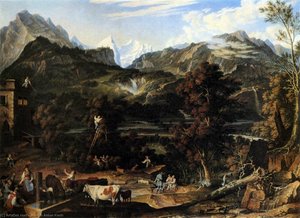
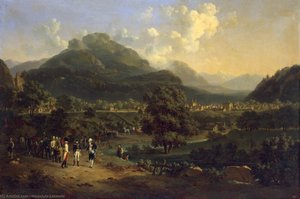
Biografija umetnika
The Architect of the Heroic Landscape
Joseph Anton Koch stands as a singular figure in Austrian art history—a painter who deftly navigated the shifting currents of Neoclassicism into the burgeoning fervor of German Romanticism. Born in 1768 in Elbigenalp, Austria, his early life was marked by a pastoral simplicity that would profoundly shape his artistic vision; tending cattle in his youth instilled in him an intimate appreciation for the natural world, a connection that later manifested in his monumental depictions of earth and sky. A fortuitous recommendation from Bishop Umgelder secured him a prestigious academic education at Stuttgart’s Karlsschule, a rigorous military academy where discipline and intellectual pursuit converged. However, Koch's youthful spirit rebelled against such constraints, leading to a brief but formative wanderlust through France and Switzerland before he finally established himself in the artistic crucible of Rome in 1795.
In the heart of Italy, Koch found kinship with fellow painter Asmus Jacob Carstens, adopting a style often referred to as the heroic aesthetic. This approach initially mirrored Carstens’ literal interpretations of mythological narratives, characterized by a certain sculptural clarity and formal rigor. Koch demonstrated his technical prowess not only through paint but also through the meticulous art of printmaking, notably etching the pages of Carrend's Les Argonautes. This period of his life was defined by a mastery of detail and a command over line that would serve as the foundation for his later, more expansive compositions.
A Visionary Evolution: From Myth to Mountain
As his career progressed, Koch underwent a profound artistic evolution, transitioning from the structured narratives of Neoclassicism toward the sweeping grandeur of landscape painting. He began to reimagine classical ideals through the lens of the Austrian Alps and the Italian countryside, producing works that felt both timeless and intensely visceral. Influenced by the monumental compositions of masters like Nicolas Poussin and Claude Lorrain, Koch developed a unique way of organizing space, where dramatic lighting and vast, rugged terrains created a sense of awe. His landscapes were never merely topographical records; they were emotional journeys through heroic scenery.
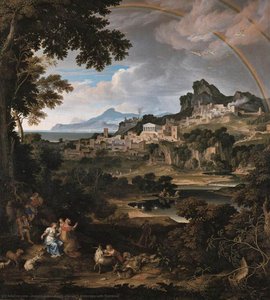
His ability to blend the classical with the romantic is perhaps best seen in his treatment of light and atmosphere. In works such as Heroic Landscape with Rainbow, he utilizes a Baroque sensibility to introduce dramatic weather elements that punctuate the stillness of the mountains. This technique allowed him to bridge two eras: the ordered, rational world of the Enlightenment and the emotive, untamed spirit of Romanticism. Even when depicting serene scenes, such as the Monastery of San Francesco di Civitella in the Sabine Mountains, there remains an underlying sense of the sublime—a realization of nature's immense power and scale.
Legacy and Historical Significance
The later years of Koch's life were marked by both movement and resilience. Facing financial hardships exacerbated by Napoleon’s invasions, he relocated to Vienna in 1812. In this new setting, he flourished under the patronage of influential intellectuals like Friedrich Schlegel and became a central figure in the Germanic artistic tradition. His work during this period began to reflect a shift toward harsher, more dramatic elements, further cementing his role as a pioneer of the landscape genre.
The historical significance of Joseph Anton Koch lies in his ability to transform the landscape from a secondary, decorative element into a primary vehicle for philosophical and emotional expression. His contributions can be summarized through several key artistic pillars:
- Synthesis of Styles: He successfully merged the formal discipline of Neoclassicism with the emotional depth of German Romanticism.
- The Heroic Aesthetic: He redefined landscape painting by introducing a sense of monumental scale and dramatic, "heroic" compositions.
- Technical Mastery: His skill spanned from the delicate precision of etching to the sweeping, atmospheric brushwork required for vast mountain vistas.
- Cultural Bridge: He acted as a vital link between the classical traditions of Rome and the emerging nationalistic landscape movements in Austria and Germany.
Today, Koch is remembered not just as an Austrian painter, but as a visionary who taught viewers to look upon the mountains and see within them the very soul of the sublime.
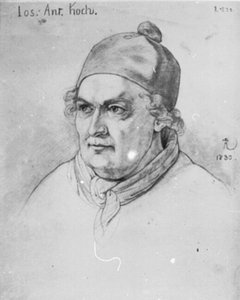
Joseph Anton Koch
1768 - 1839 , Austria
Osnovne informacije
- Artistic Movement Or Style: Neoclassicism & Romanticism
- Artists Or Movements Influenced By This Artist: ['Romantic painting']
- Artists Who Influenced This Artist: ['Asmus Jacob Carstens']
- Date Of Birth: 1768
- Date Of Death: 1839
- Full Name: Joseph Anton Koch
- Nationality: Austrian
- Notable Artworks:
- The Upland near Bern
- Landscape with Abraham and the Three Angels in the Valley of Mambre
- Heroic Landscape with Rainbow
- Place Of Birth: Elbigenalp, Austria
Povezani članci

Glavna dela koja su definisala Romantični pejzaž: 10 remek-dela za vaš dom
Otkrijte 10 remek-dela romantičnog pejzažnog slikarstva! Uronite u svet Claude Lorraina, Caspara David Friedricha i Turnera. Ispričane priče umetnosti, inspiracija za dekoraciju doma. Kvalitetne reprodukcije na ArtsDot.com – istražite celu kolekciju online!

Evocations of Place: A Historical Journey Through Landscape Art
Explore the rich history of landscape art with ArtsDot. Discover renowned artists, movements like Impressionism & Romanticism, and expert guidance for collecting timeless pieces. Find your perfect serene escape today!

25 Remek-dela Džona Konstebla: Lepota Engleske na Platnu | ArtsDot
Uronite u svet Džona Konstebla! Otkrijte 25 remek-dela engleskog pejzaža, romantizma i seoske idile. Kupite reprodukcije slika vrhunskog kvaliteta za dekoraciju enterijera na ArtsDot.com.

Evoking Atmosphere & Identity: A Journey Through Landscape Painting's History
Explore the rich history of landscape painting! Discover renowned artists, movements like Romanticism, & techniques such as atmospheric perspective. Find inspiration and quality reproductions at ArtsDot.

Evocations of Place: A Historical Journey Through Landscape Art
Explore the rich history of landscape art with ArtsDot. Discover renowned artists, movements like Impressionism & tonalism, and expert guidance for collecting timeless pieces. Find your perfect serene escape today!

