

 Pošalji
 Podeli
 Detalji o delu

 Преузми
 Slični predmeti
 Slajdovi
 Statistika
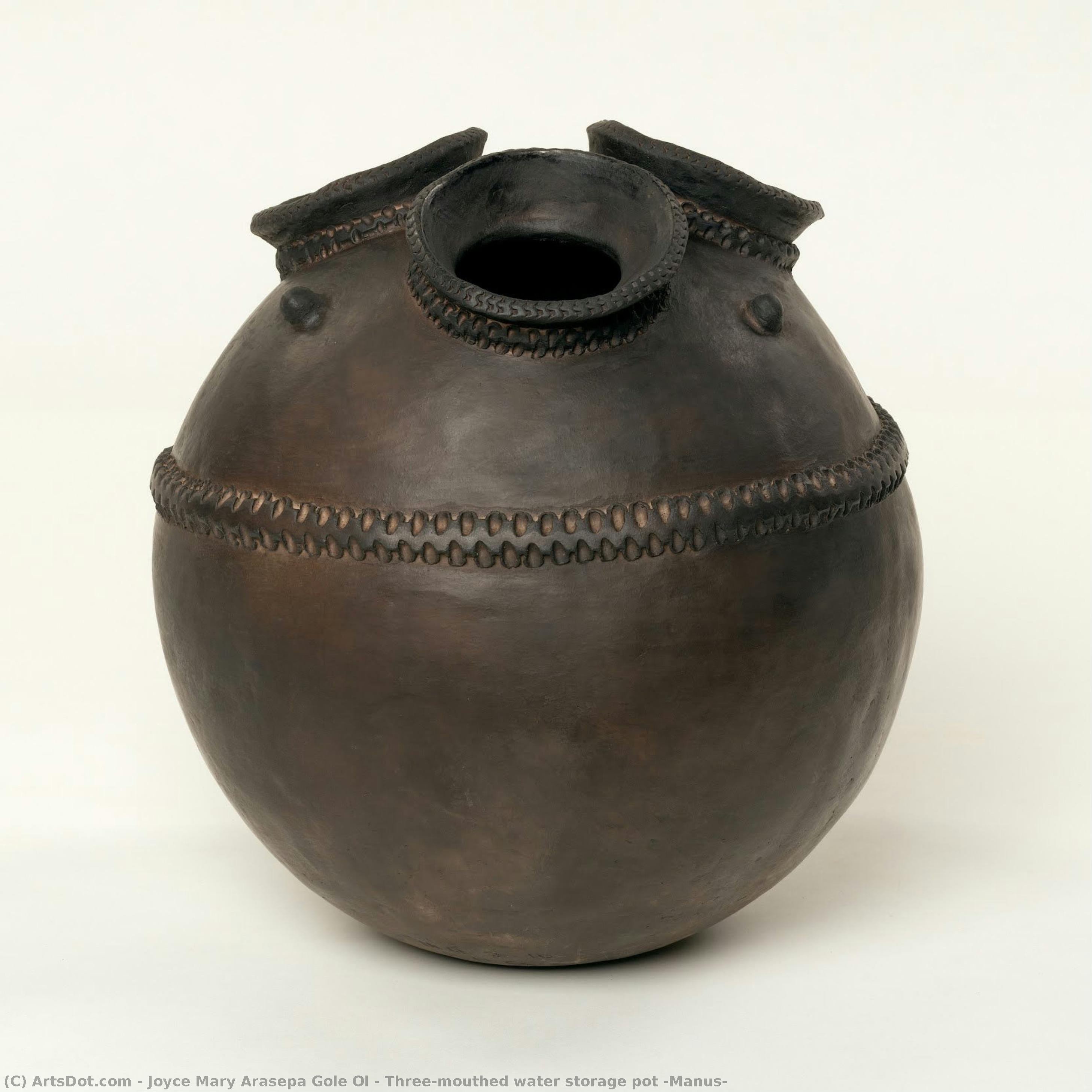
Three-mouthed water storage pot (Manus)
 Ceramics
- Cubism
 2016
2016 34.0 x 33.0 cm
 Queensland Art Gallery | Gallery of Modern Art
 Pročitaj više
Kupite digitalnu sliku visoke rezolucije i poboljšanog kvaliteta, koja je znatno superiornija od onoga što vidite u online prikazu.
Svaka datoteka je pedantno pripremljena od strane naših stručnjaka koristeći napredne alate i profesionalnu ručnu retušu. Osiguravamo da svaka slika ima izuzetnu oštrinu, preciznu reprodukciju boja i fine detalje.
Konačna datoteka se dostavlja putem e-pošte u roku od 72 sata, optimizovana za neposrednu upotrebu u profesionalnim, izdavačkim i štamparskim okruženjima. To je isti kvalitet kojem veruju vrhunski studiji dizajna, izdavači i galerije.
Digitalna slika
Preuzmite datoteku visoke rezolucije za ličnu upotrebu, štampanje i kreativne projekte. ( Pređi na štampu Kupi ručno naslikanu sliku)
Uključeno uz svaku porudžbinu digitalne slike
Profesionalna digitalna isporuka, zagarantovana
Kada odaberete ArtsDot.com, ne dobijate samo sliku – vi primate profesionalno unapređeno digitalno umetničko delo, izrađeno sa najvećom preciznošću i uz garanciju zadovoljstva. Evo svega što automatski dolazi uz vašu porudžbinu:

Brza dostava putem e-pošte
Vaša digitalna slika visoke rezolucije biće vam poslata putem e-pošte u roku od 72 sata od poručivanja – spremna za trenutnu upotrebu.

Digitalna datoteka unapređena veštačkom inteligencijom
Vaše umetničko delo je profesionalno optimizovano korišćenjem naprednih AI alata i ručne obrade, čime se osiguravaju maksimalni detalji, oštrina i preciznost boja.

Besplatna ponovna isporuka doživotno
Slučajno ste obrisali ili izgubili svoju datoteku? Ne brinite – poslaćemo vam je ponovo u bilo kom trenutku, potpuno besplatno.

Bez troškova uvoza – zauvek
Uživajte u svojim umetničkim delima trenutno, bez carine, dažbina ili troškova dostave – digitalni download je uvek bez poreza.

Garancija vernosti boja
Uz pomoć profesionalnih alata i upravljanja bojama, osiguravamo da vaša digitalna slika što vernije odražava originalne boje.

Garancija zadovoljstva od 100 dana
Ako niste zadovoljni svojom digitalnom slikom, izvršićemo reviziju ili ćemo vam vratiti 100% novca u roku od 100 dana – bez ikakvih pitanja.

100% garancija povrata novca
Niste zadovoljni? Dobijte puni povraćaj novca u roku od 100 dana od prijema digitalne datoteke – bez suvišnih pitanja.

Popusti na velike porudžbine
Kupite 3 slike, uštedite 10% - Kupite 5 slika, uštedite 15% - Kupite 10+ slika, uštedite 20%. Odlično za kreativne projekte, galerije i agencije.
Srodna umetnička dela

Biografija umetnika
Robert Delaunay: A Revolutionary of Color and Light
Robert Delaunay, born Robert-Victor-Felix Delaunay on April 12th, 1885, in the bustling heart of Paris, was not merely a painter; he was a pioneer who fundamentally reshaped our perception of color and its expressive potential. His life, intertwined with that of his wife Sonia Delaunay, became a vibrant testament to artistic collaboration and a bold rejection of traditional aesthetic boundaries. From his early apprenticeship as a theatrical designer – a period that instilled in him an appreciation for visual harmony and dynamic composition – to his later explorations into abstraction, Delaunay’s career was marked by relentless experimentation and a profound belief in the inherent power of color itself. He died on October 25th, 1941, leaving behind a legacy as one of the most influential figures of the early 20th century.Early Influences and the Dawn of Divisionism
Delaunay’s artistic journey began within the framework of Neo-Impressionism, a movement he initially embraced in the early 1900s. This influence is evident in his early works like “Saint-Séverin,” where meticulously placed dots of color were used to recreate the shimmering light and atmosphere of the Parisian cathedral. However, Delaunay quickly recognized the limitations of this approach, finding it too reliant on a purely optical imitation of reality. He sought a more fundamental expression of color’s essence, leading him to develop his own distinctive style known as Divisionism – a technique that involved dissecting images into smaller, independent areas of color, allowing each hue to stand alone and interact with its neighbors. This method, often described as “controlled fragmentation,” liberated color from the constraints of form and allowed for a more dynamic and emotionally charged visual experience.The Birth of Orphism: A Symphony of Color
Around 1912, alongside his wife Sonia, Delaunay co-founded the movement known as Orphism – a term coined by the poet Guillaume Apollinaire, who recognized the group’s radical approach to color and form. Orphism wasn't simply about using bright colors; it was a philosophy of art centered on the belief that color itself possessed an independent existence and could be used to evoke emotions and sensations directly. Delaunay and Sonia experimented with circular forms, radiating lines, and bold, contrasting hues, creating paintings that resembled stained-glass windows or kaleidoscopic patterns. Their work rejected representational imagery in favor of pure visual sensation, aiming to create a “pure” artistic experience. Key works from this period include "Disc" (1912) and "Circular Forms" (1913), which exemplify the movement’s core principles.Abstraction and the Pursuit of Pure Color
Following World War I, Delaunay's style underwent a significant transformation. He moved away from the fragmented forms of Divisionism and embraced a more abstract approach, focusing on the interplay of color and light. His later paintings, such as “Endless Rhythm” (1930-31), are characterized by large, luminous fields of color that seem to vibrate with energy. These works represent a culmination of his lifelong exploration of color theory, informed by scientific research into the nature of light and perception. He believed that painting should be a purely visual art, independent of subject matter, and sought to create paintings that were not merely representations of objects but rather expressions of pure feeling.Legacy and Influence
Robert Delaunay’s impact on 20th-century art is undeniable. His pioneering work in color theory influenced a generation of artists, including Stanton Macdonald-Wright, Morgan Russell, Paul Klee, and even the German Expressionists. His emphasis on the independent existence of color paved the way for later developments in abstract expressionism and color field painting. Furthermore, his collaborative partnership with Sonia Delaunay established a unique model for artistic creation, demonstrating the power of shared vision and mutual inspiration. Today, Robert Delaunay’s paintings are celebrated for their vibrant energy, innovative use of color, and profound exploration of the visual world. His legacy continues to inspire artists and viewers alike, reminding us of the transformative potential of art to evoke emotion and expand our understanding of reality.
joyce mary arasepa gole ol
1941 - , Papua New Guinea
Kratke činjenice
- Artistic Movement Or Style:
- Divisionism
- Cubism
- Orphism
- Abstract art
- Artists Or Movements Influenced By This Artist:
- Stanton-Wright
- Morgan Russell
- Patrick Bruce
- Der Blaue Reiter
- Macke
- Marc
- Klee
- Benton
- Feininger
- Artists Who Influenced This Artist:
- Neoimpressionism
- Cézanne
- Date Of Birth: April 12, 1885
- Date Of Death: October 25, 1941
- Full Name: Robert Delaunay
- Nationality: French
- Notable Artworks:
- Endless Rhythm
- Cubism
- Orphic Cubism
- Simultanism
- Place Of Birth: Paris, France