

![Buckle [center-right]\ncompact Cases [upper]\ncompact Cases [lower]\ncompact Cases [center-left] — Jules John Dunand](/media/artworks/images-full/72/9a/729a8901439122e1508a07ad203ece49.jpg)
 Pregledaj u prostoru
 Pošalji
 Podeli
 Detalji o delu

 Преузми
 Slični predmeti
 Rendgenski snimak
 Slajdovi
Buckle [Center-right]\nCompact Cases [Upper]\nCompact Cases [Lower]\nCompact Cases [Center-left]


 Pročitaj više
Ručno rađena uljana reprodukcija
Ručno oslikano uljanim bojama na platnu u dimenzijama i okviru po vašem izboru, izrađeno po porudžbini od strane naših umetnika. ( Kupi print Kupi digitalnu sliku)




































Izaberite jednu od naših unapred definisanih veličina koje odgovaraju originalnim proporcijama umetničkog dela.

Можете унети сопствене димензије како бисте прилагодили дело одређеном оквиру или простору. Ако одабрана величина не одговара пропорцијама оригинала, слика ће бити исечена или проширена додатним елементима који се ручно насликавају. Дигитални prikaz ће вам бити послат на одобрење пре почетка производње.
Имајте на уму да преглед на екрану не одражава стварно исецање или проширење. Само приказ (mockup) ће тачно приказати коначну композицију.
Иако су доступне прилагођене величине, препоручујемо да одаберете димензију из дефинисане листе како бисте сачували оригиналне пропорције.
Nakon narudžbine, tim ArtsDot.com će klijentu putem e-pošte poslati uputstva i dostaviti prikaz predloženog rešenja
Isporuka širom sveta () za 3/4 nedelje umesto uobičajenih 5 nedelja. (21 август). Bez kompromisa po pitanju kvaliteta.

Besplatna ekspresna dostava širom sveta

Visokokvalitetno laneno platno

Kompletno osiguranje transporta

Garancija povraćaja carine i uvoznih dažbina

Garancija vernosti boja

Politika povrata u roku od 60 dana (samo u slučaju nedostataka)

Garancija povrata novca od 100%

Popust pri grupnoj kupovini
 Opcija sa staklom dostupna je samo za dimenzije manje od 110 cm

Buckle [Center-right]\nCompact Cases [Upper]\nCompact Cases [Lower]\nCompact Cases [Center-left]
Tehnika reprodukcije
Dimenzije reprodukcije
-


Konačna cena
$ 263
Opis umetničkog dela
Srodna umetnička dela

Biografija umetnika
The Alchemist of Art Deco: The Life and Legacy of Jean Dunand
In the shimmering, opulent landscape of the early twentieth century, few names evoke the sophisticated grandeur of the Art Deco era quite like Jean Dunand. A true Renaissance man of the decorative arts, Dunand possessed a rare ability to bridge the gap between ancient Eastern traditions and the burgeoning modernism of the West. Born Jules John Dunand in 1877 in Lancy, Switzerland, his journey was one of constant metamorphosis. The son of a goldsmith, he inherited an early intimacy with precious metals, a foundation that would later allow him to master the complex art of dinanderie—the exquisite process of hand-hammered metalwork. His move to Paris in 1909 was more than a mere change of scenery; it was a spiritual homecoming that saw him adopt his more famous French name and begin a lifelong dialogue with the most avant-garde movements of his time.
Dunand’s artistic evolution was deeply rooted in his rigorous training at the École des Arts Industriels de Genève, where he earned a diploma in sculpture. This sculptural sensibility remained the heartbeat of his work, even when he transitioned into more decorative mediums. His early years in Paris were marked by significant mentorships, most notably under the sculptor Jean Dampt, whose influence helped refine Dunand’s ability to manipulate form and texture. As he navigated the Parisian art scene, participating in prestigious exhibitions like the Salon of the National Society of Fine Arts, his work began to reflect a fascinating tension between the organic fluidity of Art Nouveau and the structured, geometric elegance that would define Art Deco.
A Mastery of Light, Metal, and Lacquer
While Dunand’s mastery of metal—working with copper, steel, silver, and pewter—was nothing short of virtuosic, it was his encounter with the ancient art of Japanese lacquer that would secure his immortality in art history. Around 1912, Dunand began a transformative collaboration with Seizo Sugawara, a Japanese master who had brought the secrets of lacquer painting to France. This encounter ignited a passion for a medium that required immense patience, precision, and a near-supernatural understanding of layering and drying. Through this study, Dunand became one of the very few Western artists capable of executing the traditional Japanese style, creating large-scale decorative panels that seemed to glow from within.
His technique was a breathtaking fusion of disparate worlds. In his metalwork, he utilized hammers and glides to create intricate patterns, often encrusting his pieces with mother-of-pearl or gilding them with gold to catch the light in ways that felt both ancient and modern. His lacquer panels, meanwhile, were masterpieces of depth and texture, often featuring:
- Naturalistic Motifs: Intricate depictions of flora, fauna, and landscapes that whispered of Japonisme.
- Geometric Precision: A sharp, rhythmic use of line that aligned perfectly with the Art Deco aesthetic.
- Textural Contrast: The interplay between smooth, high-gloss surfaces and matte, relief-carved elements.
Historical Significance and Enduring Elegance
The significance of Jean Dunand lies in his refusal to be confined by a single medium or style. He was an architect of atmosphere, designing entire interiors where his lacquered screens, metal vases, and sculptural objects worked in concert to create a cohesive sensory experience. His work stood alongside the giants of his era, such as Rodin and Renoir, yet he carved out a unique niche that celebrated the beauty of the functional object. By elevating decorative arts to the level of fine art, he helped define the luxury aesthetic of the 1920s and 30s.
Today, Dunand’s legacy is preserved in the world's most prestigious museums and private collections, serving as a testament to a period when craftsmanship and modern design reached a perfect, luminous equilibrium. His ability to breathe new life into forgotten techniques like lacquer and dinanderie ensures that his work remains not just a relic of the past, but a living inspiration for artists seeking to find the soul within the material.
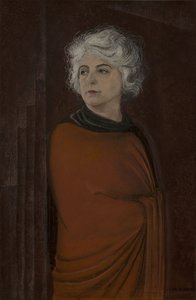
jules john dunand
1877 - 1942 , Switzerland
Osnovne informacije
- Artistic Movement Or Style: Art Deco
- Artists Or Movements Influenced By This Artist: ['Cubism']
- Artists Who Influenced This Artist:
- Jean Dampt
- Seizo Sugawara
- Date Of Birth: 1877
- Date Of Death: 1942
- Full Name: Jean Dunand
- Nationality: Swiss & French
- Notable Artworks:
- Fortissimo
- Baltimore Jewelry Center
- Place Of Birth: Lancy, Switzerland
Povezani članci

25 Remek-dela Džona Singera Sargenta: Portreti Elegancije i Svetlosti | ArtsDot
Uronite u svet Džona Singera Sargenta! Otkrijte 25 remek-dela impresionizma i realizma, od portreta Madame X do fascinantnih akvarela. Inspiracija za dekoraciju enterijera & luksuzne reprodukcije slika na ArtsDot.com.

25 Remek-dela Džona Konstebla: Lepota Engleske na Platnu | ArtsDot
Uronite u svet Džona Konstebla! Otkrijte 25 remek-dela engleskog pejzaža, romantizma i seoske idile. Kupite reprodukcije slika vrhunskog kvaliteta za dekoraciju enterijera na ArtsDot.com.
The Gilded Age Reimagined: Exploring the Aesthetic Principles & Enduring Legacy of Art Deco
Explore the captivating world of Art Deco! Discover its origins, defining features, cultural impact & enduring legacy. Expert insights for collectors and design enthusiasts. Shop handmade reproductions at ArtsDot.
The Gleaming Geometry of Desire: Exploring Art Deco's Enduring Influence on Visual Culture
Explore the captivating world of Art Deco! Discover its history, key characteristics, enduring influence on design & collecting with expert insights from ArtsDot.com.
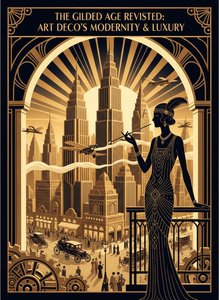
The Gilded Age Revisited: Art Deco's Modernity & Luxury
Explore the captivating world of Art Deco paintings & the Gilded Age's enduring legacy. Discover iconic artists like Tamara de Lempicka & invest in museum-quality reproductions with ArtsDot.

