

 Pregledaj u prostoru
 Pošalji
 Podeli
 Detalji o delu

 Преузми
 Slični predmeti
 Rendgenski snimak
 Slajdovi
 Statistika
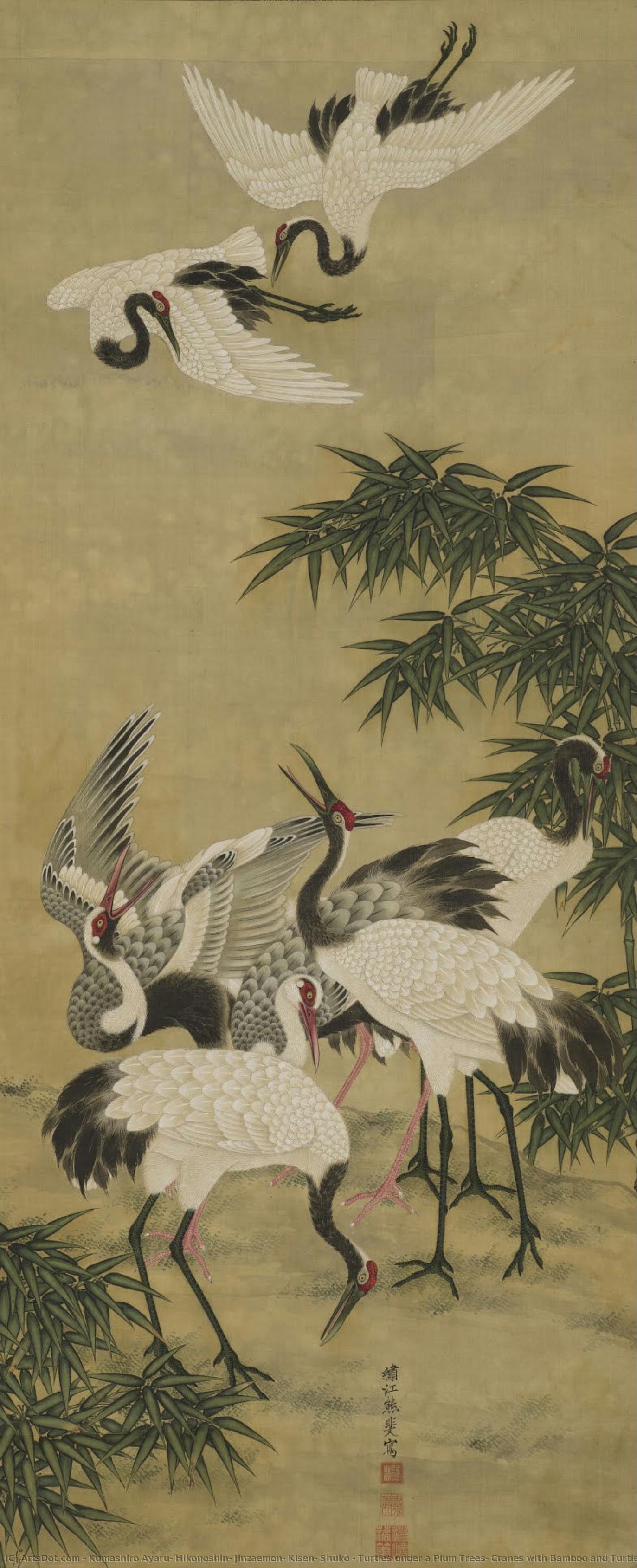
Turtles under a Plum Trees, Cranes with Bamboo and Turtles uder a Pine Tree

 Pročitaj više
Kupite digitalnu sliku visoke rezolucije i poboljšanog kvaliteta, koja je znatno superiornija od onoga što vidite u online prikazu.
Svaka datoteka je pedantno pripremljena od strane naših stručnjaka koristeći napredne alate i profesionalnu ručnu retušu. Osiguravamo da svaka slika ima izuzetnu oštrinu, preciznu reprodukciju boja i fine detalje.
Konačna datoteka se dostavlja putem e-pošte u roku od 72 sata, optimizovana za neposrednu upotrebu u profesionalnim, izdavačkim i štamparskim okruženjima. To je isti kvalitet kojem veruju vrhunski studiji dizajna, izdavači i galerije.
Digitalna slika
Preuzmite datoteku visoke rezolucije za ličnu upotrebu, štampanje i kreativne projekte. ( Pređi na štampu Kupi ručno naslikanu sliku)
Uključeno uz svaku porudžbinu digitalne slike
Profesionalna digitalna isporuka, zagarantovana
Kada odaberete ArtsDot.com, ne dobijate samo sliku – vi primate profesionalno unapređeno digitalno umetničko delo, izrađeno sa najvećom preciznošću i uz garanciju zadovoljstva. Evo svega što automatski dolazi uz vašu porudžbinu:

Brza dostava putem e-pošte
Vaša digitalna slika visoke rezolucije biće vam poslata putem e-pošte u roku od 72 sata od poručivanja – spremna za trenutnu upotrebu.

Digitalna datoteka unapređena veštačkom inteligencijom
Vaše umetničko delo je profesionalno optimizovano korišćenjem naprednih AI alata i ručne obrade, čime se osiguravaju maksimalni detalji, oštrina i preciznost boja.

Besplatna ponovna isporuka doživotno
Slučajno ste obrisali ili izgubili svoju datoteku? Ne brinite – poslaćemo vam je ponovo u bilo kom trenutku, potpuno besplatno.

Bez troškova uvoza – zauvek
Uživajte u svojim umetničkim delima trenutno, bez carine, dažbina ili troškova dostave – digitalni download je uvek bez poreza.

Garancija vernosti boja
Uz pomoć profesionalnih alata i upravljanja bojama, osiguravamo da vaša digitalna slika što vernije odražava originalne boje.

Garancija zadovoljstva od 100 dana
Ako niste zadovoljni svojom digitalnom slikom, izvršićemo reviziju ili ćemo vam vratiti 100% novca u roku od 100 dana – bez ikakvih pitanja.

100% garancija povrata novca
Niste zadovoljni? Dobijte puni povraćaj novca u roku od 100 dana od prijema digitalne datoteke – bez suvišnih pitanja.

Popusti na velike porudžbine
Kupite 3 slike, uštedite 10% - Kupite 5 slika, uštedite 15% - Kupite 10+ slika, uštedite 20%. Odlično za kreativne projekte, galerije i agencije.
Srodna umetnička dela










Biografija umetnika
A Life Immersed in the Nagasaki Style
Kumashiro Yuhi, a name synonymous with the delicate beauty of 18th-century Japanese bird-and-flower painting, was born Kumashiro Ayaru in Nagasaki in 1712. His life unfolded against the backdrop of a Japan cautiously opening to foreign influence, particularly through the port city of Nagasaki—a vital hub for trade and cultural exchange with China. This unique environment profoundly shaped Yuhi’s artistic trajectory, leading him to become a pivotal figure in the Nanpin school and a master of what would be known as the “Nagasaki style.” His story is not merely that of an artist, but of a family deeply interwoven with the threads of international communication; his lineage served as government interpreters, providing a crucial link between Japan and its neighbors. This early exposure to Chinese culture undoubtedly sparked a curiosity that would define his artistic pursuit.
The Embrace of Chinese Aesthetics
Yuhi’s formal art education began at the age of 21, though initially within the realm of translation rather than brushwork. However, this path soon diverged when he became a pupil of Shen Quan, a visiting Chinese painter who resided in Nagasaki from 1731 to 1733. Shen Quan’s influence was transformative. Yuhi wholeheartedly embraced the aesthetics of the Ming and Qing dynasties, immersing himself in the techniques of bird-and-flower painting – *kachōga* – which emphasized capturing the essence of nature with meticulous detail and expressive brushstrokes. He continued his studies under Gao Qian, another disciple of Shen Quan, solidifying his foundation in this style. The Nanpin school, named after Shen Quan’s art name, flourished under Yuhi's passionate dedication, becoming a beacon for artists seeking to emulate the refined elegance of Chinese painting.
Developing a Distinctive Voice
Yuhi wasn’t simply a copyist; he absorbed the principles of Chinese art and then infused them with his own sensibility. An anecdote reveals much about his commitment: when commissioned to paint a tiger, he boldly approached a caged animal, even striking it with a bamboo pole to observe its movements firsthand. This seemingly unconventional act demonstrates Yuhi’s dedication to realism—not merely replicating form but understanding the very life force of his subjects. His paintings were celebrated for their ability to rival Chinese works in quality and nuance, a remarkable achievement given the limited access Japan had to original pieces from the mainland. He skillfully balanced technical precision with an emotional depth that resonated deeply with Japanese audiences.
Spreading the Nagasaki Style
Yuhi’s impact extended far beyond his own brushstrokes. He became a highly sought-after teacher, generously sharing his knowledge and techniques with a generation of aspiring artists. Among his most notable students were Sō Shiseki, Mori Ransai, and Kakutei, each of whom would go on to champion the “Nagasaki style” in major cities like Edo (modern Tokyo), Osaka, and Kyoto. This dissemination of artistic principles established Yuhi as a central figure in shaping the landscape of Japanese painting during the Edo period. His legacy isn’t found solely in his own body of work but also in the flourishing of a distinctive aesthetic across the nation.
A Lasting Legacy
Kumashiro Yuhi passed away in 1772 or 1773, leaving behind a rich artistic heritage. His paintings continue to be admired for their exquisite detail, vibrant colors, and profound connection to nature. He skillfully bridged the gap between Chinese influence and Japanese tradition, creating a style that was both refined and uniquely his own. Yuhi’s life exemplifies the power of cultural exchange and the enduring beauty that can arise when artists embrace new influences while remaining true to their artistic vision. He remains an important figure in understanding the development of Japanese painting during the Edo period, and his work continues to inspire awe and appreciation today.
kumashiro ayaru, hikonoshin, jinzaemon, kisen, shūkō
1712 - 1772 , Japan
Kratke činjenice
- Artistic Movement Or Style: Nanpin school
- Artists Or Movements Influenced By This Artist:
- Sō Shiseki
- Mori Ransai
- Kakutei
- Artists Who Influenced This Artist: ['Shen Quan']
- Date Of Birth: 1712
- Date Of Death: 1772
- Full Name: Kumashiro Yuhi
- Nationality: Japanese
- Place Of Birth: Nagasaki, Japan