

 Pregledaj u prostoru
 Pošalji
 Podeli
 Detalji o delu

 Преузми
 Slični predmeti
 Rendgenski snimak
 Slajdovi
 Statistika
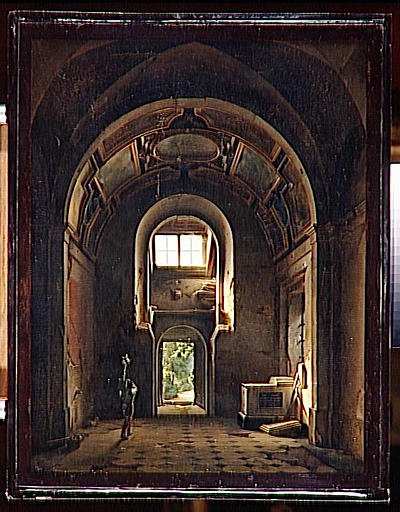
INTERIEUR D'UNE CHAPELLE DE L'EGLISE DES FEUILLANTS A PARIS


 Pročitaj više
Kupite digitalnu sliku visoke rezolucije i poboljšanog kvaliteta, koja je znatno superiornija od onoga što vidite u online prikazu.
Svaka datoteka je pedantno pripremljena od strane naših stručnjaka koristeći napredne alate i profesionalnu ručnu retušu. Osiguravamo da svaka slika ima izuzetnu oštrinu, preciznu reprodukciju boja i fine detalje.
Konačna datoteka se dostavlja putem e-pošte u roku od 72 sata, optimizovana za neposrednu upotrebu u profesionalnim, izdavačkim i štamparskim okruženjima. To je isti kvalitet kojem veruju vrhunski studiji dizajna, izdavači i galerije.
Digitalna slika
Preuzmite datoteku visoke rezolucije za ličnu upotrebu, štampanje i kreativne projekte. ( Pređi na štampu Kupi ručno naslikanu sliku)
Uključeno uz svaku porudžbinu digitalne slike
Profesionalna digitalna isporuka, zagarantovana
Kada odaberete ArtsDot.com, ne dobijate samo sliku – vi primate profesionalno unapređeno digitalno umetničko delo, izrađeno sa najvećom preciznošću i uz garanciju zadovoljstva. Evo svega što automatski dolazi uz vašu porudžbinu:

Brza dostava putem e-pošte
Vaša digitalna slika visoke rezolucije biće vam poslata putem e-pošte u roku od 72 sata od poručivanja – spremna za trenutnu upotrebu.

Digitalna datoteka unapređena veštačkom inteligencijom
Vaše umetničko delo je profesionalno optimizovano korišćenjem naprednih AI alata i ručne obrade, čime se osiguravaju maksimalni detalji, oštrina i preciznost boja.

Besplatna ponovna isporuka doživotno
Slučajno ste obrisali ili izgubili svoju datoteku? Ne brinite – poslaćemo vam je ponovo u bilo kom trenutku, potpuno besplatno.

Bez troškova uvoza – zauvek
Uživajte u svojim umetničkim delima trenutno, bez carine, dažbina ili troškova dostave – digitalni download je uvek bez poreza.

Garancija vernosti boja
Uz pomoć profesionalnih alata i upravljanja bojama, osiguravamo da vaša digitalna slika što vernije odražava originalne boje.

Garancija zadovoljstva od 100 dana
Ako niste zadovoljni svojom digitalnom slikom, izvršićemo reviziju ili ćemo vam vratiti 100% novca u roku od 100 dana – bez ikakvih pitanja.

100% garancija povrata novca
Niste zadovoljni? Dobijte puni povraćaj novca u roku od 100 dana od prijema digitalne datoteke – bez suvišnih pitanja.

Popusti na velike porudžbine
Kupite 3 slike, uštedite 10% - Kupite 5 slika, uštedite 15% - Kupite 10+ slika, uštedite 20%. Odlično za kreativne projekte, galerije i agencije.
A Symphony of Light and Shadow in the Heart of Paris
In the quiet, hallowed corridors of Louis Daguerre’s “Interior of a Chapel in the Church of the Feuillants in Paris,” we find much more than a mere architectural study; we encounter a profound meditation on the interplay between the earthly and the divine. As one gazes into this meticulously rendered space, the eye is immediately swept into a rhythmic dance of receding arches that create a breathtaking illusion of depth. This masterful use of linear perspective draws the viewer through layers of stone, columns, and shadows, guiding the soul toward a singular, luminous destination at the chapel's far end. It is a composition that breathes with the grandeur of the early 19th century, capturing a moment of stillness that feels both monumental and deeply intimate.
The atmosphere of the piece is defined by its exquisite use of chiaroscuro, a technique where the dramatic tension between light and dark imbues the scene with a palpable sense of mystery. Daguerre employs a subdued, earthy palette—rich browns, soft grays, and warm beiges—which allows the sudden flood of light from the distant altar window to act as a spiritual protagonist. This brilliance does not merely illuminate; it transforms the architectural elements, casting long, contemplative shadows that suggest the weight of history and the presence of the unseen. For the collector or interior designer, this painting offers a sophisticated anchor for a room, providing a sense of structural elegance and a quiet, dignified energy that can elevate any curated space.
The Visionary Hand of a Pioneer
To understand the soul of this artwork, one must consider the hand that held the brush. Louis Daguerre, a name forever etched in history as the father of photography, brought a scientist’s precision and a dramatist’s eye to his canvas. His background in theatre design and panoramic painting is evident in the way he orchestrates light to create a sense of theatrical spectacle within a sacred setting. Every texture, from the smooth surfaces of the stone arches to the subtle roughness of the floor tiles, is rendered with an unwavering commitment to realism that predates the photographic revolution he would later ignite. This piece serves as a beautiful bridge between the classical traditions of oil painting and the burgeoning fascination with capturing objective reality.
Beyond its technical brilliance, the painting resonates with deep symbolic resonance. The presence of the crucifix in the foreground serves as a silent sentinel, grounding the viewer in a context of devotion and spiritual contemplation. The journey from the shadowed foreground toward the radiant light at the end of the nave can be interpreted as a metaphor for enlightenment, hope, or the human quest for truth. It is this emotional depth—the ability to evoke feelings of solitude, reverence, and awe—that makes a high-quality reproduction of this work such a compelling choice for those seeking to infuse their homes or galleries with a sense of timelessness and intellectual grace.
Srodna umetnička dela
Biografija umetnika
Louis Daguerre: The Father of Photography
Louis Daguerre (1787-1851) stands as a monumental figure in the annals of art history, yet his legacy is inextricably linked to a medium he revolutionized – photography. Born in Cormeilles-en-Parisy, France, Daguerre’s early life was marked by an apprenticeship in architecture and theatre design, disciplines that instilled within him a meticulous attention to detail and perspective—skills that would prove invaluable as he embarked on his groundbreaking scientific pursuits. He wasn't merely interested in aesthetics; he possessed a profound understanding of optics and the manipulation of light, recognizing its potential for artistic expression long before it was widely accepted as a viable art form.- Early Life & Training: Daguerre’s formative years were spent honing his craft under Pierre Prévost, the pioneer of panoramic painting in France. This experience cultivated his mastery of theatrical illusion and instilled in him an appreciation for creating immersive visual experiences—a sensibility that would later translate into his innovative approach to diorama theatre.
- The Diorama Theatre: Daguerre’s contribution to the burgeoning Victorian entertainment landscape was truly transformative. He conceived and constructed the Diorama in Paris, a revolutionary theatrical spectacle that combined painted scenery with projected lighting effects to simulate realistic environments. This ambitious project cemented his reputation as a visionary artist and demonstrated his ability to synthesize artistic skill with technological innovation.
The Invention of Photography: A Paradigm Shift
Prior to Daguerre’s pivotal breakthrough, Nicéphore Niépce had painstakingly experimented with bitumen of Judea—a substance derived from asphalt—to produce the first surviving camera photograph. However, Niépce's process demanded exposures lasting for hours or even days, rendering it impractical for widespread adoption. Recognizing this limitation, Daguerre tirelessly pursued alternative methods utilizing silver salts, building upon earlier research by Johann Heinrich Schultz and others. His relentless dedication ultimately yielded a revolutionary technique—the daguerreotype—which dramatically shortened exposure times while preserving an astonishing level of detail.- The Daguerreotype Process: Daguerre’s ingenious innovation involved exposing a thin silver-plated copper sheet to iodine vapor, creating a coating of light-sensitive silver iodide. This plate was then exposed in the camera, and subsequently developed using mercury vapor and sodium thiosulfate—a process that captured an image with remarkable accuracy.
- Lateral Reversal & Artistic Implications: Perhaps the most striking characteristic of the daguerreotype was its lateral reversal—meaning that images appeared inverted compared to their reflection in a mirror. This peculiarity profoundly impacted artistic sensibilities, prompting artists to reconsider traditional notions of representation and exploring new avenues for visual expression.
A Legacy Beyond the Camera Lens
Daguerre’s impact extended far beyond the realm of photography itself. He championed the use of scientific instruments as tools for artistic exploration, arguing that “the most useful and extraordinary [...] instruments of science” were those capable of enhancing our perception of the world. His fascination with microscopy and telescopic imaging underscored his commitment to pushing the boundaries of visual observation—a spirit that resonated throughout the Victorian era and beyond.- Influence on Artistic Movements: Daguerre’s invention undeniably catalyzed significant shifts within artistic circles, fostering a new aesthetic sensibility known as Straight Photography. Artists embraced high contrast images that relied on size and context to convey their emotional impact—a departure from the meticulous realism championed by earlier generations of painters.
- Recognition & Remembrance: Daguerre's name is etched onto the Eiffel Tower, symbolizing France’s embrace of innovation and technological advancement. Furthermore, a monument commemorates his grave in Cormeilles-en-Parisy, ensuring that his contribution to art history—and indeed, to human understanding—remains vividly present for future generations.
Major Achievements & Artistic Output
Daguerre’s artistic output encompassed a diverse range of projects, including breathtaking dioramas depicting historical scenes and architectural marvels, as well as meticulously crafted panoramic paintings that captured the grandeur of landscapes and cities. His work exemplified his unparalleled skill in blending theatrical illusion with scientific precision—a testament to his visionary intellect and enduring influence on the visual arts. He is remembered not merely for inventing photography but for reshaping artistic conventions and inspiring countless artists to explore new frontiers of creative expression.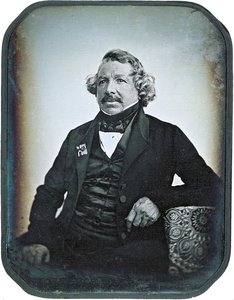
louis-jacques-mandé daguerre
1787 - 1851 , France
Kratke činjenice
- Artistic Movement Or Style: Romanticism
- Artists Or Movements Influenced By This Artist: ['Photography']
- Artists Who Influenced This Artist: ['Nicéphore Niépce']
- Date Of Birth: November 18, 1787
- Date Of Death: July 10, 1851
- Full Name: Louis-Jacques-Mandé Daguerre
- Nationality: French
- Notable Artworks:
- The Ruins of the Holyrood Chapel
- Interior de Rosslyn Chapel
- Vallée au soleil couchant
- Place Of Birth: Cormeilles-en-Parisy, France