Pregledaj u prostoru
 Pošalji
 Podeli
 Detalji o delu

 Преузми
 Slični predmeti
 Rendgenski snimak
 Slajdovi
 Statistika
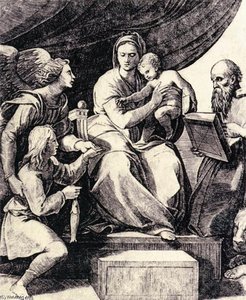
An Assembly of Wise Men and Women
 Pročitaj više
Giclee štampa / Umetnički otisak
Giclée štampa ili print na platnu muzejskog kvaliteta uz brzu proizvodnju i fleksibilne opcije završne obrade. ( Kupi ručno naslikanu sliku Pređi na digitalnu sliku)




































Izaberite jednu od naših unapred definisanih veličina koje odgovaraju originalnim proporcijama umetničkog dela.

Možete uneti sopstvene dimenzije kako biste umetničko delo prilagodili specifičnom okviru ili prostoru. Ako odabrani format ne odgovara proporcijama originalne slike, mi ćemo ili iscrtati deo dela ili proširiti sliku pomoću ogledane ivice ili jednobojnog popunjavanja. Digitalni prikaz će vam biti poslat na odobrenje pre početka proizvodnje.
Imajte na umu da pregled na ekranu ne odražava stvarno iscrtavanje ili proširivanje. Samo će prikaz (mockup) precizno pokazati finalnu kompoziciju.
Iako su prilagođene dimenzije dostupne, preporučujemo da odaberete dimenziju sa unapred definisane liste kako biste očuvali originalne proporcije.
Dostava širom sveta () za 2 nedelje umesto uobičajenih 4/5 nedelja. (15 септембар)

Besplatna ekspresna dostava širom sveta

Visokokvalitetno laneno platno

Kompletno osiguranje transporta

Garancija povraćaja carine i uvoznih dažbina

Garancija vernosti boja

Politika povraćaja u roku od 100 dana (isključivo u slučaju nedostataka)

Garancija povrata novca od 100%

Popust pri grupnoj kupovini
 Opcija sa staklom dostupna je samo za dimenzije manje od 110 cm

An Assembly of Wise Men and Women
Giclee štampa / Umetnički otisak
Dimenzije reprodukcije
-


Konačna cena
$ 62
Srodna umetnička dela
Biografija umetnika
Marco Dente da Ravenna: The Silent Master of Reproduction
Marco Dente da Ravenna (circa 1486 – 1527) remains a figure shrouded in intriguing mystery, a silent master whose legacy is largely defined by his extraordinary skill in reproduction rather than groundbreaking originality. Born and raised in the vibrant city of Ravenna, a crucible of artistic innovation during the High Renaissance, Dente’s career unfolded within the influential workshop of Marcantonio Raimondi, where he honed his craft and ultimately became a pivotal figure in shaping the visual landscape of his time. His story is not one of solitary genius, but rather of meticulous apprenticeship, shrewd observation, and an uncanny ability to capture the essence of other artists' visions – a skill that paradoxically cemented his place within art history despite the relative obscurity of his own individual style.
Dente’s early life offers little in the way of documented detail. He was part of a prominent family in Ravenna, a city renowned for its rich artistic heritage and burgeoning printmaking scene. His training began under Marcantonio Raimondi, a master engraver known for his meticulous reproductions of classical sculptures and Raphael's drawings. This apprenticeship instilled in Dente a deep respect for the techniques of engraving and a keen understanding of how to translate complex imagery onto metal plates. Crucially, it also exposed him to the prevailing artistic trends of the era – particularly the renewed interest in antiquity and the influence of Raphael’s idealized depictions of classical forms.
The Reproduction Game: Technique and Context
What distinguishes Dente from many of his contemporaries is not a distinctive personal style, but rather his almost obsessive dedication to reproduction. Unlike artists who sought to create entirely original works, Dente specialized in meticulously copying the prints of others – primarily those produced by Marcantonio Raimondi and, most significantly, Raphael. This practice wasn’t simply mechanical; it required an extraordinary level of technical skill, a deep understanding of perspective, anatomy, and composition, and a remarkable ability to discern subtle nuances in tone and detail. His engravings were not mere copies; they were carefully crafted interpretations that sought to faithfully replicate the spirit and character of the original.
The context surrounding Dente’s work is equally important. During the early 16th century, there was a burgeoning market for images of classical antiquity – particularly casts of ancient sculptures. These casts were highly prized by wealthy patrons and collectors, but they were often difficult to transport or display. Prints offered a relatively inexpensive and accessible way to experience these masterpieces. Raimondi’s workshop, and subsequently Dente's, played a crucial role in supplying this demand, producing numerous copies of Raphael’s drawings and other classical models. This system was driven by commercial considerations – the need to replicate and distribute images efficiently – but it also had significant artistic implications, shaping the visual culture of the time.
Notable Works: Echoes of Raphael and Antiquity
Despite his specialization in reproduction, Dente produced a remarkable body of work that reveals both his technical mastery and his deep engagement with the artistic traditions he was replicating. His most celebrated engraving is undoubtedly his depiction of Laocoön and his two sons (circa 1520-21), a powerful and dramatic interpretation of the ancient Greek tragedy. This print, based on a lost Raphael drawing, showcases Dente’s ability to capture the dynamism and pathos of the scene with remarkable precision. The composition is meticulously rendered, the figures are anatomically accurate, and the overall effect is one of intense emotional drama.
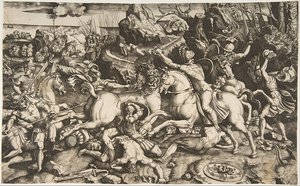
Other notable works include his engravings of The Massacre of the Innocents (1520-21) – a harrowing depiction based on a drawing by Baccio Bandinelli – and The Judgment of Paris. These prints, like Laocoön, demonstrate Dente’s ability to translate complex narratives and visual concepts onto metal plates with remarkable skill. Throughout his oeuvre, there is a clear influence of Raphael's style—a refined elegance, balanced compositions, and an emphasis on idealized beauty. However, Dente’s engravings are not simply imitations; they possess a unique character and expressiveness that distinguish them from the originals.
A Tragic End and Lasting Legacy
Dente's career was tragically cut short by the Sack of Rome in 1527. As the city fell to invading forces, his workshop – along with countless other artistic treasures – was destroyed, erasing much of his output from existence. The loss was devastating, not only for Dente himself but also for art historians who were struggling to understand his role and significance. Despite this destruction, fragments of his work have survived, offering tantalizing glimpses into the mind of a remarkable artist.
Today, Marco Dente da Ravenna is recognized as one of the most important engravers of the High Renaissance. While he may not be celebrated for his originality, his meticulous reproductions played a crucial role in shaping the visual culture of his time and preserving the legacy of Raphael and other masters. His story serves as a poignant reminder that artistic influence can take many forms – sometimes through imitation, sometimes through subtle interpretation, and always through the enduring power of skill and dedication.
marco dente da ravenna
1486 - 1527 , Italy
Osnovne informacije
- Artistic Movement Or Style: Mannerism
- Artists Or Movements Influenced By This Artist:
- Marcantonio Raimondi's School
- Renaissance Printmaking
- Artists Who Influenced This Artist:
- Marcantonio Raimondi
- Raphael
- Date Of Birth: c. 1486
- Date Of Death: 1527
- Full Name: Marco Dente da Ravenna
- Nationality: Italian
- Notable Artworks:
- Birth of Venus
- Laocoön
- Massacre Innocents
- Judgement Paris
- Place Of Birth: Ravenna, Italy