 Pregledaj u prostoru
 Pošalji
 Podeli
 Detalji o delu

 Преузми
 Slični predmeti
 Rendgenski snimak
 Slajdovi
A.T.M.O.T.W.


 Pročitaj više
Kupite digitalnu sliku visoke rezolucije i poboljšanog kvaliteta, koja je znatno superiornija od onoga što vidite u online prikazu.
Svaka datoteka je pedantno pripremljena od strane naših stručnjaka koristeći napredne alate i profesionalnu ručnu retušu. Osiguravamo da svaka slika ima izuzetnu oštrinu, preciznu reprodukciju boja i fine detalje.
Konačna datoteka se dostavlja putem e-pošte u roku od 72 sata, optimizovana za neposrednu upotrebu u profesionalnim, izdavačkim i štamparskim okruženjima. To je isti kvalitet kojem veruju vrhunski studiji dizajna, izdavači i galerije.
Digitalna slika
Preuzmite datoteku visoke rezolucije za ličnu upotrebu, štampanje i kreativne projekte. ( Kupi print Kupi ručno naslikanu sliku)
Uključeno uz svaku porudžbinu digitalne slike
Profesionalna digitalna isporuka, zagarantovana
Kada odaberete ArtsDot.com, ne dobijate samo sliku – vi primate profesionalno unapređeno digitalno umetničko delo, izrađeno sa najvećom preciznošću i uz garanciju zadovoljstva. Evo svega što automatski dolazi uz vašu porudžbinu:

Brza dostava putem e-pošte
Vaša digitalna slika visoke rezolucije biće vam poslata putem e-pošte u roku od 72 sata od poručivanja – spremna za trenutnu upotrebu.

Digitalna datoteka unapređena veštačkom inteligencijom
Vaše umetničko delo je profesionalno optimizovano korišćenjem naprednih AI alata i ručne obrade, čime se osiguravaju maksimalni detalji, oštrina i preciznost boja.

Besplatna ponovna isporuka doživotno
Slučajno ste obrisali ili izgubili svoju datoteku? Ne brinite – poslaćemo vam je ponovo u bilo kom trenutku, potpuno besplatno.

Bez troškova uvoza – zauvek
Uživajte u svojim umetničkim delima trenutno, bez carine, dažbina ili troškova dostave – digitalni download je uvek bez poreza.

Garancija vernosti boja
Uz pomoć profesionalnih alata i upravljanja bojama, osiguravamo da vaša digitalna slika što vernije odražava originalne boje.

Garancija zadovoljstva u roku od 100 dana
Ako niste zadovoljni svojom digitalnom slikom, revidirat ćemo je ili vratiti 100% novca u roku od 100 dana – bez ikakvih pitanja.

100% garancija povrata novca
Niste zadovoljni? Obezbedite pun povrat novca u roku od 100 dana od trenutka kada ste primili svoju digitalnu datoteku – bez suvišnih pitanja.

Popusti na velike porudžbine
Kupite 3 slike, uštedite 10% - Kupite 5 slika, uštedite 15% - Kupite 10+ slika, uštedite 20%. Odlično za kreativne projekte, galerije i agencije.
The Genesis of a Concrete Dialogue
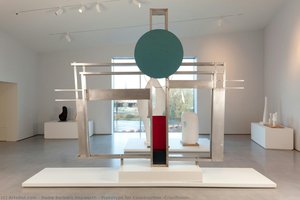
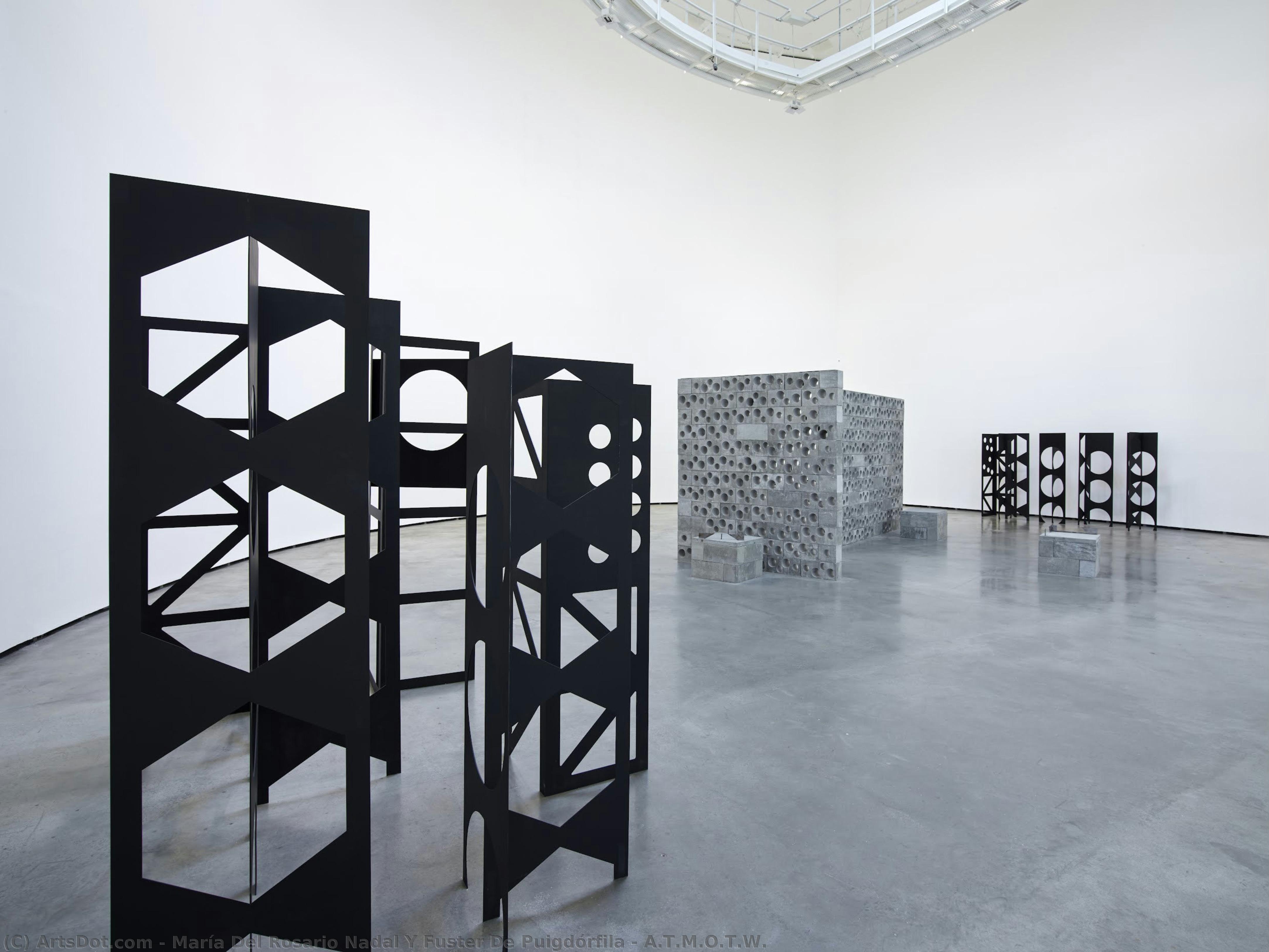
Xabier Salaberria’s “A.T.M.O.T.W.” (All The Material Of The World) isn't merely an assemblage of sculptures; it’s a carefully orchestrated invitation to contemplate the very nature of representation and the layered history embedded within modern art. Born in 1969, Salaberria has spent his career dissecting the conventions of sculpture, particularly its relationship to architecture and the industrial age. This piece, conceived specifically for the 2013 exhibition “Garmendia, Maneros Zabala, Salaberria,” operates as a deliberate deconstruction, drawing upon a rich tapestry of influences – from the pioneering Rietveld Pavilion’s geometric elegance to the monumental scale of Basque architectural traditions. The installation resides within a starkly minimalist museum space, its concrete forms acting as both echoes and critiques of the building's own structure, creating a dialogue between the external and internal realms.
A Symphony of Geometric Forms
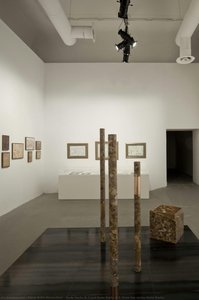
The visual impact of “A.T.M.O.T.W.” is immediately arresting – a controlled chaos of interlocking squares, rectangles, and circular apertures rendered in smooth, grey concrete. Each sculpture possesses a distinct presence, ranging from the imposing solidity of some pieces to the more delicate intricacy of others. The repetition of these fundamental geometric shapes isn’t simply decorative; it speaks to the serialization inherent in mass production – a key element Salaberria interrogates throughout his work. Notice how the openings within the forms aren't merely absences, but active participants in the composition, inviting viewers to step into and interact with the space. The deliberate use of negative space is as crucial as the solid form itself, fostering a sense of openness and encouraging contemplation.
Echoes of Modernism and Beyond
Salaberria’s choice of concrete isn't arbitrary. Concrete, a material synonymous with the Industrial Revolution and the rise of modern architecture, carries significant historical weight. By utilizing this material, he directly engages with the legacy of movements like De Stijl and Bauhaus, whose emphasis on geometric abstraction and functional design profoundly shaped 20th-century art and architecture. However, “A.T.M.O.T.W.” transcends a simple homage to these precedents. The inclusion of references to Basque sculpture – a tradition deeply rooted in the region’s history and identity – subtly shifts the focus towards local context while simultaneously acknowledging the broader global dialogue surrounding modernism. The installation also subtly nods to the architectural principles of Gerrit Rietveld, whose pavilion exemplified a revolutionary approach to space and form.
A Space for Reflection: The Museum as Stage
More than just an artistic statement, “A.T.M.O.T.W.” transforms the museum itself into a subject of inquiry. The title – "All The Material Of The World" – suggests a vastness and accumulation of knowledge, mirroring the museum’s role as a repository of cultural artifacts. By placing his sculptures within this institutional setting, Salaberria prompts viewers to consider how museums represent and interpret history, challenging the traditional notion of the museum as a neutral space for objective display. The two chairs strategically positioned within the installation invite a pause, encouraging visitors to engage with the artwork on a more personal level – to contemplate its meaning and their own relationship to it. The stark lighting further enhances this contemplative atmosphere, casting dramatic shadows that emphasize the three-dimensionality of the forms.
Capturing the Essence: Photographic Details
- Overall Impression: A black and white photograph presenting a concrete sculpture installation within a modern museum space. The composition is dominated by several large-scale sculptures arranged across the room, with stark lighting creating strong contrasts between light and shadow.
- Composition: Utilizes a wide-angle perspective to capture the entirety of the installation and its surroundings. Sculptures are strategically positioned throughout the frame, guiding the viewer's eye. The chairs add a human element.
- Color Palette: Monochromatic – shades of gray and black emphasize forms and textures, contributing to formality and restraint.
- Lines & Shapes: Strong vertical and horizontal lines define architecture and sculptures. Geometric shapes (squares, rectangles, circles) are repeated, creating order and rhythm.
- Textures: Concrete sculptures exhibit a rough texture contrasting with the polished floor, adding depth and dimension.
- Lighting: Directional light from an unseen source casts sharp shadows, highlighting three-dimensionality.
- Perspective & Depth: Wide-angle lens creates spaciousness and depth within the room. Linear perspective enhances the illusion of distance.