 Pregledaj u prostoru
 Pošalji
 Podeli
 Detalji o delu

 Преузми
 Slični predmeti
 Rendgenski snimak
 Slajdovi
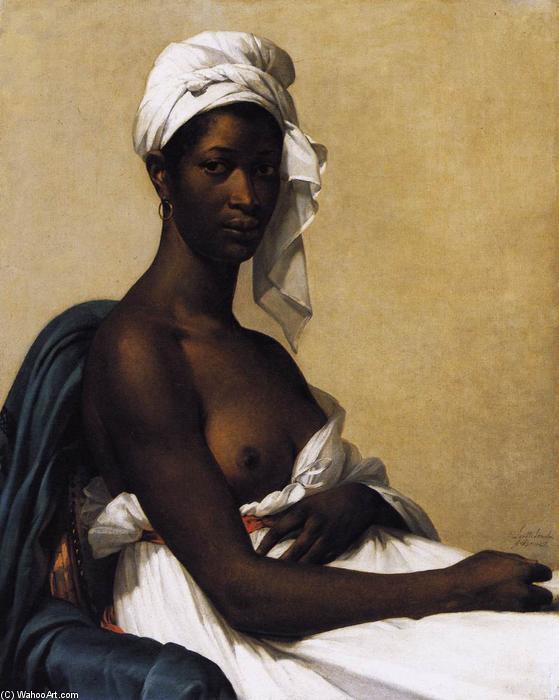
Portrait of a Negress
 Acrylic On Canvas
- WallArt
- Neoclassicist Art
 1800
1800 81.0 x 65.0 cm
 Louvre
 Pročitaj više
Kupite digitalnu sliku visoke rezolucije i poboljšanog kvaliteta, koja je znatno superiornija od onoga što vidite u online prikazu.
Svaka datoteka je pedantno pripremljena od strane naših stručnjaka koristeći napredne alate i profesionalnu ručnu retušu. Osiguravamo da svaka slika ima izuzetnu oštrinu, preciznu reprodukciju boja i fine detalje.
Konačna datoteka se dostavlja putem e-pošte u roku od 72 sata, optimizovana za neposrednu upotrebu u profesionalnim, izdavačkim i štamparskim okruženjima. To je isti kvalitet kojem veruju vrhunski studiji dizajna, izdavači i galerije.
Digitalna slika
Preuzmite datoteku visoke rezolucije za ličnu upotrebu, štampanje i kreativne projekte. ( Kupi print Kupi ručno naslikanu sliku)
Uključeno uz svaku porudžbinu digitalne slike
Profesionalna digitalna isporuka, zagarantovana
Kada odaberete ArtsDot.com, ne dobijate samo sliku – vi primate profesionalno unapređeno digitalno umetničko delo, izrađeno sa najvećom preciznošću i uz garanciju zadovoljstva. Evo svega što automatski dolazi uz vašu porudžbinu:

Brza dostava putem e-pošte
Vaša digitalna slika visoke rezolucije biće vam poslata putem e-pošte u roku od 72 sata od poručivanja – spremna za trenutnu upotrebu.

Digitalna datoteka unapređena veštačkom inteligencijom
Vaše umetničko delo je profesionalno optimizovano korišćenjem naprednih AI alata i ručne obrade, čime se osiguravaju maksimalni detalji, oštrina i preciznost boja.

Besplatna ponovna isporuka doživotno
Slučajno ste obrisali ili izgubili svoju datoteku? Ne brinite – poslaćemo vam je ponovo u bilo kom trenutku, potpuno besplatno.

Bez troškova uvoza – zauvek
Uživajte u svojim umetničkim delima trenutno, bez carine, dažbina ili troškova dostave – digitalni download je uvek bez poreza.

Garancija vernosti boja
Uz pomoć profesionalnih alata i upravljanja bojama, osiguravamo da vaša digitalna slika što vernije odražava originalne boje.

Garancija zadovoljstva u roku od 60 dana
Ako niste zadovoljni svojom digitalnom slikom, revidirat ćemo je ili vratiti 100% novca u roku od 60 dana – bez ikakvih pitanja.

100% garancija povrata novca
Niste zadovoljni? Obezbedite pun povrat novca u roku od 60 dana od trenutka kada ste primili svoju digitalnu datoteku – bez suvišnih pitanja.

Popusti na velike porudžbine
Kupite 3 slike, uštedite 10% - Kupite 5 slika, uštedite 15% - Kupite 10+ slika, uštedite 20%. Odlično za kreativne projekte, galerije i agencije.
Portrait of a Negress: A Study in Neoclassical Elegance and Feminist Symbolism
The Portrait of a Negress by Marie Guillemine Benoist stands as an arresting testament to the artistic sensibilities of its era—the early 1800s—and simultaneously embodies a profound dialogue concerning gender roles, racial representation, and the burgeoning movement for women’s emancipation. Painted in Paris during a period marked by significant social upheaval following the Napoleonic Wars, this oil-on-canvas masterpiece transcends mere visual beauty to deliver a complex message about societal expectations and artistic ambition.The Artist's Context: Marie Guillemine Benoist – A Pioneer Among Women Painters
Marie Guillemine Benoist (1768-1826) was an exceptional figure in the art world of her time, navigating the constraints imposed upon women artists with remarkable determination and creativity. Born into a noble family steeped in administrative tradition, Benoist defied societal norms by pursuing a professional artistic career—a daring undertaking for women during the Enlightenment and Romantic periods. Her training under Elisabeth Vigée Le Brun instilled in her a meticulous attention to detail and an understanding of portraiture as a vehicle for conveying both likeness and character. This dedication to craft is evident throughout her oeuvre, including “Portrait of a Negress,” where she skillfully captures the sitter’s gaze and posture with remarkable precision.A Detailed Examination of Technique and Style
The painting's stylistic characteristics firmly situate it within the Neoclassical movement—a reaction against the excesses of Rococo art that championed reason, order, and idealized beauty. Benoist employed loose brushstrokes to create a sense of movement and life, subtly animating the figure’s drapery and conveying an impression of serene composure. The artist skillfully utilized chiaroscuro—the dramatic interplay of light and shadow—to sculpt the woman's face and torso, emphasizing her features with subtle gradations of tone. Furthermore, Benoist’s choice of palette—dominated by muted earth tones—contributes to the painting’s contemplative mood and reinforces its connection to classical ideals of harmony and balance. The canvas itself measures 81 x 65 cm, reflecting a deliberate consideration for scale and proportion that aligns with Neoclassical principles.Symbolism Beyond Appearance: Gender Roles and Racial Representation
Beyond its technical prowess, “Portrait of a Negress” carries significant symbolic weight. The woman’s pose—seated gracefully in a chair, her body turned slightly to the side—reflects the prevailing ideal of feminine dignity and composure during the period. Her white robe symbolizes purity and virtue, while the draped fabric subtly suggests vulnerability and grace. Crucially, Benoist's decision to depict a black woman—a subject considered taboo by many artists of the time—represents a bold assertion of feminist ideals. The painting implicitly challenges societal prejudices against women of color and elevates the sitter’s presence as an emblem of resilience and beauty. The inclusion of the chair symbolizes domesticity and reinforces the notion that the woman embodies the virtues expected of women in the home.Historical Significance and Legacy
“Portrait of a Negress” debuted at the Paris Salon of 1800, garnering considerable acclaim from critics and collectors alike. Its subsequent acquisition by Louis XVIII for the French state solidified its place as a cornerstone of Neoclassicist art and underscored its importance in shaping perceptions of gender and race during the Restoration era. Today, the painting resides in the Musée du Louvre, where it continues to inspire awe and provoke contemplation—a testament to Benoist’s artistic vision and her courageous stance against societal conventions. Its enduring appeal speaks to the timeless fascination with beauty, dignity, and the pursuit of intellectual freedom—themes that resonate powerfully across generations.Srodna umetnička dela

Biografija umetnika
Giovanni Antonio Canal: The Master of Venetian Light
Born in Venice in 1697 as Giovanni Antonio Canal, later known simply as Canaletto, was a pivotal figure in the history of art, renowned for his exquisitely detailed and evocative depictions of cityscapes – *vedute* – that capture the essence of 18th-century Venice, Rome, and London. More than just a painter of views, Canaletto possessed an extraordinary ability to translate light, atmosphere, and human activity onto canvas, establishing himself as one of the most influential artists of his era. His legacy continues to resonate today, informing countless landscape painters and offering a unique window into the vibrant life of Europe’s great cities.
Canaletto's artistic journey began humbly, assisting his father, Bernardo Canal, a theatrical scene painter. This early exposure instilled in him a keen eye for composition, perspective, and the depiction of human figures within architectural settings – skills that would prove invaluable as he transitioned to topographical painting. He honed his craft through apprenticeships with other Venetian artists, absorbing techniques and developing his distinctive style. Unlike many of his contemporaries who relied on idealized representations or fantastical elements, Canaletto prioritized accuracy and realism, meticulously documenting the streets, buildings, and inhabitants of the cities he observed. This commitment to observation is evident in his early works like “The Stonemason’s Yard,” a remarkably detailed study of daily life within a Venetian workshop, showcasing his mastery of light and shadow.
The Rise of the *Veduta* and Canaletto's Workshop
The 18th century witnessed the rise of the *veduta*, or cityscape painting, as a popular genre in Europe. Canaletto was at the forefront of this trend, producing an astonishing number of views – estimates range from several hundred to over a thousand – that served both as artistic expressions and practical records of urban development. Initially, he catered to wealthy Venetian patrons, creating individual portraits of their homes and businesses. However, recognizing the lucrative potential of documenting the city’s grand public events and architectural marvels, Canaletto shifted his focus towards producing works for tourists and collectors. This shift led him to establish a workshop, employing a team of assistants – most notably his nephew, Bernardo Bellotto – who executed many of the more repetitive or large-scale commissions.
While some critics initially questioned the authenticity of Canaletto’s work, attributing it to a mere imitator, it became clear that he was not simply copying existing views. His workshop produced highly skilled and consistent renderings, often incorporating his own preparatory sketches and compositional refinements. The collaboration between Canaletto and his assistants allowed him to maintain a remarkably high output while preserving the quality of his artistic vision. This system, though somewhat controversial at the time, proved incredibly successful, solidifying Canaletto’s position as one of Venice's most celebrated artists.
London Years and Artistic Evolution
In 1746, Canaletto embarked on a significant chapter in his career – a decade-long sojourn in England. Invited by the influential Venetian merchant and art collector Joseph “Consul” Smith, he traveled to London, where he quickly gained recognition for his accurate and engaging depictions of the city’s landmarks and bustling streets. His English paintings, including views of Eton College, Warwick Castle, and Alnwick Castle, demonstrated a remarkable ability to capture the scale and grandeur of these sites while also conveying a sense of atmosphere and human activity.
During his time in England, Canaletto’s style underwent subtle but noticeable changes. He experimented with brighter colors and looser brushwork, reflecting the influence of English landscape painting. He continued to utilize his *camera obscura*, a device that projected an image onto a surface, allowing him to create remarkably precise preparatory drawings for his paintings. However, he remained steadfast in his commitment to compositional design, prioritizing visual harmony and clarity over slavish adherence to topographical accuracy. His London years represent a fascinating period of artistic evolution, showcasing his adaptability and willingness to embrace new influences while retaining the core elements of his distinctive style.
Legacy and Influence
Canaletto’s impact on art history is profound. He elevated *veduta* painting to an unprecedented level of realism and detail, establishing a standard for future generations of landscape artists. His meticulous observation, masterful use of light and shadow, and ability to capture the essence of urban life have made his works enduringly popular. His paintings provide invaluable insights into the social, cultural, and architectural history of Venice, Rome, and London, offering a unique perspective on Europe’s 18th-century cities.
Beyond his artistic achievements, Canaletto's legacy extends to the development of topographical drawing and the use of optical instruments in art. His meticulous preparatory sketches, often created with the aid of a *camera obscura*, demonstrate a pioneering approach to visual representation. Canaletto’s influence can be seen in the works of countless artists who followed him, solidifying his place as one of the most important and enduring figures in the history of European art.