 Pregledaj u prostoru
 Pošalji
 Podeli
 Detalji o delu

 Преузми
 Slični predmeti
 Rendgenski snimak
 Slajdovi
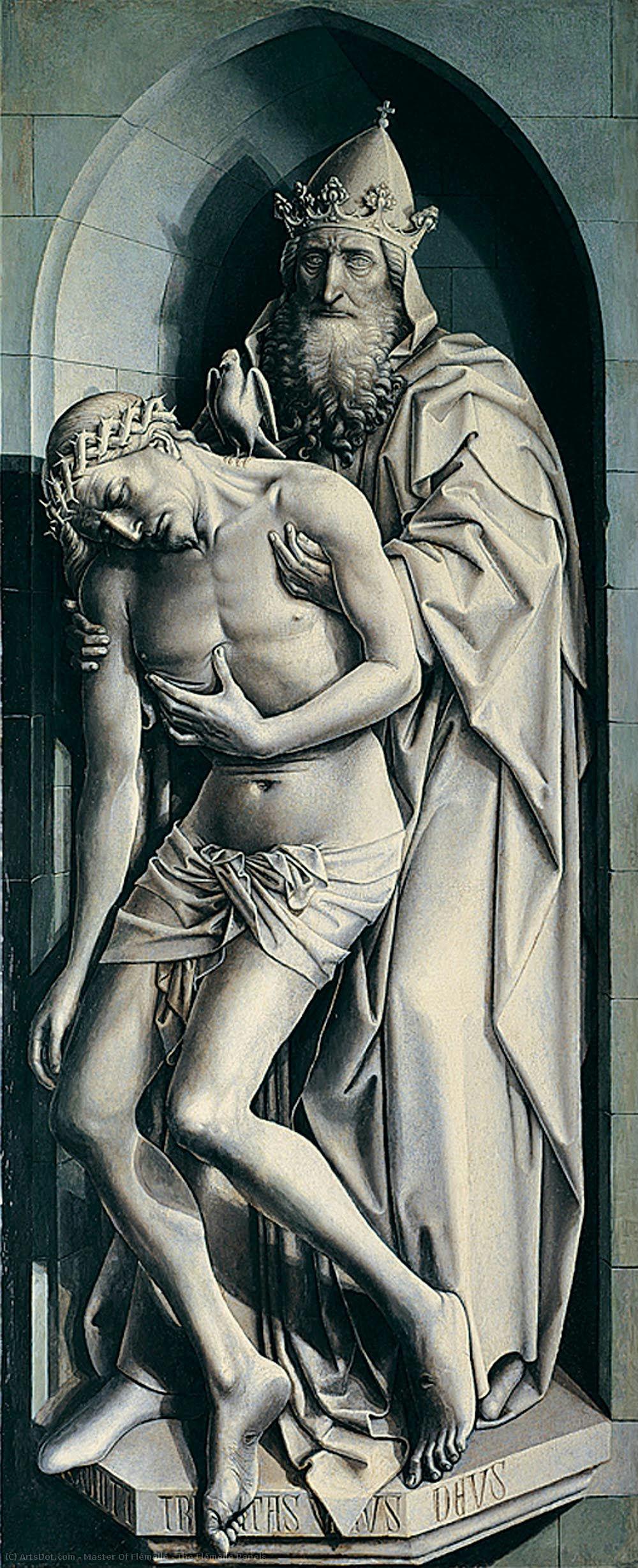
Панели Флеммаля
 Akril na platnu
- Umetnost za zidove
- Early Netherlandish Renaissance
 1430
1430 61.0 x 148.0 cm
 Städel Museum
 Pročitaj više
Ručno rađena uljana reprodukcija
Ručno oslikano uljanim bojama na platnu u dimenzijama i okviru po vašem izboru, izrađeno po porudžbini od strane naših umetnika. ( Kupi print Kupi digitalnu sliku)




P118B $10

P118H $10

P118W $10

P438Z $10

P508JH $12

P508YH $12

P805H $10

P805Z $10

P919BZ $10

P919G $10

P919XJ $10

P959ZH $10

P968JZ $12

W106C $8

W218G $10

W218JH $8

W218Y $10

W307PJ $10

W316G $10

W316PJ $8

W316Y $10

W398PJ $8

W4111J $10

W500HY $15

W500JH $15

W692G $12

W849H $8

W940BG $15

W953PJ $8




Izaberite jednu od naših unapred definisanih veličina koje odgovaraju originalnim proporcijama umetničkog dela.

Можете унети сопствене димензије како бисте прилагодили дело одређеном оквиру или простору. Ако одабрана величина не одговара пропорцијама оригинала, слика ће бити исечена или проширена додатним елементима који се ручно насликавају. Дигитални prikaz ће вам бити послат на одобрење пре почетка производње.
Имајте на уму да преглед на екрану не одражава стварно исецање или проширење. Само приказ (mockup) ће тачно приказати коначну композицију.
Иако су доступне прилагођене величине, препоручујемо да одаберете димензију из дефинисане листе како бисте сачували оригиналне пропорције.
Nakon narudžbine, tim ArtsDot.com će klijentu putem e-pošte poslati uputstva i dostaviti prikaz predloženog rešenja
Isporuka širom sveta () za 3/4 nedelje umesto uobičajenih 5 nedelja. (22 август). Bez kompromisa po pitanju kvaliteta.

Besplatna ekspresna dostava širom sveta

Visokokvalitetno laneno platno

Kompletno osiguranje transporta

Garancija povraćaja carine i uvoznih dažbina

Garancija vernosti boja

Politika povrata u roku od 60 dana (samo u slučaju nedostataka)

Garancija povrata novca od 100%

Popust pri grupnoj kupovini
 Opcija sa staklom dostupna je samo za dimenzije manje od 110 cm

Панели Флеммаля
Tehnika reprodukcije
Dimenzije reprodukcije
-


Konačna cena
$ 263
Opis umetničkog dela
Robert Campin (Master of Flémalle): A Window into Medieval Compassion
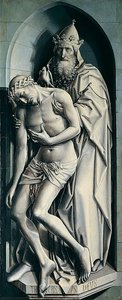
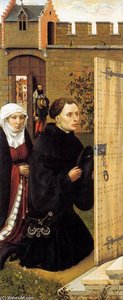
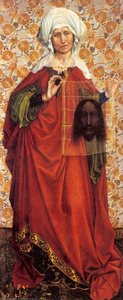
The image depicts a scene brimming with understated emotion – two men standing shoulder to shoulder, one gently cradling the other’s arm. This seemingly simple composition speaks volumes about the artistic sensibilities of Jean-Baptiste Mongeau and his contemporaries during the mid-15th century, marking a pivotal moment in Northern Renaissance art. Captured by Robert Campin, commonly known as Master of Flémalle, this painting transcends mere representation; it embodies a profound exploration of human connection and vulnerability.Style and Technique: Pioneering Oil Painting
Campin’s mastery lies not only in his meticulous depiction of figures but also in his groundbreaking adoption of oil paint – a technique that was still relatively nascent at the time. Unlike tempera, which relied on pigment bound in egg yolk, oil paints allowed for richer colors, greater luminosity, and subtle gradations of tone, offering unparalleled realism. This innovation distinguishes “The Flémalle Panels” from its predecessors and establishes Campin as one of the foremost practitioners of this transformative medium. The artist’s meticulous attention to detail—from the folds of fabric to the expressions on the men's faces—demonstrates a commitment to capturing not just what is seen but also what is felt.Historical Context: Bruges at the Height of Prosperity
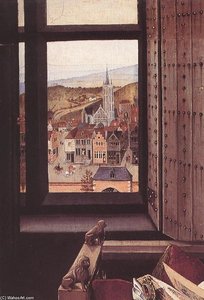
The painting originates from Bruges, Belgium – a thriving commercial hub and artistic center during the Burgundian Netherlands under Philip the Handsome. This era witnessed an explosion of creativity fueled by wealth and patronage, attracting artists from across Europe. Campin’s work reflects this cultural dynamism, aligning with the broader trend toward naturalism and psychological depth that characterized Northern Renaissance art. The Merode Altarpiece, Campin's magnum opus, exemplifies similar stylistic choices and underscores the importance of humanist ideals within artistic expression. Studying “The Flémalle Panels” provides invaluable insight into the social and intellectual landscape of Bruges during its golden age.Symbolism: Gesture and Expression – Keys to Understanding
Beyond its technical brilliance, "The Flémalle Panels" is laden with symbolic significance. The posture of the men—one supporting the other—represents compassion, care, and filial piety – values deeply rooted in medieval Christian morality. Campin skillfully employs gesture and facial expression to convey emotion, inviting viewers to contemplate themes of tenderness and devotion. These subtle nuances elevate the painting beyond a mere depiction of individuals; it becomes an emblem of human empathy and spiritual contemplation.Emotional Impact: A Moment Frozen in Time
The enduring appeal of “The Flémalle Panels” lies in its ability to evoke a powerful emotional response. The quiet intimacy of the scene resonates with viewers across centuries, reminding us of the importance of human connection and the beauty found in simple gestures of kindness. Campin’s masterful execution captures a fleeting moment—a gesture of support—that speaks to universal human experiences. It's a testament to the artist's ability to distill complex emotions into visual form, securing its place as an iconic masterpiece of Northern Renaissance art.Srodna umetnička dela
Biografija umetnika
The Shadowed Canvas: Exploring the Life and Art of Jean-Baptiste Mongeau
Jean-Baptiste Mongeau, a name perhaps less familiar than his contemporaries in the burgeoning Romantic movement, nevertheless carved out a unique and profoundly evocative space within French art during the late 18th and early 19th centuries. Born in Lyon in 1778, Mongeau’s life was inextricably linked to the tumultuous social and political shifts of his time – the rise of revolutionary fervor, the Napoleonic era, and the subsequent restoration. While he never achieved widespread fame during his lifetime, a closer examination of his work reveals a deeply sensitive artist grappling with themes of memory, loss, and the ephemeral nature of beauty, anticipating many of the concerns that would define later Symbolist painters. Mongeau’s early life offered little indication of the artistic path he would ultimately pursue. His father was a silk merchant, a practical profession in the heart of Lyon's textile industry. However, young Jean-Baptiste displayed an unusual aptitude for drawing and painting from a remarkably young age, initially sketching designs for his family’s business and later capturing the vibrant scenes of the city’s bustling markets and canals. He received informal instruction from a local artisan, mastering the fundamentals of oil paint and composition before embarking on a period of self-directed study, fueled by an intense curiosity about the world around him. Crucially, he was exposed to the works of Jacques-Louis David, whose Neoclassical style initially exerted a strong influence – evidenced in his early portraits and historical scenes, characterized by precise detail and idealized forms. A pivotal moment in Mongeau’s artistic development occurred during his time serving as an artillery officer in Napoleon's campaigns. The horrors he witnessed on the battlefield—the carnage, the suffering, and the sheer waste of human life—profoundly impacted him. This experience marked a dramatic shift away from the polished formality of Neoclassicism and towards a more introspective and emotionally charged style. He began to explore darker subjects – landscapes imbued with melancholy, portraits reflecting inner turmoil, and allegorical scenes that hinted at the fragility of existence. His palette darkened considerably, favoring somber blues, greens, and browns, punctuated by flashes of intense color used sparingly to heighten emotional impact. The influence of Romanticism, particularly the emphasis on subjective experience and the sublime, became increasingly apparent. Mongeau’s artistic style is often described as “atmospheric realism.” He wasn't interested in simply replicating reality; instead, he sought to capture its essence—its mood, its feeling. His landscapes are particularly notable for their evocative use of light and shadow, creating a sense of depth and mystery. He frequently depicted scenes of twilight or dawn, using diffused light to suggest the passage of time and the inevitability of decay. His portraits, in contrast to the idealized representations common at the time, were characterized by an unsettling honesty—a willingness to portray the subject’s vulnerabilities and anxieties. He employed a loose brushstroke technique, layering colors to create a hazy, dreamlike quality that further enhanced the sense of emotional resonance. A key element of his work is the use of *grisaille*, a monochrome painting technique, often used in underpaintings to establish form and tone before adding color. Among Mongeau’s most celebrated works are “The Fallen Soldier” (1808), a haunting depiction of a lone figure slumped amidst the wreckage of battle, and "Memory's Embrace" (1815), an allegorical painting that explores the themes of loss and remembrance. “The Fallen Soldier,” in particular, is considered a seminal work of Romantic art in France, capturing not just the physical devastation of war but also the profound psychological trauma it inflicted. It’s notable for its lack of explicit gore; instead, Mongeau focuses on the soldier's posture, his face etched with despair, and the desolate landscape surrounding him—a powerful indictment of conflict without resorting to sensationalism. His later works often featured recurring motifs – wilting flowers, decaying fruit, and solitary figures gazing into the distance—all symbols of mortality and the transience of beauty. Despite a relatively modest output during his lifetime, Mongeau’s influence on subsequent generations of French artists is undeniable. His emphasis on emotional expression, his exploration of dark themes, and his innovative use of light and color foreshadowed many of the developments that would characterize the Symbolist movement. His work was largely overlooked until the late 20th century when a renewed interest in Romanticism led to a reassessment of his artistic legacy. Today, Jean-Baptiste Mongeau is recognized as a significant, if often misunderstood, figure in French art history—an artist who dared to confront the darker aspects of human experience and capture their essence on canvas with remarkable sensitivity and power.Key Works
- The Fallen Soldier (1808): A poignant depiction of a fallen soldier, embodying the horrors of war and the psychological toll it exacts.
- Memory’s Embrace (1815): An allegorical painting exploring themes of loss, remembrance, and the fleeting nature of beauty.
- Twilight on the Rhône (c. 1810): A landscape capturing the melancholic beauty of a twilight scene along the river.
- Portrait of Madame Dubois (1805): A strikingly honest portrait revealing the subject’s inner anxieties and vulnerabilities.
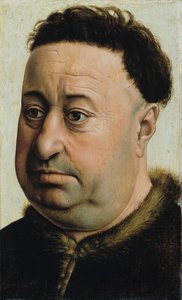
master of flémalle
1444 , Belgium
Povezani članci
Robert Campin: Pioneering Realism & Spiritual Depth in Early Netherlandish Painting
Explore the revolutionary work of Robert Campin, a pioneer of Early Netherlandish painting. Discover his naturalistic style, religious symbolism in masterpieces like the Mérode Altarpiece, and lasting influence on art history.

The Enduring Legacy of Oil on Canvas: Technique, History & Aesthetic Impact
Explore the rich history & techniques of oil painting – from Renaissance masters to Impressionism. Discover pigments, layering methods, and why this timeless medium endures. Expert insights for artists & art enthusiasts.

Oil on Canvas: A Historical & Technical Exploration of a Timeless Artistic Medium
Explore the rich history & enduring techniques of oil painting on canvas. Discover the science behind its longevity, conservation practices, and contemporary relevance. Expert insights for art enthusiasts.

The Enduring Power of Painting: A Historical & Contemporary Exploration of Form and Emotion
Explore the rich history & enduring techniques of oil painting with ArtsDot. Discover masterpieces, learn about art collecting, and find authentic handmade reproductions crafted by skilled artists.

Trajnu Ostavština Uljanih Boja na Platnu: Tehnika, Istorija i Savremena Praksa
Istražite bogatu istoriju i savremene tehnike uljanog slikarstva. Saveti stručnjaka, analiza radova velikih majstora i vodiči za biranje kvalitetnih materijala. Otkrijte tajne očuvanja umetničkih dela!