

 Pošalji
 Podeli
 Detalji o delu

 Преузми
 Slični predmeti
 Slajdovi
Laudario of the Compagnia di Sant'Agnese
 Gold Leaf
- Sculpture
- Byzantine
 1320
1320 367.0 x 273.0 cm
 National Gallery of Art
 Pročitaj više
Ručno rađena uljana reprodukcija
Ručno oslikano uljanim bojama na platnu u dimenzijama i okviru po vašem izboru, izrađeno po porudžbini od strane naših umetnika. ( Kupi print Kupi digitalnu sliku)




































Izaberite jednu od naših unapred definisanih veličina koje odgovaraju originalnim proporcijama umetničkog dela.

Можете унети сопствене димензије како бисте прилагодили дело одређеном оквиру или простору. Ако одабрана величина не одговара пропорцијама оригинала, слика ће бити исечена или проширена додатним елементима који се ручно насликавају. Дигитални prikaz ће вам бити послат на одобрење пре почетка производње.
Имајте на уму да преглед на екрану не одражава стварно исецање или проширење. Само приказ (mockup) ће тачно приказати коначну композицију.
Иако су доступне прилагођене величине, препоручујемо да одаберете димензију из дефинисане листе како бисте сачували оригиналне пропорције.
Nakon narudžbine, tim ArtsDot.com će klijentu putem e-pošte poslati uputstva i dostaviti prikaz predloženog rešenja
Isporuka širom sveta () za 3/4 nedelje umesto uobičajenih 5 nedelja. (5 септембар). Bez kompromisa po pitanju kvaliteta.

Besplatna ekspresna dostava širom sveta

Visokokvalitetno laneno platno

Kompletno osiguranje transporta

Garancija povraćaja carine i uvoznih dažbina

Garancija vernosti boja

Politika povrata u roku od 60 dana (samo u slučaju nedostataka)

Garancija povrata novca od 100%

Popust pri grupnoj kupovini
 Opcija sa staklom dostupna je samo za dimenzije manje od 110 cm

Laudario of the Compagnia di Sant'Agnese
Tehnika reprodukcije
Dimenzije reprodukcije
-


Konačna cena
$ 363
The Divine Narrative in Illuminated Gold
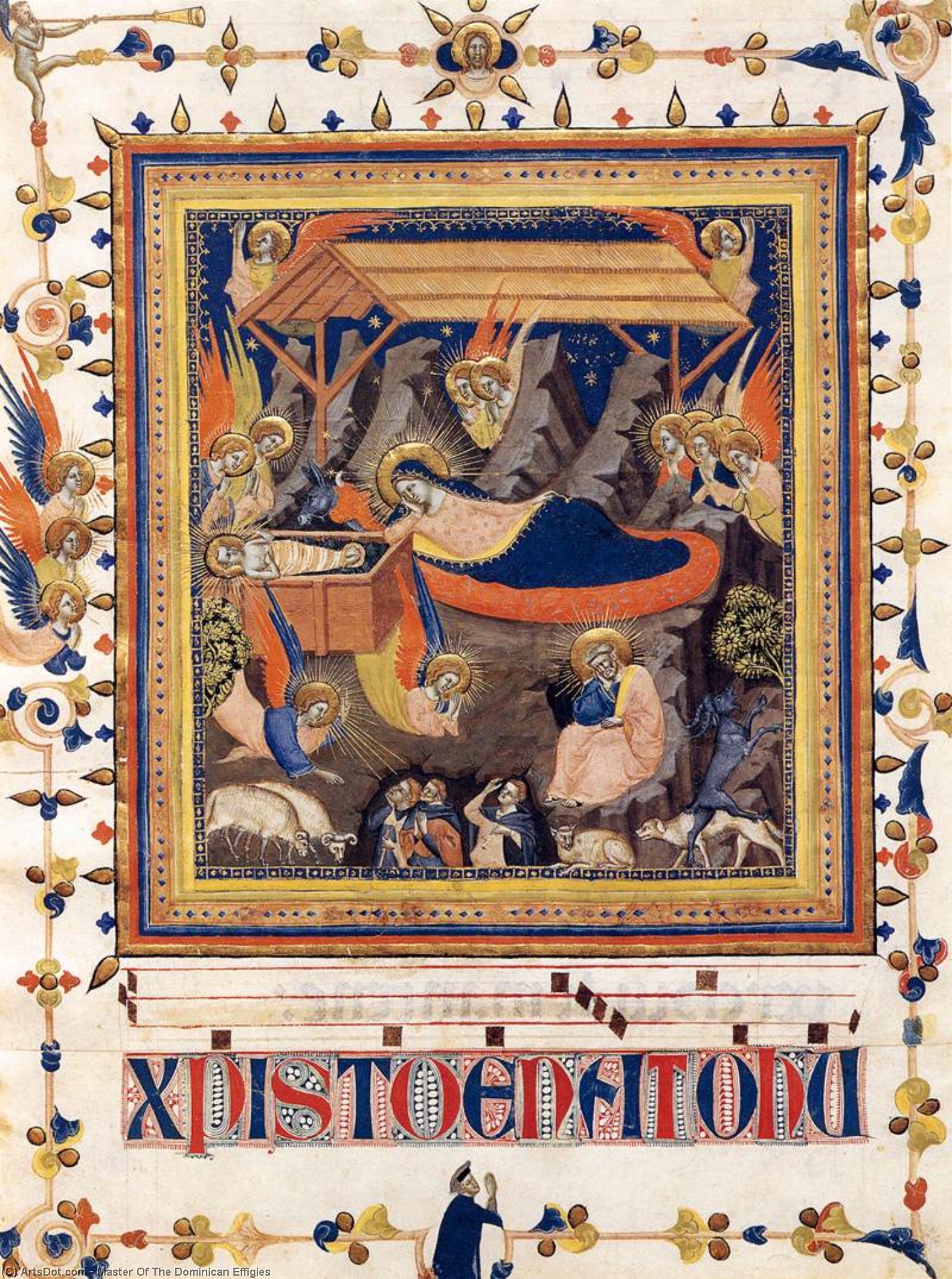
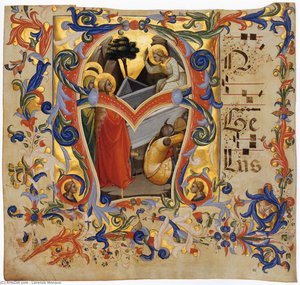
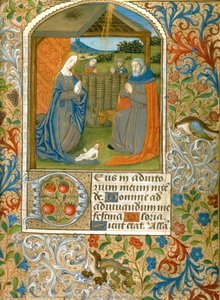
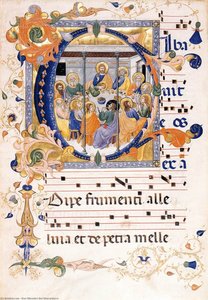
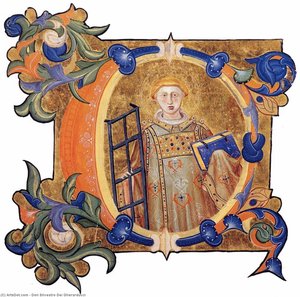
Behold the breathtaking richness of the Laudario of the Compagnia di Sant'Agnese, a monumental testament to medieval devotion rendered in pigment and gold leaf. This illuminated manuscript page is not merely an illustration; it is a carefully constructed portal into the sacred moment of the Nativity. The scene unfolds with meticulous detail, centering upon the humble yet profoundly significant tableau within the stable. Mary, Joseph, and the newborn Christ are enveloped by an atmosphere thick with divine mystery, watched over by celestial beings whose presence is announced by hovering angels presenting their gifts. Surrounding this core narrative, the gentle company of oxen, donkeys, and sheep grounds the miraculous event in a tangible, earthly setting.
Byzantine Echoes and Romanesque Form
Stylistically, the work resonates deeply with the grandeur of Byzantine illumination while retaining the narrative vigor characteristic of the Romanesque period. The artist masterfully employs a flattened perspective, eschewing the illusion of deep space for one that prioritizes symbolic clarity above all else. This deliberate choice forces the viewer to confront the spiritual weight of the moment rather than its physical dimensions. Notice how the composition is structured by geometric precision—squares and rectangles interlace with the organic curves of life—creating a dense, almost jewel-like tapestry of meaning. The entire piece pulses with an ordered, sacred energy.
Technique: A Symphony of Pigment and Light
The sheer technical brilliance on display is staggering. Executed using tempera pigments applied to vellum or parchment, the artist achieved a luminosity that seems to emanate from within the material itself. The extensive use of gold leaf is perhaps the most arresting feature; it does not merely decorate, but rather symbolizes the ineffable nature of divinity and holiness. These golden accents catch the light, creating an opulent visual texture that speaks of immense labor and profound reverence. Complementing this richness are the deep, saturated hues—the royal blues, the passionate reds, and the earthy browns—all working together to create a palette of sublime opulence.
Symbolism and Spiritual Resonance
Every element within the Laudario carries the weight of theological significance. The prominent banner bearing the inscription ‘Christo Redemptori’ serves as an unwavering focal point, directing all attention toward the core message of salvation. The surrounding decorative borders, featuring stylized floral motifs and intricate patterns, act like sacred veils, framing the divine mystery for our contemplation. To gaze upon this work is to engage in a dialogue with centuries of Christian devotion; it speaks eloquently of grace, sacrifice, and the enduring promise of redemption.
Bringing Sacred Grandeur Home
For those who seek to infuse their sacred spaces or private collections with an aura of timeless, profound artistry, a reproduction of this piece offers an unparalleled connection to art history. While its original scale—a magnificent 367 x 273 cm—demands reverence, the ability to own a high-quality rendering allows one to incorporate this breathtaking narrative power into a modern setting. It is more than decoration; it is a devotional centerpiece, inviting quiet contemplation and echoing the enduring majesty of faith.
Srodna umetnička dela
Biografija umetnika
The Enigma of the Florentine Brush
In the golden, flickering light of early fourteenth-century Florence, an artist emerged whose name remains a whispered mystery, known only through the enduring beauty of his creations. The Master of the Dominican Effigies stands as a singular, anonymous figure in the annals of art history, a creator whose true identity is lost to time but whose vision remains vibrantly alive. Active approximately between 1328 and 1350, this master was not merely a painter but a principal Florentine manuscript illuminator, a craftsman capable of weaving profound spiritual narratives into both expansive panels and the delicate, intimate pages of illuminated codices.
While historical records offer little regarding his personal life or origins—though some scholarly fragments suggest a connection to Lombardy—his artistic fingerprints are unmistakable. He operated within a Florence characterized by burgeoning civic pride and an intense, almost spiritual engagement with Byzantine aesthetics. This era was a crossroads of styles, where the monumental, static grandeur of the East met the burgeoning humanism of the Italian West, and the Master of the Dominican Effigities stood at the very heart of this stylistic alchemy.
A Symphony of Gold and Devotion
The work of the Master is a breathtaking testament to the power of religious iconography. His technique was a masterful blend of narrative depth and decorative splendor, often characterized by a luminous palette that seemed to radiate from within the pigment itself. To observe his work is to witness a meticulous devotion to detail; he possessed a rare ability to use gold leaf not merely as an ornament, but as a divine light that sanctified the figures he depicted. His style frequently employed flattened figures and stylized drapery, a clear homage to the monumental frescoes of Constantinople and Thessalonica, yet he infused these traditional forms with a uniquely Florentine sense of expressive emotion.
His achievements are most notably preserved in several remarkable masterpieces that continue to captivate the modern eye:
- The Laudario of the Compagnia di Sant'Agnese: A monumental achievement in manuscript illumination, where the pages serve as celestial portals. Through intricate gold leaf and azure pigments, he captured scenes from the Gospels with a sense of ceremony that transcends the medieval era.
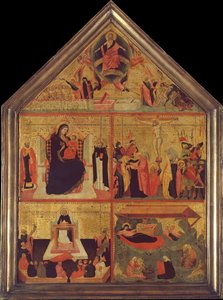
- The Last Judgment and Related Panels: A complex, multi-layered work dating to around 1325, showcasing his prowess as both an illuminator and a painter. This piece weaves together themes of the Crucifixion, the Nativity, and the glorification of saints into a singular, cohesive visual tapestry.
- The Lehnman Panel: A work that highlights his tendencies as a miniaturist, emphasizing lively storytelling through reduced, intricate forms that demand close, meditative study.
Legacy of the Byzantine Influence
The historical significance of the Master of the Dominican Effigies lies in his role as a bridge between eras. He was a pioneer who helped integrate the rigid, iconic traditions of the Byzantine Empire into the evolving language of Florentine painting. By blending the decorative richness of the East with the burgeoning narrative complexity of the Italian tradition, he contributed to the foundational layers of what would eventually blossom into the Renaissance.
Though his name remains shrouded in shadow, his legacy is etched in gold and pigment across the great collections of the world, from the Metropolitan Museum of Art to the Getty Museum. He remains a vital figure for any student of art history—a reminder that even when an artist's identity vanishes, the soul of their work can remain eternally present, speaking across centuries of devotion and beauty.
Osnovne informacije
- Artistic Movement Or Style: Medieval Catholic Art
- Artists Or Movements Influenced By This Artist: ['Medieval Catholic Art']
- Artists Who Influenced This Artist:
- Egyptian Art Influence
- Ptolemaic Egypt Art
- Byzantine Style
- Full Name: Master of the Dominican Effigies
- Nationality: Italian
- Notable Artworks:
- Laudario of Sant'Agnese
- Fragment of a Triptych
- The Last Judgment
- The Crucifixion
- The Glorification of Saint Thomas Aquinas
- The Virgin and Child with a Bishop-Saint and Saint Peter Martyr
- Place Of Birth: Florence
Povezani članci

High Medieval Art: 10 Masterpieces That Shaped an Era | ArtsDot
Journey through High Medieval Art! Explore 10 iconic masterpieces – from Giotto's frescoes to stunning Gothic cathedrals. Discover the stories behind these timeless paintings, sculptures & illuminated manuscripts. Find museum-quality art reproductions at ArtsDot.com.
Illuminating Faith & Power: A Journey Through Medieval Art (c. 500 – c. 1500)
Explore the rich history of Medieval Art (c. 500 – c. 1500) with ArtsDot. Discover Byzantine mosaics, Gothic cathedrals & Renaissance masterpieces. Expert insights & museum-quality reproductions.
Early Medieval Art: 10 Masterpieces That Shaped a New World | ArtsDot
Journey through 10 stunning Early Medieval masterpieces – from the Book of Kells to Carolingian mosaics. Explore art history, symbolism & find museum-quality reproductions for your home at ArtsDot.com. Discover all masterpieces online!

Late Medieval Masterpieces: 10 Artworks That Defined an Era | ArtsDot
Journey through 10 defining Late Medieval masterpieces – from Giotto's frescoes to Jan van Eyck’s realism. Explore the stories, techniques & vibrant colors of Gothic art. Find museum-quality reproductions and elevate your home decor with ArtsDot.com! Discover all masterpieces on ArtsDot.com
Illuminating the Fourteenth Century: Art, Innovation & Enduring Legacies (1300-1400)
Explore the transformative art of the 14th century! Discover Gothic masterpieces, International Style innovations, and the precursors to the Renaissance. Expert insights & historical context at ArtsDot.

