Pregledaj u prostoru
 Pošalji
 Podeli
 Detalji o delu

 Преузми
 Slični predmeti
 Rendgenski snimak
 Slajdovi
Concert of Angels (detail)


 Pročitaj više
Giclee štampa / Umetnički otisak
Giclée štampa ili print na platnu muzejskog kvaliteta uz brzu proizvodnju i fleksibilne opcije završne obrade. ( Kupi ručno naslikanu sliku Kupi digitalnu sliku)




P118B $10

P118H $10

P118W $10

P438Z $10

P508JH $12

P508YH $12

P805H $10

P805Z $10

P919BZ $10

P919G $10

P919XJ $10

P959ZH $10

P968JZ $12

W106C $8

W218G $10

W218JH $8

W218Y $10

W307PJ $10

W316G $10

W316PJ $8

W316Y $10

W398PJ $8

W4111J $10

W500HY $15

W500JH $15

W692G $12

W849H $8

W940BG $15

W953PJ $8




Izaberite jednu od naših unapred definisanih veličina koje odgovaraju originalnim proporcijama umetničkog dela.

Možete uneti sopstvene dimenzije kako biste umetničko delo prilagodili specifičnom okviru ili prostoru. Ako odabrani format ne odgovara proporcijama originalne slike, mi ćemo ili iscrtati deo dela ili proširiti sliku pomoću ogledane ivice ili jednobojnog popunjavanja. Digitalni prikaz će vam biti poslat na odobrenje pre početka proizvodnje.
Imajte na umu da pregled na ekranu ne odražava stvarno iscrtavanje ili proširivanje. Samo će prikaz (mockup) precizno pokazati finalnu kompoziciju.
Iako su prilagođene dimenzije dostupne, preporučujemo da odaberete dimenziju sa unapred definisane liste kako biste očuvali originalne proporcije.
Dostava širom sveta () za 2 nedelje umesto uobičajenih 4/5 nedelja. (30 август)

Besplatna ekspresna dostava širom sveta

Visokokvalitetno laneno platno

Kompletno osiguranje transporta

Garancija povraćaja carine i uvoznih dažbina

Garancija vernosti boja

Politika povrata u roku od 60 dana (samo u slučaju nedostataka)

Garancija povrata novca od 100%

Popust pri grupnoj kupovini
 Opcija sa staklom dostupna je samo za dimenzije manje od 110 cm

Concert of Angels (detail)
Giclee štampa / Umetnički otisak
Dimenzije reprodukcije
-


Konačna cena
$ 62
A Celestial Chorus: Unveiling the Majesty of Grünewald’s “Concert of Angels”
Matthias Grünewald's "Concert of Angels and Nativity," a pivotal panel within the Isenheim Altarpiece, isn’t merely a depiction of biblical figures; it’s an immersive experience—a profound meditation on faith, suffering, and divine grace. Completed around 1512-1516 for the monastery of St. Anthony in Isenheim, Alsace, this artwork transcends its religious subject matter to become a testament to Grünewald's unparalleled ability to capture both the ethereal beauty of the heavens and the raw emotion of human experience. The panel’s power resides not just in its technical brilliance but also in its deeply resonant symbolism, inviting viewers into a world where earthly pain is intertwined with celestial hope.

The scene unfolds within a richly detailed, Gothic chapel—a space both familiar and otherworldly. Grünewald masterfully employs *chiaroscuro*, the dramatic interplay of light and shadow, to sculpt the figures and create an atmosphere of intense drama. Angels, rendered with exquisite detail in their flowing robes and feathered wings, are not depicted as serene messengers but as active participants in a vibrant musical celebration. The central focus is on a blond-haired angel, his posture suggesting both reverence and joyful engagement with the music he plays on a viola da gamba. His hand, positioned at an unconventional angle—a deliberate artistic choice—captures the viewer’s attention and draws them into the heart of the scene.
The Language of Angels: Symbolism and Iconography
Grünewald's use of symbolism is layered and complex. The chapel itself represents the realm of God, while the angels embody his divine presence and agency. The instruments they play—viola da gamba and viola da braccio—are not simply musical devices; they symbolize the harmony and order of the cosmos. The inclusion of a female figure in the doorway, often interpreted as Mary or Ecclesia (the Church), underscores the central role of faith and salvation. The surrounding flora – roses and fig trees – carry potent symbolic weight: the rose representing Mary’s purity and the fig tree symbolizing both her conception and the Tree of Knowledge from the Garden of Eden, hinting at humanity's fallen state and the promise of redemption.
- Wings as a Symbol of Divine Ascent: The angels’ wings are not merely decorative; they represent their ascent to higher realms of existence.
- Musical Harmony: The instruments symbolize divine order and harmony within creation.
- The Chapel as the Realm of God: A microcosm of heaven, inviting contemplation on spiritual realities.
A Masterpiece Forged in Suffering
It’s crucial to understand that the Isenheim Altarpiece—and this panel specifically—was conceived within a context of profound suffering. The monastery served as a hospital for lepers, and the altarpiece was designed to offer solace and hope to those afflicted with debilitating skin diseases. Grünewald's dramatic style, characterized by intense emotion and stark realism, reflects this environment. The figures are not idealized; they are rendered with an unflinching honesty that acknowledges the pain and vulnerability of human existence. Yet, amidst the darkness, there is a persistent glimmer of light—a testament to the enduring power of faith and divine compassion.
Bringing Grünewald’s Vision Home: Reproductions and Artistic Legacy
Reproductions of “Concert of Angels” offer a remarkable opportunity to experience the depth and complexity of this iconic artwork. Whether displayed in a grand salon or a smaller study, a high-quality print allows viewers to appreciate Grünewald's masterful use of color, composition, and symbolism. Consider framing options that complement the artwork’s rich palette and evoke the atmosphere of the Isenheim chapel. This piece is more than just decoration; it’s an invitation to contemplate profound spiritual themes—a reminder of humanity’s shared vulnerability and the enduring promise of divine grace.
Srodna umetnička dela
Biografija umetnika
Матијас Гриневалд: Живот и наслеђе
Матијас Гриневалд, рођено име Матис Готарт Најтхардт, рођен око 1470-1475. године у Вирцбургу, Немачка, био је кључна фигура немачке ренесансе. Упркос томе што је живео у периоду све већег утицаја италијанских ренесансних идеала, Гриневалд је остао дубоко укорењен у уметничким традицијама касног средњевековног централне Европе. Детаљи о његовом раном животу су оскудни, али се зна да је добио уметничку обуку, вероватно у локалним радионицама.
Уметнички развој и утицаји
Гриневалдов уметнички развој обликовале су преовлађујуће северноевропске традиције реализма, емотивне интензивности и детаљног посматрања. Његов рад показује утицаје уметника као што су Албрехт Дирер и Мартин Шонгауер, али је изградио свој јединствени пут карактерисан драматичном експресијом и живописном бојом. Он није био директно укључен у хуманистичке кругове који су били распрострањени у Италији; уместо тога, његова уметност служила је пре свега религиозним сврхама, одражавајући духовну узнемиреност свог времена. Гриневалд није тежио идеализацији форме или класичној хармонији, већ је настојао да представи људску патњу и божанску милост са неукрашеном искреношћу.
Главна дела и уметнички стил
Гриневалдов опус се одликује интензивним емоционалним набојем, драматичним композицијама и реалистичном репрезентацијом људског тела. Међу његовим најзначајнијим делима издвајају се:
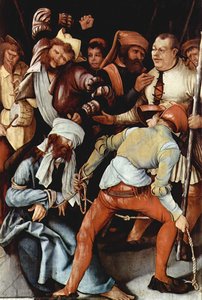
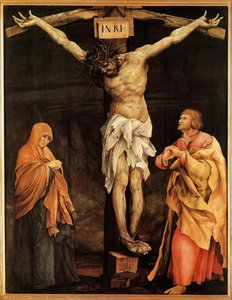
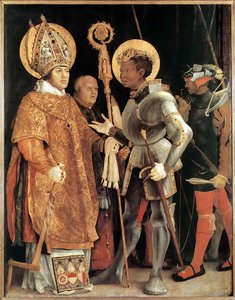
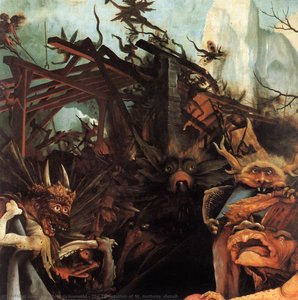
- Изенхајмски олтар (1512-1516): Ово ремек-дело, смештено у музеју Унтерлинден у Колмарu, сматра се Гриневалдовим magnum opus-ом. Приказује сцене из живота Христа са потресном реалистичношћу, посебно фокусирајући се на патњу и искупљење. Олтар је био намењен болничком реду и служио као средство утехе и духовне подршке за пацијенте.
- Распнуће (око 1502-1503): Рано дело које демонстрира његов развијајући се стил, показујући интензивне емоције и анатомске детаље. Композиција је драматична и наглашава физичку патњу Христа.
- Дева Марија са Благовешћењем (1512-14): Студија за Изенхајмски олтар, откривајући његов педантни процес планирања. Ово дело показује Гриневалдову способност да створи интимну и емотивно напуњену атмосферу.
- Мојсије (1511): Цртеж који истиче Гриневалдову вештину у хватању изражајних фигура и драматичних поза. Ова студија показује његову мајсторску употребу линије и светла и сенке.
Гриневалдов стил се одликује:
- Драмском композицијом: Користио је динамичне аранжмане да појача емотивни утицај.
- Живописном палетом боја: Његова употреба интензивних, често контрастних боја створила је моћно визуелно искуство.
- Реалистичним приказом патње: Гриневалд се није плашио да представи физички и емоционални бол повезан са религиозним наративима.
- Изражајним фигурама: Његове фигуре су прожете јаким емоцијама и психолошком дубином.
Историјски значај и наслеђе
Гриневалдов рад стоји као сведочанство трајне моћи средњовековних уметничких традиција у Немачкој током ренесансе. Он је повезао рупу између касног готичког стила и нових ренесансних трендова, стварајући јединствени визуелни језик који је одзвањао са његовим савременицима. Његов утицај се види код каснијих немачких уметника који су наставили да истражују теме религиозног жара и емотивне интензивности. Иако је био углавном заборављен вековима након његове смрти 1528. године, Гриневалд је доживео препород у 19. веку, а данас је признат као један од најважнијих сликара немачке ренесансе. Његова уметност наставља да очарава гледаоце својом сировом емоцијом, техничком бриљантношћу и дубоком духовном дубином.
Даља истраживања
Откријте више о животу и делима Матијаса Гриневалда на: ArtsDot
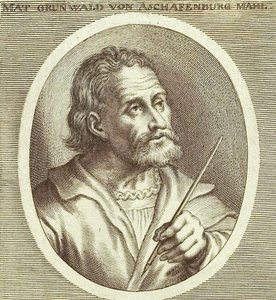
Матијас Гриневалд
1480 - 1528 , Nemačka
Osnovne informacije
- Datum Rođenja: oko 1470-1475
- Datum Smrti: 1528.
- Mesto Rođenja: Würzburg, Nemačka
- Nacionalnost: Nemac
- Puno Ime: Matthias Grünewald
- Umetnici Koji Su Uticali:
- Albrecht Dürer
- Martin Schongauer
- Umetnici Pod Uticajem: Kasniji nemački slikari
- Umetnički Pokret/Stil: Nemački renesans
- Značajna Dela:
- Isenheim oltar
- Raspeće
Povezani članci
Celestial Messengers: Angels in Painting – A Historical & Artistic Exploration
Explore the captivating history of angels in painting! Discover symbolism, iconic Renaissance & Byzantine masterpieces, and renowned artists. Expert insights for art lovers & collectors at ArtsDot.
Celestial Messengers: A Comprehensive Exploration of Angelic Representation in Art History
Explore the captivating history of angels in art! Discover symbolism, iconic Renaissance masterpieces & renowned artists. Expert insights for art lovers & collectors at ArtsDot.
Matthias Grünewald: Devotion, Distortion & Spiritual Turmoil in Renaissance Art
Explore the profound religious art of Matthias Grünewald, master of the Isenheim Altarpiece. Discover his unique expressionism, symbolism & lasting impact on Renaissance painting. A guide for collectors and enthusiasts.
The Northern Renaissance: A Flourishing of Realism, Religious Reform & Artistic Innovation
Explore the Northern Renaissance! Discover Jan van Eyck's innovations, religious shifts, & key artists of this influential period. Expert analysis and insights into Early Netherlandish painting at ArtsDot.
Illuminating Belief: A Visual Exploration of Faith Across Artistic Movements & Historical Contexts
Explore the rich history of faith through art! Discover Renaissance masterpieces, iconic artists & religious symbolism with expert analysis from ArtsDot. Perfect for collectors and enthusiasts.