

 Pregledaj u prostoru
 Pošalji
 Podeli
 Detalji o delu

 Преузми
 Slični predmeti
 Rendgenski snimak
 Slajdovi
 Stats
StatsModel for 'Torsion'


 Pročitaj više
Kupite digitalnu sliku visoke rezolucije i poboljšanog kvaliteta, koja je znatno superiornija od onoga što vidite u online prikazu.
Svaka datoteka je pedantno pripremljena od strane naših stručnjaka koristeći napredne alate i profesionalnu ručnu retušu. Osiguravamo da svaka slika ima izuzetnu oštrinu, preciznu reprodukciju boja i fine detalje.
Konačna datoteka se dostavlja putem e-pošte u roku od 72 sata, optimizovana za neposrednu upotrebu u profesionalnim, izdavačkim i štamparskim okruženjima. To je isti kvalitet kojem veruju vrhunski studiji dizajna, izdavači i galerije.
Digitalna slika
Preuzmite datoteku visoke rezolucije za ličnu upotrebu, štampanje i kreativne projekte. ( Switch to Print Kupi ručno naslikanu sliku)
Uključeno uz svaku porudžbinu digitalne slike
Profesionalna digitalna isporuka, zagarantovana
Kada odaberete ArtsDot.com, ne dobijate samo sliku – vi primate profesionalno unapređeno digitalno umetničko delo, izrađeno sa najvećom preciznošću i uz garanciju zadovoljstva. Evo svega što automatski dolazi uz vašu porudžbinu:

Brza dostava putem e-pošte
Vaša digitalna slika visoke rezolucije biće vam poslata putem e-pošte u roku od 72 sata od poručivanja – spremna za trenutnu upotrebu.

Digitalna datoteka unapređena veštačkom inteligencijom
Vaše umetničko delo je profesionalno optimizovano korišćenjem naprednih AI alata i ručne obrade, čime se osiguravaju maksimalni detalji, oštrina i preciznost boja.

Besplatna ponovna isporuka doživotno
Slučajno ste obrisali ili izgubili svoju datoteku? Ne brinite – poslaćemo vam je ponovo u bilo kom trenutku, potpuno besplatno.

Bez troškova uvoza – zauvek
Uživajte u svojim umetničkim delima trenutno, bez carine, dažbina ili troškova dostave – digitalni download je uvek bez poreza.

Garancija vernosti boja
Uz pomoć profesionalnih alata i upravljanja bojama, osiguravamo da vaša digitalna slika što vernije odražava originalne boje.

Garancija zadovoljstva od 100 dana
Ako niste zadovoljni svojom digitalnom slikom, izvršićemo reviziju ili ćemo vam vratiti 100% novca u roku od 100 dana – bez ikakvih pitanja.

100% garancija povrata novca
Niste zadovoljni? Dobijte puni povraćaj novca u roku od 100 dana od prijema digitalne datoteke – bez suvišnih pitanja.

Popusti na velike porudžbine
Kupite 3 slike, uštedite 10% - Kupite 5 slika, uštedite 15% - Kupite 10+ slika, uštedite 20%. Odlično za kreativne projekte, galerije i agencije.
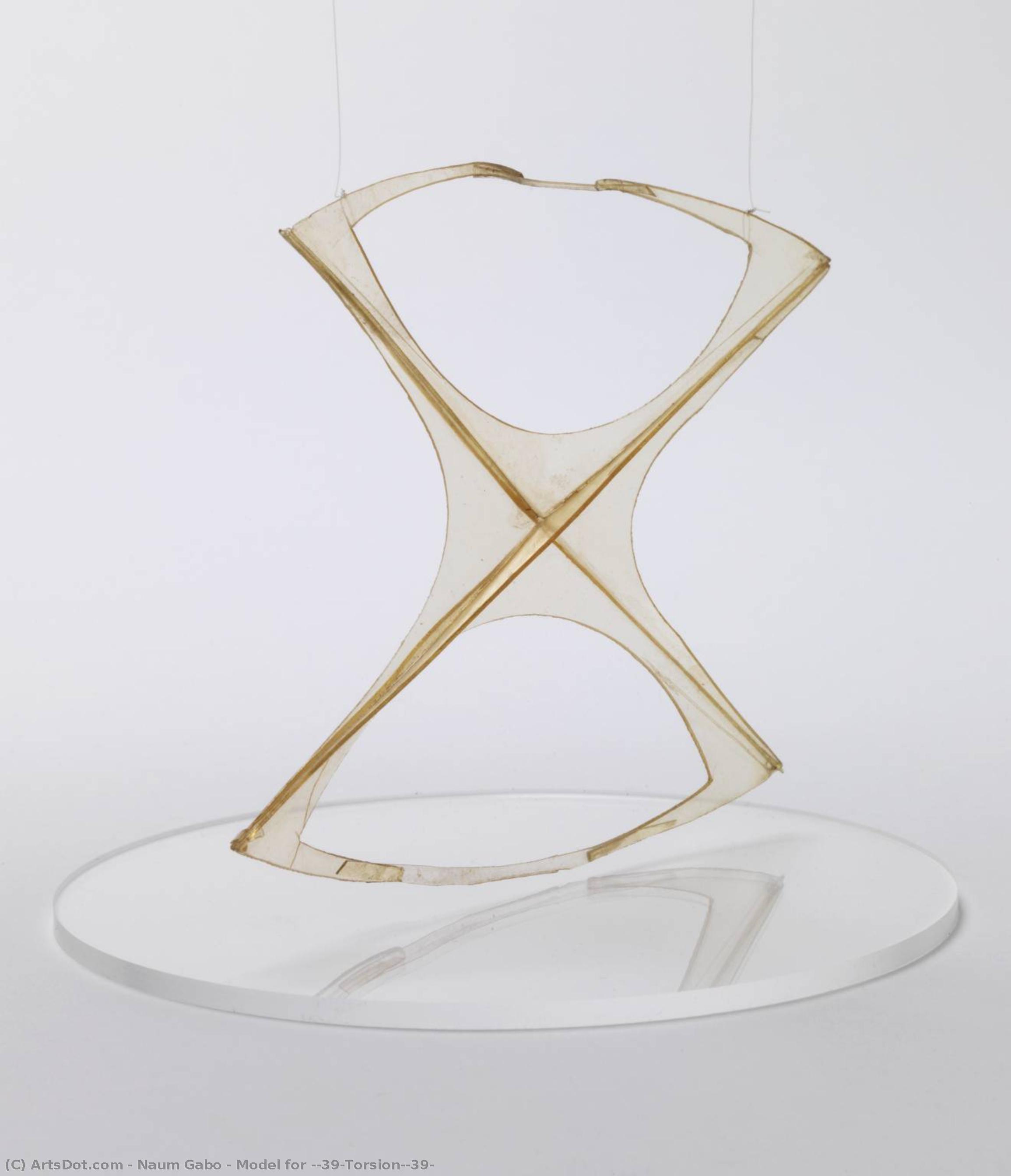
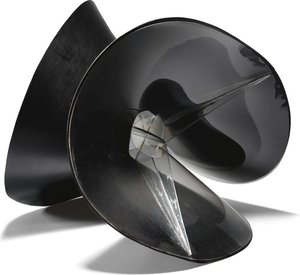
Model for 'Torsion': A Pioneering Vision of Kinetic Sculpture
Naum Gabo’s ‘Model for ‘Torsion,’ created in 1928–36, stands as an emblem of Constructivism and a cornerstone in the evolution of twentieth-century sculpture. Born Naum Neemia Pevsner in Bryansk, Russia, Gabo embarked on a lifelong artistic odyssey fueled by unwavering conviction that art could mirror the dynamism inherent within modern life—a belief profoundly shaped by his upbringing amidst engineering principles. Collaborating closely with his brother Antoine, he championed bold experimentation and challenged conventional sculptural traditions, establishing himself as a pivotal figure in shaping the aesthetic landscape of his era. The sculpture itself embodies Gabo’s core philosophy: an exploration of space and time through geometric abstraction. Constructed primarily from translucent acrylic or glass—a material chosen for its ability to convey both solidity and ethereal lightness—the piece presents an elongated ‘X’ shape, subtly curving along its axis. Mounted on a simple white circular pedestal, the composition prioritizes clarity and visual impact, directing attention entirely to the object's form and texture. Lines dominate the artwork, defining the sharp angles of the 'X' and emphasizing its graceful curves—a deliberate contrast that underscores Gabo’s fascination with opposing forces.- Material: Translucent Acrylic or Glass
- Dimensions: Unknown
- Date: 1928–36
Srodna umetnička dela


Biografija umetnika
A Pioneer of Kineticism: The Life and Art of Naum Gabo
Naum Gabo, born Naum Neemia Pevsner in 1890 in the Russian town of Bryansk, stands as a monumental figure in the evolution of twentieth-century sculpture. His journey was one of constant exploration, driven by a profound belief in the power of abstract art to reflect the dynamism of the modern world and express fundamental human experiences. Gabo wasn’t merely sculpting forms; he was investigating space, time, and the very essence of perception. The son of an engineer, Boris Pevsner, his early life instilled within him a fascination with structure and mechanics – influences that would profoundly shape his artistic vision. He shared a close bond with his brother Antoine Pevsner, also a prominent Constructivist artist, leading him to adopt the name “Gabo” to distinguish their work. This familial connection fostered a lifelong dialogue about art’s potential, culminating in collaborative manifestos and exhibitions that challenged conventional artistic boundaries. His multilingualism – fluency in Russian, German, French, and English – facilitated his peripatetic life, allowing him to engage with avant-garde circles across Europe and eventually the United States.From Russia's Avant-Garde to Global Influence
Gabo’s artistic development was inextricably linked to the revolutionary fervor of early twentieth-century Russia. After initial studies in medicine and natural sciences at Munich University, followed by engineering training, he immersed himself in the Parisian art scene alongside his brother Antoine around 1913. The seeds of his future style were sown during this period, as he absorbed influences from Cubism and Futurism while simultaneously developing a unique approach rooted in geometric abstraction. Upon returning to Russia following the 1917 revolution, Gabo became deeply involved in the burgeoning Constructivist movement. He, alongside Antoine Pevsner, articulated their vision in the “Realistic Manifesto” of 1920 – a pivotal text that rejected the decorative aspects of earlier abstract movements and championed a new art focused on representing "kinetic rhythms," the fundamental forms of our perception of time and space. This manifesto wasn’t simply an aesthetic declaration; it was a philosophical statement about art's role in reflecting the scientific and social progress of the age. The brothers staged an open-air exhibition in Moscow to accompany its release, boldly presenting their ideas directly to the public. However, the increasingly restrictive political climate in Russia led Gabo to leave the country in 1922, embarking on a journey that would take him through Berlin, Paris, Oslo, and finally, London before settling in the United States.Sculpting Space and Time: A Revolutionary Approach
Gabo’s artistic innovations were characterized by a relentless exploration of new materials and techniques. He moved beyond traditional sculptural mediums like stone and bronze, embracing industrial materials such as nylon, wire, lucite, glass, and metal to create works that defied conventional notions of form and volume. A defining feature of his work was his interest in “negative space” – the voids and openings within a sculpture. He didn’t see these spaces as mere absences but as integral components of the artwork itself, possessing a concrete reality equal to that of solid mass. His *Linear Constructions* (1942-1971) exemplify this approach, utilizing nylon filament to create delicate, ethereal structures that define space rather than occupying it. Perhaps his most groundbreaking achievement was his pioneering work in kinetic sculpture. *Kinetic Sculpture (Standing Waves)* (1920), often considered the first true kinetic artwork, demonstrated Gabo’s fascination with movement and time as essential elements of artistic expression. He wasn't simply creating static objects; he was crafting experiences that unfolded over time, engaging the viewer in a dynamic interplay between form and perception.Legacy and Enduring Significance
Throughout his career, Naum Gabo received significant recognition for his contributions to modern sculpture. Major retrospectives were held at the Tate Gallery in London (1966) and numerous institutions across Europe and America showcased his work. He completed several public commissions, including *Constructie* in Rotterdam and *Revolving Torsion* in London, though many ambitious projects remained unrealized due to logistical or financial constraints. His influence extended beyond sculpture, impacting architecture, design, and even dance. Gabo’s unwavering commitment to abstraction, his innovative use of materials, and his exploration of space and time continue to inspire artists today. He left behind a body of work that challenges us to reconsider the very nature of sculpture – not as a representation of reality, but as an embodiment of its underlying forces and rhythms. His legacy lies in his ability to transform abstract concepts into tangible experiences, inviting viewers to engage with art on a deeply intellectual and emotional level. He died in Connecticut in 1977, leaving behind a profound artistic inheritance that continues to resonate within the world of modern and contemporary art.Key Works & Collections
- Hommage à Naum Gabo (Homage to Naum Gabo) by Jankel Adler – A testament to Gabo’s influence on other artists.
- Untitled (416) – Demonstrates his mastery of abstract form and material exploration.
- Untitled, (1957) – An example of his urban sculpture and architectural studies.
- His works are prominently featured in the collections of:
- The Tate Gallery, London
- The Museum of Modern Art, New York
- The Guggenheim Museum, New York
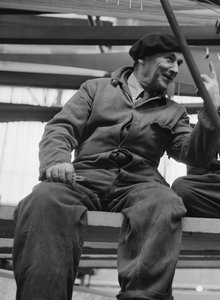
Naum Gabo
1890 - 1977 , Russia
Kratke činjenice
- Artistic Movement Or Style: Constructivism, Kinetic Art
- Artists Or Movements Influenced By This Artist:
- Antoine Pevsner
- Cubism
- Bauhaus
- De Stijl
- Artists Who Influenced This Artist: ['Wassily Kandinsky']
- Date Of Birth: 1890
- Date Of Death: 1977
- Full Name: Naum Gabo
- Nationality: Russian
- Notable Artworks:
- Hommage à Naum Gabo
- Untitled (416)
- Untitled (1957)
- Place Of Birth: Bryansk, Russia