

 Pregledaj u prostoru
 Pošalji
 Podeli
 Detalji o delu

 Преузми
 Slični predmeti
 Rendgenski snimak
 Slajdovi
 Statistika
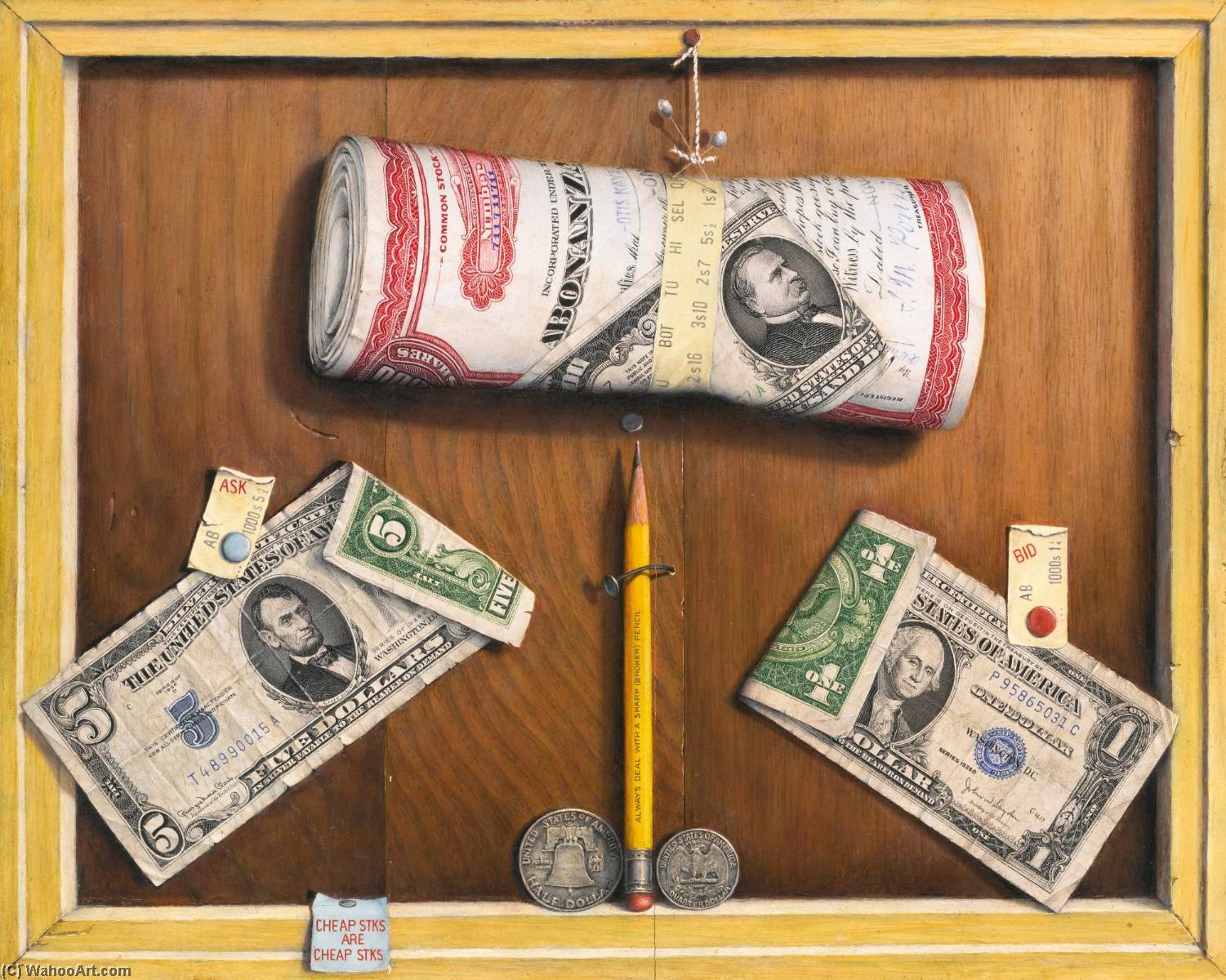
Bid and Ask
 1953
1953 31.0 x 39.0 cm
 Pročitaj više
Ručno rađena uljana reprodukcija
Ručno oslikano uljanim bojama na platnu u dimenzijama i okviru po vašem izboru, izrađeno po porudžbini od strane naših umetnika. ( Pređi na štampu Pređi na digitalnu sliku)




































Izaberite jednu od naših unapred definisanih veličina koje odgovaraju originalnim proporcijama umetničkog dela.

Можете унети сопствене димензије како бисте прилагодили дело одређеном оквиру или простору. Ако одабрана величина не одговара пропорцијама оригинала, слика ће бити исечена или проширена додатним елементима који се ручно насликавају. Дигитални prikaz ће вам бити послат на одобрење пре почетка производње.
Имајте на уму да преглед на екрану не одражава стварно исецање или проширење. Само приказ (mockup) ће тачно приказати коначну композицију.
Иако су доступне прилагођене величине, препоручујемо да одаберете димензију из дефинисане листе како бисте сачували оригиналне пропорције.
Nakon narudžbine, tim ArtsDot.com će klijentu putem e-pošte poslati uputstva i dostaviti prikaz predloženog rešenja
Isporuka širom sveta () za 3/4 nedelje umesto uobičajenih 5 nedelja. (10 септембар). Bez kompromisa po pitanju kvaliteta.

Besplatna ekspresna dostava širom sveta

Visokokvalitetno laneno platno

Kompletno osiguranje transporta

Garancija povraćaja carine i uvoznih dažbina

Garancija vernosti boja

Politika povraćaja u roku od 100 dana (isključivo u slučaju nedostataka)

Garancija povrata novca od 100%

Popust pri grupnoj kupovini
 Opcija sa staklom dostupna je samo za dimenzije manje od 110 cm

Bid and Ask
Tehnika reprodukcije
Dimenzije reprodukcije
-


Konačna cena
$ 263
The Composition and Symbolism
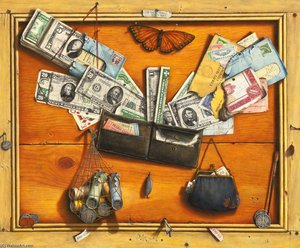
The painting depicts a man holding money and a penny, surrounded by scattered coins and a pair of scissors. The overall composition suggests a sense of wealth or financial success. The use of oil on panel as the medium adds depth and richness to the painting, making it a truly captivating piece. Key elements in the painting include the man's expression, the scattered coins, and the pair of scissors. These elements work together to convey a sense of financial transaction or negotiation, hence the title "Bid and Ask". The painting can be seen as a commentary on the nature of commerce and the human relationship with money.Comparison to Other Works
The style of Otis Kaye's "Bid and Ask" is reminiscent of other notable artists, such as Jan Van Eyck, who created the famous painting "Madonna at the Fountain". Like Kaye, Van Eyck was known for his attention to detail and use of symbolism in his work. For more information on Jan Van Eyck and his paintings, visit /art/list/?Filter=8XYBFZ-Jan-Van-Eyck-Madonna-at-the-Fountain.- Other notable paintings on ArtsDot.com include "Edward, Prince of Wales, with Monkey" by Hans Holbein The Younger and "Provex" by Olle Baertling.
- For more information on these artists and their works, visit the ArtsDot.com website.
The Corpus Christi College, located in Oxford, United Kingdom, is also home to several remarkable artworks, including paintings by notable artists. For more information on the college and its art collection, visit /art/list/?Filter=A@D3BRDH-Discovering-the-Artworks-of-Corpus-Christi-College-United-Kingdom.
Srodna umetnička dela

Biografija umetnika
Otis Kaye: The Illusionist of Currency
Otis Kaye (1885–1974) was an American artist whose distinctive style—trompe-l'œil painting, primarily focused on U.S. currency—earned him recognition as a master of illusion and appropriation. Born in Dresden, Germany, he emigrated to the United States with his parents at the age of three, establishing himself in Nahma, Michigan, where he honed his drafting skills and began his artistic journey amidst the burgeoning lumber industry. Despite the absence of extensive documentation regarding his formative years—no birth certificate exists, nor are records readily available for his father’s identity—Kaye's life unfolded against a backdrop of significant cultural shifts and artistic developments.- Early Influences: Kaye’s artistic sensibilities were profoundly shaped by the legacy of William Harnett, John Frederick Peto, and John Haberle, artists who pioneered trompe-l'œil techniques—creating images that deceive the eye into perceiving depth where none exists. This tradition instilled in Kaye a fascination with visual trickery and a meticulous attention to detail.
- The Currency Obsession: The genesis of Kaye’s celebrated oeuvre lies in his unwavering dedication to replicating U.S. currency, a practice deemed illegal by Congress in 1909. Driven by an intellectual curiosity and a desire to challenge artistic conventions, Kaye embarked on a prolific series of paintings—often featuring coins and bills—that defied legal restrictions while simultaneously elevating the medium of oil painting to new heights of sophistication.
A Career Dedicated to Craftsmanship and Conceptual Exploration
Following his formative years in Michigan, Kaye pursued formal education at Dresden’s Gewerbeschule (Technical University), where he mastered engineering principles alongside artistic draughtsmanship. He married Alma Goldstein in 1910, forging a partnership rooted in shared passions for classical music—a habit that persisted throughout his life as he meticulously crafted his paintings. Together they raised two children, Freda and Oskar, establishing a family life characterized by intellectual engagement and artistic appreciation. Kaye’s professional trajectory spanned decades, marked by periods of quiet contemplation interspersed with bursts of creative productivity. He eschewed public exhibitions and commercial sales during his lifetime, prioritizing the integrity of his artistic vision above all else.- Technique: Kaye's trompe-l'œil technique demanded an unparalleled level of precision—a painstaking layering of pigments to simulate three dimensions on a two-dimensional surface. He employed meticulous brushwork and subtle gradations of color, achieving remarkable realism that captivated viewers and critics alike.
Major Achievements and Artistic Legacy
Beginning in the 1980s, Kaye’s paintings gained prominence within the art world as they were exhibited at galleries and auctioned internationally—rapidly ascending into prestigious collections across North America and Europe. His prints were showcased at the Federal Reserve Bank in Washington, D.C., furthering his artistic reputation and cementing his place among the foremost practitioners of trompe-l'œil painting. The definitive catalog of Kaye’s works, *Otis Kaye: Money, Mystery and Mastery*, published by New Britain Museum of American Art in 2015, comprehensively documented his oeuvre—providing invaluable insight into his artistic evolution and conceptual preoccupations. Kaye’s enduring influence can be discerned in subsequent generations of artists who embraced illusionistic techniques—demonstrating the lasting impact of his pioneering vision on the trajectory of American art history.Concluding Reflections: The Riddle of Appropriation
Bruce Chambers eloquently captured the essence of Kaye's artistic achievement, stating that “we are now accustomed to identifying Otis Kaye by the ambitious scale, layered meanings, and impeccable craftmanship of his trompe l'oeil money paintings…” His work continues to fascinate scholars and collectors—challenging conventional notions of artmaking and prompting ongoing debate about the role of appropriation in shaping artistic discourse. Kaye’s legacy resides not merely in the stunning visual results of his trompe-l'œil practice but also in his unwavering commitment to intellectual rigor—a testament to the transformative power of artistic exploration.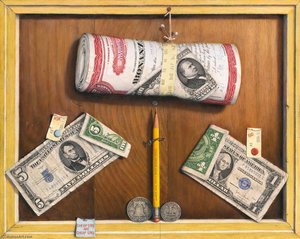
Osnovne informacije
- Artistic Movement Or Style: Trompe l'œil
- Artists Or Movements Influenced By This Artist: ['Rembrandt']
- Artists Who Influenced This Artist:
- William Harnett
- John Frederick Peto
- John Haberle
- Date Of Birth: 1885
- Date Of Death: 1974
- Full Name: Otis Kaye
- Nationality: American
- Notable Artworks:
- De Jia Vu
- Land of the Free
- Joshua's Horn
- Place Of Birth: Dresden, Germany