

 Pošalji
 Podeli
 Detalji o delu

 Преузми
 Slični predmeti
 Slajdovi
 Statistika
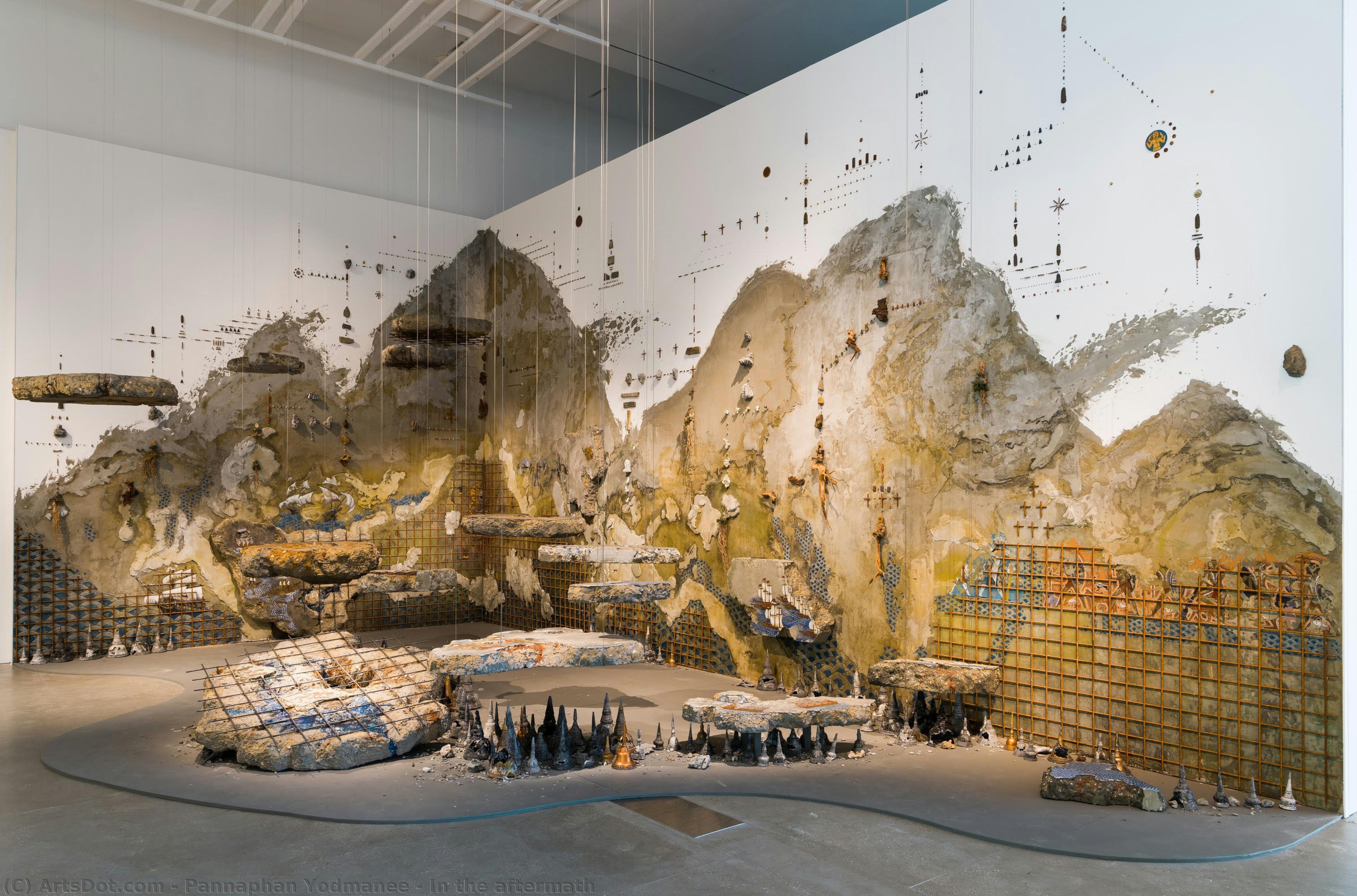
In the aftermath
 Installation Art
- Installation
- Contemporary Installation
 2018
2018- Contemporary
 Queensland Art Gallery | Gallery of Modern Art
 Pročitaj više
Giclee štampa / Umetnički otisak
Giclée štampa ili print na platnu muzejskog kvaliteta uz brzu proizvodnju i fleksibilne opcije završne obrade. ( Kupi ručno naslikanu sliku Pređi na digitalnu sliku)




































Izaberite jednu od naših unapred definisanih veličina koje odgovaraju originalnim proporcijama umetničkog dela.

Možete uneti sopstvene dimenzije kako biste umetničko delo prilagodili specifičnom okviru ili prostoru. Ako odabrani format ne odgovara proporcijama originalne slike, mi ćemo ili iscrtati deo dela ili proširiti sliku pomoću ogledane ivice ili jednobojnog popunjavanja. Digitalni prikaz će vam biti poslat na odobrenje pre početka proizvodnje.
Imajte na umu da pregled na ekranu ne odražava stvarno iscrtavanje ili proširivanje. Samo će prikaz (mockup) precizno pokazati finalnu kompoziciju.
Iako su prilagođene dimenzije dostupne, preporučujemo da odaberete dimenziju sa unapred definisane liste kako biste očuvali originalne proporcije.
Dostava širom sveta () za 2 nedelje umesto uobičajenih 4/5 nedelja. (9 септембар)

Besplatna ekspresna dostava širom sveta

Visokokvalitetno laneno platno

Kompletno osiguranje transporta

Garancija povraćaja carine i uvoznih dažbina

Garancija vernosti boja

Politika povraćaja u roku od 100 dana (isključivo u slučaju nedostataka)

Garancija povrata novca od 100%

Popust pri grupnoj kupovini
 Opcija sa staklom dostupna je samo za dimenzije manje od 110 cm

In the aftermath
Giclee štampa / Umetnički otisak
Dimenzije reprodukcije
-


Konačna cena
$ 62
A Landscape of Memory and Ruin
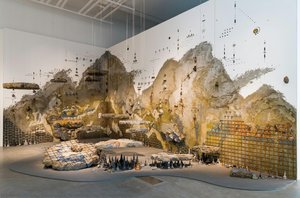
In the profound and immersive installation In the aftermath, artist Pannaphan Yodmanee invites viewers into a surreal, suspended world that feels simultaneously like an ancient geological formation and the debris of a fallen civilization. Created in 2018, this large-scale work functions as a breathtakingly complex landscape, where the boundaries between the natural world and human history dissolve. As one gazes upon the intricate arrangement of plaster, wood, and fabric, there is an immediate sense of being transported to a mountain range caught in a state of beautiful decay. The composition is densely populated, with jagged peaks and eroded structures that evoke the quiet majesty of a cave system or the haunting stillness of a site recently touched by catastrophe.
The visual journey through this piece is one of discovery and layered meaning. Yodmanee utilizes a sophisticated technique of assemblage, blending sculptural elements with delicate, miniature paintings. The textures are remarkably tactile; rough, weathered plaster surfaces contrast sharply against the smoothness of ceramic fragments and soft textile elements. This interplay of materials creates a rhythmic depth, where shadows cast by the gallery lighting dance across the undulating forms, suggesting that the artwork itself is a living, breathing entity subject to the passage of time.
The Intersection of Spirit and History
At its heart, In the aftermath is deeply rooted in the spiritual lineage of Thailand. Having mastered traditional Buddhist painting techniques within the walls of local temples since childhood, Yodmanee infuses this contemporary installation with the profound cosmologies of her heritage. The work serves as a modern vessel for Buddhist narratives, utilizing found objects and meticulously crafted miniatures of sacred stupas and icons to tell stories of existence, rebirth, and loss. These small, vivid details act as anchors of sanctity amidst a sea of rubble, representing the enduring presence of faith even within the wreckage of modernity.
The symbolism within the installation is both expansive and intimate. By incorporating rocks and stones from her hometown in Nakhon Si Thammarat, Yodmanee grounds the abstract landscape in a specific, physical reality. These natural elements represent the primordial world, while the fragments of demolished buildings serve as poignant reminders of human conflict, migration, and the destructive tendencies of civilization. The piece explores the tension between resilience and decay, illustrating how identity is formed through both the preservation of tradition and the inevitable scars left by historical upheaval.
An Evocative Presence for Discerning Spaces
For the art collector or interior designer, In the aftermath offers a profound emotional resonance that transcends mere decoration. The color palette—a sophisticated harmony of earthy ochres, deep browns, and muted grays, punctuated by subtle glints of gold and traces of blue—provides a grounding yet intellectually stimulating atmosphere. It is a work that demands contemplation, making it an ideal centerpiece for spaces dedicated to thought, reflection, and cultural appreciation.
Whether viewed as a study in contemporary installation art or as a deeply spiritual meditation on the human condition, this piece captures a unique moment in Southeast Asian contemporary art. Owning a high-quality reproduction of such a complex work allows one to bring a sense of monumental history and sculptural depth into a private collection, offering a window into a world where the ancient and the contemporary exist in a delicate, hauntingly beautiful equilibrium.
Srodna umetnička dela

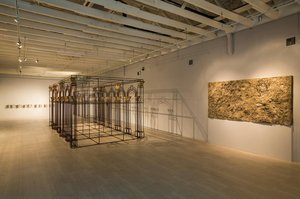
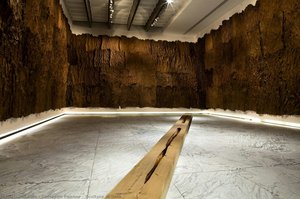
Biografija umetnika
Early Life and Artistic Foundations
Pannaphan Yodmanee, born in 1988 in Nakhon Si Thammarat, Thailand, emerged from a cultural landscape steeped in Buddhist tradition and artistic heritage. Her formative years were profoundly shaped by the ancient temples and vibrant spiritual life of her hometown. From the age of ten, she embarked on a rigorous study of traditional Buddhist painting techniques at a local temple, immersing herself in the intricate symbolism, delicate brushwork, and profound philosophical underpinnings of this revered art form. This early training wasn’t merely about mastering technique; it was an initiation into a worldview that would become central to her artistic vision.
This foundational period instilled in Yodmanee not only technical skill but also a deep understanding of Buddhist cosmology, the cyclical nature of existence, and the interconnectedness of all things. The meticulous detail demanded by traditional painting fostered a patience and precision that would later manifest in her large-scale installations. However, even at this early stage, she began to question the boundaries of tradition, sensing a desire to translate these ancient principles into a contemporary visual language.
From Murals to Ruins: A Developing Aesthetic
Yodmanee’s artistic trajectory took a compelling turn as she pursued formal studies at Silpakorn University in Bangkok. While continuing to refine her painting skills, she began experimenting with three-dimensional forms and found objects. This exploration led to the development of her signature style – layered installations that evoke both the decaying grandeur of ancient ruins and the raw energy of demolition sites. She skillfully combines slabs of demolished concrete, exposed iron structures, and natural elements like rocks and minerals, creating tactile landscapes imbued with a sense of history and loss.
The artist’s process is deeply intuitive, often beginning with the collection of discarded materials – fragments of buildings, weathered stones, and forgotten objects. These found elements are not merely aesthetic components; they carry their own histories, adding layers of meaning to her work. She then meticulously paints these surfaces with scenes depicting historical events in Southeast Asia, blending traditional Thai iconography with contemporary imagery. The use of gold leaf and vivid blues—colors deeply associated with Buddhist art—adds a luminous quality to the installations, creating a captivating interplay between decay and transcendence.
Themes of Aftermath and Resilience
At the heart of Yodmanee’s work lies a profound exploration of themes related to aftermath, resilience, and the cyclical nature of time. Her installations often evoke Buddhist narratives of impermanence and historical loss, prompting viewers to contemplate the fragility of existence and the enduring power of faith. The ruins she constructs are not simply symbols of destruction; they represent opportunities for rebirth and renewal.
Her work frequently addresses the complex relationship between tradition and modernity, exploring how ancient beliefs and practices continue to shape contemporary Thai society. She delves into the Karmic connection of time, reflecting on the ways in which past events influence the present and future. The artist’s use of found objects also speaks to a broader concern with environmental degradation and the impact of human activity on the natural world.
International Recognition and Major Achievements
Pannaphan Yodmanee has achieved significant international recognition for her evocative and thought-provoking work. She first gained prominence through awards from the prestigious Bualuang Paintings Exhibition, a leading art competition in Thailand, receiving bronze medals in 2010 and 2012, followed by gold in 2013 and silver in 2014. This early success paved the way for her inclusion in major international exhibitions.
In 2015, she participated in Thailand Eye at London’s Saatchi Gallery, showcasing her work to a global audience. The following year marked a pivotal moment in her career when she was selected as one of only 63 artists from across Southeast, East, and South Asia to participate in the Singapore Biennale 2016. It was here that she received the coveted Benesse Prize, with judges praising her ability to “merge the traditional and the contemporary” and create a “unified cartography that chronicles Southeast Asian history.” Her installation, titled “Aftermath,” captivated viewers with its multi-layered complexity and profound symbolism. She has also exhibited at Tang Contemporary Art.
Historical Significance and Ongoing Exploration
Pannaphan Yodmanee’s work represents a significant contribution to contemporary Thai art, bridging the gap between tradition and innovation. Her unique approach—combining found objects, natural elements, concrete, and painting—has established her as a distinctive voice in the international art community. She challenges conventional notions of sculpture and installation, creating immersive environments that invite contemplation and reflection.
Her exploration of themes related to aftermath, resilience, and the cyclical nature of time resonates deeply with contemporary audiences grappling with issues of environmental degradation, political instability, and cultural change. Yodmanee’s work is not merely about depicting ruins; it's about finding beauty and meaning in destruction, recognizing the enduring power of faith, and embracing the interconnectedness of all things. As she continues to evolve her artistic practice, Pannaphan Yodmanee promises to remain a compelling force in the world of contemporary art.
pannaphan yodmanee
1988 - , Thailand
Osnovne informacije
- Artistic Movement Or Style: Contemporary Thai art
- Date Of Birth: 1988
- Full Name: Pannaphan Yodmanee
- Nationality: Thai
- Notable Artworks: ['In the aftermath']
- Place Of Birth: Nakhon Si Thammarat, Thailand
Povezani članci

Glavna dela koja su definisala Romantični pejzaž: 10 remek-dela za vaš dom
Otkrijte 10 remek-dela romantičnog pejzažnog slikarstva! Uronite u svet Claude Lorraina, Caspara David Friedricha i Turnera. Ispričane priče umetnosti, inspiracija za dekoraciju doma. Kvalitetne reprodukcije na ArtsDot.com – istražite celu kolekciju online!

25 Remek-dela Džona Konstebla: Lepota Engleske na Platnu | ArtsDot
Uronite u svet Džona Konstebla! Otkrijte 25 remek-dela engleskog pejzaža, romantizma i seoske idile. Kupite reprodukcije slika vrhunskog kvaliteta za dekoraciju enterijera na ArtsDot.com.
Evoking Nature's Sublime: A Comprehensive Exploration of 19th-Century Landscape Painting
Explore the captivating world of 19th-century landscape painting! Discover renowned artists like Friedrich & Monet, key movements, and find the perfect artwork to bring nature's serenity into your home. Expert insights at ArtsDot.

Evocations of Place: A Historical Journey Through Landscape Art
Explore the rich history of landscape art with ArtsDot. Discover renowned artists, movements like Impressionism & Romanticism, and expert guidance for collecting timeless pieces. Find your perfect serene escape today!

Evocations of Place: A Historical Journey Through Landscape Art
Explore the rich history of landscape art with ArtsDot. Discover renowned artists, movements like Impressionism & tonalism, and expert guidance for collecting timeless pieces. Find your perfect serene escape today!