

 Pregledaj u prostoru
 Pošalji
 Podeli
 Detalji o delu

 Преузми
 Slični predmeti
 Rendgenski snimak
 Slajdovi
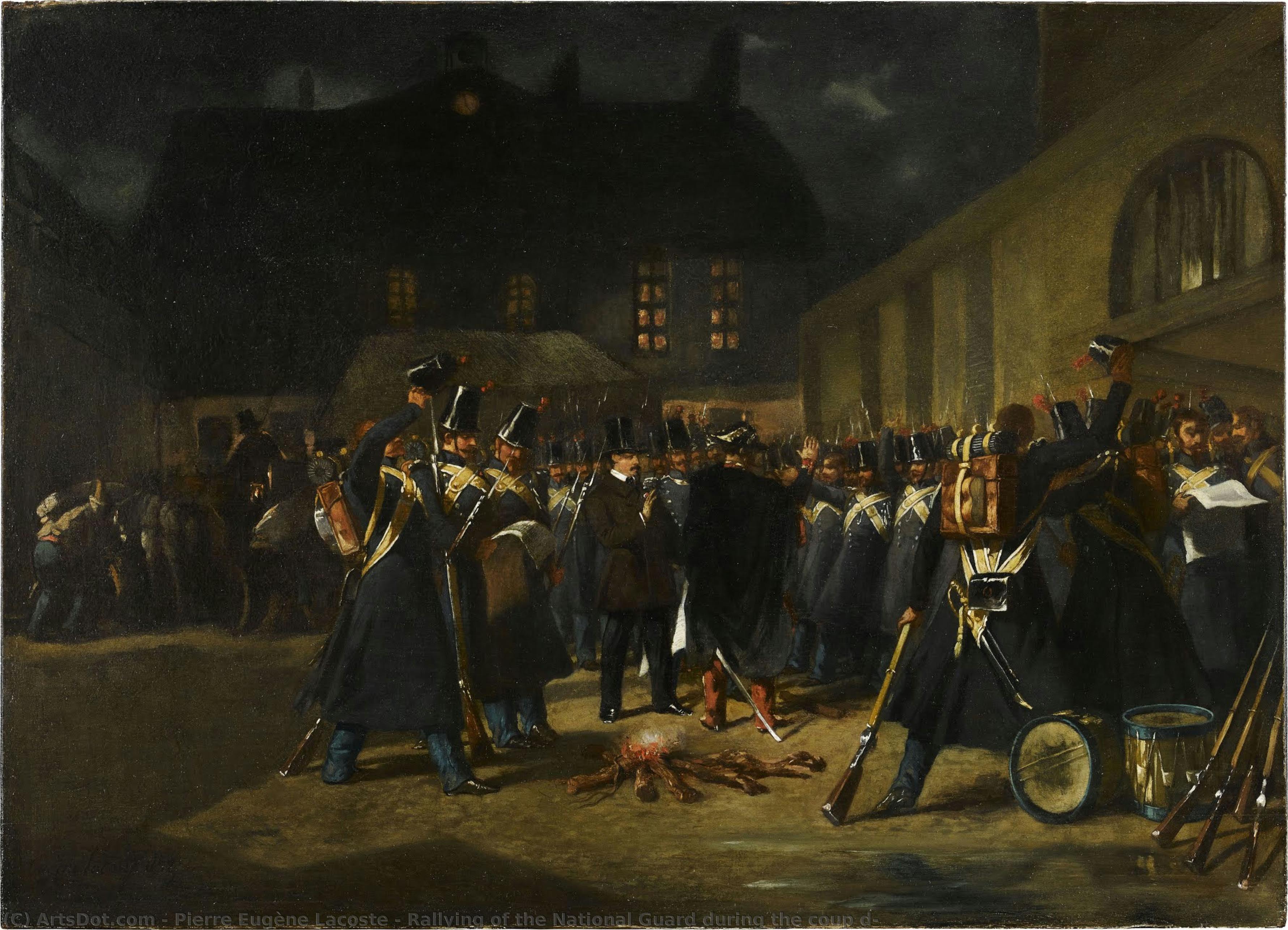
Rallying of the National Guard during the coup d


 Pročitaj više
Ručno rađena uljana reprodukcija
Ručno oslikano uljanim bojama na platnu u dimenzijama i okviru po vašem izboru, izrađeno po porudžbini od strane naših umetnika. ( Kupi print Kupi digitalnu sliku)




P118B $10

P118H $10

P118W $10

P438Z $10

P508JH $12

P508YH $12

P805H $10

P805Z $10

P919BZ $10

P919G $10

P919XJ $10

P959ZH $10

P968JZ $12

W106C $8

W218G $10

W218JH $8

W218Y $10

W307PJ $10

W316G $10

W316PJ $8

W316Y $10

W398PJ $8

W4111J $10

W500HY $15

W500JH $15

W692G $12

W849H $8

W940BG $15

W953PJ $8




Izaberite jednu od naših unapred definisanih veličina koje odgovaraju originalnim proporcijama umetničkog dela.

Можете унети сопствене димензије како бисте прилагодили дело одређеном оквиру или простору. Ако одабрана величина не одговара пропорцијама оригинала, слика ће бити исечена или проширена додатним елементима који се ручно насликавају. Дигитални prikaz ће вам бити послат на одобрење пре почетка производње.
Имајте на уму да преглед на екрану не одражава стварно исецање или проширење. Само приказ (mockup) ће тачно приказати коначну композицију.
Иако су доступне прилагођене величине, препоручујемо да одаберете димензију из дефинисане листе како бисте сачували оригиналне пропорције.
Nakon narudžbine, tim ArtsDot.com će klijentu putem e-pošte poslati uputstva i dostaviti prikaz predloženog rešenja
Isporuka širom sveta () za 3/4 nedelje umesto uobičajenih 5 nedelja. (27 август). Bez kompromisa po pitanju kvaliteta.

Besplatna ekspresna dostava širom sveta

Visokokvalitetno laneno platno

Kompletno osiguranje transporta

Garancija povraćaja carine i uvoznih dažbina

Garancija vernosti boja

Politika povrata u roku od 60 dana (samo u slučaju nedostataka)

Garancija povrata novca od 100%

Popust pri grupnoj kupovini
 Opcija sa staklom dostupna je samo za dimenzije manje od 110 cm

Rallying of the National Guard during the coup d
Tehnika reprodukcije
Dimenzije reprodukcije
-


Konačna cena
$ 263
Opis umetničkog dela
A Moment Frozen in Time: The Spirit of the National Guard
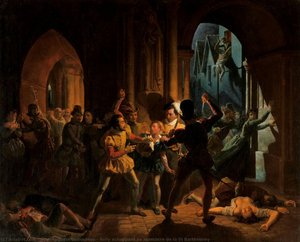
In the evocative monochrome depths of Pierre Eugène Lacoste’s 1852 masterpiece, Rallying of the National Guard during the coup d'état, we are transported to a pivotal moment of French history. The painting serves as a window into a period of profound political upheaval, capturing not just a military gathering, but the very pulse of a nation in transition. Through a masterful use of light and shadow, Lacoste presents a group of men in uniform gathered upon a street, their presence commanding yet heavy with the gravity of the era. The absence of color strips away modern distractions, forcing the viewer to confront the raw, structural essence of the scene—the sharp lines of military garb, the glint of steel swords, and the somber, determined expressions of the soldiers.
The composition is a study in unity and collective purpose. As the eye wanders through the assembly, one notices the intricate layering of figures; some stand in the immediate foreground, their details rendered with a clarity that suggests an intimate proximity to the viewer, while others recede into the misty background, creating a sense of vast, unfolding history. This arrangement does more than provide depth; it symbolizes the strength of the collective. The swords, held or worn by the men, act as silent sentinels of preparedness, suggesting that this is not merely a social gathering, but a demonstration of readiness and a testament to the commitment these individuals hold toward their cause.
The Artistry of Shadow and Historical Resonance
Technically, Lacoste utilizes a monochromatic palette to evoke the feeling of an archival memory. By working within the constraints of black and white, he emphasizes texture and form—the heavy fabric of the uniforms, the ruggedness of the street, and the atmospheric tension that hangs over the assembly. This stylistic choice lends the work an eternal quality, making it feel less like a fleeting snapshot and perhaps more like a monumental lithograph brought to life through paint. The interplay of light suggests a flickering torchlight or a dim, overcast day, casting long shadows that add a layer of psychological complexity to the soldiers' faces.
For the discerning collector or interior designer, this piece offers a profound emotional resonance. It is an artwork that commands attention through its quiet intensity rather than through loud, vibrant colors. Integrating a high-quality reproduction of this work into a space introduces a sense of historical gravity and intellectual depth. Whether placed in a study lined with leather-bound books or as a focal point in a contemporary gallery-style living room, the painting invites contemplation on themes of duty, tradition, and the cyclical nature of revolution. It is an invitation to possess a fragment of the 19th century, preserved through the visionary lens of one of France's most skilled historical chroniclers.
Srodna umetnička dela

Biografija umetnika
The Visionary of the Stage: The Life and Art of Pierre Eugène Lacoste
In the vibrant, flickering candlelight of nineteenth-century Paris, a period defined by the sweeping emotional tides of Romanticism, there lived an artist whose true canvas was not merely paper or stone, but the very fabric of theatrical illusion. Pierre Eugène Lacoste (1818–1907) was a polymath of the visual arts, a man whose creative spirit flowed seamlessly between the precision of a draftsman, the tactile depth of a sculptor, and the imaginative grandeur of a costume designer. While history often reserves its brightest spotlights for those who painted landscapes or captured portraits, Lacoste carved out a legacy within the ephemeral world of the opera, where his ability to breathe life into historical myth through textile and form became legendary.
Born in the heart of Paris, Lacoste’s early years were steeped in an atmosphere of intense artistic rigor. He was not merely a self-taught dreamer but a student of the masters, receiving a formidable education under the guidance of luminaries such as Léon Cogniet, Charles-Antoine Cambon, and Amaranthe Rouillet. This lineage of realism provided him with an indispensable foundation; from them, he inherited a profound respect for anatomical accuracy and the subtle nuances of light and shadow. This training ensured that even when his work ventured into the fantastical realms of stagecraft, it remained anchored in a palpable, breathtaking reality. His early development was characterized by this unique tension between the disciplined observation of the naturalist and the soaring imagination of the Romantic.
A Masterpiece of Thread and Texture
The zenith of Lacoste’s career arrived when his meticulous eye met the monumental demands of the grand opera. He possessed a rare, almost archaeological devotion to historical authenticity, a quality that made him indispensable to the great productions of his era. Perhaps his most enduring triumph was his work on the revival of Verdi's Aida in 1880. Tasked with recreating the splendor of ancient Egypt, Lacoste did not settle for mere imitation. He delved into the study of Egyptian textiles and ancient motifs, employing innovative techniques to ensure that every drape of linen and every glint of gold felt as though it had been unearthed from a pharaoh's tomb. His designs were far more than clothing; they were narrative tools that communicated power, tragedy, and exoticism to an audience captivated by the spectacle.
Beyond the grand scale of opera, Lacoste’s artistry extended into the intimate and the illustrative. His skill as a painter and illustrator allowed him to capture the fleeting emotions of daily life and the dramatic tension of historical vignettes with equal prowess. Whether he was working on a delicate watercolor or a complex sculptural model, his hand was always guided by a commitment to expressive detail. This versatility allowed him to bridge the gap between the fine arts and the decorative arts, making him a pivotal figure in shaping the aesthetic landscape of the French nineteenth century.
Legacy of an Unsung Architect of Spectacle
Though the passage of time has occasionally obscured his name from the broader canon of art history, the influence of Pierre Eugène Lacoste remains etched in the DNA of theatrical design. He helped transform the stage from a place of simple performance into a total work of art, where costume, setting, and movement coalesced into a singular, immersive experience. His life’s work serves as a testament to the power of craftsmanship—the idea that true beauty is found in the meticulous attention to the smallest detail, whether it be the fold of a sleeve or the curve of a sculpted limb.
Today, we remember Lacoste not just as a designer, but as an architect of dreams. His ability to synthesize history, anatomy, and artistry allowed him to build worlds that felt both ancient and immediate. In the grand tapestry of French art, he remains a vital thread, reminding us that the most profound magic often resides in the hands of the craftsman who seeks to make the imaginary feel undeniably real.
pierre eugène lacoste
1818 - 1907 , France
Osnovne informacije
- Artistic Movement Or Style: Romanticism
- Artists Or Movements Influenced By This Artist: ['Opera Costume Design']
- Artists Who Influenced This Artist:
- Amaranthe Rouillet
- Charles-Antoine Cambon
- Léon Cogniet
- Date Of Birth: Paris, France (1818)
- Date Of Death: 1907
- Full Name: Pierre Eugène Lacoste
- Nationality: French
- Notable Artworks: ['Rallying of the National Guard']
- Place Of Birth: Paris
Povezani članci
White on Canvas: 10 Masterpieces & Timeless Elegance for Your Home Decor
Explore 10 iconic white paintings by Monet, Whistler & Rothko! Discover the stories behind these serene masterpieces and their impact on art history. Find museum-quality reproductions for your home decor at .

Dark Masterpieces: 10 Iconic Paintings Dominated by Black Tones |
Explore 10 iconic paintings dominated by black tones, from Rembrandt’s chiaroscuro to Goya's dark expressions. Discover the stories behind these masterpieces & find museum-quality art reproductions for your home at .

Monochrome Visions: Exploring the Aesthetic & Historical Significance of Black & White Photography
Explore the rich history & artistic power of black and white photography. From early techniques to iconic masters like Ansel Adams, discover why monochrome continues to captivate art lovers today. Expert insights for collectors.
19th Century Masterpieces: 10 Paintings That Defined an Era | ArtsDot
Journey through 19th century art with ArtsDot! Explore 10 iconic paintings – from Monet & Renoir to Courbet – and discover the stories behind Romanticism, Realism & Impressionism. Find museum-quality reproductions for your home decor. Explore the full collection online!
25 Remek-dela Nacionalne Galerije Londona: Umetnička Inspiracija za Vaš Dom
Otkrijte 25 remek-dela Nacionalne galerije Londona! Istražite priče Van Goga, Moneta i drugih velikana. Inspiracija za dekoraciju enterijera & luksuzne reprodukcije slika dostupne na ArtsDot.com.

