

 Pošalji
 Podeli
 Detalji o delu

 Преузми
 Slični predmeti
 Slajdovi
 Statistika
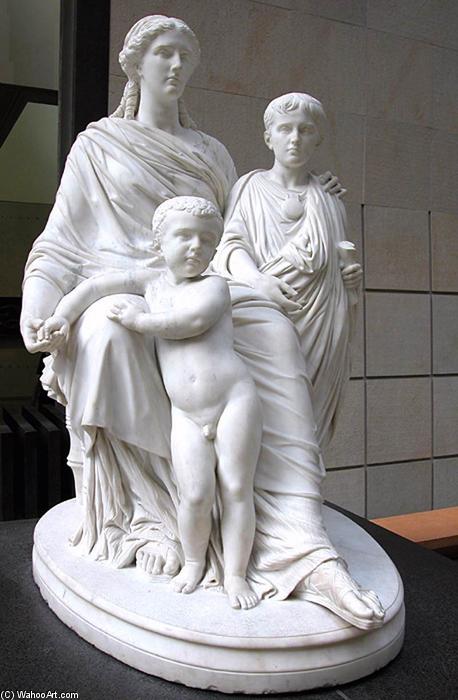
Cornelia, Mother of the Gracchi


 Pročitaj više
Giclee štampa / Umetnički otisak
Giclée štampa ili print na platnu muzejskog kvaliteta uz brzu proizvodnju i fleksibilne opcije završne obrade. ( Kupi ručno naslikanu sliku Pređi na digitalnu sliku)




































Izaberite jednu od naših unapred definisanih veličina koje odgovaraju originalnim proporcijama umetničkog dela.

Možete uneti sopstvene dimenzije kako biste umetničko delo prilagodili specifičnom okviru ili prostoru. Ako odabrani format ne odgovara proporcijama originalne slike, mi ćemo ili iscrtati deo dela ili proširiti sliku pomoću ogledane ivice ili jednobojnog popunjavanja. Digitalni prikaz će vam biti poslat na odobrenje pre početka proizvodnje.
Imajte na umu da pregled na ekranu ne odražava stvarno iscrtavanje ili proširivanje. Samo će prikaz (mockup) precizno pokazati finalnu kompoziciju.
Iako su prilagođene dimenzije dostupne, preporučujemo da odaberete dimenziju sa unapred definisane liste kako biste očuvali originalne proporcije.
Dostava širom sveta () za 2 nedelje umesto uobičajenih 4/5 nedelja. (9 септембар)

Besplatna ekspresna dostava širom sveta

Visokokvalitetno laneno platno

Kompletno osiguranje transporta

Garancija povraćaja carine i uvoznih dažbina

Garancija vernosti boja

Politika povraćaja u roku od 100 dana (isključivo u slučaju nedostataka)

Garancija povrata novca od 100%

Popust pri grupnoj kupovini
 Opcija sa staklom dostupna je samo za dimenzije manje od 110 cm

Cornelia, Mother of the Gracchi
Giclee štampa / Umetnički otisak
Dimenzije reprodukcije
-


Konačna cena
$ 62
The Enduring Grace of Maternal Virtue
To stand before Cornelia, Mother of the Gracchi is to encounter a moment suspended in time—a perfect crystallization of Roman ideals rendered in cool, luminous marble. This sculpture, executed by Pierre Jules Cavelier in 1861, transcends mere portraiture; it is an eloquent meditation on motherhood, lineage, and enduring virtue. The composition itself guides the eye with a masterful sense of stability. Cornelia, seated at the apex of the arrangement, embodies serene dignity. She supports her two young sons, whose clinging forms anchor the entire piece to the circular base. This pyramidal structure lends an immediate feeling of strength and profound balance, suggesting that true familial bonds are both beautiful and unshakeable.
A Study in Neoclassical Elegance
Cavelier’s handling of this subject places it firmly within the tradition of Neoclassicism, though infused with a palpable Romantic sensibility. While the adherence to classical order—the symmetry, the idealized forms, the noble bearing—is evident, the emotional resonance is deeply personal. The artist masterfully employs curved lines throughout; observe the gentle fall of Cornelia’s drapery or the soft curve of her posture. These flowing elements contrast beautifully with the more defined verticality of the figures' upright stances. The monochromatic palette, dominated by the creamy whites and subtle greys of the marble, allows light to become a primary artistic tool. It is this interplay of diffused light across polished stone that gives the sculpture its ethereal glow, defining contours through shadow rather than harsh contrast.
Technique and Material Mastery
The sheer technical skill required for such a piece cannot be overstated. The medium, marble—likely the finest Carrara variety—demands an almost surgical precision from the sculptor. Cavelier’s technique is one of exquisite carving and polishing, allowing him to render textures that seem both solid and weightless. One can almost feel the cool smoothness under the fingertips. The depth within the work is achieved not just through overlapping forms, but through the subtle graduation of tone across the stone itself. This meticulous craftsmanship ensures that even in a reproduction, the viewer connects with the palpable sense of history embedded in every polished plane.
Symbolism and Emotional Resonance
The subject matter—Cornelia, famed for her unwavering dedication to her sons, the Gracchi brothers—imbues the piece with potent symbolism. It speaks to the highest ideals of Roman womanhood: wisdom coupled with maternal devotion. The children clinging to their mother are not merely decorative elements; they represent legacy and the continuity of virtue across generations. For the modern collector or designer, this sculpture offers more than aesthetic beauty; it provides a focal point imbued with themes of enduring love and quiet strength. It is an object that invites contemplation, suggesting that true power resides in nurturing bonds.
Srodna umetnička dela
Biografija umetnika
The Sculptural Legacy of Pierre-Jules Cavelier
In the vibrant, shifting landscape of nineteenth-century Paris, few artists captured the delicate tension between classical restraint and Romantic fervor as gracefully as Pierre-Jules Cavelier. Born in 1814 to a family of skilled artisans—his father being a silversmith and furniture maker—Cavelier was destined for a life defined by the tactile mastery of form and material. This early immersion in the precision of craftsmanship provided the bedrock upon which he would build an illustrious career, eventually ascending to become one of the most respected figures in French academic sculpture. His journey from the workshops of Paris to the prestigious halls of the Villa Medici is a testament to a talent that could bridge the gap between the rigorous discipline of antiquity and the emotive depth of the Romantic era.
Cavelian’s artistic evolution was deeply shaped by his encounters with the masters of his time. Studying under the legendary sculptor David d’Angers and the painter Paul Delaroche, he learned to navigate the complexities of human anatomy and historical narrative. This period of intense training culminated in his monumental achievement in 1842: winning the Prix de Rome with his plaster statue, Diomedes Entering the Palladium. This victory was more than a personal triumph; it granted him entry into the Villa Medici, an experience that would serve as the crucible for his mature style. Surrounded by a cohort of future luminaries such as Édouard Lantéri and Eugène Guillaume, Cavelier spent his years in Rome absorbing the grandeur of classical antiquity, refining a technique that allowed marble and bronze to breathe with a lifelike, poetic vitality.
A Synthesis of Neoclassicism and Romanticism
The true brilliance of Cavelier’s work lies in his ability to synthesize disparate artistic movements into a singular, cohesive voice. While his foundations were firmly rooted in the Neoclassical tradition—characterized by anatomical accuracy and a reverence for Greek and Roman ideals—his soul belonged to the Romantic movement. He possessed a rare ability to imbue static stone with a sense of psychological depth and transient emotion. In works such as Cornélie, one can observe how he utilizes the purity of classical form to convey profound human sentiment, creating figures that seem to exist in a state of eternal, quiet contemplation.
His mastery extended beyond the intimate scale of portraiture into the grand architectural landscape of Paris. Cavelier’s contributions to the city's visual identity are marked by a sense of drama and movement, as seen in his evocative Angel on the Bell Tower. His sculptures often feature:
- Fluidity of Form: A seamless transition between muscular tension and graceful repose.
- Narrative Depth: The ability to tell complex historical or mythological stories through a single, poignant gesture.
- Material Mastery: An expert command over the textures of marble and bronze, making stone appear as soft as skin or as light as drapery.
Historical Significance and Enduring Influence
As the nineteenth century progressed, Cavelier’s influence rippled through the academic institutions of France. His role as a teacher and a pillar of the artistic community ensured that his commitment to technical excellence and emotional sincerity would be passed down to subsequent generations of sculptors. His works, now housed in some of the world's most esteemed collections, including the Musée d'Orsay and the Louvre, serve as enduring windows into a period when art sought to reconcile the permanence of history with the fleeting beauty of human emotion.
Today, Pierre-Jules Cavelier is remembered not merely as a practitioner of academic sculpture, but as a poet in stone. His legacy remains a vital part of the French sculptural canon, reminding us of a time when the pursuit of beauty was inextricably linked to the exploration of the human spirit. Through his hands, the cold rigidity of classical tradition was transformed into a living, breathing testament to the Romantic imagination.
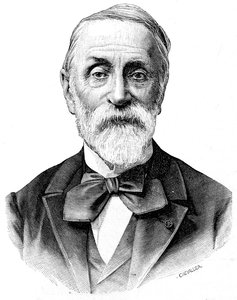
pierre jules cavelier
1814 - 1894 , France
Osnovne informacije
- Artistic Movement Or Style: Neoclassical & Romantic Sculpture
- Artists Or Movements Influenced By This Artist: ['Romanticism']
- Artists Who Influenced This Artist:
- David d'Angers
- Paul Delaroche
- Date Of Birth: August 30, 1814
- Full Name: Pierre Jules Cavelier
- Nationality: French
- Notable Artworks:
- Cornélie
- Angel on the Bell Tower
- Bust of Ary Scheffer
- Place Of Birth: Paris, France
Povezani članci

The Enduring Form: Exploring Themes & Techniques in Sculpture Across Historical Periods
Explore the rich history of sculpture from ancient masterpieces to contemporary innovations. Discover key techniques, influential artists & investment potential for discerning art collectors.
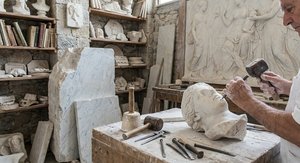
The Enduring Legacy of Marble: A Comprehensive Exploration of Technique, Symbolism & Artistic Expression
Explore the rich history of marble sculpture from antiquity to the Renaissance! Discover key techniques, influential artists & enduring themes in classical art. Expert insights for collectors and enthusiasts at ArtsDot.

Bronze Sculptures That Defined Art History | ArtsDot
Journey through art history with our Top 10 bronze sculptures! Explore masterpieces by Rodin, Michelangelo & more. Discover stories behind iconic statues and find museum-quality reproductions for your home decor at ArtsDot.com.

Bronze Age to Modern Masters: 10 Sculptures That Redefined Art | ArtsDot
Journey through art history with 10 legendary bronze sculptures – from Michelangelo's David to Rodin’s Thinker. Explore the stories, techniques & timeless beauty of these masterpieces. Find museum-quality reproductions & elevate your home decor on ArtsDot.com.
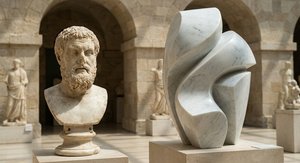
The Enduring Allure of Marble in Art History: From Classical Sculpture to Modern Abstraction
Explore the captivating history of marble sculpture from ancient Greece to modern art. Discover renowned artists like Canova & Michelangelo, carving techniques, and investment insights at ArtsDot.