

 Pregledaj u prostoru
 Pošalji
 Podeli
 Detalji o delu

 Преузми
 Slični predmeti
 Rendgenski snimak
 Slajdovi
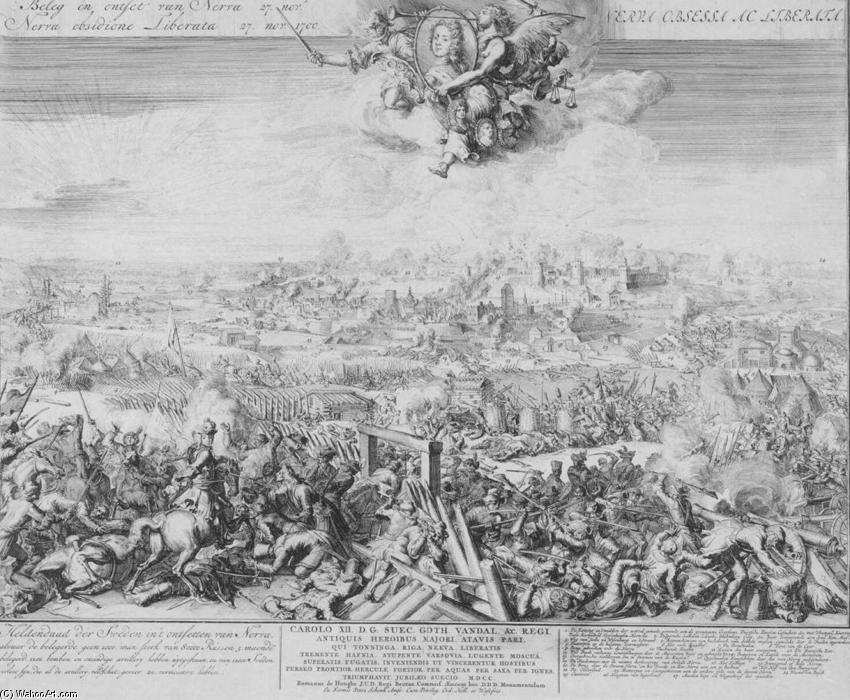
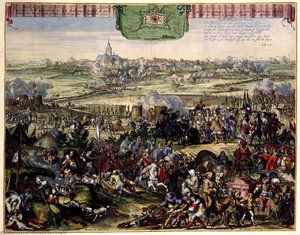
Battle of Narva on 19 November 1700
 Etching
- WallArt
- Baroque
 1700
1700 526.0 x 622.0 cm
 Hermitage Museum
 Pročitaj više
Kupite digitalnu sliku visoke rezolucije i poboljšanog kvaliteta, koja je znatno superiornija od onoga što vidite u online prikazu.
Svaka datoteka je pedantno pripremljena od strane naših stručnjaka koristeći napredne alate i profesionalnu ručnu retušu. Osiguravamo da svaka slika ima izuzetnu oštrinu, preciznu reprodukciju boja i fine detalje.
Konačna datoteka se dostavlja putem e-pošte u roku od 72 sata, optimizovana za neposrednu upotrebu u profesionalnim, izdavačkim i štamparskim okruženjima. To je isti kvalitet kojem veruju vrhunski studiji dizajna, izdavači i galerije.
Digitalna slika
Preuzmite datoteku visoke rezolucije za ličnu upotrebu, štampanje i kreativne projekte. ( Kupi print Kupi ručno naslikanu sliku)
Uključeno uz svaku porudžbinu digitalne slike
Profesionalna digitalna isporuka, zagarantovana
Kada odaberete ArtsDot.com, ne dobijate samo sliku – vi primate profesionalno unapređeno digitalno umetničko delo, izrađeno sa najvećom preciznošću i uz garanciju zadovoljstva. Evo svega što automatski dolazi uz vašu porudžbinu:

Brza dostava putem e-pošte
Vaša digitalna slika visoke rezolucije biće vam poslata putem e-pošte u roku od 72 sata od poručivanja – spremna za trenutnu upotrebu.

Digitalna datoteka unapređena veštačkom inteligencijom
Vaše umetničko delo je profesionalno optimizovano korišćenjem naprednih AI alata i ručne obrade, čime se osiguravaju maksimalni detalji, oštrina i preciznost boja.

Besplatna ponovna isporuka doživotno
Slučajno ste obrisali ili izgubili svoju datoteku? Ne brinite – poslaćemo vam je ponovo u bilo kom trenutku, potpuno besplatno.

Bez troškova uvoza – zauvek
Uživajte u svojim umetničkim delima trenutno, bez carine, dažbina ili troškova dostave – digitalni download je uvek bez poreza.

Garancija vernosti boja
Uz pomoć profesionalnih alata i upravljanja bojama, osiguravamo da vaša digitalna slika što vernije odražava originalne boje.

Garancija zadovoljstva u roku od 60 dana
Ako niste zadovoljni svojom digitalnom slikom, revidirat ćemo je ili vratiti 100% novca u roku od 60 dana – bez ikakvih pitanja.

100% garancija povrata novca
Niste zadovoljni? Obezbedite pun povrat novca u roku od 60 dana od trenutka kada ste primili svoju digitalnu datoteku – bez suvišnih pitanja.

Popusti na velike porudžbine
Kupite 3 slike, uštedite 10% - Kupite 5 slika, uštedite 15% - Kupite 10+ slika, uštedite 20%. Odlično za kreativne projekte, galerije i agencije.
A Chronicle in Etchings: The Battle of Narva
Romeyn de Hooghe’s “Battle of Narva on 19 November 1700” isn't merely a depiction of a historical event; it’s a visceral plunge into the heart of conflict, a meticulously rendered tableau of chaos and consequence. Created in 1700, during the tumultuous Great Northern War, this monumental etching captures a pivotal moment – the Swedish victory against a vastly superior Russian force – with an intensity that transcends simple illustration. De Hooghe, already establishing himself as a master of political satire and visual propaganda, here delivers a work brimming with dramatic tension and a profound understanding of human experience under pressure.
The scene unfolds across a vast panoramic canvas, dominated by the swirling smoke and debris of battle. The composition is deliberately complex, layering numerous figures engaged in brutal hand-to-hand combat alongside the organized chaos of musket fire. A striking element immediately draws the eye: an angelic figure, hovering high above the fray, seemingly observing the carnage with a detached yet undeniably weighty gaze. This inclusion elevates the scene beyond a straightforward military record, hinting at themes of divine intervention and the moral weight of war – a common motif in Baroque art reflecting on the human condition.
The Art of the Etch: Technique and Detail
De Hooghe’s mastery lies not just in his subject matter but also in his technical execution. The work is executed entirely through etching, a process demanding immense skill and patience. Fine lines, meticulously crafted with incredible precision, define every form, texture, and movement within the composition. The artist utilizes varying line weights to create a dynamic sense of depth – thick strokes emphasize the solidity of armor and fortifications, while delicate lines capture the fleeting motion of soldiers and the billowing smoke. The surface itself is rich with textural detail; you can almost feel the roughness of weathered stone, the grit of mud underfoot, and the sheen of polished steel.
- The Process: De Hooghe began by creating a copper plate using acid, etching lines into its surface. These etched lines then served as a matrix for printing multiple impressions.
- Line Weight Variation: The use of varying line thicknesses creates a sense of depth and emphasizes key elements within the composition.
- Detail & Texture: The intricate detailing—from the individual folds in clothing to the sparks flying from muskets—demonstrates de Hooghe’s meticulous approach.
Historical Context and Symbolic Weight
To understand “Battle of Narva,” one must grasp its place within the larger narrative of the Great Northern War. The conflict pitted Sweden, under the ambitious leadership of Charles XII, against Russia, Poland-Lithuania, and Denmark–Norway – a complex web of alliances and rivalries vying for control of Eastern Europe. The Battle of Narva itself was a stunning victory for the Swedes, showcasing their military prowess and bolstering Charles XII’s reputation as a brilliant strategist. De Hooghe's etching serves not just as a record of this event but also as a potent piece of propaganda, reinforcing Sweden’s image as a defender of liberty against autocratic rule.
The inclusion of the angelic figure is particularly significant within this context. It speaks to the prevailing belief in divine providence during the 18th century – the idea that God was actively involved in human affairs. However, the angel’s detached observation suggests a more ambivalent perspective on war's brutality, prompting viewers to contemplate the moral implications of conflict and the suffering it inflicts.
A Legacy of Dramatic Power
“Battle of Narva” remains a powerful testament to Romeyn de Hooghe’s artistic genius. It is more than just a historical illustration; it's an immersive experience, transporting the viewer directly into the heart of a pivotal battle. The etching’s dramatic composition, masterful technique, and profound symbolism continue to resonate with audiences today, solidifying de Hooghe’s legacy as one of the most important graphic satirists in history. Reproductions offer a chance to appreciate this monumental work's intricate details and emotional depth, bringing a piece of 18th-century history into your own space.
Srodna umetnička dela
![Vida De Miguel De Cervantes Saavedra (life Of Miguel De Cervantes Saavedra). Book V Of The Edition Of Don Quixote (biblioteca Nacional De España)\n\n[7] — Martín Fernández De Navarrete Y Ximénez De Tejada, Academic Art](/media/artworks/images-thumb/8c/b6/8cb67a4dd450447373a546c8dd039e57.jpg)
Biografija umetnika
The Prophet of Liberty: The Life and Legacy of Romeyn de Hooghe
Romeyn de Hooghe (1645-1708) stands as a monumental figure in the annals of Dutch Baroque art, recognized not merely for his artistic skill but for his unparalleled contribution to political satire and visual propaganda. Born in Amsterdam during a period marked by intense religious and political upheaval—the Eighty Years’ War against Spain continuing its grip on the Netherlands—de Hooghe emerged from humble beginnings as a skilled etcher, draughtsman, painter, sculptor, and medalist. He rapidly ascended to prominence within the artistic landscape of his time, driven by a prolific output that exceeded 3500 prints. This vast body of work cemented his legacy as arguably the first modern graphic satirist, shaping public opinion and documenting pivotal moments in Dutch history with an unflinching honesty and an inventive, often biting, artistry.
De Hooghe’s formative years instilled a meticulous attention to detail and an unwavering dedication to craft. Trained initially in classic languages—a testament to the humanist ideals prevalent during his era—his artistic inclinations soon superseded academic pursuits, propelling him toward mastering various techniques. He honed his etching skills under the tutulence of Jacob Savertijns, gaining invaluable experience in capturing nuanced tonal gradations and conveying profound emotion through intricate line work. This foundational training would prove instrumental in shaping his distinctive style, characterized by dramatic contrasts of light and dark, a hallmark that distinguishes his oeuvre from his contemporaries and allows his subjects to emerge with a startling, almost theatrical presence.
A Weapon of Ink: The Art of Political Caricature
The trajectory of de Hooghe’s career intersected decisively with the escalating tensions between the Dutch Republic and France under Louis XIV. This confrontation, fueled by religious differences and territorial ambitions, provided the perfect stage for his burgeoning talent as a commentator. Recognizing the potent communicative power of visual imagery, he embraced caricature as his primary medium, transforming it into a weapon of intellectual dissent. Through his engravings, he could reach a broad audience, using sharp wit and grotesque imagery to mock the ambitions of foreign monarchs and champion the cause of Dutch sovereignty.
His work was never merely decorative; it was deeply embedded in the geopolitical struggles of the late 17th century. Whether depicting the chaos of war or the intricate details of a changing world, his hand was always present to guide the viewer's perception. His mastery extended beyond simple satire into the realm of grand historical documentation and cartography:
- The Drama of Conflict: In works such as his 1700 etching of the Battle of Narva, de Hooghe captured the raw intensity and terrifying chaos of European warfare, utilizing the Baroque style to emphasize the epic scale of historical struggle.
- Cartographic Precision: Beyond the battlefield, he possessed a profound ability to render the world through detailed maps, such as his intricate Map of Jerusalem, which offered viewers a rare, meticulously detailed glimpse into distant, sacred landscapes.
- Global Vision: His ambitious projects, including works like Nova Totius Terrarium Orbis, demonstrated an attempt to synthesize geographical knowledge with artistic grandeur, reflecting the era's expanding horizons.
Historical Significance and Artistic Endurance
The historical significance of Romeyn de Hooghe lies in his ability to bridge the gap between fine art and mass communication. He was a pioneer who understood that an image could move a nation more effectively than a manifesto. By blending the technical sophistication of the Dutch Baroque—the mastery of light, the precision of the etching needle, and the depth of composition—with the subversive energy of political satire, he created a new genre of visual journalism. His work served as both a mirror to the anxieties of his age and a hammer used to shape the political landscape of the Dutch Republic.
Even today, de Hooghe’s prints remain vital historical documents. They offer more than just aesthetic beauty; they provide a window into the psyche of a people navigating the birth of modern nation-states. His ability to oscillate between the microscopic detail of a cityscape and the macroscopic drama of an international war ensures that his name remains etched in the history of art as much as it is in the history of politics. He remains a master of the line, a chronicler of truth, and a true prophet of liberty.
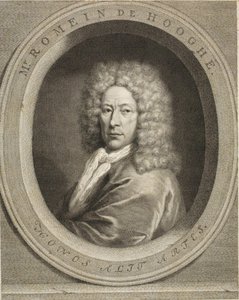
Romeyn de Hooghe
1645 - 1708

