

 Pregledaj u prostoru
 Pošalji
 Podeli
 Detalji o delu

 Преузми
 Slični predmeti
 Rendgenski snimak
 Slajdovi
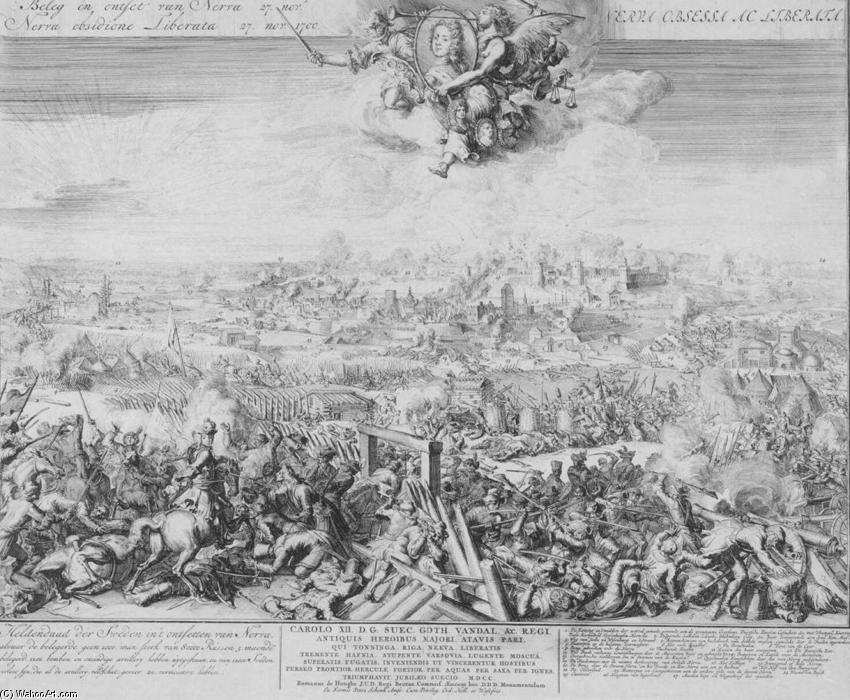
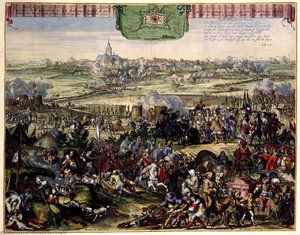
Battle of Narva on 19 November 1700
 Etching
- WallArt
- Baroque
 1700
1700 526.0 x 622.0 cm
 Hermitage Museum
 Pročitaj više
Giclee štampa / Umetnički otisak
Giclée štampa ili print na platnu muzejskog kvaliteta uz brzu proizvodnju i fleksibilne opcije završne obrade. ( Kupi ručno naslikanu sliku Kupi digitalnu sliku)




P118B $10

P118H $10

P118W $10

P438Z $10

P508JH $12

P508YH $12

P805H $10

P805Z $10

P919BZ $10

P919G $10

P919XJ $10

P959ZH $10

P968JZ $12

W106C $8

W218G $10

W218JH $8

W218Y $10

W307PJ $10

W316G $10

W316PJ $8

W316Y $10

W398PJ $8

W4111J $10

W500HY $15

W500JH $15

W692G $12

W849H $8

W940BG $15

W953PJ $8




Izaberite jednu od naših unapred definisanih veličina koje odgovaraju originalnim proporcijama umetničkog dela.

Možete uneti sopstvene dimenzije kako biste umetničko delo prilagodili specifičnom okviru ili prostoru. Ako odabrani format ne odgovara proporcijama originalne slike, mi ćemo ili iscrtati deo dela ili proširiti sliku pomoću ogledane ivice ili jednobojnog popunjavanja. Digitalni prikaz će vam biti poslat na odobrenje pre početka proizvodnje.
Imajte na umu da pregled na ekranu ne odražava stvarno iscrtavanje ili proširivanje. Samo će prikaz (mockup) precizno pokazati finalnu kompoziciju.
Iako su prilagođene dimenzije dostupne, preporučujemo da odaberete dimenziju sa unapred definisane liste kako biste očuvali originalne proporcije.
Dostava širom sveta () za 2 nedelje umesto uobičajenih 4/5 nedelja. (4 септембар)

Besplatna ekspresna dostava širom sveta

Visokokvalitetno laneno platno

Kompletno osiguranje transporta

Garancija povraćaja carine i uvoznih dažbina

Garancija vernosti boja

Politika povrata u roku od 60 dana (samo u slučaju nedostataka)

Garancija povrata novca od 100%

Popust pri grupnoj kupovini
 Opcija sa staklom dostupna je samo za dimenzije manje od 110 cm

Battle of Narva on 19 November 1700
Giclee štampa / Umetnički otisak
Dimenzije reprodukcije
-


Konačna cena
$ 62
A Chronicle in Etchings: The Battle of Narva
Romeyn de Hooghe’s “Battle of Narva on 19 November 1700” isn't merely a depiction of a historical event; it’s a visceral plunge into the heart of conflict, a meticulously rendered tableau of chaos and consequence. Created in 1700, during the tumultuous Great Northern War, this monumental etching captures a pivotal moment – the Swedish victory against a vastly superior Russian force – with an intensity that transcends simple illustration. De Hooghe, already establishing himself as a master of political satire and visual propaganda, here delivers a work brimming with dramatic tension and a profound understanding of human experience under pressure.
The scene unfolds across a vast panoramic canvas, dominated by the swirling smoke and debris of battle. The composition is deliberately complex, layering numerous figures engaged in brutal hand-to-hand combat alongside the organized chaos of musket fire. A striking element immediately draws the eye: an angelic figure, hovering high above the fray, seemingly observing the carnage with a detached yet undeniably weighty gaze. This inclusion elevates the scene beyond a straightforward military record, hinting at themes of divine intervention and the moral weight of war – a common motif in Baroque art reflecting on the human condition.
The Art of the Etch: Technique and Detail
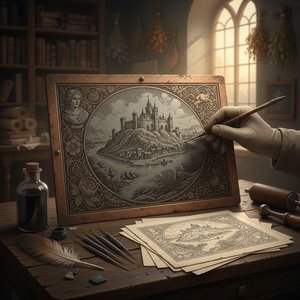
De Hooghe’s mastery lies not just in his subject matter but also in his technical execution. The work is executed entirely through etching, a process demanding immense skill and patience. Fine lines, meticulously crafted with incredible precision, define every form, texture, and movement within the composition. The artist utilizes varying line weights to create a dynamic sense of depth – thick strokes emphasize the solidity of armor and fortifications, while delicate lines capture the fleeting motion of soldiers and the billowing smoke. The surface itself is rich with textural detail; you can almost feel the roughness of weathered stone, the grit of mud underfoot, and the sheen of polished steel.
- The Process: De Hooghe began by creating a copper plate using acid, etching lines into its surface. These etched lines then served as a matrix for printing multiple impressions.
- Line Weight Variation: The use of varying line thicknesses creates a sense of depth and emphasizes key elements within the composition.
- Detail & Texture: The intricate detailing—from the individual folds in clothing to the sparks flying from muskets—demonstrates de Hooghe’s meticulous approach.
Historical Context and Symbolic Weight
To understand “Battle of Narva,” one must grasp its place within the larger narrative of the Great Northern War. The conflict pitted Sweden, under the ambitious leadership of Charles XII, against Russia, Poland-Lithuania, and Denmark–Norway – a complex web of alliances and rivalries vying for control of Eastern Europe. The Battle of Narva itself was a stunning victory for the Swedes, showcasing their military prowess and bolstering Charles XII’s reputation as a brilliant strategist. De Hooghe's etching serves not just as a record of this event but also as a potent piece of propaganda, reinforcing Sweden’s image as a defender of liberty against autocratic rule.
The inclusion of the angelic figure is particularly significant within this context. It speaks to the prevailing belief in divine providence during the 18th century – the idea that God was actively involved in human affairs. However, the angel’s detached observation suggests a more ambivalent perspective on war's brutality, prompting viewers to contemplate the moral implications of conflict and the suffering it inflicts.
A Legacy of Dramatic Power
“Battle of Narva” remains a powerful testament to Romeyn de Hooghe’s artistic genius. It is more than just a historical illustration; it's an immersive experience, transporting the viewer directly into the heart of a pivotal battle. The etching’s dramatic composition, masterful technique, and profound symbolism continue to resonate with audiences today, solidifying de Hooghe’s legacy as one of the most important graphic satirists in history. Reproductions offer a chance to appreciate this monumental work's intricate details and emotional depth, bringing a piece of 18th-century history into your own space.
Srodna umetnička dela
![Vida De Miguel De Cervantes Saavedra (life Of Miguel De Cervantes Saavedra). Book V Of The Edition Of Don Quixote (biblioteca Nacional De España)\n\n[7] — Martín Fernández De Navarrete Y Ximénez De Tejada, Academic Art](/media/artworks/images-thumb/8c/b6/8cb67a4dd450447373a546c8dd039e57.jpg)
Povezani članci

Francisco Goya: 25 Remek-dela Španskog Majstora za Vaš Dom | ArtsDot
Istražite 25 remek-dela Francisca Goya, španskog slikara romantizma i impresionizma. Portreti, tamne slike & istorija umetnosti na ArtsDot.com! Kupite reprodukcije slika vrhunskog kvaliteta za dekoraciju enterijera. Otkrijte celu kolekciju online.
Etching Masters: 10 Legendary Prints That Revolutionized Art | ArtsDot
Journey through 10 legendary etching masterpieces by Rembrandt, Dürer & Goya. Explore the history of printmaking and discover timeless art for your home. Find museum-quality reproductions at ArtsDot.com.
Etching: A Historical Survey of Technique, Aesthetic Qualities & Enduring Artistic Significance
Explore the rich history of etching, from its origins to Rembrandt's masterful innovations. Discover the technique, aesthetic qualities & enduring legacy of this captivating art form. Expert insights for collectors and enthusiasts.

About Us
Discover our story! We bring world-class art into your life through expert curation, personalized creations, and free previews. Trusted by individuals and businesses since 2000.
The Intricate World of Etching: A Historical Survey of Technique, Aesthetic Evolution, and Enduring Artistic Impact
Explore the rich history of etching, from its origins to modern practice. Discover techniques, key artists like Rembrandt, and insights for collectors. A comprehensive guide by ArtsDot.

