

 Pregledaj u prostoru
 Pošalji
 Podeli
 Detalji o delu

 Преузми
 Slični predmeti
 Rendgenski snimak
 Slajdovi
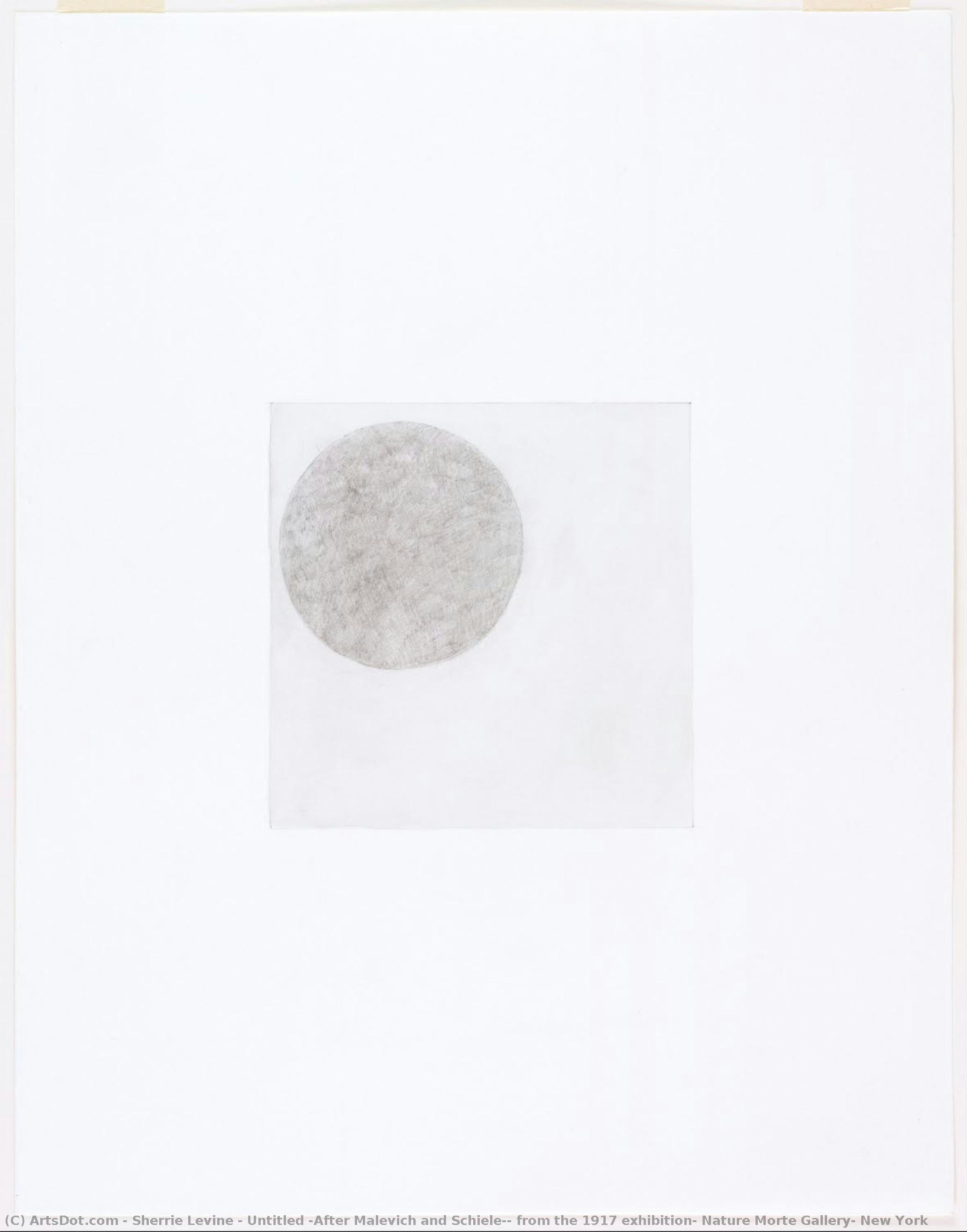
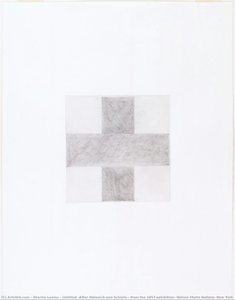
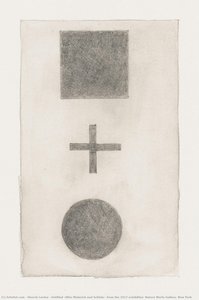
Untitled (After Malevich and Schiele), from the 1917 exhibition, Nature Morte Gallery, New York
 Painting
- WallArt
- Postmodernism
 1984
1984 27.0 x 35.0 cm
 MoMA - Muzej moderne umetnosti
 Pročitaj više
Giclee štampa / Umetnički otisak
Giclée štampa ili print na platnu muzejskog kvaliteta uz brzu proizvodnju i fleksibilne opcije završne obrade. ( Kupi ručno naslikanu sliku Kupi digitalnu sliku)




P118B $10

P118H $10

P118W $10

P438Z $10

P508JH $12

P508YH $12

P805H $10

P805Z $10

P919BZ $10

P919G $10

P919XJ $10

P959ZH $10

P968JZ $12

W106C $8

W218G $10

W218JH $8

W218Y $10

W307PJ $10

W316G $10

W316PJ $8

W316Y $10

W398PJ $8

W4111J $10

W500HY $15

W500JH $15

W692G $12

W849H $8

W940BG $15

W953PJ $8




Izaberite jednu od naših unapred definisanih veličina koje odgovaraju originalnim proporcijama umetničkog dela.

Možete uneti sopstvene dimenzije kako biste umetničko delo prilagodili specifičnom okviru ili prostoru. Ako odabrani format ne odgovara proporcijama originalne slike, mi ćemo ili iscrtati deo dela ili proširiti sliku pomoću ogledane ivice ili jednobojnog popunjavanja. Digitalni prikaz će vam biti poslat na odobrenje pre početka proizvodnje.
Imajte na umu da pregled na ekranu ne odražava stvarno iscrtavanje ili proširivanje. Samo će prikaz (mockup) precizno pokazati finalnu kompoziciju.
Iako su prilagođene dimenzije dostupne, preporučujemo da odaberete dimenziju sa unapred definisane liste kako biste očuvali originalne proporcije.
Dostava širom sveta () za 2 nedelje umesto uobičajenih 4/5 nedelja. (24 август)

Besplatna ekspresna dostava širom sveta

Visokokvalitetno laneno platno

Kompletno osiguranje transporta

Garancija povraćaja carine i uvoznih dažbina

Garancija vernosti boja

Politika povrata u roku od 60 dana (samo u slučaju nedostataka)

Garancija povrata novca od 100%

Popust pri grupnoj kupovini
 Opcija sa staklom dostupna je samo za dimenzije manje od 110 cm

Untitled (After Malevich and Schiele), from the 1917 exhibition, Nature Morte Gallery, New York
Giclee štampa / Umetnički otisak
Dimenzije reprodukcije
-


Konačna cena
$ 62
Opis predmeta
The Geometry of Absence: Contemplating Levine's Echo
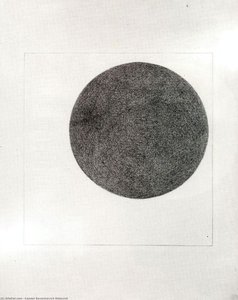
To stand before an image like this Untitled work—a stark dialogue between form and void—is to enter a quiet chamber of contemplation. It is not merely a painting; it is an interrogation of perception itself. The composition, dominated by the perfect, unwavering circle set against the expanse of white, speaks in hushed tones about minimalism's profound capacity for resonance. Sherrie Levine, through this piece echoing Malevich and Schiele, strips away narrative clutter until only the essential remains: shape. The grayscale palette is not a limitation, but rather an amplifier, forcing the viewer to look beyond color and engage with the very structure of light meeting pigment.
Technique and Materiality: A Study in Subtlety
Observe closely the circle itself. It possesses a depth that belies its apparent flatness. The technique employed suggests meticulous layering—a careful accretion of paint, perhaps acrylic or oil, building subtle tonal variations within the supposed boundary. This is where the artist’s hand whispers secrets to the eye; one can trace implied edges through varying shades of gray, noting how the texture appears soft yet undeniably present. It is a masterful exercise in restraint. The materials are handled with an almost clinical precision, creating a surface that feels both monumental in its simplicity and incredibly delicate upon approach. This careful modulation of tone within the geometric confines elevates the piece from mere decoration to considered optical experience.
Historical Echoes: Authorship and Appropriation
Understanding Sherrie Levine requires acknowledging her pioneering role in postmodern art, particularly her groundbreaking use of appropriation. While this specific work references the stark geometries associated with Malevich's revolutionary abstraction and perhaps the raw emotional undercurrents hinted at by Schiele, its power lies in its dialogue with artistic history itself. By presenting such a distilled form, Levine challenges the very notion of originality. The piece asks: what constitutes authorship when the subject matter is so fundamentally universal—a circle within a square? It invites us to consider not just what is painted, but how art has been seen and re-seen across decades.
Emotional Resonance and Interior Dialogue
The emotional impact of this artwork is one of profound quietude. There is no drama here, no overt gesture demanding attention; instead, it offers a sanctuary for the mind. For the collector or designer, this piece functions as an anchor—a point of visual stillness within a dynamic space. It does not shout its presence; rather, it absorbs the surrounding energy, offering a moment of breath. Placing such a work allows a room to settle into a state of thoughtful equilibrium, transforming a mere wall into a contemplative plane.
Srodna umetnička dela
![Abstract Composition [triptych] — Vaclav Vytlacil, Abstract Expressionism](/media/artworks/images-thumb/08/3c/083c0675045645fd42d4e6c6d63f1ced.jpg)
Biografija umetnika
The Architect of Appropriation: The Life and Legacy of Sherrie Levine
Sherrie Levine stands as a pivotal figure in contemporary art, recognized for her pioneering exploration of appropriation—a practice that fundamentally challenged notions of originality and authorship within the postmodern landscape. Born in 1947 in Hazleton, Pennsylvania, Levine’s formative years were shaped by experiences rooted in the American Midwest, notably spending her childhood and adolescence in the suburbs of St. Louis, Missouri. Early exposure to art fostered a lifelong fascination with visual culture, beginning with visits to the St. Louis Art Museum where she observed her mother—a passionate painter—introducing her to the transformative power of artistic expression at just eight years old. This familial influence extended beyond mere observation; Levine’s mother instilled in her a love for art house films and cinematic storytelling, shaping an aesthetic sensibility that would later inform her profound engagement with the layers of visual history.
Levine pursued formal education with rigorous dedication, earning her B.A. from the University of Wisconsin–Madison in 1969. Her academic pursuits solidified her understanding of art history and critical theory, preparing her for a career dedicated to conceptual exploration. Continuing her studies at UW-Madison, she earned an M.F.A. in 1973, honing her artistic skills and refining her approach to visual communication. It was during this period that Levine began to develop her signature style—a deliberate act of appropriation—drawing inspiration from the groundbreaking works of modernist masters such as Walker Evans, Edgar Degas, Marcel Duchamp, and Constantin Brancusi. By re-presenting existing images, she sought to interrogate the very essence of what it means to create in an age of infinite reproduction.
Challenging the Canon through Rephotography and Drawing
The late 1970s witnessed a surge of appropriation art within New York’s East Village scene, fueled by a desire to interrogate established artistic conventions. Alongside contemporaries like Louise Lawler and Barbara Kruger, Levine pushed the boundaries of creativity, establishing herself as a prominent voice in a movement that questioned the sanctity of the "original" masterpiece. Her work often utilizes rephotography—the act of photographing existing photographs—to create a dialogue between the past and the present. This technique allows her to strip away the traditional aura of the artist's hand, instead focusing on the way images circulate, persist, and transform through time.
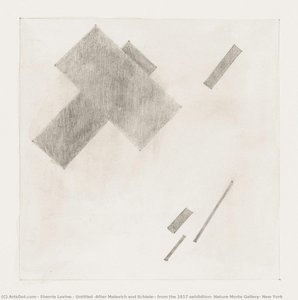
Beyond her photographic interventions, Levine has explored the starkness of minimalist drawing to echo the movements of early modernism. Her 1984 work, Untitled (After Malevich and Schiele), serves as a profound example of this technique. In this piece, she utilizes minimalist graphite to create a geometric abstraction that references the pioneering spirits of Kazimir Malevich and Egon Schiele. Through these drawings, Levine does not merely copy; she inhabits the visual language of her predecessors, using stark lines and shadows to embody a bold challenge to artistic originality. This work showcases her ability to engage deeply with the history of art while simultaneously deconstructing its most fundamental myths.
Historical Significance and the Postmodern Dialogue
The enduring significance of Sherrie Levine lies in her ability to transform the act of looking into an act of critical critique. Her career has been a continuous investigation into the politics of representation, gender, and the ownership of imagery. By reclaiming the works of male masters, she has performed a feminist intervention, subtly shifting the gaze and questioning the patriarchal structures inherent in the art historical canon.
Her contributions can be summarized through several key artistic pillars:
- The Reconceptualization of Authorship: Levine’s practice forces the viewer to confront the blurred lines between the creator and the curator, making the act of selection a primary creative force.
- Engagement with Modernist Legacies: Through her appropriation of figures like Walker Evans and Malevich, she keeps the dialogue of modernism alive while simultaneously critiquing its foundations.
- The Power of the Image in Flux: Her work highlights how meaning is not fixed within an object but is instead generated through the context, repetition, and re-presentation of visual culture.
Today, Levine remains a vital presence in the art world, her work continuing to resonate within the ongoing debates regarding digital reproduction, intellectual property, and the ever-evolving nature of the image in the contemporary era.
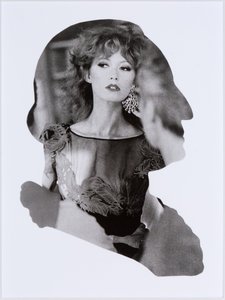
Sherrie Levine
1947 - , United States of America
Osnovne informacije
- Artistic Movement Or Style: Appropriation Art
- Artists Or Movements Influenced By This Artist:
- Louise Lawler
- Mike Bidlo
- Artists Who Influenced This Artist:
- Walker Evans
- Marcel Duchamp
- Date Of Birth: 1947
- Full Name: Sherrie Levine
- Nationality: American
- Notable Artworks:
- Untitled (After Walker Evans)
- Untitled (After Malevich & Schiele)
- Place Of Birth: Hazleton, United States
Povezani članci
Egon Schiele: 25 Remek-dela Ekspresionizma za Vaš Dom | ArtsDot
Istražite 25 remek-dela Egona Schielea – ekspresionističkih portreta i slika koje odražavaju duboke emocije. Kupite reprodukcije vrhunskog kvaliteta za dekoraciju enterijera na ArtsDot.com! Otkrijte celu kolekciju online.
Kazimir Malevich: 25 Remek-dela Apstraktne Umetnosti za Vaš Dom | ArtsDot
Istražite 25 remek-dela Kazimira Maleviča i uronite u svet apstraktne umetnosti i suprematizma. Otkrijte priče iza legendarnih slika kao što je 'Crni kvadrat' i pronađite inspiraciju za dekoraciju enterijera sa ArtsDot.com.

Top 10 dela geometrijske apstrakcije koje morate videti | ArtsDot.com
Istražite 10 remek-dela geometrijske apstrakcije – Mondrian, Malevič i Kandinski. Otkrijte priče iza ovih ikoničnih slika i pronađite inspiraciju za dekoraciju enterijera sa ArtsDot.com! Reprodukcije vrhunskog kvaliteta.
Abstraktni Ekspresionizam: 10 Remek Dela Koja Su Definisala Pokret
Otkrijte 10 remek dela koja su definisala apstraktni ekspresionizam! Istražite dela Pola Krausa, Džejson Poloka i drugih. Saznajte priče iza umetnosti i inspirisanje za dekoraciju doma. Eksplorirajte kolekciju na ArtsDot.com!

Kandinsky's Masterpieces: 25 Paintings That Define Abstract Art | ArtsDot
Journey through Wassily Kandinsky's 25 most iconic abstract paintings. Explore his revolutionary use of color, form & spiritual expressionism. Find museum-quality Kandinsky reproductions and elevate your home decor with ArtsDot.com. Discover all masterpieces on ArtsDot.com!

