

 Pregledaj u prostoru
 Pošalji
 Podeli
 Detalji o delu

 Преузми
 Slični predmeti
 Rendgenski snimak
 Slajdovi
 Statistika
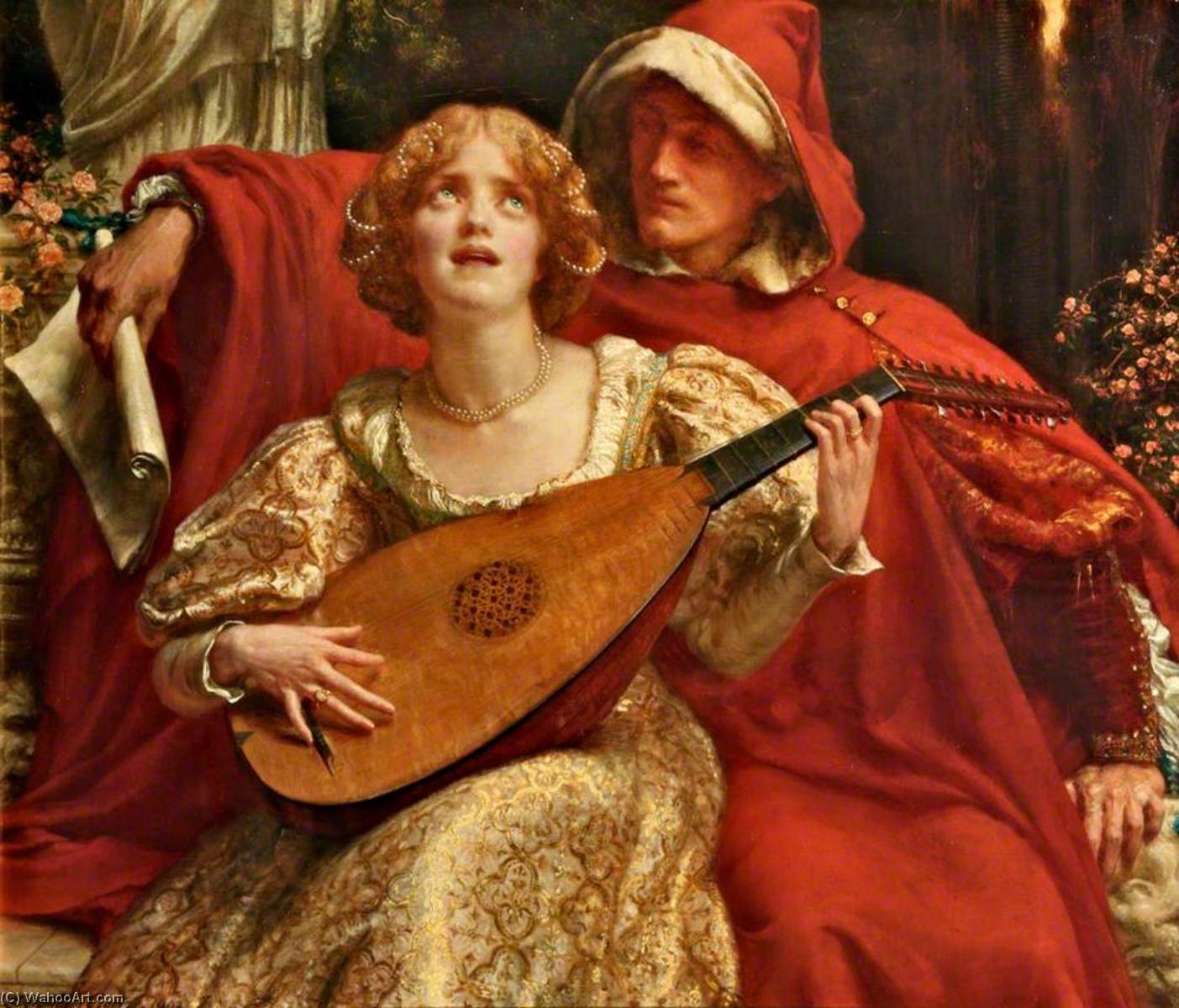
'Thy Voice is like to Music heard ere Birth Some Spirit Lute touched on a Spirit Sea'
 Pre-Raphaelite
 1902
1902 44.0 x 54.0 cm
 Pročitaj više
Ručno rađena uljana reprodukcija
Ručno oslikano uljanim bojama na platnu u dimenzijama i okviru po vašem izboru, izrađeno po porudžbini od strane naših umetnika. ( Pređi na štampu Pređi na digitalnu sliku)




































Izaberite jednu od naših unapred definisanih veličina koje odgovaraju originalnim proporcijama umetničkog dela.

Можете унети сопствене димензије како бисте прилагодили дело одређеном оквиру или простору. Ако одабрана величина не одговара пропорцијама оригинала, слика ће бити исечена или проширена додатним елементима који се ручно насликавају. Дигитални prikaz ће вам бити послат на одобрење пре почетка производње.
Имајте на уму да преглед на екрану не одражава стварно исецање или проширење. Само приказ (mockup) ће тачно приказати коначну композицију.
Иако су доступне прилагођене величине, препоручујемо да одаберете димензију из дефинисане листе како бисте сачували оригиналне пропорције.
Nakon narudžbine, tim ArtsDot.com će klijentu putem e-pošte poslati uputstva i dostaviti prikaz predloženog rešenja
Isporuka širom sveta () za 3/4 nedelje umesto uobičajenih 5 nedelja. (8 септембар). Bez kompromisa po pitanju kvaliteta.

Besplatna ekspresna dostava širom sveta

Visokokvalitetno laneno platno

Kompletno osiguranje transporta

Garancija povraćaja carine i uvoznih dažbina

Garancija vernosti boja

Politika povraćaja u roku od 100 dana (isključivo u slučaju nedostataka)

Garancija povrata novca od 100%

Popust pri grupnoj kupovini
 Opcija sa staklom dostupna je samo za dimenzije manje od 110 cm

'Thy Voice is like to Music heard ere Birth Some Spirit Lute touched on a Spirit Sea'
Tehnika reprodukcije
Dimenzije reprodukcije
-


Konačna cena
$ 288
A Glimpse into Romantic Intimacy: 'Thy Voice is like to Music heard ere Birth'
Sigismund Christian Hubert Goetze’s ‘Thy Voice is like to Music heard ere Birth Some Spirit Lute touched on a Spirit Sea,’ painted in 1902, offers a captivating window into the aesthetic sensibilities of the late 19th and early 20th centuries. This oil painting, measuring 44 x 54 cm, exemplifies the Pre-Raphaelite movement’s enduring influence while showcasing Goetze's own artistic skill in capturing moments of quiet intimacy and emotional depth.
Subject Matter and Composition
The artwork centers around a tender scene: a young woman gracefully playing a lute, her gaze directed upwards towards a man who observes her with rapt attention. The composition is deliberately focused on these two figures, creating an immediate sense of closeness and shared emotion. The background remains softly blurred, intentionally drawing the viewer's eye to the central interaction. A small table adorned with papers and flowers adds subtle detail to the left side of the canvas, hinting at a scholarly or artistic environment. The woman is depicted in a flowing golden gown accented by a pearl necklace, while the man wears a striking red hooded robe, creating a visual contrast that emphasizes their individual presence within the scene.
Style, Technique and Historical Context
Goetze’s style aligns closely with the Pre-Raphaelite Brotherhood's ideals – a movement known for its emphasis on detailed realism, romantic themes, and a rejection of academic conventions. The painting demonstrates meticulous attention to detail in rendering fabrics (the rich textures of the robes), skin tones, and the intricate details of the lute itself. Glazing techniques are likely employed to achieve the luminous quality of light reflecting off the woman’s skin and the golden gown. The flattened perspective, characteristic of this era's artistic trends, contributes to a sense of timelessness and focuses attention on the figures themselves. The artwork emerged during a period marked by significant social and cultural shifts, with a renewed interest in medieval aesthetics and romantic ideals – themes that resonate strongly within Goetze’s work.
Symbolism and Emotional Resonance
Beyond its aesthetic appeal, ‘Thy Voice is like to Music heard ere Birth’ carries layers of symbolic meaning. The lute itself is a potent symbol of musical talent, romance, and artistic expression. The woman's upward gaze suggests vulnerability and emotional openness, while the man’s intense observation implies admiration and perhaps unspoken affection. The title, drawn from poetry (likely referencing John Keats), further enhances the romantic and ethereal quality of the scene, evoking a sense of otherworldly beauty and timeless love. The color palette – dominated by deep reds and golds – contributes to an opulent atmosphere, subtly hinting at themes of passion and desire.
A Timeless Masterpiece for Your Collection
‘Thy Voice is like to Music heard ere Birth’ represents a compelling blend of artistic skill, romantic sensibility, and symbolic depth. Whether you are an avid art collector or seeking a striking piece to enhance your home décor, this reproduction captures the essence of Goetze's masterpiece, offering a timeless glimpse into a world of beauty, music, and enduring love.
Srodna umetnička dela
Biografija umetnika
A Life Immersed in Sacred Vision: Sigismund Christian Hubert Goetze
Sigismund Christian Hubert Goetze (1866-1939) remains a compelling, though often overlooked, figure within the landscape of late 19th and early 20th century Hungarian painting. Born into an era defined by both burgeoning nationalism and profound spiritual questioning, Goetze dedicated his artistic life to exploring themes of religious devotion, human dignity, and the subtle nuances of portraiture. While biographical details surrounding his early years are scarce, it is clear that he received a solid academic training, likely within the established art institutions of Budapest or Vienna – centers of artistic activity in the Austro-Hungarian Empire. This foundation equipped him with a masterful technique, evident in the precise rendering of form and the rich, atmospheric quality of his paintings. Goetze wasn’t driven by radical innovation; rather, he sought to refine existing traditions, imbuing them with a deeply personal sensitivity. His work reflects a commitment to representing not merely physical likeness but also the inner life of his subjects, particularly those within religious contexts.The Language of Faith and Form
Goetze’s artistic output is dominated by religious scenes – depictions of biblical narratives, portraits of saints, and intimate studies of devotional figures. These works are not grandiose displays of theological complexity; instead, they possess a quiet intimacy, focusing on moments of personal piety and spiritual contemplation. His palette typically favors muted earth tones—ochres, browns, and grays—creating an atmosphere of solemnity and reverence. Light plays a crucial role in his compositions, often emanating from unseen sources to illuminate key figures or symbolic objects. This use of chiaroscuro not only enhances the dramatic impact of the scenes but also serves as a metaphor for divine grace illuminating the darkness of human existence. He skillfully blended realism with an underlying sense of idealism, elevating ordinary individuals into archetypal representations of faith and virtue. The influence of Renaissance masters is palpable in his compositions—particularly the works of Raphael and Caravaggio—but Goetze adapted these influences to suit his own aesthetic sensibilities and the specific cultural context of Hungary.Portraiture as a Window to the Soul
Beyond his religious paintings, Goetze established himself as a respected portraitist. His portraits are characterized by their psychological depth and meticulous attention to detail. He wasn’t interested in capturing mere social status or outward appearance; instead, he sought to reveal the character and inner life of his sitters.- He achieved this through subtle gestures, expressive eyes, and a careful study of facial features.
- His portraiture often depicts members of the Hungarian clergy and aristocracy, suggesting a close connection to the upper echelons of society.
- These portraits provide valuable insights into the social and cultural milieu of late 19th-century Hungary.
Historical Context and Enduring Legacy
Goetze's career unfolded during a period of significant political and social upheaval in Hungary. The rise of nationalism, the decline of the Austro-Hungarian Empire, and the growing secularization of society all impacted the artistic landscape. While he didn’t actively engage in overtly political themes, his work can be seen as a subtle affirmation of traditional values and religious faith in the face of modernity. His paintings offered a sense of continuity and stability during a time of rapid change. Although Goetze never achieved widespread international recognition, his work remains highly regarded within Hungary. His paintings are held in numerous public and private collections, and he is recognized as an important representative of 19th-century Hungarian art. His enduring legacy lies in his ability to create works that are both technically accomplished and emotionally resonant—paintings that continue to inspire contemplation and reverence. He represents a bridge between the academic traditions of the past and the emerging artistic sensibilities of the modern era, offering a unique perspective on the spiritual and cultural life of Hungary.
sigismund christian hubert goetze
1866 - 1939
Osnovne informacije
- Artistic Movement Or Style: Romanticism
- Artists Or Movements Influenced By This Artist: ['Pre-Raphaelites']
- Artists Who Influenced This Artist:
- William Holman Hunt
- John Everett Millais
- Date Of Birth: October 24, 1866
- Date Of Death: October 24, 1939
- Full Name: Sigismund Christian Hubert Goetze
- Nationality: English
- Notable Artworks:
- Old Bridge, Glen Moriston
- Tamarisk Tree, Lake Como
- Place Of Birth: London, England
Povezani članci
Sir John Everett Millais: Pre-Raphaelite Rebellion & Victorian Narrative Detail
Explore the revolutionary art of Sir John Everett Millais & the Pre-Raphaelite Brotherhood. Discover their radical realism, symbolic narratives, and lasting impact on Victorian aesthetics. A deep dive into 19th-century masterpieces.
Dante Gabriel Rossetti: 25 Remek-dela Pre-Raphaelita i Inspiracija za Vaš Dom
Istražite 25 remek-dela Dante Gabriel Rossettija, ikone Pre-Raphaelita! Otkrijte priče iza slika, simbolizam i inspiraciju za vaš dom. Kvalitetne reprodukcije na ArtsDot.com.

Romantic Masterpieces: 10 Artworks to Stir Your Soul |
Fall in love with art! Explore 10 iconic romantic paintings – from Renaissance classics to Impressionist masterpieces. Discover the stories behind artists like Monet & Klimt, and find museum-quality reproductions for your home at .
Arthur Hughes: Pre-Raphaelite Visions of Beauty & Melancholy
Explore the captivating world of Arthur Hughes (1832-1915), a leading Pre-Raphaelite painter. Discover his dreamy landscapes, poetic narratives & iconic Victorian artworks. Learn about his life, style & collecting today.
The Pre-Raphaelite Brotherhood: Rebellion, Romance & Medieval Revival
Explore the captivating world of the Pre-Raphaelite Brotherhood! Discover their rebellious spirit, iconic masterpieces & lasting influence on art history. Learn about Rossetti, Millais & more.