

 Pregledaj u prostoru
 Pošalji
 Podeli
 Detalji o delu

 Преузми
 Slični predmeti
 Rendgenski snimak
 Slajdovi
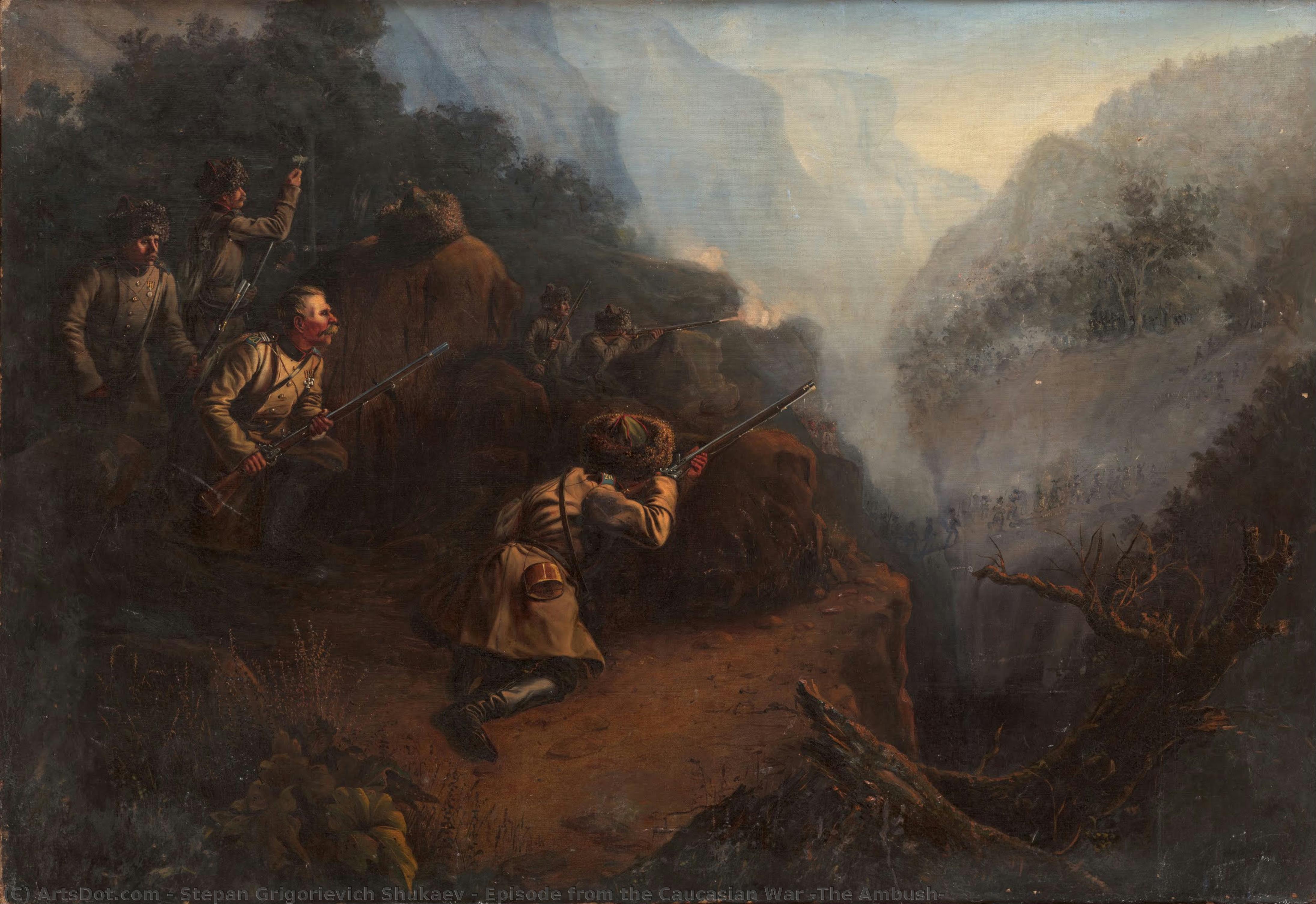
Episode from the Caucasian War (The Ambush)
 1859
1859 106.0 x 73.0 cm
 Dagestan Museum of Fine Arts named after P. S. Gamzatova
 Pročitaj više
Ručno rađena uljana reprodukcija
Ručno oslikano uljanim bojama na platnu u dimenzijama i okviru po vašem izboru, izrađeno po porudžbini od strane naših umetnika. ( Kupi print Kupi digitalnu sliku)




































Izaberite jednu od naših unapred definisanih veličina koje odgovaraju originalnim proporcijama umetničkog dela.

Можете унети сопствене димензије како бисте прилагодили дело одређеном оквиру или простору. Ако одабрана величина не одговара пропорцијама оригинала, слика ће бити исечена или проширена додатним елементима који се ручно насликавају. Дигитални prikaz ће вам бити послат на одобрење пре почетка производње.
Имајте на уму да преглед на екрану не одражава стварно исецање или проширење. Само приказ (mockup) ће тачно приказати коначну композицију.
Иако су доступне прилагођене величине, препоручујемо да одаберете димензију из дефинисане листе како бисте сачували оригиналне пропорције.
Nakon narudžbine, tim ArtsDot.com će klijentu putem e-pošte poslati uputstva i dostaviti prikaz predloženog rešenja
Isporuka širom sveta () za 3/4 nedelje umesto uobičajenih 5 nedelja. (7 септембар). Bez kompromisa po pitanju kvaliteta.

Besplatna ekspresna dostava širom sveta

Visokokvalitetno laneno platno

Kompletno osiguranje transporta

Garancija povraćaja carine i uvoznih dažbina

Garancija vernosti boja

Politika povraćaja u roku od 100 dana (isključivo u slučaju nedostataka)

Garancija povrata novca od 100%

Popust pri grupnoj kupovini
 Opcija sa staklom dostupna je samo za dimenzije manje od 110 cm

Episode from the Caucasian War (The Ambush)
Tehnika reprodukcije
Dimenzije reprodukcije
-


Konačna cena
$ 263
Srodna umetnička dela








Biografija umetnika
Camille Pissarro: A Pioneer of Light and Life
Born Jacob Abraham Camille Pissarro on July 10, 1830, in Saint-Thomas, a Danish colony in the Caribbean, Pissarro’s artistic journey was one shaped by constant movement and an evolving relationship with both his homeland and France. His early life amidst the vibrant colors and rhythms of the island instilled in him a deep appreciation for nature, a foundation that would profoundly influence his later work. His family's business background—a general merchandise store—provided a grounding in commerce and observation, skills he unknowingly honed as he began to sketch and draw, initially driven by a youthful fascination with art rather than a formally planned career path.
Pissarro’s formal artistic training began in 1842 at Passy, near Paris, where he studied under various instructors. However, it was his encounter with Fritz Melbye, a Danish artist, in 1850 that truly ignited his passion and provided him with the crucial guidance needed to transition from amateur sketching to a serious pursuit of painting. Melbye’s influence steered Pissarro towards capturing the nuances of light and color, particularly through his studies of tropical landscapes – an experience that would remain a cornerstone of Pissarro's artistic vision for much of his career.
The Parisian Years: Formation and Early Influences
Returning to Paris in 1855, Pissarro immersed himself in the burgeoning art scene. He enrolled at the École des Beaux-Arts, a traditional institution, but quickly found its rigid academic approach stifling. He sought out independent study and mentorship, eventually connecting with Paul Cézanne and Claude Monet – figures who would become lifelong friends and collaborators. These relationships proved pivotal, exposing Pissarro to new approaches to color theory and composition, moving him away from the highly polished surfaces of earlier French painting.
During this period, Pissarro’s work began to reflect a growing interest in capturing fleeting moments and atmospheric effects. He experimented with looser brushstrokes and brighter palettes, influenced by the Impressionist movement that was beginning to challenge established artistic conventions. His early Parisian paintings often depicted scenes of everyday life – market squares, street corners, and working-class communities—offering glimpses into the lives of ordinary people.
The Rural Retreats: A Search for Authenticity
Despite his success in Paris, Pissarro increasingly sought refuge from the city’s bustle in more rural settings. Beginning around 1860, he established a series of studios in places like Montmorency, La Roche-Guyon, and Varenne-Saint-Maur, each location providing him with new subjects and perspectives. These retreats were not merely vacations; they represented a deliberate effort to connect more deeply with nature and to capture the essence of rural life – the changing seasons, the rhythms of agriculture, and the simple beauty of the countryside.
This shift towards rural landscapes marked a significant turning point in Pissarro’s artistic development. He began to focus on depicting the effects of light and weather on the land, employing broken brushstrokes and subtle color variations to convey a sense of atmosphere and mood. His paintings during this period are characterized by their quiet dignity and understated beauty – a testament to his ability to find profound meaning in the ordinary.
Impressionism and Beyond: Collaboration and Evolution
Pissarro’s involvement with the Impressionist movement was complex and multifaceted. He participated in all eight of the group's exhibitions, providing crucial support and encouragement to his fellow artists. However, he remained a more independent spirit than some of his colleagues, often pursuing his own artistic vision while engaging with the broader Impressionist circle. His collaboration with Paul Cézanne, particularly during the 1870s and 80s, proved especially influential, leading them both to explore new ways of representing space and form.
In the late 1880s, Pissarro embraced Pointillism, a technique pioneered by Georges Seurat and Paul Signac. He adopted this method, applying tiny dots of color to create luminous effects, demonstrating his willingness to experiment with new approaches to painting. Despite these stylistic shifts, Pissarro’s core artistic principles—his deep appreciation for nature, his sensitivity to light and atmosphere, and his commitment to capturing the essence of everyday life—remained constant throughout his long and productive career.
Legacy and Significance
Camille Pissarro died on November 13, 1903, in Paris. His legacy as one of the founding fathers of Impressionism is firmly established, but his influence extends far beyond that label. He was a tireless observer of the world around him, a keen innovator, and a generous mentor to younger artists. Pissarro’s paintings continue to resonate with viewers today because they offer a glimpse into a bygone era—a time when art was driven by a genuine love of nature and a desire to capture its beauty in all its fleeting moments.
stepan grigorievich shukaev
1830 - 1883 , Russia
Osnovne informacije
- Artistic Movement Or Style: Hudson River School, Impressionism
- Artists Or Movements Influenced By This Artist:
- Paul Cézanne
- Claude Monet
- Artists Who Influenced This Artist: ['Fritz Melbye']
- Date Of Birth: July 10, 1830
- Date Of Death: November 13, 1903
- Full Name: Camille Pissarro
- Nationality: Danish, French
- Notable Artworks:
- Boulevard Montmartre
- Impression, Soleil Levant
- La Route de Rouen
- Place Of Birth: Saint Thomas, Denmark