

 Pošalji
 Podeli
 Detalji o delu

 Преузми
 Slični predmeti
 Slajdovi
Bridget Quilt


 Pročitaj više
Giclee štampa / Umetnički otisak
Giclée štampa ili print na platnu muzejskog kvaliteta uz brzu proizvodnju i fleksibilne opcije završne obrade. ( Kupi ručno naslikanu sliku Kupi digitalnu sliku)




































Izaberite jednu od naših unapred definisanih veličina koje odgovaraju originalnim proporcijama umetničkog dela.

Možete uneti sopstvene dimenzije kako biste umetničko delo prilagodili specifičnom okviru ili prostoru. Ako odabrani format ne odgovara proporcijama originalne slike, mi ćemo ili iscrtati deo dela ili proširiti sliku pomoću ogledane ivice ili jednobojnog popunjavanja. Digitalni prikaz će vam biti poslat na odobrenje pre početka proizvodnje.
Imajte na umu da pregled na ekranu ne odražava stvarno iscrtavanje ili proširivanje. Samo će prikaz (mockup) precizno pokazati finalnu kompoziciju.
Iako su prilagođene dimenzije dostupne, preporučujemo da odaberete dimenziju sa unapred definisane liste kako biste očuvali originalne proporcije.
Dostava širom sveta () za 2 nedelje umesto uobičajenih 4/5 nedelja. (7 септембар)

Besplatna ekspresna dostava širom sveta

Visokokvalitetno laneno platno

Kompletno osiguranje transporta

Garancija povraćaja carine i uvoznih dažbina

Garancija vernosti boja

Politika povrata u roku od 100 dana (samo u slučaju nedostataka)

Garancija povrata novca od 100%

Popust pri grupnoj kupovini
 Opcija sa staklom dostupna je samo za dimenzije manje od 110 cm

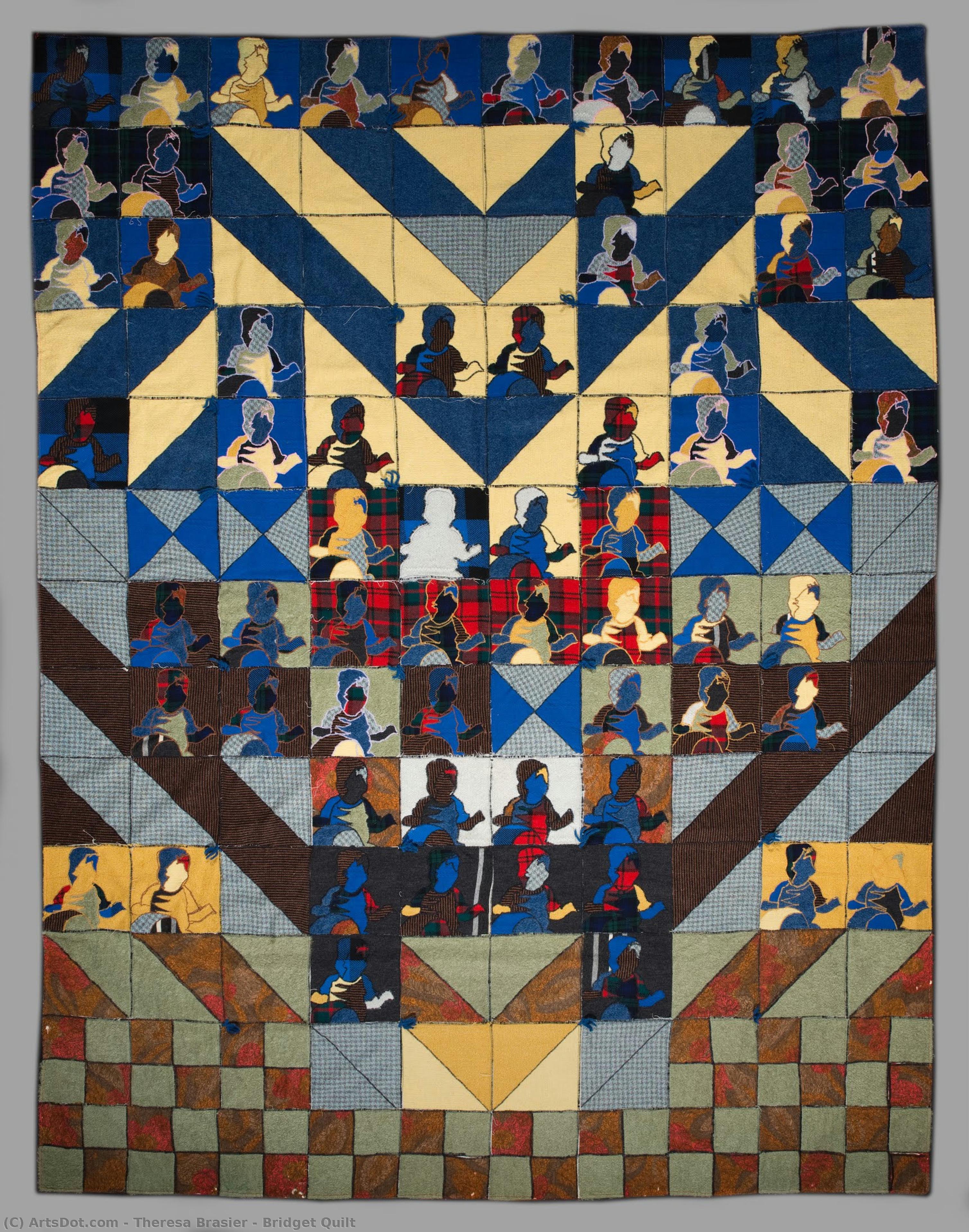
Bridget Quilt
Giclee štampa / Umetnički otisak
Dimenzije reprodukcije
-


Konačna cena
$ 62
A Tapestry of Human Connection
In the evocative work Bridget Quilt, created in 1968 by the British artist Theresa Brasier, we are invited into a vibrant, kaleidoscopic world where textile tradition meets contemporary narrative. At first glance, the piece presents a mesmerizing mosaic of human presence, captured within the structured yet fluid geometry of a quilt. The composition is anchored by a deep, resonant blue background that serves as a nocturnal or celestial stage, punctuated by bright yellow squares that act like windows into different moments of life. This striking color contrast does more than just please the eye; it creates a rhythmic pulse that guides the viewer through an intricate dance of figures and forms.
< xmlns:dt="http://www.w3.org/2001/XMLSchema-instance">The Artistry of Detail and Movement
The true magic of Bridget Quilt lies in its breathtaking complexity. Upon closer inspection, the viewer discovers a bustling community of at least fourteen distinct figures, each meticulously rendered in unique positions and orientations. Some characters appear caught in quiet contemplation, sitting still within their yellow frames, while others seem to be mid-motion, engaged in the silent choreography of daily existence. This technique of layering diverse human vignettes creates a sense of infinite depth, suggesting that the quilt is not merely a physical object, but a repository of shared memories and collective history. The artist’s ability to balance such a dense population of subjects without overwhelming the composition speaks to a masterful command of spatial arrangement and visual weight.
The style of the piece bridges the gap between folk art traditions and modern abstraction. While the subject matter—the quilt—is rooted in domesticity and warmth, the execution possesses an avant-garde energy. The way the figures interact with the geometric boundaries of the yellow squares suggests a tension between individual freedom and the structures we inhabit. For collectors and interior designers, this piece offers a profound versatility; it functions as a focal point of intense intellectual engagement in a gallery setting, yet its warm tones and tactile suggestion make it an incredibly soulful addition to a sophisticated residential space.
A Legacy of Texture and Emotion
Beyond the visual spectacle, Bridget Quilt resonates on an emotional level, evoking feelings of nostalgia, community, and the interconnectedness of the human experience. The concept of a quilt—a medium traditionally used to provide warmth and protection—serves as a powerful metaphor for the way our individual stories are stitched together to form a larger social fabric. There is a profound sense of comfort in the repetition of pattern, yet an underlying excitement in the discovery of each new face and gesture hidden within the folds of the design.
For those seeking to bring a piece of contemporary British textile history into their collection, this work stands as a testament to the power of narrative art. It is a piece that rewards repeated viewing, offering new layers of meaning with every glance. Whether viewed as a study in color theory or a poetic exploration of human sociology, Bridget Quilt remains an enduring masterpiece of texture and emotion, perfect for inspiring those who appreciate art that speaks to both the mind and the heart.
Srodna umetnička dela

Biografija umetnika
Paul Jackson Pollock: A Revolutionary in Paint
Jackson Pollock, born January 28, 1912, in Cody, Wyoming, and tragically dying August 11, 1956, near Springs, Long Island, remains one of the most iconic and debated figures in 20th-century art. More than just a painter, he was a revolutionary who fundamentally altered our understanding of what painting could be – shifting from representation to an exploration of process, gesture, and pure visual experience. His legacy continues to resonate today, influencing countless artists and shaping the trajectory of modern and contemporary art.
Pollock’s early life was marked by constant movement. Born into a family of Scots-Irish farmers, he spent his childhood traversing the American West and Southwest with his father, a government surveyor. This itinerant upbringing instilled in him a sense of restlessness and an appreciation for diverse cultures – particularly Native American traditions, which subtly informed his artistic sensibilities. He enrolled at Los Angeles’ Manual Arts High School but was expelled, a formative experience that fueled his rebellious spirit. He later studied at the Art Students League in New York City under Thomas Hart Benton, absorbing elements of the Regionalist style before ultimately forging his own distinct path.
The Emergence of Drip Painting and Action Painting
Pollock’s artistic breakthrough occurred in 1947, a pivotal year that saw him abandon traditional painting methods. He began experimenting with pouring and dripping thinned enamel paint onto large canvases laid flat on the floor of his studio – a radical departure from the easel-based approach prevalent at the time. This technique, dubbed “drip painting” or “action painting,” wasn’t about meticulously applying color to create an image; it was about embracing chance, spontaneity, and the physical act of creation itself. As he famously stated, "When I am in my painting, I'm not aware of what I’m doing."
His process involved using sticks, brushes, and even syringes to manipulate the paint, allowing it to flow and spread across the canvas with minimal intervention. The resulting works – pieces like *Number 1, 1950* (1950), *Convergence* (1952), and *Autumn Rhythm (Number 30)* (1952) – are characterized by their all-over composition, dense layers of color, and a sense of dynamic energy. Critics initially reacted with skepticism, dismissing his work as chaotic and random, but this perspective gradually shifted as Pollock’s influence grew.
Influences and Artistic Context
Pollock's artistic development was shaped by a confluence of influences. The Surrealist movement, particularly the emphasis on the subconscious and automatic drawing techniques, provided a conceptual framework for his exploration of spontaneity. His exposure to Mexican muralism, with its bold colors and social commentary, instilled in him a sense of scale and ambition. Furthermore, his engagement with Jungian psychology, facilitated by Dr. Joseph Henderson, encouraged him to delve into the emotional depths of his work.
He was also deeply influenced by the burgeoning Abstract Expressionist movement, which emerged in New York during the late 1940s. Artists like Mark Rothko and Willem de Kooning were pushing the boundaries of painting, exploring themes of emotion, spirituality, and existential angst. Pollock’s work aligned with this broader trend, contributing to a new era of American art that prioritized individual expression and formal experimentation.
Legacy and Historical Significance
Despite his tragically short life – cut short by a car accident at age 44 – Jackson Pollock left an indelible mark on the art world. His innovative techniques, radical approach to painting, and unwavering commitment to artistic freedom challenged conventional notions of representation and paved the way for subsequent generations of artists. His work continues to be celebrated for its dynamism, energy, and profound exploration of the creative process.
MoMA’s acquisition of *Number 1, 1950* in 1948 marked a turning point in Pollock's career, establishing him as a major figure in American art. His retrospective exhibitions at MoMA in 1967 and 1998-1999 cemented his legacy as one of the most important artists of the 20th century. Today, his paintings command staggering prices at auction, and his influence can be seen across a wide range of artistic disciplines – from painting and sculpture to performance art and installation.

theresa brasier
1956 - , United Kingdom
Osnovne informacije
- Artistic Movement Or Style: Abstract Expressionism”
- Artists Or Movements Influenced By This Artist:
- Lee Krasner
- Gutai Group
- Minimalism
- Date Of Birth: January 28, 1912
- Date Of Death: August 11, 1956
- Drip Painting: Action painting
- Full Name: Paul Jackson Pollock
- Nationality: American
- Number 17a",
"No. 5, 1948",
"Mural On Indian Red Ground",
"Autumn Rhythm (Number 30)",
"Convergence",
"Blue Poles"
],
"Artists Who Influenced This Artist:
- Thomas Hart Benton
- David Alfaro Siqueiros
- José Clemente Orozco
- Pablo Picasso
- Place Of Birth: Cody, Wyoming, USA
- All-Over Painting: Notable artworks
Povezani članci
Slate Blue Masterpieces: 10 Iconic Paintings & Timeless Home Decor Ideas
Immerse yourself in the captivating world of slate blue! Explore 10 iconic paintings by Monet, Van Gogh & Renoir. Discover their stories, techniques & find museum-quality art reproductions for your home at .
The Allure of Azure: Exploring the Symbolic & Aesthetic Depths of Blue in Art History
Explore the rich history of blue in art! Discover its symbolism, from ancient pigments to modern masterpieces by Kandinsky & Seurat. Uncover the psychological impact and cultural meanings behind this captivating hue.
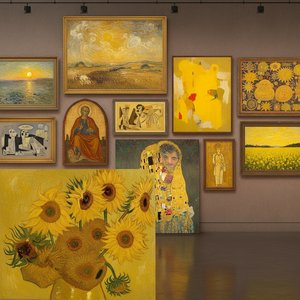
Golden Hues: 10 Masterpieces Dominated by Chrome Yellow | ArtsDot
Immerse yourself in golden light! Explore 10 famous paintings dominated by 'Chrome Yellow', from Van Gogh’s Sunflowers to Monet's Haystacks. Discover the stories behind these iconic Impressionist & Post-Impressionist masterpieces and find museum-quality art reproductions at ArtsDot.com.
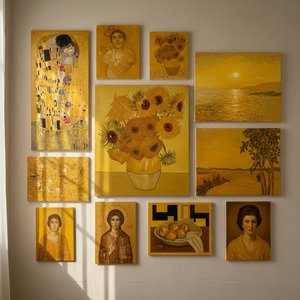
Golden Hues: Top 10 Paintings Dominated by Yellow Ochre |
Explore 10 iconic paintings bathed in golden yellow ochre! From Van Gogh's sunflowers to Monet’s haystacks, discover the stories behind these masterpieces. Find museum-quality art reproductions & elevate your home decor on .
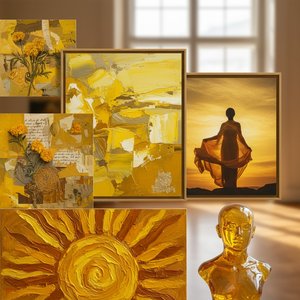
The Golden Hue: Exploring Symbolism & Emotion in Yellow Art
Explore the rich symbolism & emotional power of yellow in art history! From Van Gogh to Kandinsky, discover how artists used this vibrant hue. Expert analysis & high-quality reproductions at ArtsDot.