

 Pošalji
 Podeli
 Detalji o delu

 Преузми
 Slični predmeti
 Slajdovi
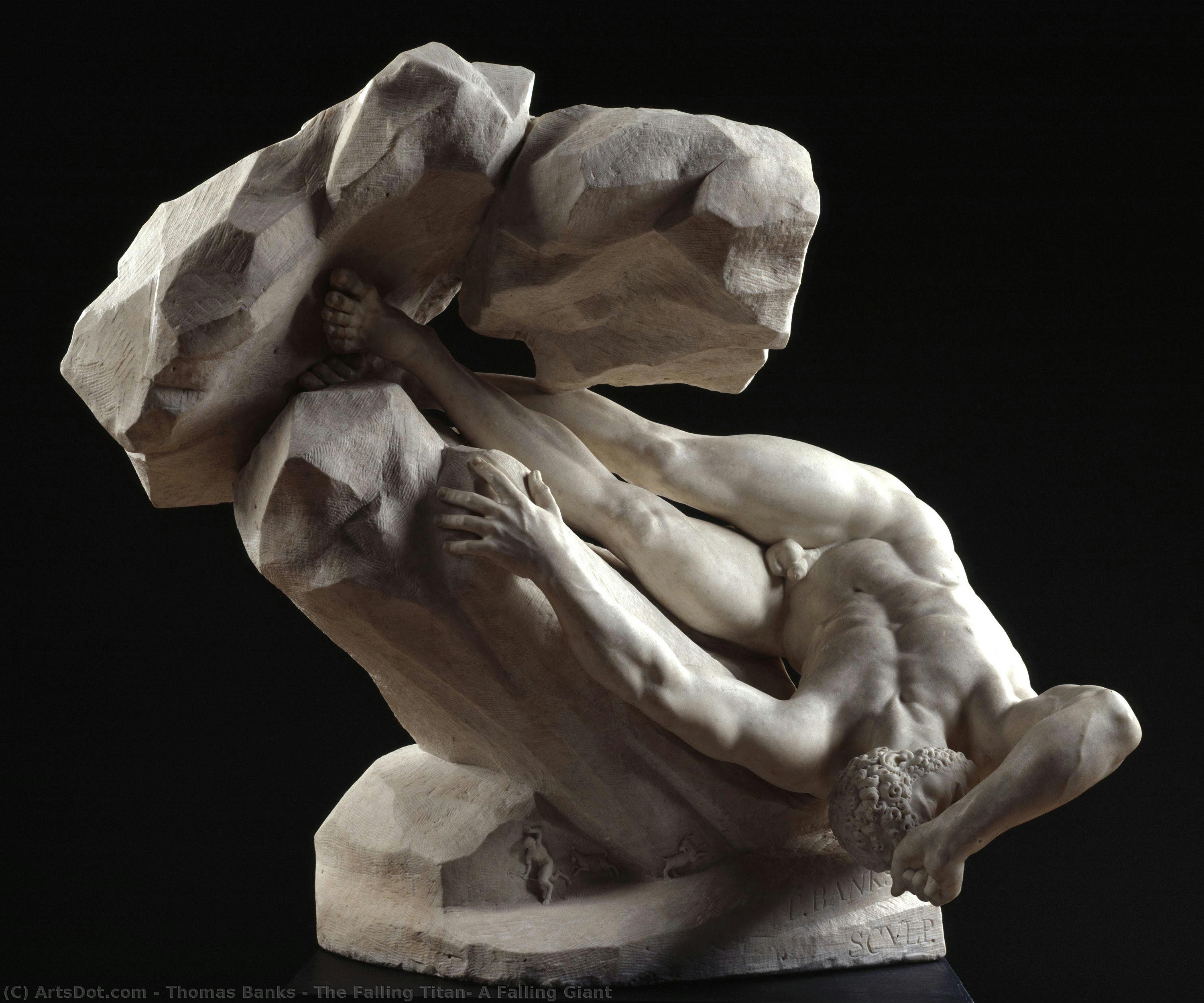
The Falling Titan; A Falling Giant


 Pročitaj više
Kupite digitalnu sliku visoke rezolucije i poboljšanog kvaliteta, koja je znatno superiornija od onoga što vidite u online prikazu.
Svaka datoteka je pedantno pripremljena od strane naših stručnjaka koristeći napredne alate i profesionalnu ručnu retušu. Osiguravamo da svaka slika ima izuzetnu oštrinu, preciznu reprodukciju boja i fine detalje.
Konačna datoteka se dostavlja putem e-pošte u roku od 72 sata, optimizovana za neposrednu upotrebu u profesionalnim, izdavačkim i štamparskim okruženjima. To je isti kvalitet kojem veruju vrhunski studiji dizajna, izdavači i galerije.
Digitalna slika
Preuzmite datoteku visoke rezolucije za ličnu upotrebu, štampanje i kreativne projekte. ( Kupi print Kupi ručno naslikanu sliku)
Uključeno uz svaku porudžbinu digitalne slike
Profesionalna digitalna isporuka, zagarantovana
Kada odaberete ArtsDot.com, ne dobijate samo sliku – vi primate profesionalno unapređeno digitalno umetničko delo, izrađeno sa najvećom preciznošću i uz garanciju zadovoljstva. Evo svega što automatski dolazi uz vašu porudžbinu:

Brza dostava putem e-pošte
Vaša digitalna slika visoke rezolucije biće vam poslata putem e-pošte u roku od 72 sata od poručivanja – spremna za trenutnu upotrebu.

Digitalna datoteka unapređena veštačkom inteligencijom
Vaše umetničko delo je profesionalno optimizovano korišćenjem naprednih AI alata i ručne obrade, čime se osiguravaju maksimalni detalji, oštrina i preciznost boja.

Besplatna ponovna isporuka doživotno
Slučajno ste obrisali ili izgubili svoju datoteku? Ne brinite – poslaćemo vam je ponovo u bilo kom trenutku, potpuno besplatno.

Bez troškova uvoza – zauvek
Uživajte u svojim umetničkim delima trenutno, bez carine, dažbina ili troškova dostave – digitalni download je uvek bez poreza.

Garancija vernosti boja
Uz pomoć profesionalnih alata i upravljanja bojama, osiguravamo da vaša digitalna slika što vernije odražava originalne boje.

Garancija zadovoljstva u roku od 60 dana
Ako niste zadovoljni svojom digitalnom slikom, revidirat ćemo je ili vratiti 100% novca u roku od 60 dana – bez ikakvih pitanja.

100% garancija povrata novca
Niste zadovoljni? Obezbedite pun povrat novca u roku od 60 dana od trenutka kada ste primili svoju digitalnu datoteku – bez suvišnih pitanja.

Popusti na velike porudžbine
Kupite 3 slike, uštedite 10% - Kupite 5 slika, uštedite 15% - Kupite 10+ slika, uštedite 20%. Odlično za kreativne projekte, galerije i agencije.
Opis kolekcionarskog dela
The Drama of Descent: Capturing Divine Struggle in Marble
To stand before The Falling Titan; A Falling Giant is to confront raw, unbridled drama rendered in cold, immutable stone. This sculpture does not merely depict a fall; it embodies the very moment of catastrophic failure—the instant where immense power meets inevitable gravity. The subject matter itself draws from the grand narratives of classical mythology: a colossal figure, having dared to challenge the celestial order by aiming for Olympus, now hurtling earthward. It is a visceral tableau of hubris meeting consequence, forcing the viewer into an immediate, breathless empathy with the doomed giant.
Mastery in Motion: Technique and Foreshortening
What elevates this piece beyond mere narrative sculpture is Thomas Banks’s breathtaking technical virtuosity. Observe the musculature, contorted not just by impact, but by the very act of falling itself. Banks masterfully employs dramatic foreshortening—a technique that warps perspective to create an illusion of extreme speed and depth. The titan's outstretched limbs seem to pierce the space before him, making the viewer feel as if they are standing at the precipice alongside him. Furthermore, the inclusion of tiny, almost incidental figures—the satyr and goats in the lower left corner—serves a crucial compositional purpose: it establishes an overwhelming sense of scale. These small witnesses amplify the monumental tragedy unfolding above them.
Historical Echoes and Artistic Intent
Created in 1786, this work sits at a fascinating intersection of Neoclassical ideals and burgeoning Romantic sensibility. While rooted in classical subject matter, the sheer emotional intensity—the palpable terror mixed with defiant grandeur—leans toward the dramatic fervor that would characterize later Romantic movements. The very genesis of the piece speaks to intellectual collaboration; whether conceived à priori within the marble block or drawn from earlier sketches made with Henry Fuseli, the work suggests a deep engagement between the artist's imagination and the physical limitations (and possibilities) of the medium. It is sculpture as high-stakes intellectual performance.
Symbolism and Emotional Resonance for the Modern Collector
For the contemporary collector or designer seeking an object imbued with narrative weight, The Falling Titan offers profound symbolic resonance. It speaks to themes universal to the human experience: the fall from grace, the consequences of overreaching ambition, and the sheer, breathtaking beauty found even in moments of collapse. Reproducing such a piece allows one to bring this contained drama into an interior space—a focal point that demands contemplation. Imagine its presence against a muted backdrop; the contrast between the polished stone's permanence and the captured moment of violent motion creates an electrifying tension, transforming any room into a gallery of mythic struggle.
Srodna umetnička dela
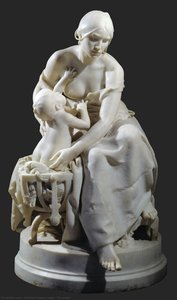
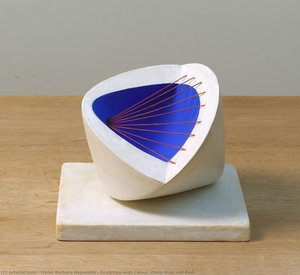
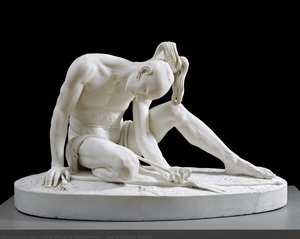
Biografija umetnika
A Sculptor of Classical Grandeur: The Life and Legacy of Thomas Banks
In the pantheon of eighteenth-century English art, few names evoke the dignified strength of Neoclassicism quite like Thomas Banks. Born in London in 1737, Banks was a man whose artistic soul was deeply rooted in the precision of his lineage and the grandeur of antiquity. The son of William Banks, a surveyor for the Duke of Beaufort, he inherited an early appreciation for architectural rigor and meticulous detail. His formative years were shaped by a dual education: the disciplined drawing lessons provided by his father and a rigorous apprenticeship under the woodcarver William Barlow. Yet, it was in the quiet evenings spent within the studio of the Flemish master Peter Scheemakers that Banks truly found his calling. Under this mentorship, the young artist moved beyond the tactile limits of wood to embrace the sweeping, heroic narratives of marble and stone, developing a stylistic language that would eventually command the attention of emperors and academies alike.
The trajectory of Banks’s career was marked by a profound engagement with the classical world. In 1772, upon receiving a prestigious Travelling Studentship from the Royal Academy, he journeyed to Rome, an experience that served as the crucible for his mature style. Immersed in the remnants of Roman greatness, Banks absorbed the weight and grace of ancient monuments, learning to translate the silent language of stone into emotive, monumental forms. This period of intense study allowed him to bridge the gap between mere imitation and true artistic expression, infusing his work with a sense of movement and psychological depth that resonated with the burgeoning Neoclassical movement.
From Saint Petersburg to the Royal Academy
The late eighteenth century brought both challenges and triumphs to Banks’s journey. Following his return from Italy in 1779, he encountered a shifting cultural landscape in England where the fervent passion for classical poetry seemed to be waning. Seeking new horizons, he traveled to Saint Petersburg, where he served as a sculptor to the formidable Empress Catherine the Great. It was during this Russian sojourn that he produced one of his most charming works, Cupid Tormenting a Butterfly, a piece that masterfully balanced classical mythological themes with a delicate, almost Romantic sensibility. This period of imperial patronage not only solidified his international reputation but also refined his ability to capture the ephemeral beauty of nature within the permanence of sculpture.
Upon his return to England, Banks’s work took on a more muscular and dramatic tone, characterized by an unflinching exploration of human emotion and heroic struggle. His election as an Associate of the Royal Academy in 1784, followed by full membership the next year, signaled his ascent to the pinnacle of the British art establishment. He became a master of the monumental, capable of rendering the most harrowing scenes of myth with a technical virtuosity that left viewers breathless. His ability to utilize dramatic foreshortening and intricate musculature allowed him to breathe life into cold marble, making the descent of a titan or the grief of a hero feel palpably real.
A Lasting Impression on British Sculpture
The historical significance of Thomas Banks lies in his ability to synthesize the intellectual rigor of Neoclassicism with a uniquely English sense of narrative drama. His oeuvre is scattered across some of the most sacred spaces of British heritage, from the solemn halls of Westminster Abbey to the hallowed reaches of St Paul’s Cathedral. His contributions include:
- The Shakespeare Group: Perhaps his most celebrated achievement, the colossal Shakespeare Attended by Painting and Poetry stands as a breathtaking tribute to English literary genius, blending sculptural form with the spirit of the arts.
- Commemorative Monuments: His works in Westminster Abbey, honoring figures such as Sir Eyre Coote and William Woollett, demonstrate his mastery of the funerary monument, turning grief into enduring classical beauty.
- Mythological Narratives: Works like The Falling Titan; A Falling Giant showcase his ability to capture the precise moment of catastrophic failure, utilizing technical prowess to evoke empathy for the divine struggle.
Though he passed away in London in 1805, the echoes of Banks’s chisel remain. He did not merely carve stone; he sculpted the very essence of an era, capturing the tension between the stability of classical ideals and the turbulent emotions of a changing world. Through his hands, the legends of antiquity were reborn in the heart of England, leaving behind a legacy of strength, grace, and eternal motion.
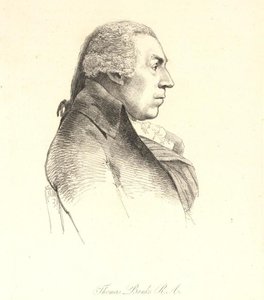
thomas banks
1737 - 1823 , United Kingdom
Kratke činjenice
- Artistic Movement Or Style: Neoclassical
- Artists Or Movements Influenced By This Artist: ['Classical Mythology']
- Artists Who Influenced This Artist:
- Peter Scheemakers
- William Kent
- Date Of Birth: London, United Kingdom (1737)
- Date Of Death: February 2, 1805
- Full Name: Thomas Banks RA
- Nationality: English
- Notable Artworks:
- Shakespeare Attended by Painting and Poetry
- Monument to Sir Eyre Coote
- Monument to General Loton
- Monument to Sir Clifton Wintringham
- Monument to William Woollett
- Portrait of Warren Hastings
- Place Of Birth: London

